
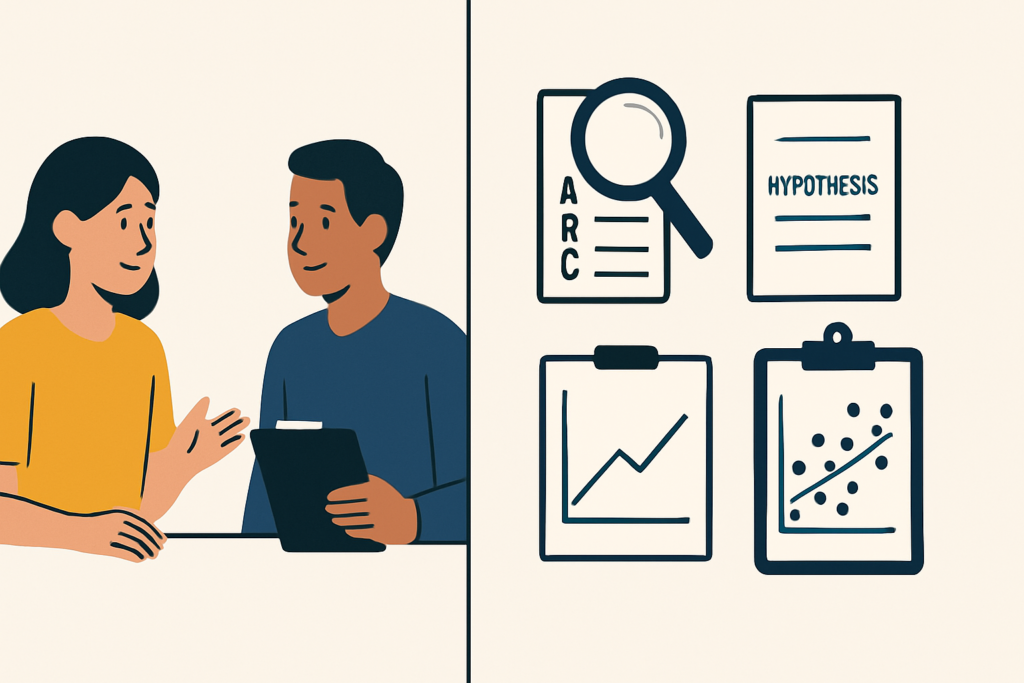
A discussion-based assessment serves as a foundational tool in applied behavior analysis, particularly during the initial stages of understanding challenging behaviors. This indirect assessment method involves structured conversations with caregivers, teachers, or other informants to gather historical data about behavior patterns. The primary goal is to identify potential antecedents and consequences while generating initial hypotheses about behavioral function.
Table of Contents
- Discussion Based Assessment: Defining the Discussion-Based Assessment in ABA
- Conducting a Discussion-Based Assessment: Worked Examples
- Discussion-Based Assessments and the BCBA Exam
- Quick Checklist for Effective Implementation
- Summary and Key Takeaways
- References
Discussion Based Assessment: Defining the Discussion-Based Assessment in ABA
At its core, a discussion-based assessment represents an indirect assessment method that relies on informant reports rather than direct observation. This approach systematically collects information about behavior patterns through structured interviews or conversations.
Core Definition and Key Characteristics
This assessment type focuses on gathering historical data about when, where, and why behaviors occur. Unlike direct observation methods like ABC recording, it relies on informant memory and perspective. The process typically involves asking specific questions about behavioral topography, frequency, duration, and environmental contexts.
Key characteristics include its efficiency in collecting preliminary data and its ability to provide context that might not be immediately observable. However, practitioners must recognize its limitations, particularly regarding informant bias and memory accuracy.
Its Place in the Functional Assessment Hierarchy
Within a comprehensive functional behavior assessment (FBA), discussion-based assessments typically serve as the initial step. They help narrow down when and where to conduct more intensive direct observations. This approach aligns with ethical practice by gathering multiple sources of information before developing interventions.
The assessment hierarchy typically progresses from indirect methods to direct observation and finally to functional analysis when necessary. Discussion-based assessments provide the preliminary roadmap for this progression.

Conducting a Discussion-Based Assessment: Worked Examples
Practical application demonstrates how theoretical concepts translate into actionable assessment strategies. These examples show how interview data informs behavioral understanding.
Example 1: Elopement in a School Setting
During a teacher interview, the BCBA learns that a student leaves their desk during independent math work. The teacher reports this occurs approximately three times per session, typically when worksheets contain multiple-digit multiplication problems.
- Antecedent: Presentation of challenging math worksheets
- Behavior: Leaving desk area without permission
- Consequence: Teacher redirects student back to desk after 2-3 minutes
- Hypothesized function: Escape from difficult academic demands
Follow-up questions might explore whether the behavior occurs during other challenging tasks or if certain types of assistance reduce elopement frequency.
Example 2: Aggression During Home Sessions
A parent describes their child hitting during in-home therapy sessions, particularly when therapists attempt to transition from preferred activities to work tasks. The parent notes this pattern has intensified over the past month.
- Antecedent: Transition away from preferred activity (tablet time)
- Behavior: Hitting therapist with open hand
- Consequence: Therapist delays transition, provides comfort
- Hypothesized function: Access to tangibles and attention
This discussion reveals potential motivating operations related to activity transitions and suggests the need for transition supports.
Example 3: Self-Injurious Behavior (SIB) – A Complex Case
Caregivers report hand-biting that seems to occur across various settings without clear environmental triggers. The behavior appears more frequent during quiet periods and less during engaging activities.
- Antecedent: Low stimulation environments, apparent absence of social triggers
- Behavior: Biting back of hand until skin breaks
- Consequence: No consistent social consequence observed
- Hypothesized function: Automatic reinforcement (sensory stimulation)
This case highlights the importance of direct observation to confirm automatic reinforcement hypotheses and the ethical necessity of comprehensive assessment before intervention.
Discussion-Based Assessments and the BCBA Exam
Understanding this assessment method is crucial for BCBA exam success, as questions frequently test knowledge of assessment selection and interpretation.
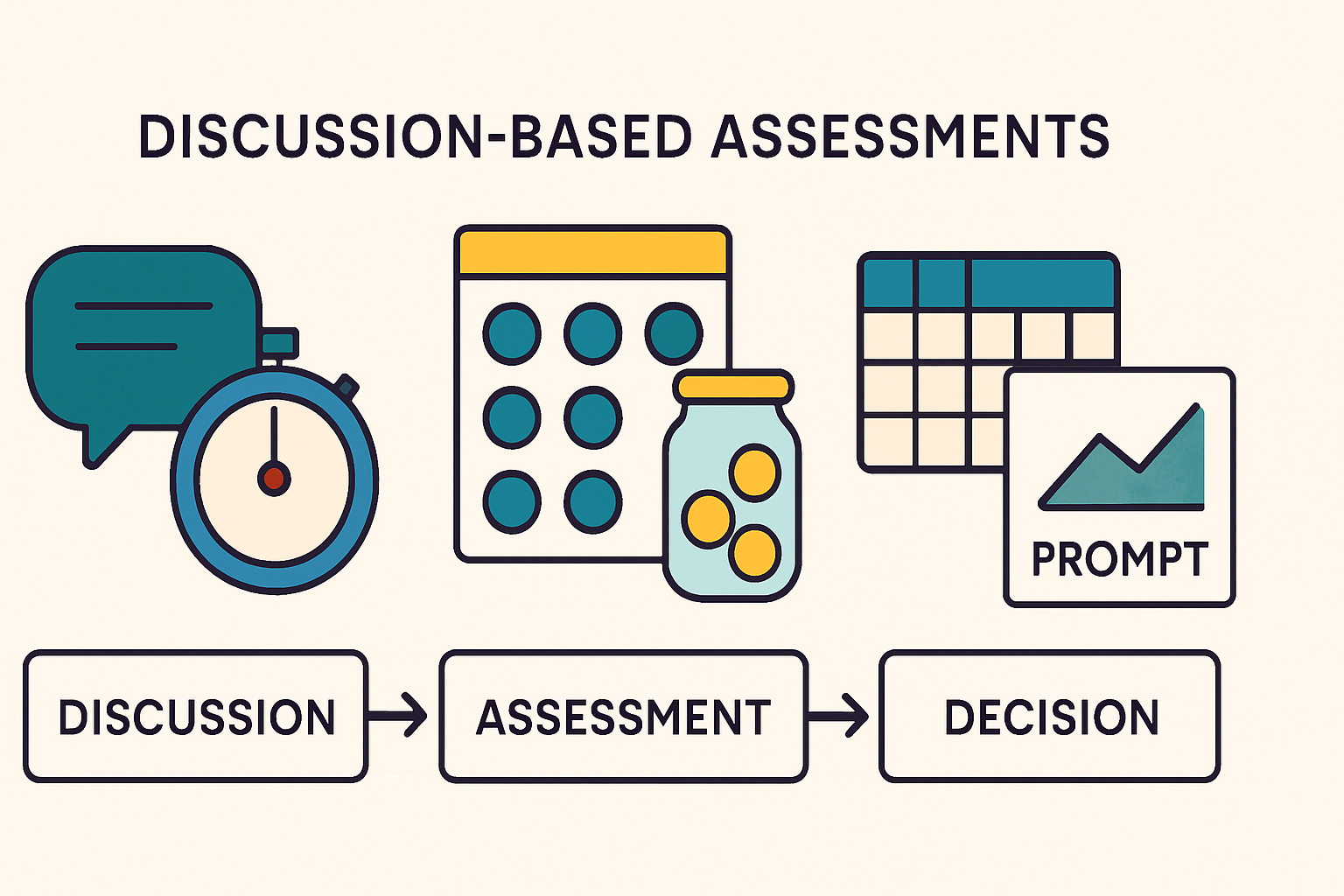
Key Task List Links and Exam Focus Areas
The BACB Task List addresses discussion-based assessments primarily within Domain F: Behavior Assessment. Specific items include conducting functional assessments (F-1), identifying environmental variables (F-2), and conducting descriptive assessments (F-3).
Exam questions often test when to use indirect versus direct assessment methods, how to interpret interview data, and recognizing the limitations of informant reports. Understanding these concepts helps with questions about assessment hierarchy and ethical data collection practices.
Common Exam Traps and How to Avoid Them
Candidates frequently encounter several predictable pitfalls related to discussion-based assessments:
- Over-reliance on interview data for final hypothesis confirmation without direct observation
- Confusing discussion-based assessments with direct descriptive assessments like ABC recording
- Failing to recognize informant bias and memory limitations
- Missing the need for corroborating evidence from multiple sources
- Ethical traps regarding using unverified hypotheses for intervention design
To avoid these traps, remember that discussion-based assessments generate hypotheses rather than confirm functions. Always plan for follow-up direct observation as part of comprehensive functional behavior assessment.
Quick Checklist for Effective Implementation
Use this practical checklist to ensure thorough and ethical discussion-based assessment implementation:
- Identify appropriate informants with regular observation opportunities
- Prepare structured questions focusing on ABC sequences
- Document specific behavioral descriptions, not just labels
- Note environmental contexts and potential setting events
- Generate multiple possible hypotheses, not just single explanations
- Plan follow-up direct observation to test initial hypotheses
- Consider cultural and linguistic factors in information gathering
- Maintain professional boundaries while building rapport
This checklist aligns with best practices outlined in the ethics guidelines for behavior analysts.
Summary and Key Takeaways
Discussion-based assessments serve as valuable preliminary assessment tools in ABA practice. They efficiently gather historical data and generate initial hypotheses about behavioral function. However, their indirect nature requires careful interpretation and always necessitates follow-up direct observation.
Key takeaways include understanding their role within comprehensive functional assessment, recognizing their limitations regarding informant bias, and applying structured questioning techniques. For BCBA exam preparation, focus on when to use this method, how to interpret the data, and what steps should follow in the assessment process.
Remember that ethical practice requires using discussion-based assessments as part of a multi-method approach, never as standalone confirmation of behavioral function. This balanced understanding supports both exam success and effective clinical practice in applied behavior analysis.



