

If you search for average pay for BCBA, you will see a number of different answers. That is normal: salary sites use different job titles, posting pools, dates, regions, and methods. A useful answer must state what the number represents before treating it as a benchmark.
Table of Contents
- In This Guide
- Average Pay for BCBA: The Current Snapshot
- Why Salary Sources Disagree
- What Actually Changes BCBA Pay
- Salary Versus the Total Compensation Package
- How to Compare a Real BCBA Offer
- How Certification Connects to Earning Potential
- What This Means for BCBA Exam Planning
- Average Pay for BCBA FAQ
- Take the Free BCBA Mock Exam
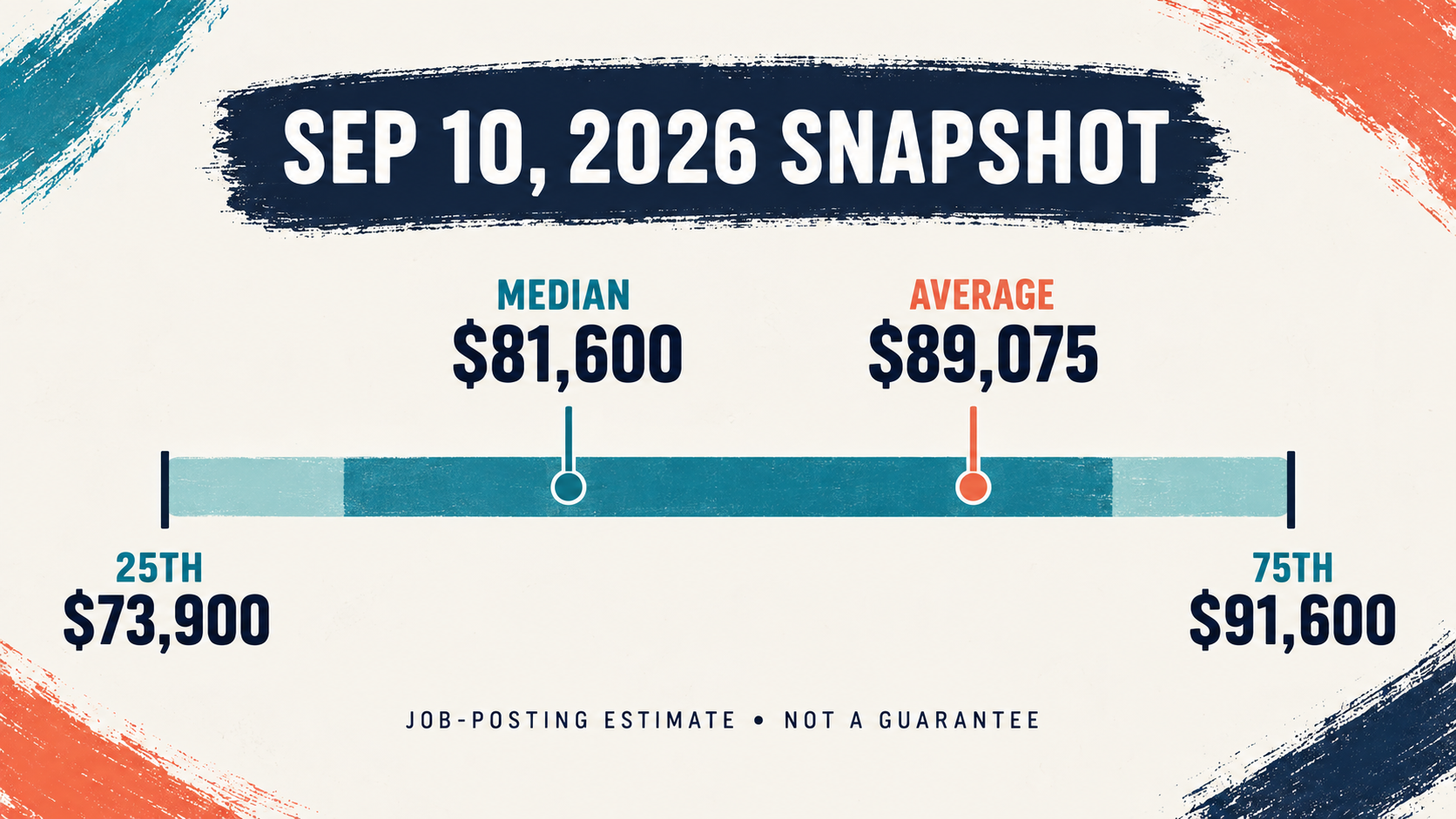
As a dated U.S. job-posting snapshot, ZipRecruiter reported an average annual pay of $89,075 for a “BCBA Behavior Analyst” on September 10, 2026. The same page reported a median of about $81,600, a 25th percentile of about $73,900, and a 75th percentile of about $91,600. These figures are estimates from active job postings, not a guaranteed salary, an official BACB wage, or a promise about what a newly certified BCBA will earn.
In This Guide
Average Pay for BCBA: The Current Snapshot
The figures above are best read as a range, not as a single answer to “What will I make?” In the ZipRecruiter snapshot, the median is lower than the average, which suggests that a smaller group of higher-paying postings can pull the average upward. The middle of the reported range is more useful for a first comparison than the headline average alone.
| Figure | Reported amount | How to use it |
|---|---|---|
| Average annual pay | $89,075 | A headline job-posting estimate; useful for orientation, not a personal offer. |
| Median | About $81,600 | A middle-point benchmark that can be less affected by unusually high postings. |
| 25th to 75th percentile | About $73,900 to $91,600 | A central range for comparing a posting before examining location and role details. |
Refresh the source before using the figures for a job decision. Salary pages update at different times, and a later snapshot may be higher or lower. The purpose of publishing the date is to make the number auditable rather than pretending it is timeless.
Why Salary Sources Disagree
One salary page may count job postings, another may use self-reported compensation, and another may group BCBAs with broader behavior-analysis or counseling occupations. Those are not interchangeable data sets. A precise-looking number can still be a weak comparison if the underlying population is different.
- Job title: “BCBA,” “behavior analyst,” clinical director, consultant, and school-based analyst can describe different work and pay structures.
- Data source: Job-posting estimates, employer surveys, self-reported salaries, and government occupational data answer different questions.
- Time: A 2024 or 2025 estimate may not describe a 2026 offer, especially in a changing labor market.
- Geography: National averages hide state licensing rules, cost of living, payer mix, and local demand.
- Work model: A salaried employee, hourly clinician, contractor, and private-practice owner may have very different gross and take-home figures.
The BACB employment-demand report is useful for understanding demand for people with BCBA or BCBA-D certification, but it is not a personal pay calculator. Keep demand data and compensation data in separate columns when researching a career decision.
What Actually Changes BCBA Pay
Four factors explain why two people with the same credential can receive very different offers: experience, setting, location, and the total package. The first number you see is only the beginning of the comparison.
- Experience and responsibility: A new clinician, a case supervisor, a lead BCBA, and a director may carry different caseloads, staff-training expectations, and risk-management duties.
- Setting: Clinic, home-based, school, hospital, telehealth, consulting, and private practice can use different productivity models and schedules.
- Location: Cost of living, local competition, state rules, travel time, and demand can move offers in either direction.
- Billable expectations: A high annual number may come with a demanding billable target, unpaid administrative time, or travel that changes the effective hourly rate.
- Specialized work: Leadership, assessment expertise, clinical supervision, organizational behavior management, or a difficult-to-staff setting may change the market value of the role.
- Employer structure: Large agencies, school districts, hospitals, universities, and small practices may package salary, supervision, support, and benefits differently.
Do not assume that a higher salary is automatically the better job. A role with lower base pay but realistic caseloads, paid documentation time, strong supervision, and useful benefits may produce a better professional and financial result than a higher number tied to unsustainable expectations.
Use the number as a starting point, not a verdict: A salary estimate becomes more useful when you translate it into the work you would actually perform. Ask whether the position is primarily direct clinical service, supervision, assessment, parent training, school consultation, or a blended role. The title “BCBA” can describe very different weeks. One employer may pay for meetings and documentation inside a predictable schedule, while another may expect those tasks to happen after a full clinical day.
It is also worth separating the advertised range from the amount that is realistically attainable. A bonus, productivity payment, or higher end of a range may depend on billable hours, completed authorizations, travel, or a caseload that takes months to build. Record the guaranteed base, the conditions attached to variable pay, and the date when benefits begin. This makes the comparison more honest and gives you specific questions to ask before accepting an offer.
Salary Versus the Total Compensation Package
Compare the whole offer in writing. Base salary is only one line. A reasonable worksheet should separate:
- base salary or hourly rate;
- expected billable and nonbillable hours;
- bonus rules and whether the bonus is guaranteed;
- health, dental, vision, retirement, and paid leave;
- paid supervision, training, meetings, and documentation time;
- travel reimbursement, mileage, and geographic coverage;
- caseload size, cancellation policy, and productivity expectations;
- continuing-education support and exam-preparation benefits;
- clinical support, administrative support, and advancement path.
For an hourly role, estimate expected annual income from realistic paid hours rather than multiplying the highest possible rate by 2,080. For a salaried role, ask what hours, travel, after-hours communication, and documentation the employer expects. The effective value of an offer depends on how the work is actually structured.
How to Compare a Real BCBA Offer
Use this sequence when an employer presents a number:
- Ask whether the quoted amount is base pay, total compensation, or a target that includes a bonus.
- Ask how productivity is measured and how cancellations, assessments, parent training, supervision, and documentation are counted.
- Ask how many clients, technicians, or cases the role typically carries.
- Ask which hours are paid and which tasks are expected outside direct service.
- Ask how raises, promotions, and clinical leadership responsibilities are determined.
- Compare benefits and unpaid time instead of comparing salary headlines alone.
- Check the offer against several current local postings, not one national average.
Write down the answers. Two offers that both say “$90,000” can have very different schedules, travel, clinical support, and take-home value. The more transparent the employer is about the work model, the more useful the salary number becomes.
How Certification Connects to Earning Potential
Certification is not a salary guarantee, but it can change which roles a professional is eligible to pursue. A BCBA credential may be relevant to clinical supervision, assessment, program design, staff training, school services, consulting, or leadership roles. The return on the investment depends on tuition, supervised experience, examination preparation, time away from paid work, local opportunities, and the actual offer available after certification.
Use demand reports and local postings to test the opportunity in your market. Then compare the cost and timeline of the certification route with realistic offers, not the highest number on a salary page. If your goal is to sit for the BCBA exam, the exam itself is one part of a larger professional plan that includes coursework, fieldwork, competence, supervision, and ongoing ethical practice.
What This Means for BCBA Exam Planning

A salary search can be a useful motivation check, but it should not replace an exam plan. The current BACB resource index and credential handbook should control eligibility and exam requirements. Salary sites cannot tell you whether your coursework, fieldwork, or supervision meets BACB rules.
If certification is your next step, organize the decision into three separate questions: what the current BACB requirements are, what preparation you need to pass the exam, and what local roles and offers look like after certification. For the exam-preparation part, use the free BCBA mock exam to practice measurement, ethics, assessment, and intervention scenarios. Keep the career decision grounded in current offers and your own priorities.
Average Pay for BCBA FAQ
What is the average pay for BCBA professionals in the United States?: One current ZipRecruiter snapshot checked on September 10, 2026 reported an average annual estimate of $89,075 for BCBA Behavior Analyst job postings. Treat it as a dated market estimate, not a guaranteed salary or official BACB wage.
Why is the median lower than the average?: A smaller number of higher-paying postings can pull an average upward. The median is the middle point of the reported distribution, so it can be a more useful first comparison when the range is wide. Does becoming a BCBA guarantee higher pay?: No. Certification can expand role eligibility, but pay depends on setting, location, experience, employer, productivity expectations, and benefits. The credential does not guarantee a particular income.
Should I use the BLS number as the BCBA salary?: Only if you clearly identify the broader occupation and do not present it as a BCBA-specific wage. Different data sets measure different populations. Label the source and compare like with like.
What should I compare besides salary?: Compare billable expectations, caseload, paid documentation and supervision time, benefits, travel, cancellation rules, advancement, and support. The total package and work model often matter as much as the headline number. For targeted review, use our average pay for bcba practice questions to apply the concept in exam-style scenarios.
Take the Free BCBA Mock Exam
If you want a low-pressure way to check your recall, use the free practice resource below. Take the Free BCBA Mock Exam



