
Understanding positive punishment is crucial for any behavior analyst preparing for certification. This behavioral principle often causes confusion due to its technical definition differing from everyday language. In applied behavior analysis, positive punishment refers to a specific type of consequence that decreases future behavior.
Table of Contents
- Positive Punishment ABA: Defining Positive Punishment in ABA
- Analyzing Positive Punishment Through ABA Examples
- Positive Punishment and the BCBA Exam
- Ethical Application and Procedural Checklist
- Summary and Key Takeaways
- References
Positive Punishment ABA: Defining Positive Punishment in ABA
The term combines two essential components: ‘positive’ meaning addition, and ‘punishment’ meaning a decrease in behavior. Together, they describe a procedure where a stimulus is added following a behavior, resulting in that behavior becoming less likely to occur in the future.
The Technical Definition: Adding a Stimulus to Decrease Behavior
In behavior analysis, positive punishment occurs when a stimulus is presented contingent upon a behavior, and that presentation results in a reduction of the behavior’s future frequency. The ‘positive’ component refers specifically to the addition of a stimulus, not to any value judgment about whether the procedure is good or bad.
This definition hinges on the functional relationship between the behavior and its consequence. The stimulus only qualifies as a punisher if it actually decreases the behavior it follows. This is measured through careful data collection and analysis.
Positive Punishment vs. Common Misconceptions
Many people mistakenly believe ‘positive’ means pleasant or desirable. In behavioral terminology, it simply means something is added. The procedure might involve adding something aversive, but the label describes the operation, not the ethical evaluation.
Another common confusion involves distinguishing positive punishment from negative reinforcement. While both may involve aversive stimuli, negative reinforcement increases behavior by removing something, whereas positive punishment decreases behavior by adding something. Understanding this distinction is critical for accurate behavioral assessment.
Analyzing Positive Punishment Through ABA Examples
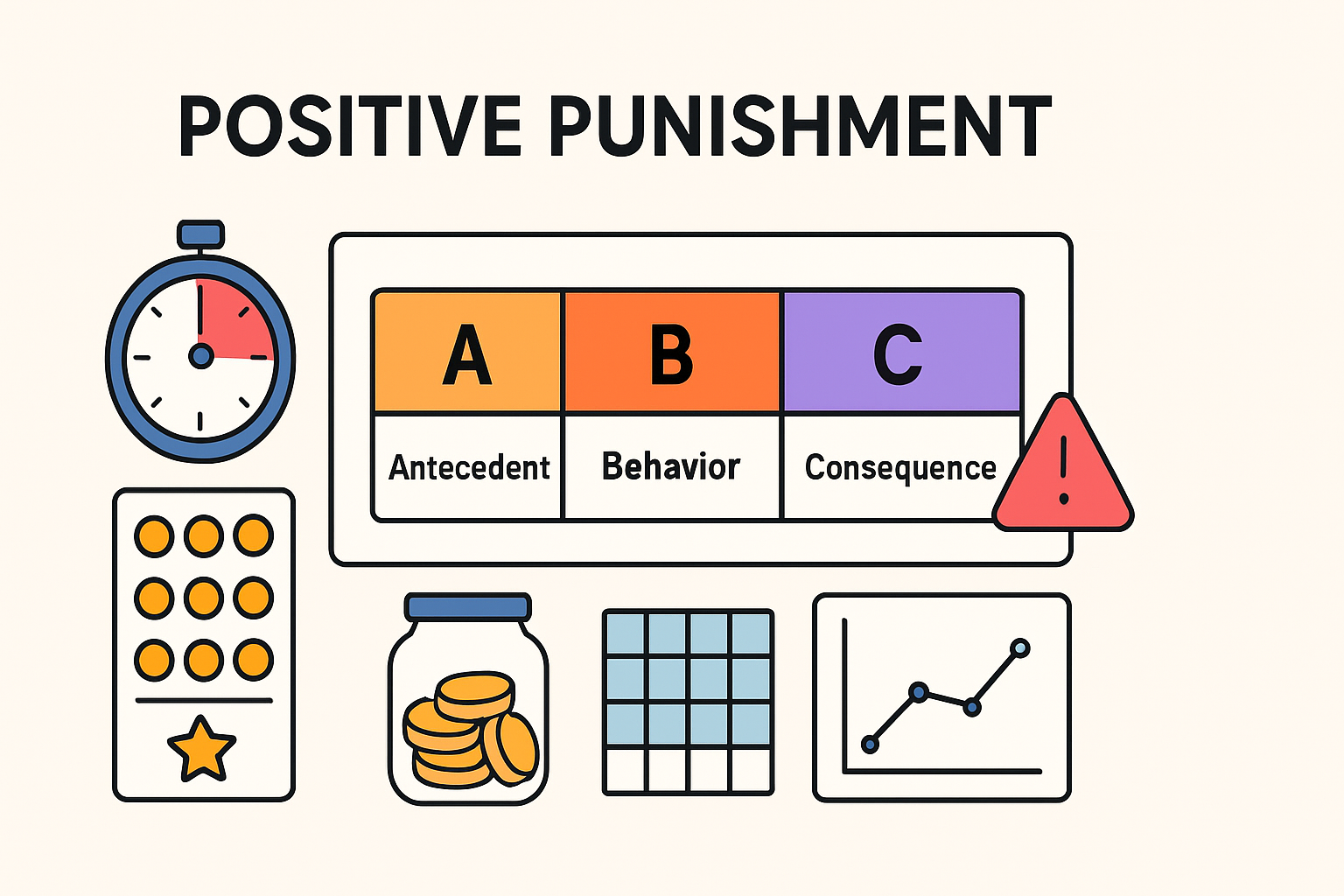
Concrete examples help solidify understanding of this principle. Let’s examine several scenarios using the ABC framework (Antecedent-Behavior-Consequence) to analyze how positive punishment operates in practice.
Example 1: The Overcorrection Procedure
Consider a student who tears a worksheet during a difficult academic task. The behavior is worksheet destruction. The consequence implemented is requiring the student to not only clean their own desk but also clean five other desks in the classroom.
This overcorrection procedure adds the stimulus of additional cleaning work. If this consequence successfully reduces future worksheet tearing, it functions as positive punishment. The hypothesized behavioral function here is likely escape from task demands.
Example 2: Reprimand Following Aggression
During a toy dispute, a child hits a peer. The therapist immediately delivers a firm, specific verbal reprimand: ‘No hitting. Hands down.’ The reprimand is added contingent on the hitting behavior.
If the frequency of hitting decreases following consistent application of this consequence, the reprimand serves as a positive punisher. The function might be access to tangible items (the toy). However, it’s essential to verify through data analysis whether the reprimand actually functions as punishment or potentially reinforces the behavior through attention.
Example 3: Response Cost vs. Positive Punishment
Distinguishing between response cost (a form of negative punishment) and positive punishment is crucial. Response cost involves removing a preferred stimulus, like taking away token points following inappropriate behavior.
In contrast, positive punishment adds a stimulus, such as assigning extra chores following non-compliance. This distinction matters greatly for both intervention planning and exam success. For more on this distinction, see our guide on positive vs negative punishment.
Positive Punishment and the BCBA Exam
Exam questions often test your ability to identify behavioral principles in action. Positive punishment appears frequently, and several common traps await unprepared candidates.
Common Exam Traps and Distractor Items
Several patterns emerge in exam questions about positive punishment:
- Confusing positive punishment with negative reinforcement – both may involve aversive stimuli but have opposite effects on behavior
- Misidentifying response cost procedures as positive punishment when they actually involve stimulus removal
- Selecting interventions that add stimuli but lack evidence of decreasing behavior in the scenario
- Overlooking the requirement that punishment must demonstrate a measurable reduction in behavior frequency
Key Considerations for Exam Scenarios
When analyzing exam scenarios, follow this systematic approach:
- First, identify the target behavior that occurred
- Determine what stimulus was added immediately following the behavior
- Check whether the scenario indicates the behavior’s future likelihood decreased
- Remember that ethical approval is a separate consideration from behavioral principle identification
For comprehensive exam preparation strategies, explore our BCBA exam study framework.
Ethical Application and Procedural Checklist
The BACB Ethics Code provides specific guidance on punishment procedures. Section 4.08 outlines considerations that must precede implementation of any punishment-based intervention.
Ethical Imperatives from the BACB Code
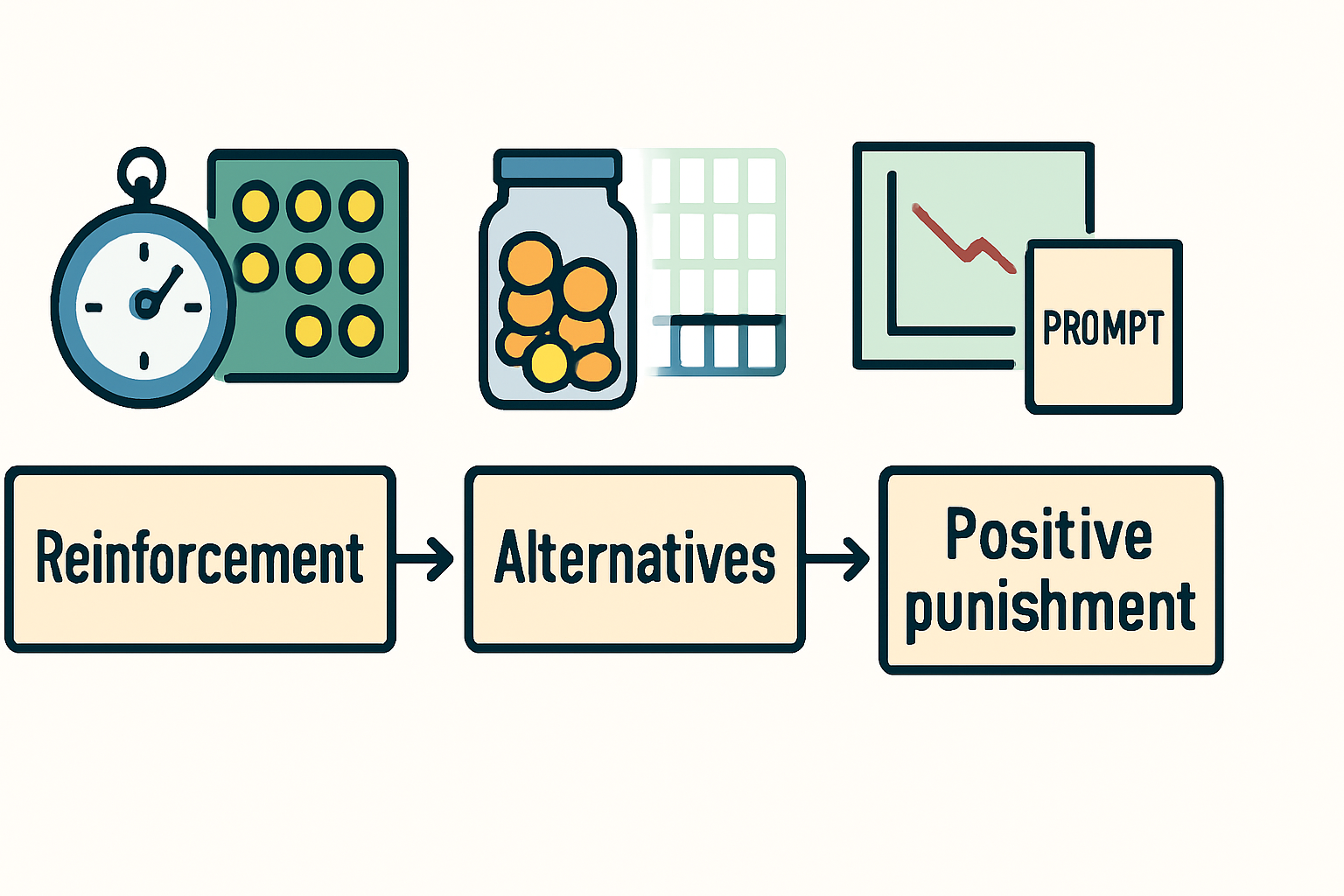
Behavior analysts must exhaust reinforcement-based alternatives before considering punishment procedures. When punishment is necessary, it requires oversight, informed consent, and safeguards against potential side effects.
The code emphasizes that punishment should only be used when reinforcement procedures have proven insufficient and when the behavior poses significant risk. Practitioners must also implement plans to reinforce alternative appropriate behaviors simultaneously.
Pre-Implementation Checklist for Practitioners
Before implementing any positive punishment procedure, complete this essential checklist:
- Have reinforcement-based alternatives been systematically tried and documented?
- Is informed consent obtained from all relevant parties, including the client when appropriate?
- Does the intervention plan include reinforcement of alternative replacement behaviors?
- Are procedures in place to monitor and minimize potential side effects?
- Is there adequate oversight and a detailed data collection plan to measure effectiveness?
- Does the intervention include a plan for fading the punishment procedure over time?
For more on ethical considerations in behavior analysis, review our ethics guide.
Summary and Key Takeaways
Positive punishment remains a technically precise concept in applied behavior analysis. Remember that ‘positive’ refers to stimulus addition, while ‘punishment’ indicates behavior reduction. Successful application requires careful measurement through data analysis to verify the functional relationship.
For exam success, focus on identifying the three critical components: behavior occurrence, stimulus addition, and subsequent behavior decrease. Always consider ethical implications separately from behavioral principle identification. When studying related concepts, explore our resources on negative reinforcement and negative punishment to build comprehensive understanding.
Mastering positive punishment requires both conceptual understanding and practical application skills. Through careful study of definitions, analysis of examples, and consideration of ethical guidelines, you can develop the proficiency needed for both exam success and ethical practice.
References
Complete BCBA Exam Prep
Turn this topic into exam-day practice
Practice concepts in context with five full-length 6th Edition mock exams, two bonus practice exams, a 6th Edition study guide, and key-term flashcards—all in one $120 USD package.
Get the $120 All-in-One Prep Pack
Review everything included on the product page before ordering. No pass guarantee is implied.



