
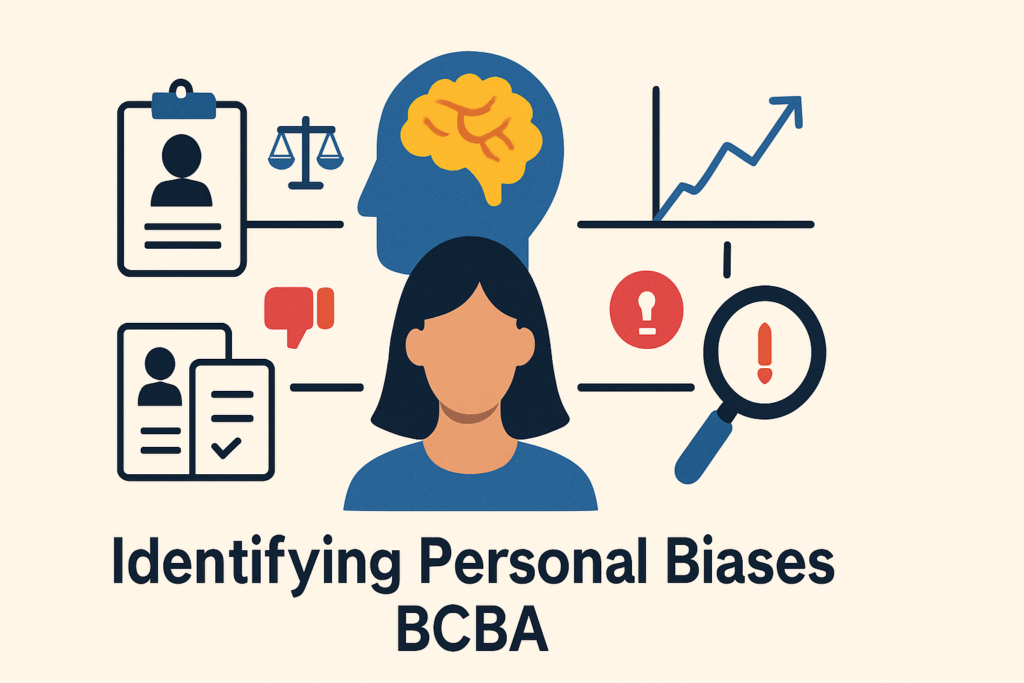
Identifying Personal Biases BCBA: What Are Personal Biases in ABA?
Personal biases in applied behavior analysis refer to systematic patterns of deviation from rational judgment that can influence a practitioner’s decisions. These biases operate outside conscious awareness and can compromise the objectivity required for effective ABA practice.
Table of Contents
- Identifying Personal Biases BCBA: What Are Personal Biases in ABA?
- Identifying Biases in Practice: Three ABA Examples
- Why This Matters on the BCBA Exam
- Your Personal Bias Identification Checklist
- Key Takeaways for Domain E Mastery
The BACB Ethics Code addresses this critical issue directly, making it a core component of Domain E.
The BACB Ethics Code and Domain E
Ethics Code items 1.06 and 4.07 specifically require BCBAs to identify and address personal biases. This isn’t about eliminating all preferences but developing self-awareness to prevent bias from affecting client welfare.
Domain E emphasizes that ethical practice requires recognizing how our own cognitive shortcuts might influence assessment, intervention selection, and supervision decisions.
Identifying Biases in Practice: Three ABA Examples
Understanding biases requires concrete examples. Here are three common scenarios where personal biases might influence BCBA practice.
Example 1: Confirmation Bias in Functional Assessment
A BCBA assumes a child’s aggression is automatically attention-seeking based on past cases, overlooking escape data. The ABC analysis reveals:
- Antecedent: Previous successful attention-based interventions
- Behavior: Selective attention to attention-seeking data points
- Consequence: Avoidance of cognitive dissonance from changing hypotheses
The function of the BCBA’s behavior is negative reinforcement through avoiding the discomfort of revising established beliefs.
Example 2: Affinity Bias in Supervision
A supervisor gives more positive feedback to a supervisee who shares their theoretical background. This affinity bias creates:
- Differential reinforcement for in-group members
- Potential discrimination against supervisees with different approaches
- Compromised objective evaluation of competency
The similarity serves as an establishing operation that increases the value of positive feedback for similar supervisees.
Example 3: Halo Effect in Program Design
A BCBA overestimates a client’s progress in social skills because the client excels academically. This represents faulty stimulus generalization where success in one domain influences perception in unrelated areas.
The bias leads to:
- Inaccurate data interpretation
- Premature advancement in programming
- Potential treatment integrity issues
Why This Matters on the BCBA Exam
Domain E questions test your ability to recognize ethical dilemmas involving personal biases. Exam questions often present subtle scenarios where bias influences decision-making.
Common Exam Traps and Question Formats
Candidates frequently stumble on these patterns:
- Selecting interventions based on personal preference rather than evidence
- Failing to seek consultation when bias is identified
- Misapplying ‘cultural responsiveness’ as justification for not addressing bias
- Overlooking how biases affect data collection and interpretation
Questions typically follow ‘what should the BCBA do?’ format, requiring you to identify the most ethical response that addresses the bias while maintaining professional competence.
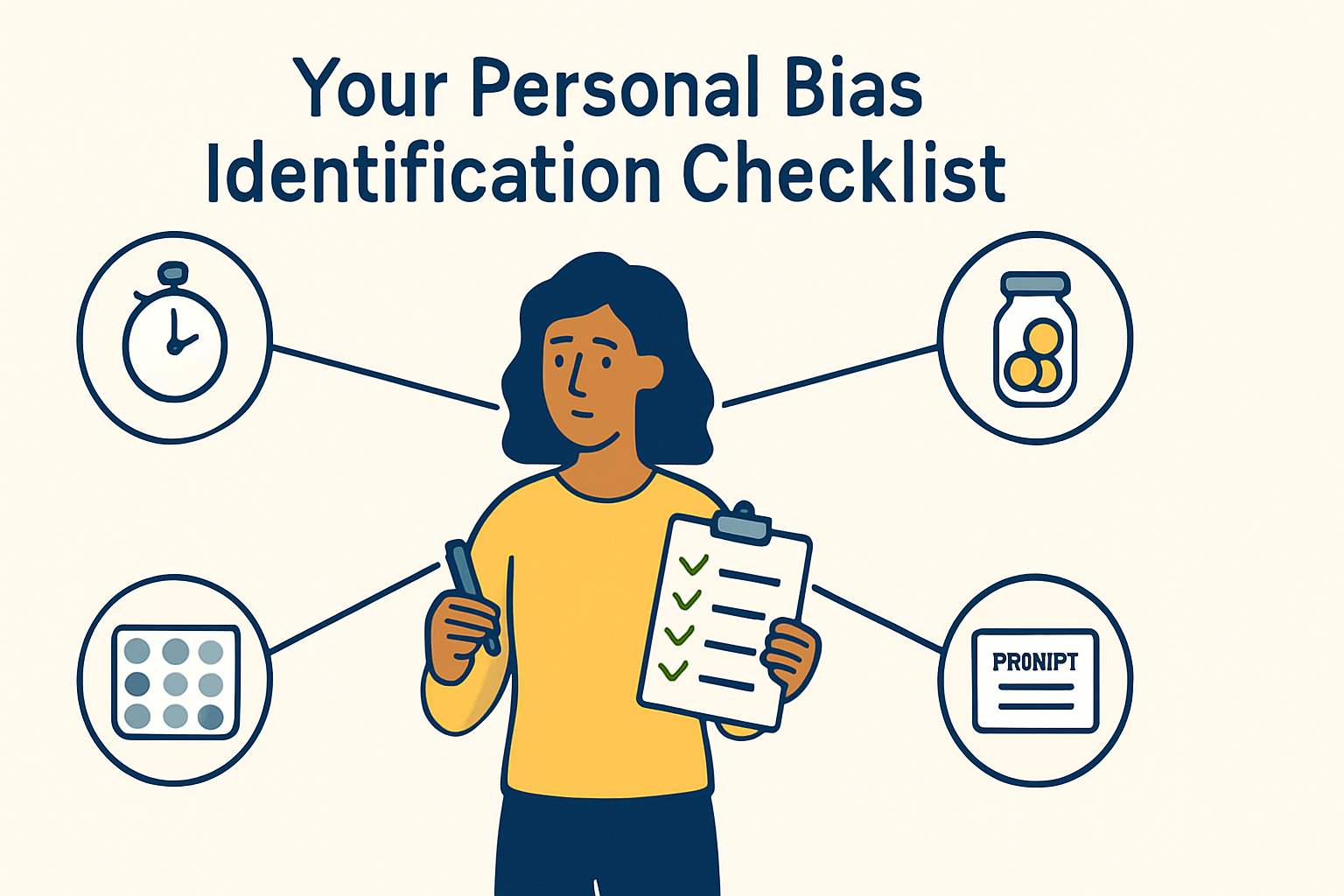
Your Personal Bias Identification Checklist
Use this practical tool for self-assessment and exam preparation. Apply it to case scenarios and your own practice.
- Monitor decision patterns across different client demographics
- Regularly review data collection methods for consistency
- Seek peer feedback on assessment and intervention choices
- Document rationale for all clinical decisions
- Examine whether personal values influence goal selection
- Check for confirmation bias in functional assessment data
- Evaluate supervision practices for differential treatment
- Consider cultural humility in all client interactions
This checklist aligns with BCBA ethics guidelines and helps maintain professional objectivity.
Key Takeaways for Domain E Mastery
Success in Domain E requires more than memorizing ethics codes. You must demonstrate practical application of bias identification principles.
- Personal biases are systematic deviations from objective judgment
- The BACB Ethics Code requires active identification and mitigation
- Common biases include confirmation, affinity, and halo effects
- Exam questions test application through scenario analysis
- Regular self-assessment is essential for ethical practice
- Consultation and peer review help mitigate bias effects
For more on ethical decision-making frameworks, review the BACB Ethics Code directly and consider how the seven dimensions of ABA intersect with ethical practice.
Next step for BCBA exam prep
Turn this topic into exam-day practice
Use this topic as a focused review, then test it in exam-style conditions with a free mock before deciding whether five full-length mocks are the right next step.
Start the Free BCBA Mock ExamContinue with Five Full-Length Mocks — $99
Review the included materials and access details before ordering. No pass guarantee is implied.



