
If you searched for free bcba certification, you may be looking for a free training route, a scholarship, employer reimbursement, or simply a way to avoid paying for study materials. Those are different cost questions. The BCBA credential itself is issued by the Behavior Analyst Certification Board (BACB) after an applicant meets the applicable requirements, submits an application, and passes the certification examination.
Table of Contents
- Is Free BCBA Certification Actually Possible?
- Which Cost Layers Should You Separate?
- What Does the BACB Currently Charge?
- Which Requirements Can Still Cost Money?
- What Aid or Reimbursement Should You Investigate?
- How Do You Build a Low-Cost Plan?
- How Does the 2027 Transition Affect the Budget?
- What Free-Certification Mistakes Should You Avoid?
- Free BCBA Certification FAQ
- What Should You Do Before Spending?
- Take the Free BCBA Mock Exam
The practical answer is that a candidate may reduce or transfer some costs, but a “free BCBA certification” claim needs careful reading. The current BCBA Handbook lists BACB application and examination fees, while the BACB also identifies possible reimbursement such as the GI Bill for qualifying veterans. Tuition, transcripts, supervised fieldwork, background checks, state licensure, travel, and preparation resources can add separate costs.
This guide separates the cost layers so you can build a realistic low-cost plan without confusing a free mock exam, free content, financial aid, employer support, or an official BCBA certification. The goal is an honest budget that names the payer for every required step before you commit time or money. Table of Contents
Is Free BCBA Certification Actually Possible?
It is possible for an individual’s out-of-pocket cost to be reduced substantially, and in some situations an employer, scholarship, grant, or benefit may cover specific expenses. That is not the same as the BACB offering a universally free BCBA certification. The current BCBA Handbook identifies a certification application fee and an examination appointment fee, and the BACB requires applicants to meet the eligibility requirements before the exam stage. Use a three-part test whenever you see “free” in a program advertisement. Treat the word as a question about scope and funding, not as evidence that the program can award the credential:
- What exactly is free: information, a course, an application, an exam attempt, or the entire pathway?
- Who pays the costs that remain: the candidate, an employer, a university, a grant, or a benefit program?
- Which official source confirms that the free or reimbursed item satisfies the current requirement?
If the offer cannot answer those questions, treat it as a marketing claim rather than a certification plan. A credible plan should let you identify the official rule, the remaining out-of-pocket amount, and the person or organization responsible for the next document.
Which Cost Layers Should You Separate?
BCBA certification is a pathway, not one purchase. The largest cost may be graduate education or qualifying coursework, but the credentialing process can also involve official transcripts, supervised fieldwork arrangements, supervision training, application fees, the exam appointment, retake fees, study materials, and time away from work. A state may then require a separate license or certificate fee after national certification.
Some candidates already have a qualifying degree and only need to finish coursework or fieldwork. Others are comparing complete graduate programs. The word “free” has a very different meaning in those two situations. Start your budget with the requirements you still lack, not with the most attractive headline.
What Does the BACB Currently Charge?
The fees below are the amounts shown in the BACB Handbook updated June 2026. They are a planning snapshot, not a permanent price promise, so reopen the live handbook before you pay. Keep the date of your check beside the estimate because a later retake or policy update can change the total:
| Item | Current handbook amount | Budget note |
|---|---|---|
| Certification application | $245 | Paid to the BACB and listed as nonrefundable and nontransferable. |
| Examination appointment | $125 | Paid to Pearson VUE after the application is approved. |
| Examination retake application | $140 | A failed attempt can create a new retake application and appointment cost. |
| Preliminary coursework evaluation | $100 optional | Use only if the current handbook says the evaluation fits your situation. |
The BACB’s examination information page also lists appointment cancellation and rescheduling rules. Plan dates carefully; “free study materials” do not protect a candidate from a missed appointment or a retake fee. Put the appointment deadline and cancellation window on the same calendar as your study milestones.
Which Requirements Can Still Cost Money?
The official fees are only one layer. The current handbook describes degree, behavior-analytic coursework, supervised fieldwork, application, examination, and maintenance requirements. Each can carry a cost depending on your situation, even when the BACB fee itself is covered by another payer.
For example, a university program may charge tuition and technology fees. A coursework-only route may still require transcripts and an eligible program contact. Fieldwork can involve supervision fees, travel, work-hour changes, or documentation time. A graduate may need a background check or a state license after earning the BCBA. None of those costs is automatically included in the BACB application fee.
- Education: degree tuition, coursework, books, technology, and transcript requests.
- Fieldwork: supervision arrangement, transportation, documentation, and time allocation.
- Credentialing: application, examination appointment, retake, and optional evaluation fees.
- Practice: state licensure or certification, continuing education, insurance, and renewal costs.
Write “already covered,” “employer covered,” “aid requested,” or “candidate pays” beside each line. That small classification is more useful than a single promise that the entire BCBA path is free.
What Aid or Reimbursement Should You Investigate?
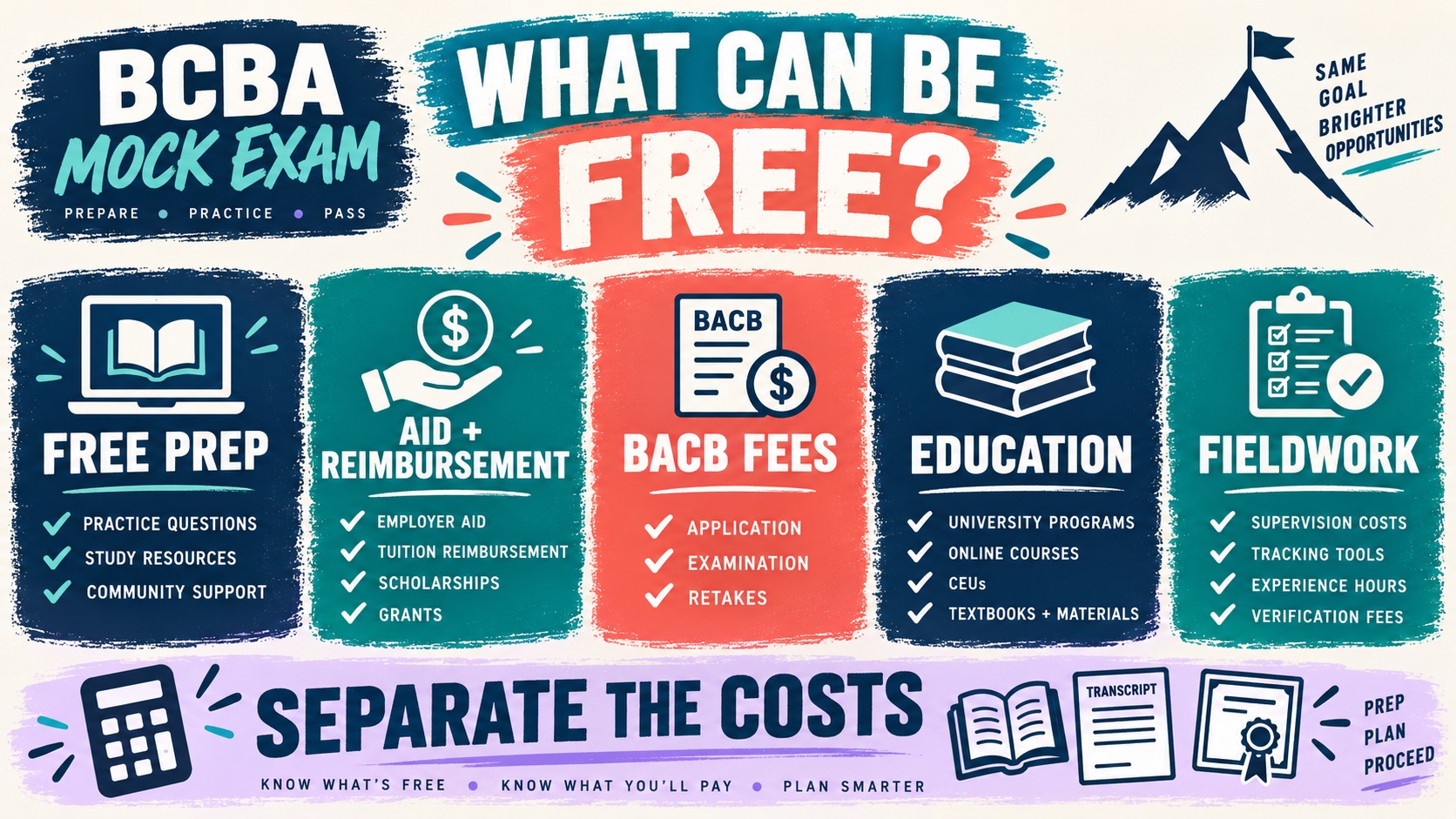
Start with the funding sources that can be verified in writing. Ask a university about scholarships, assistantships, payment plans, and employer partnerships. Ask an employer whether it reimburses coursework, supervision, application fees, exam fees, or preparation resources, and whether reimbursement depends on a service commitment. Keep the written terms before you assume a benefit is available.
The BACB Handbook notes that veterans who qualify for the GI Bill may receive reimbursement for BACB certification examination fees from the Department of Veterans Affairs, whether or not they pass the exam. Check the current VA benefit rules and eligibility rather than treating the note as an automatic award. Other candidates may have workforce-development or employer benefits that cover training but not BACB fees.
Free educational content can still be useful. The BACB provides public handbooks, examination information, and other resources, while independent providers may offer videos, study guides, or practice questions at no charge. Free content supports preparation; it does not replace a qualifying degree, supervised fieldwork, application, or examination.
How Do You Build a Low-Cost Plan?
Build the budget in the order the pathway uses the requirement. First identify your eligibility route and the documents you already possess. Then estimate the cost of finishing education and fieldwork. Only after that should you decide how much to spend on practice materials and when to submit the application. A simple low-cost plan can include these steps:
- Open the current BCBA Handbook and mark the requirements you have already completed.
- Request a written tuition, supervision, transcript, and examination-fee estimate.
- Apply for university, employer, veteran, or workforce support before paying out of pocket.
- Use free official resources and controlled practice to identify weak domains before buying a larger package.
- Keep a reserve for application timing, a retake, state licensing, or a document request.
Do not optimize only for the lowest sticker price. A cheap route that leaves a document gap or creates a failed attempt may cost more than a supported plan with clear deadlines.
How Does the 2027 Transition Affect the Budget?
The BACB’s 2027 requirements guidance and upcoming changes page describe significant changes taking effect January 1, 2027. The current handbook also explains that the pathway and application timing determine which requirements apply. That makes source dates part of the budget record rather than a minor editorial detail.
That makes timing a financial issue. An applicant who is trying to be reviewed under the current requirements must pay attention to the BACB’s complete-application deadline and document rules. An applicant who falls under the 2027 requirements may need a different coursework or fieldwork plan. Do not spend money on a program because a page says “2027 ready” without checking the current BACB source and asking the program how it documents eligibility.
What Free-Certification Mistakes Should You Avoid?
Low-cost planning becomes risky when a candidate treats a marketing label as a credential guarantee. Keep these checks visible whenever a course, employer, or advertisement promises a free route:
- Do not confuse a free mock exam or free course with a BCBA certification.
- Do not assume an employer reimbursement promise covers tuition, BACB fees, retakes, and state licensing equally.
- Do not pay an application fee before confirming the current pathway and required documents.
- Do not use an old fee table after the handbook or BACB application page has changed.
- Do not treat a scholarship advertisement as approved financial aid until the terms are written.
- Do not assume passing the national exam eliminates state licensure costs where a state license is required.
Free BCBA Certification FAQ
Can I become a BCBA without paying anything?: Some candidates may have tuition and exam costs covered by an employer, scholarship, veteran benefit, or other funding source. That is different from the BACB offering a universally free certification. Confirm who pays each required layer and whether the benefit has conditions, deadlines, service commitments, or repayment rules.
Are the BACB application and exam fees free?: The June 2026 BCBA Handbook lists a $245 certification application fee and a $125 examination appointment fee, with a separate retake application fee shown for repeat attempts. Recheck the current handbook before paying because fees and policies can change.
Is a free BCBA mock exam enough to prepare?: A free mock exam can help you practice timing and identify weak content areas, but it does not replace eligibility review, training, fieldwork, or the official examination. Use it as one part of a documented study plan, and keep practice results separate from the evidence used to prove eligibility.
What Should You Do Before Spending?
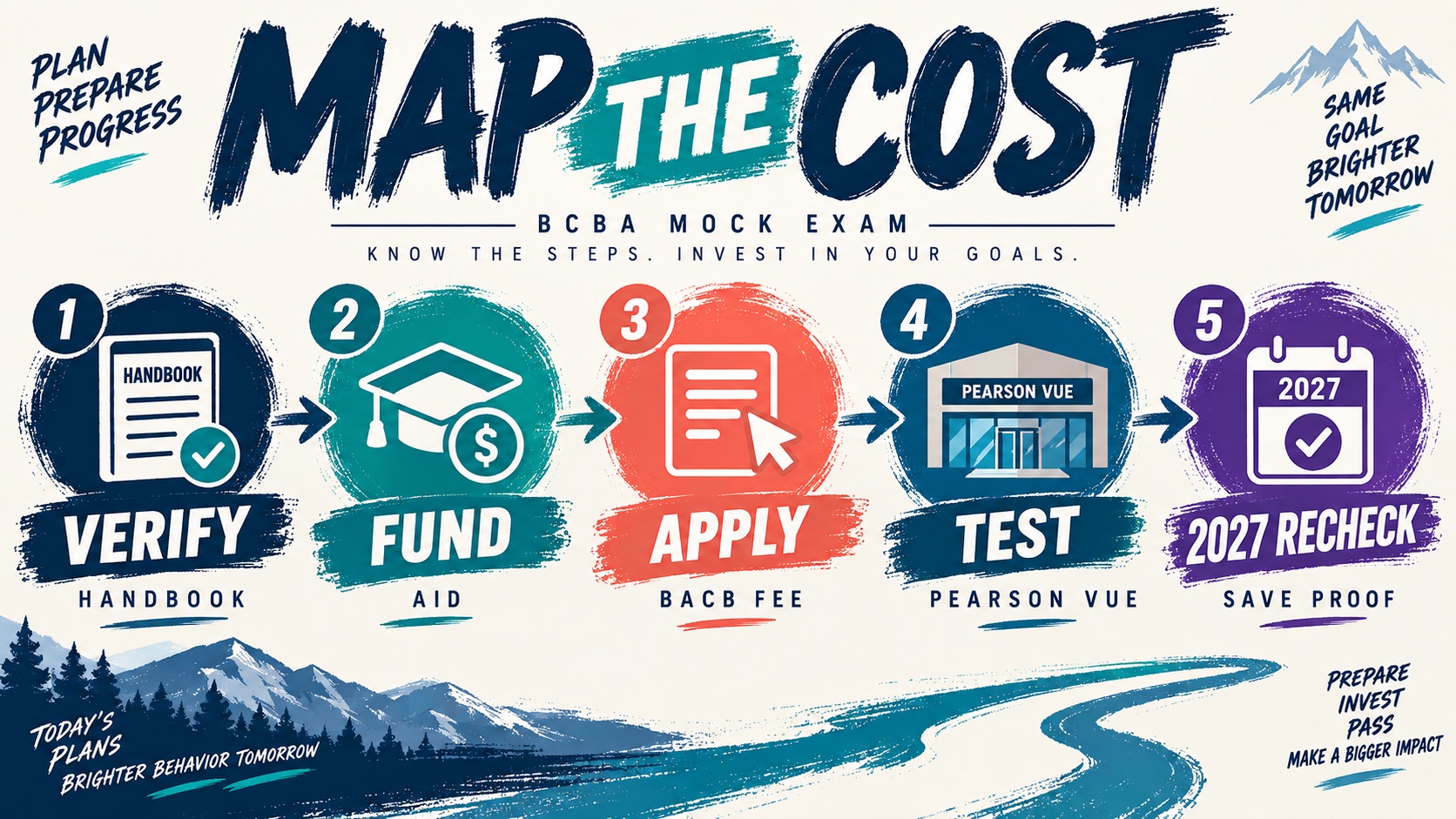
Make a requirement-and-cost sheet with four columns: requirement, evidence, expected cost, and funding source. Date the sheet when you check the handbook. Then choose free resources for discovery and targeted practice, reserving paid spending for a clear gap rather than buying every resource that uses the word “certification.”
When you are ready for a timed practice session, use our free BCBA mock exam practice for free bcba certification study planning. It is independent exam-preparation support, not official BACB certification or a promise of a passing result.
For a final cost check, reopen the current BCBA Handbook, BACB examination information, application-processing page, and any written funding agreement. A realistic low-cost plan is one that explains both what can be free and what still needs a verified payer.
Take the Free BCBA Mock Exam
When you are ready to apply the idea, use the free practice resource below for additional feedback. Take the Free BCBA Mock Exam



