
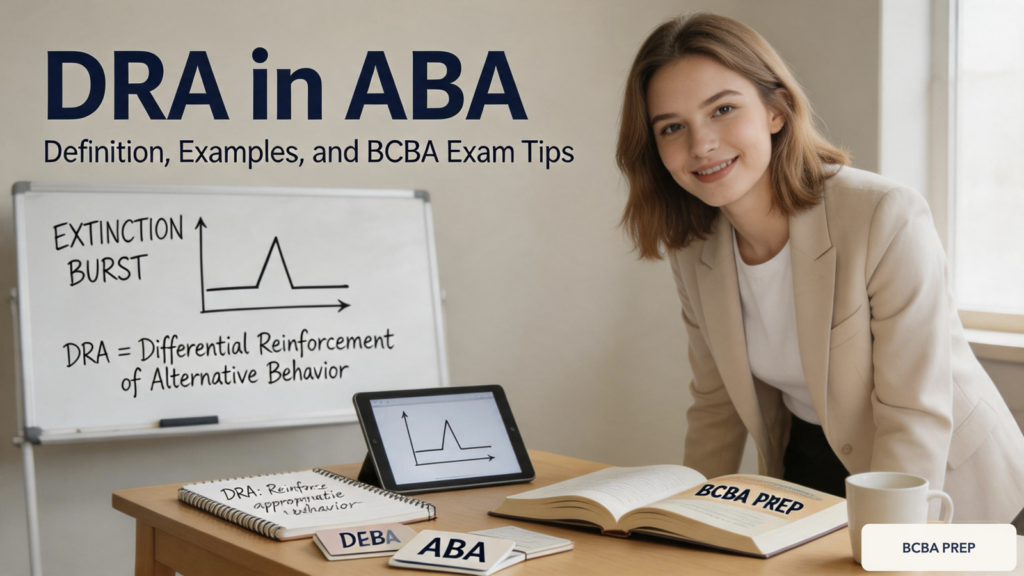
What Is DRA in ABA? A Clear Definition
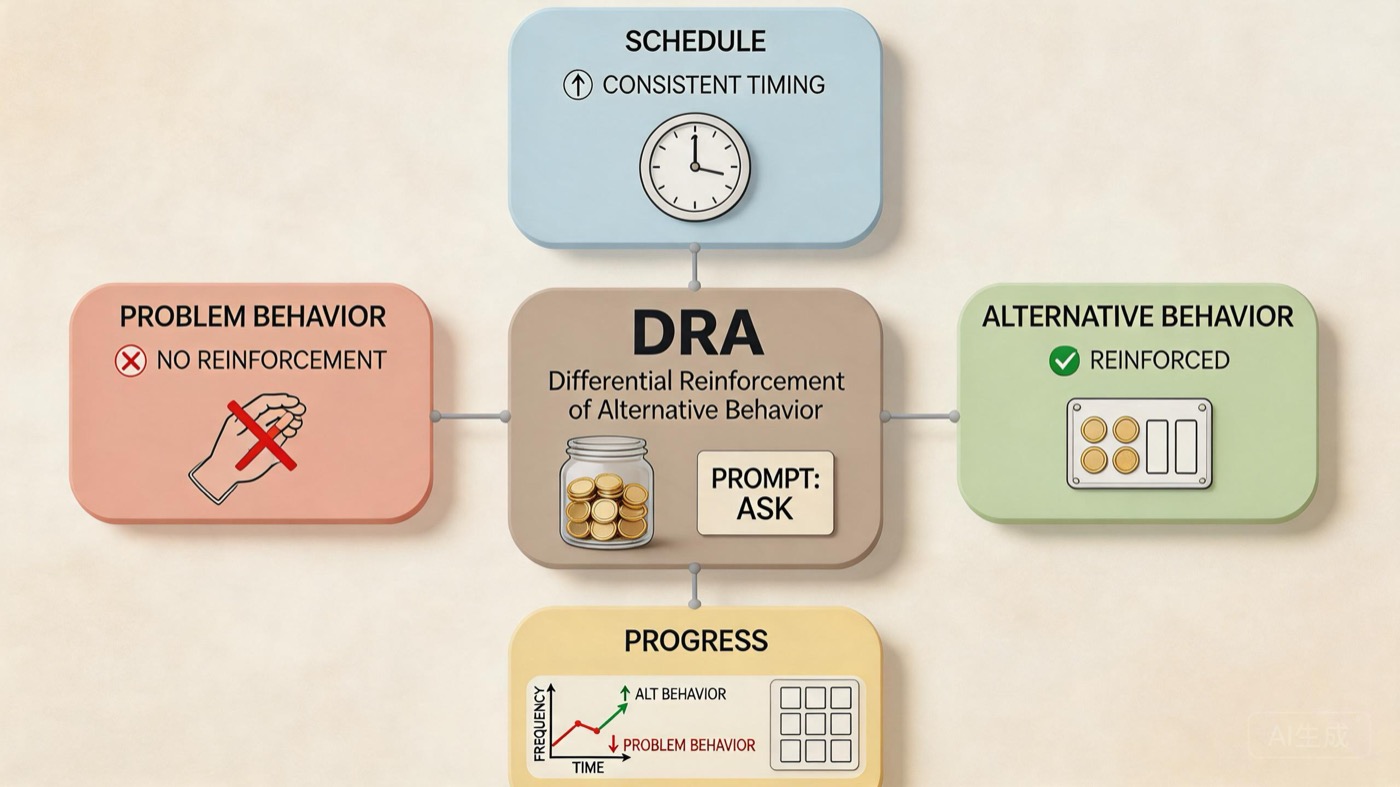
Differential reinforcement of alternative behavior (DRA) is a procedure in which a caregiver reinforces a specific alternative behavior while withholding reinforcement for the problem behavior. This combination of reinforcement and extinction reduces the occurrence of challenging behavior and increases a more appropriate response.
Practice this concept
After reviewing DRA, practice with BCBA differential reinforcement questions and explanations.
Table of Contents
- What Is DRA in ABA? A Clear Definition
- Step-by-Step Implementation: How to Use DRA
- DRA in ABA: Worked Examples with ABC Analysis
- Exam Relevance: Common Traps and How to Avoid Them
- Quick Checklist for DRA Implementation (Study Aid)
- Summary: Key Takeaways for Your BCBA Exam
DRA is one of several differential reinforcement procedures you must know for the BCBA exam. The key is that the alternative behavior is reinforced, and the problem behavior is placed on extinction.
How DRA Differs from DRO, DRI, and DRL
Understanding the differences among these procedures is a common exam question. Use this quick comparison:
- DRA: Reinforces a specific alternative behavior (e.g., asking for a break) while extinguishing problem behavior (e.g., aggression). The alternative does not need to be incompatible.
- DRI: Reinforces a behavior that is physically incompatible with the problem behavior (e.g., keeping hands in pockets instead of hitting).
- DRO: Reinforces the omission of the problem behavior for a set interval (e.g., no screaming for 5 minutes earns a token).
- DRL: Reinforces lower rates of the behavior (e.g., fewer than 5 interruptions per session).
A helpful mnemonic: DRA = Alternative, DRI = Incompatible, DRO = Omission, DRL = Lower rates.
Step-by-Step Implementation: How to Use DRA
Implementing DRA involves four main steps: identify the function of the problem behavior, select a functionally equivalent alternative, arrange reinforcement for the alternative, and implement extinction for the problem behavior.
Selecting an Appropriate Alternative Behavior
The alternative behavior must be functionally equivalent to the problem behavior, meaning it produces the same reinforcer. It should also be easier or equally effortful, already in the learner’s repertoire, and socially acceptable. For example, if a child hits to gain access to a toy, you would teach them to request the toy verbally or with a picture card.
- Conduct a functional behavior assessment (FBA) to determine the maintaining variable.
- Choose an alternative that is more efficient than the problem behavior.
- Ensure the alternative can be easily prompted and reinforced consistently.
- Plan for extinction: ensure problem behavior no longer produces the reinforcer.
DRA in ABA: Worked Examples with ABC Analysis
Applying DRA requires understanding the ABC contingency. Below are three examples with hypothesized functions.
Example 1: Aggression Maintained by Access to Tangibles
Antecedent: The caregiver denies access to a tablet. Behavior: The child hits the caregiver. Consequence: The caregiver gives the tablet. Function: Access to tangibles. DRA: Reinforce the alternative behavior of saying ‘tablet please’ or pointing to a picture of the tablet. The hitting behavior is placed on extinction (no tablet given when hitting occurs).
Example 2: Screaming Maintained by Attention
Antecedent: The caregiver is on the phone. Behavior: The child screams. Consequence: The caregiver hangs up and attends to the child. Function: Attention. DRA: Reinforce raising a hand or saying ‘excuse me’ with immediate brief attention. Screaming is ignored (extinction).
Example 3: Self-Injury Maintained by Escape from Demands
Antecedent: The caregiver presents a math worksheet. Behavior: The child hits their head. Consequence: The caregiver removes the worksheet. Function: Escape. DRA: Reinforce asking for a break (e.g., saying ‘break please’) with a short break from demands. The demand is not removed for head hitting; instead, the demand remains or a brief physical guidance is used to complete the task.
Exam Relevance: Common Traps and How to Avoid Them
BCBA exam questions on DRA often include subtle distinctions. Being aware of common pitfalls can save you points.
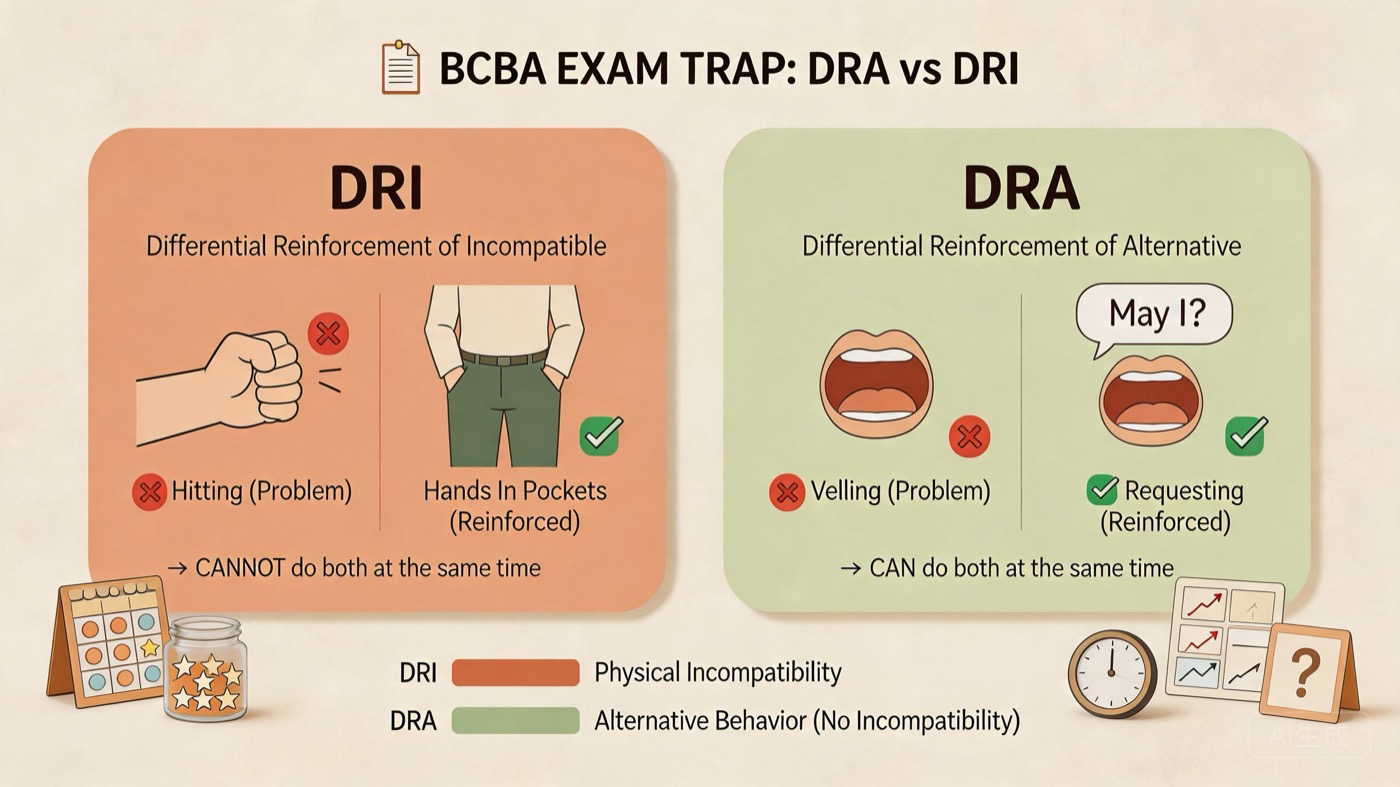
Trap #1: Thinking DRA and DRI Are the Same
The most frequent mistake is confusing DRA and DRI. Remember: DRI requires physical incompatibility (e.g., hands in pockets vs. hitting), while DRA only requires an alternative behavior that produces the same reinforcer. Review our guide on differential reinforcement for more details.
Trap #2: Ignoring Functional Equivalence
DRA only works if the alternative behavior accesses the same reinforcer as the problem behavior. For example, teaching a child to ask for a break (escape function) will not reduce attention-maintained screaming. Always identify the function first.
Trap #3: Inconsistent Extinction
If the problem behavior is occasionally reinforced (e.g., the caregiver sometimes gives in), the intervention will fail. DRA requires consistent extinction of the problem behavior. Plan for extinction bursts and train all caregivers.
Quick Checklist for DRA Implementation (Study Aid)
Use this checklist when reviewing DRA procedures for the exam or practice.
- Identify the function of the problem behavior via FBA.
- Select an alternative behavior that is functionally equivalent and less effortful.
- Arrange powerful reinforcement for the alternative behavior (immediate and consistent).
- Implement extinction for the problem behavior (no access to the reinforcer).
- Monitor data: a decrease in problem behavior and increase in alternative behavior indicate success.
Summary: Key Takeaways for Your BCBA Exam
DRA is a core intervention in ABA that reduces problem behavior by reinforcing a specific alternative behavior while withholding reinforcement for the problem behavior. For the exam, focus on the distinction from DRI, the importance of functional equivalence, and the necessity of consistent extinction. Practice applying DRA with ABC examples, and use the checklist above to solidify your understanding. For more exam prep resources, visit BCBA Exam Prep Guide. Also review the BACB website for official task list updates.



