
What Is a Conditioned Stimulus? A Precise Definition for BCB
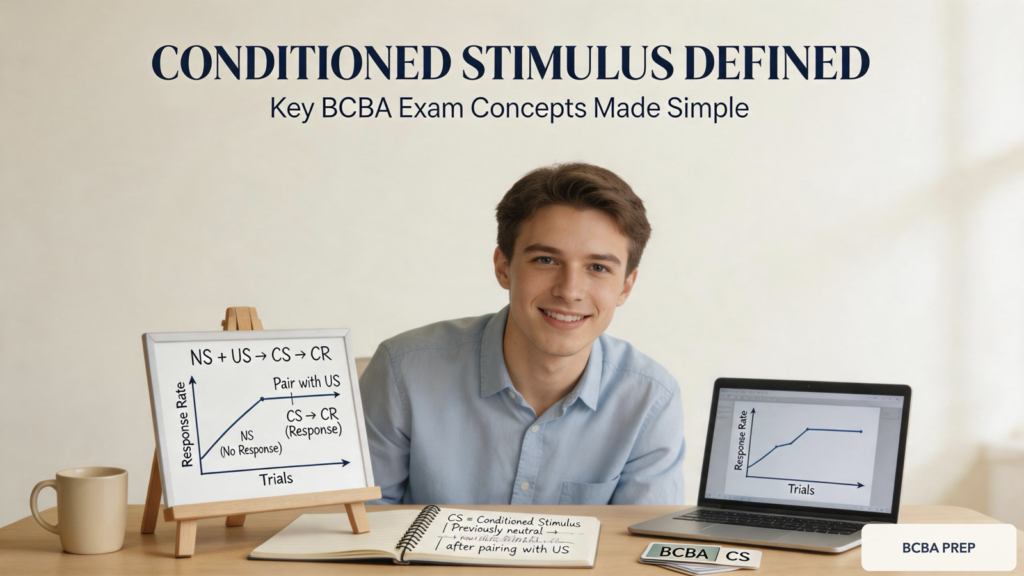
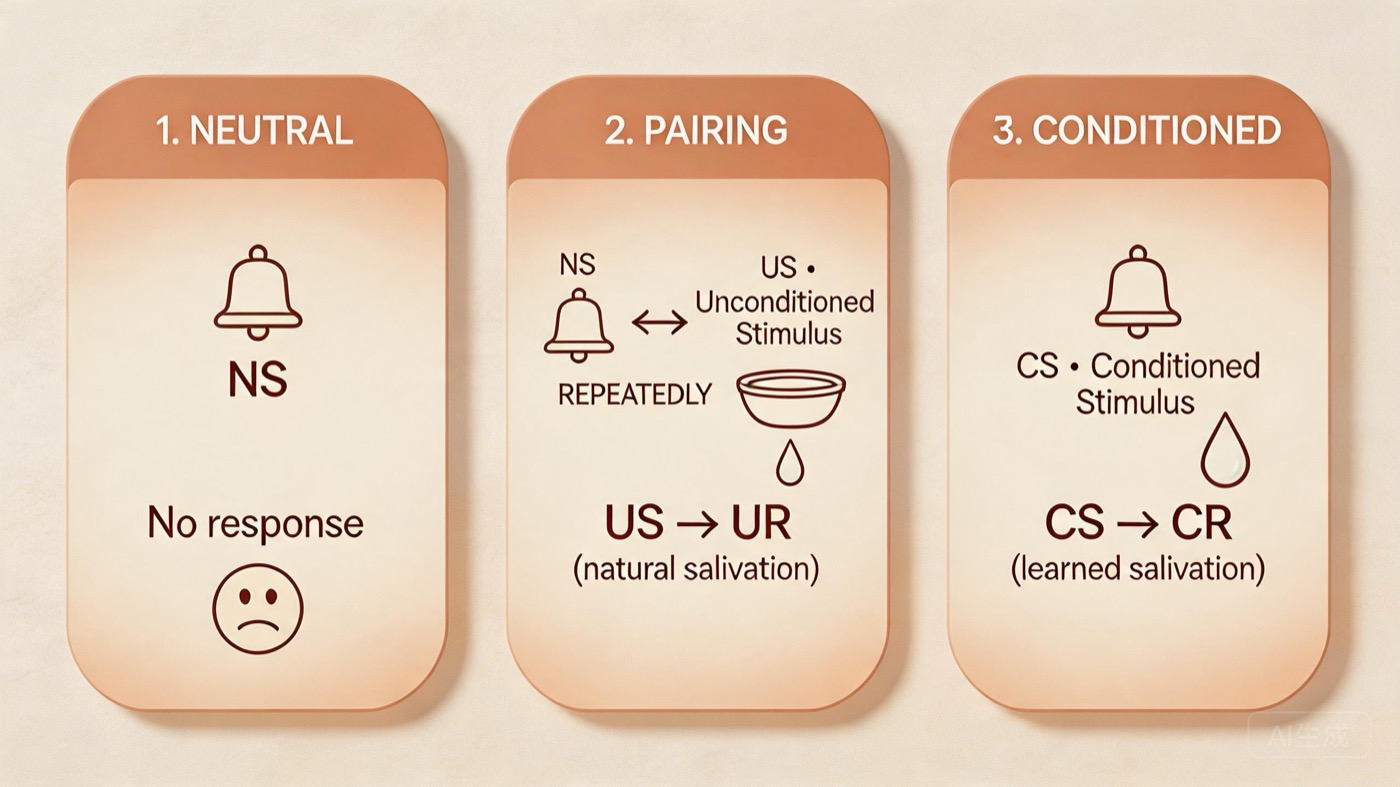
A conditioned stimulus (CS) is a previously neutral stimulus that, after repeated pairing with an unconditioned stimulus (US), acquires the ability to elicit a conditioned response (CR). In simpler terms, it is a stimulus that has been learned to trigger a response. For example, if a bell (neutral) is paired with food (US) several times, the bell becomes a CS and can make a dog salivate (CR) even without food present.
Table of Contents
- What Is a Conditioned Stimulus? A Precise Definition for BCB
- Three Worked ABA Examples of Conditioned Stimuli (ABC Format with Hypothesized Function)
- Exam Relevance and Common Traps: What to Watch For
- Quick Checklist: Conditioned Stimulus Essentials
- Summary: Mastering the Conditioned Stimulus for Exam Day
Conditioned Stimulus vs. Unconditioned Stimulus
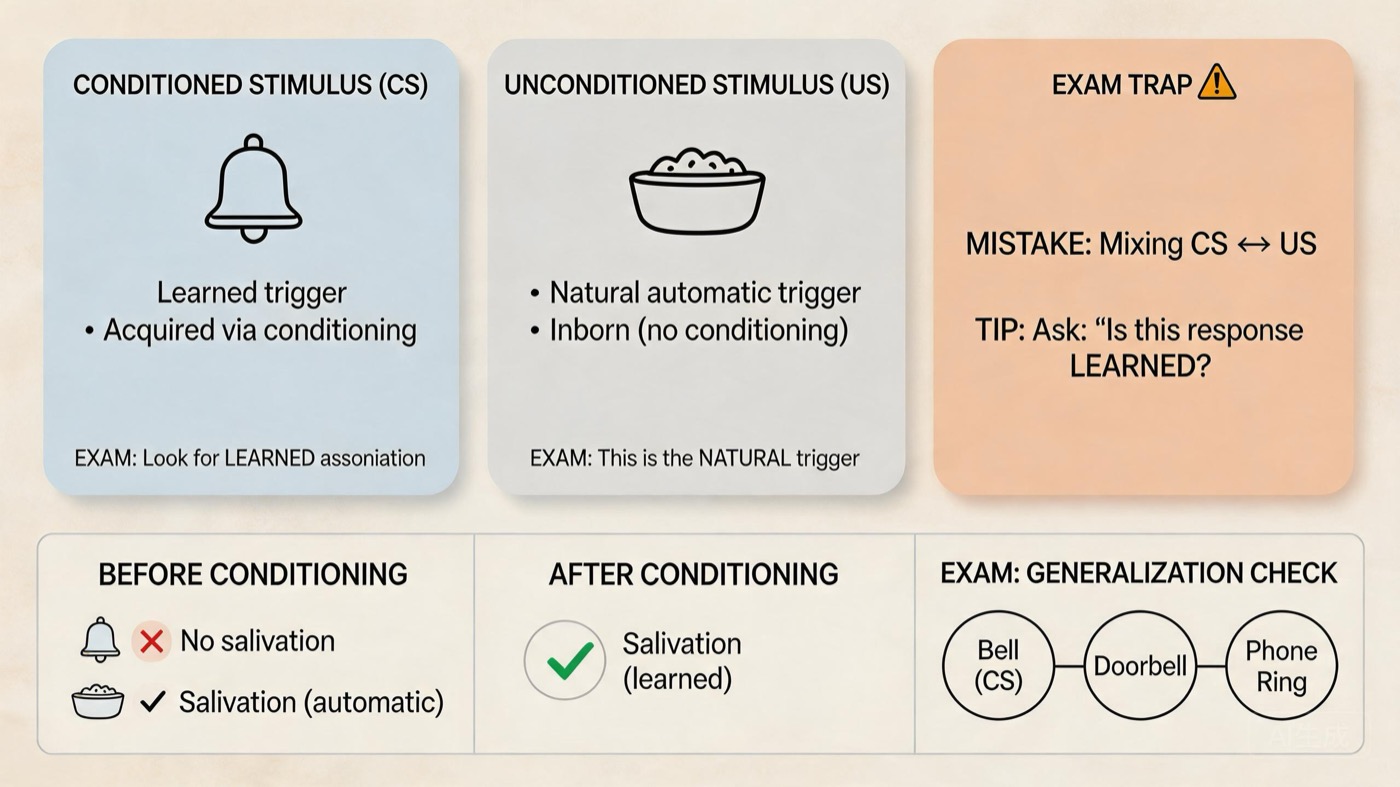
The key difference lies in origin: an unconditioned stimulus (US) naturally and automatically triggers a response without any learning (e.g., food causing salivation), while a conditioned stimulus (CS) only works after being paired with a US. Here is a quick comparison:
- Unconditioned stimulus (US): Unlearned, biologically significant. Example: poking eye (US) causes eyeblink (unconditioned response).
- Conditioned stimulus (CS): Learned through association. Example: tone paired with eye puff becomes CS; tone alone causes eyeblink (CR).
- Origin: US is innate; CS is acquired via respondent conditioning.
- Exam tip: If a stimulus works the first time, it is usually a US. If it requires pairing history, it is a CS.
Why This Distinction Matters on the BCBA Exam
BCBA exam questions often present a scenario and ask you to identify whether a stimulus is a CS or US. Confusing the two is a common mistake. Always ask: “Did this stimulus need to be learned through pairing?” If yes, it is a conditioned stimulus. If the response happens naturally without prior experience, it is an unconditioned stimulus.
Three Worked ABA Examples of Conditioned Stimuli (ABC Format with Hypothesized Function)
These examples walk you through how a neutral stimulus becomes a CS, using an ABC framework and identifying the function of the behavior. Understanding function is crucial for both respondent and operant conditioning.
Example 1: A Bell as a Conditioned Stimulus for a Dog’s Salivation
Respondent conditioning example. Initially, a bell is a neutral stimulus. It is paired repeatedly with food (US). After pairing, the bell becomes a CS. In ABC terms:
- Antecedent: Bell sound (now CS)
- Behavior: Salivation (CR)
- Consequence: Food is delivered (US)
Function: This is respondent behavior, not operant. The CS sets the occasion for a conditioned response. The function is automatic (elicited response).
Example 2: A Whistle as a Conditioned Stimulus in a Classroom Setting
Operant example. A whistle is initially neutral. After being paired with the teacher saying “line up,” students learn that the whistle signals it is time to line up. ABC:
- Antecedent: Whistle sound (CS)
- Behavior: Students line up
- Consequence: Teacher approval (social positive reinforcement)
Function: The whistle becomes a CS that signals reinforcement is available. In operant terminology, it functions as a discriminative stimulus (SD) because it sets the occasion for behavior that produces reinforcement.
Example 3: A Red Card as a Conditioned Stimulus in a Token Economy
Token economy example. A red card is neutral at first. After pairing with token delivery, it becomes a CS signaling tokens for on-task behavior. ABC:
- Antecedent: Red card (CS)
- Behavior: On-task behavior
- Consequence: Token (conditioned reinforcer)
Function: Positive reinforcement. The red card is a CS that indicates tokens are available. Note: The token is a conditioned reinforcer (a reinforcer learned through pairing), while the red card is a CS that signals the availability of that reinforcer. They are related but distinct.
To deepen your understanding of stimulus control, read our guide on discriminative stimulus in ABA.
Exam Relevance and Common Traps: What to Watch For
The BCBA exam tests your ability to identify conditioned stimuli in vignettes and avoid mixing them up with other concepts. Here is what to watch for.
Common Traps in Identifying Conditioned Stimuli
- Confusing CS with US: Remember, a US works from the start. If a stimulus seems to elicit a response without prior pairing, it is likely a US.
- Assuming all stimuli are conditioned: Some stimuli remain neutral. Only those with pairing history become CS.
- Ignoring the pairing history: A CS must have been paired with a US. If the scenario does not mention pairing, it is not a CS.
- Misidentifying stimulus class: A token is a conditioned reinforcer, not a CS, though both rely on learning. A CS elicits a response; a conditioned reinforcer increases the future probability of behavior.
- Overgeneralizing from operant to respondent: In respondent conditioning, the CS elicits a response automatically. In operant conditioning, the CS (as SD) signals that a response will produce reinforcement.
How BCBA Exam Questions Frame Conditioned Stimulus
Questions may ask you to identify the CS from a list of stimuli in a scenario, or to determine if a stimulus is conditioned or unconditioned. The best strategy is to look for the stimulus that was originally neutral and then paired. If the question provides a history of pairing, highlight that stimulus. For more exam tips, check our BCBA exam study framework.
Quick Checklist: Conditioned Stimulus Essentials
Use this checklist for last-minute review before the exam:
- Identify the neutral stimulus that became a CS through pairing with a US.
- Distinguish CS from US: CS requires learning; US is innate.
- Recognize that a CS can also function as an SD in operant conditioning (signals reinforcement).
- Remember: The CS elicits a conditioned response (respondent) or sets the occasion for behavior (operant).
- Avoid assuming a stimulus is a CS just because it appears in an ABC format; verify pairing history.
- Practice with mock exam questions that require identifying CS in vignettes. Use a free BCBA mock exam to test yourself.
Summary: Mastering the Conditioned Stimulus for Exam Day
The conditioned stimulus is a core concept in respondent and operant conditioning. On the BCBA exam, you must be able to define it, distinguish it from unconditioned stimuli, and apply it to scenarios. Remember the three examples: bell (respondent), whistle (operant/SD), and red card (token economy). Watch for common traps like confusing CS with US or assuming all stimuli are conditioned. With this guide and practice, you will be ready. For additional preparation, review the official BACB Task List and our other exam resources.



