
What is Component Analysis in ABA?
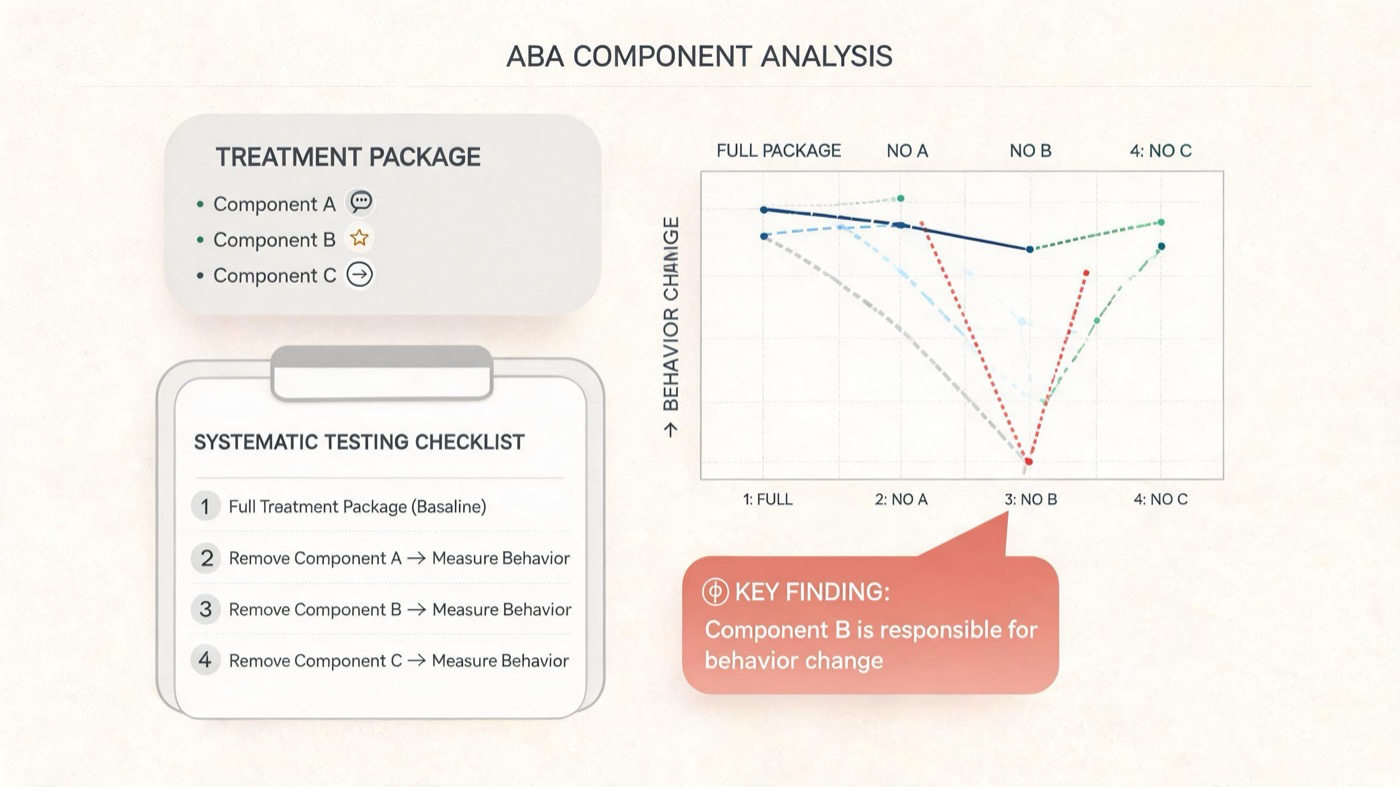
In applied behavior analysis, component analysis is a method used to identify which parts of a treatment package are responsible for behavior change. It involves systematically removing or adding individual components while measuring the target behavior to determine each component’s contribution.
Table of Contents
- What is Component Analysis in ABA?
- Two Worked Examples of Component Analysis
- Exam Relevance and Common Traps
- Quick Checklist for Component Analysis
- Summary: Why Component Analysis Matters for BCBA Success
- References
Understanding component analysis is crucial for BCBA exam success because it appears in questions about experimental design, treatment evaluation, and evidence-based practice.
Core Definition and Purpose
A component analysis breaks down a multicomponent intervention to isolate the active ingredients. It is typically conducted after a functional analysis has identified the variables maintaining behavior. The primary purpose is to evaluate the effectiveness of each component so that resources can be focused on what works.
For example, if a behavior intervention plan includes token economy, extinction, and functional communication training (FCT), a component analysis can reveal whether all three are necessary or if one component alone produces the desired change.
How It Differs from Functional Analysis
It’s common to confuse component analysis with functional analysis on the BCBA exam. A functional analysis involves manipulating environmental variables to test hypotheses about the function of behavior (e.g., escape, attention, tangible, automatic). In contrast, a component analysis manipulates components of an intervention to determine which are effective. Also, a parametric analysis examines different levels or doses of a single independent variable (e.g., different reinforcement magnitudes).
Knowing these distinctions can help you avoid common exam traps.
Two Worked Examples of Component Analysis
Let’s walk through two concrete examples that mimic what you might see on the BCBA exam. Each includes a brief ABC analysis and hypothesized function to ground the component analysis in real data.
Example 1: Reducing Aggression in a Child with Autism
A behavior intervention plan was implemented for a child with autism who engaged in aggression. The package included three components: token economy, extinction (no longer providing escape from demands following aggression), and functional communication training (FCT) to request breaks. The hypothesized function of aggression was escape from demands.
To conduct a component analysis, the BCBA implemented the full package first, then systematically withdrew each component. Below is ABC data from the analysis phase:
- Condition A: Full package (token economy + extinction + FCT) – Near-zero aggression.
- Condition B: Token economy only (withdrawal of extinction and FCT) – Aggression increased to moderate levels.
- Condition C: Extinction only (withdrawal of token economy and FCT) – Aggression initially spiked then decreased but not as low as full package.
- Condition D: FCT only – Aggression reduced but remained above full package levels.
Results indicated that all three components contributed, but the combination produced the best outcomes. This information allows the BCBA to streamline the intervention while maintaining effectiveness.
Example 2: Increasing On-Task Behavior in a Classroom Setting
A teacher implemented a treatment package to increase on-task behavior in a student with ADHD. The package included self-monitoring, teacher prompts, and reinforcement for on-task behavior. The hypothesized function of off-task behavior was access to attention (peer and teacher).
The component analysis involved alternating the components in different phases:
- Self-monitoring alone: On-task behavior improved modestly.
- Teacher prompts alone: On-task behavior improved slightly but required high teacher effort.
- Reinforcement alone: On-task behavior improved significantly, nearing full package levels.
- Full package: Highest and most stable on-task behavior.
The analysis revealed that reinforcement was the critical component. The teacher could then prioritize reinforcement while using self-monitoring as a maintenance tool.
Exam Relevance and Common Traps
Component analysis is a favorite topic on the BCBA exam because it tests your understanding of experimental design and evidence-based practice. Here’s how it typically appears and how to avoid common mistakes.
How Component Analysis Appears on the BCBA Exam
You can expect multiple-choice questions that require you to identify the purpose of component analysis, interpret data from a component analysis graph, or distinguish it from similar techniques like functional analysis or parametric analysis. For example, a question might show a multielement design with different components and ask you to select which component is most effective. According to the BACB Task List (e.g., F-8, G-1, G-2), component analysis falls under evaluating and modifying interventions.
A strong understanding of single-subject experimental designs is essential. Resources like our single-subject designs guide can help you connect these concepts.
Common Traps to Avoid on Test Day
- Confusing component analysis with functional analysis. Remember: functional analysis tests variables that maintain behavior; component analysis tests parts of an intervention.
- Assuming all components are equally effective. Component analysis often reveals that some components are inert or even counterproductive.
- Forgetting sequence or order effects. When components are introduced sequentially, the order can influence results. Reversal designs can help control for this.
- Thinking component analysis is for baseline assessment. Component analysis is conducted after an intervention has been established, not during the initial functional assessment.
Quick Checklist for Component Analysis
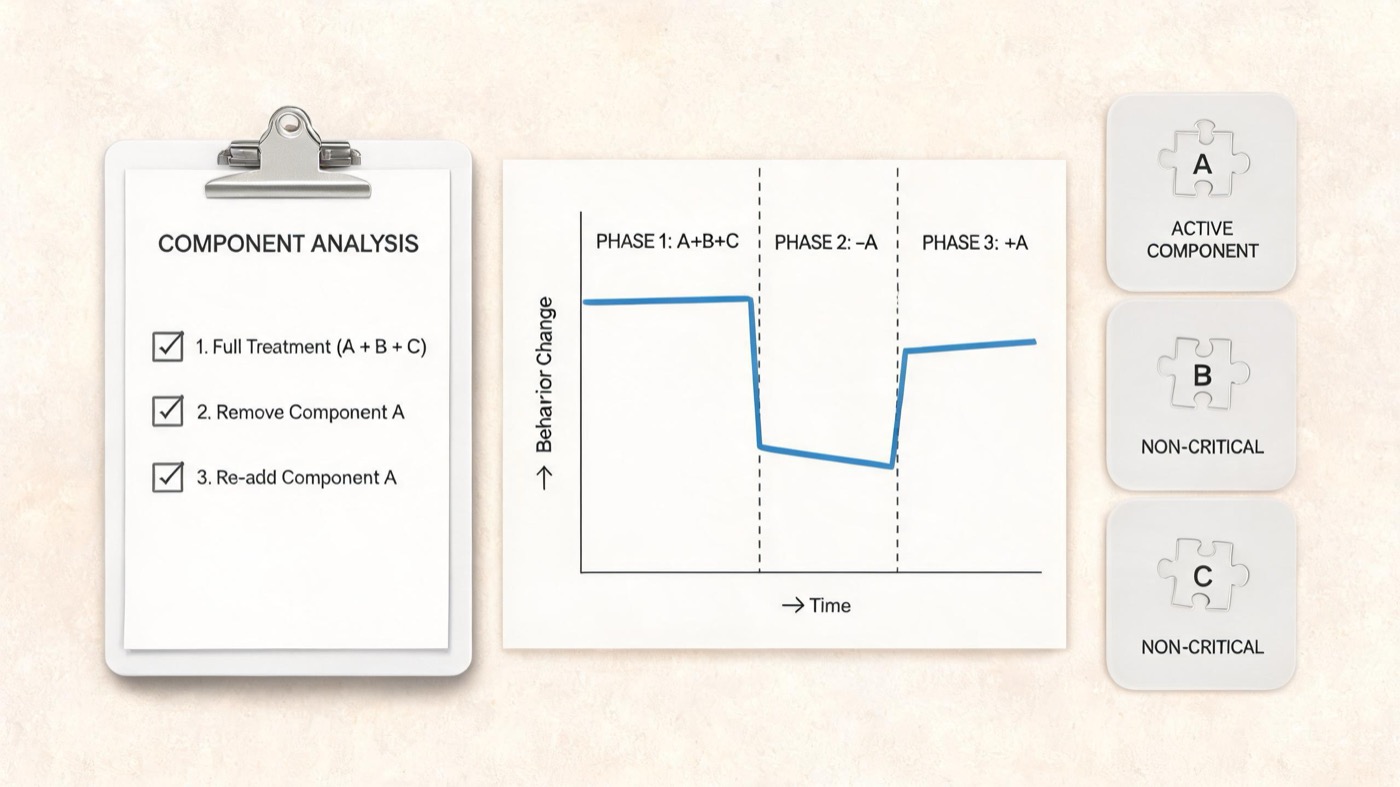
Use this checklist when reviewing a component analysis question on the exam:
- Identify the target behavior and its hypothesized function.
- List all intervention components in the treatment package.
- Determine the experimental design (e.g., reversal, alternating treatments, multiple baseline across components).
- Examine the data: Compare levels, trends, and variability across phases.
- Evaluate each component: Which produces the greatest behavior change? Are any components unnecessary?
- Consider internal validity: Order effects, carryover, and treatment integrity.
- Draw conclusions: Identify the active ingredient(s) and recommend modifications.
For more examples and practice, check out our comparative and parametric analysis guide.
Summary: Why Component Analysis Matters for BCBA Success
Component analysis is not just an exam topic—it is a practical skill that helps BCBAs design efficient, effective interventions. By isolating the active ingredients, you can reduce unnecessary procedures, save time and resources, and improve client outcomes. On the BCBA exam, you will be tested on your ability to interpret component analysis data and distinguish it from similar concepts. Mastering component analysis will set you up for both exam success and real-world practice.
For additional study support, explore our BCBA exam prep guide with mock questions and targeted reviews.



