

BCBA supervision curriculum design and feedback A useful BCBA supervision curriculum is more than a list of topics or a folder of readings. It is a repeatable plan that helps a trainee connect concepts to real behavior-analytic work, receive specific feedback, practice again, and document progress. The best curriculum changes as the trainee’s strengths, cases, ethical questions, and current certification requirements change.
Table of Contents
- BCBA Supervision Curriculum: What It Should Do
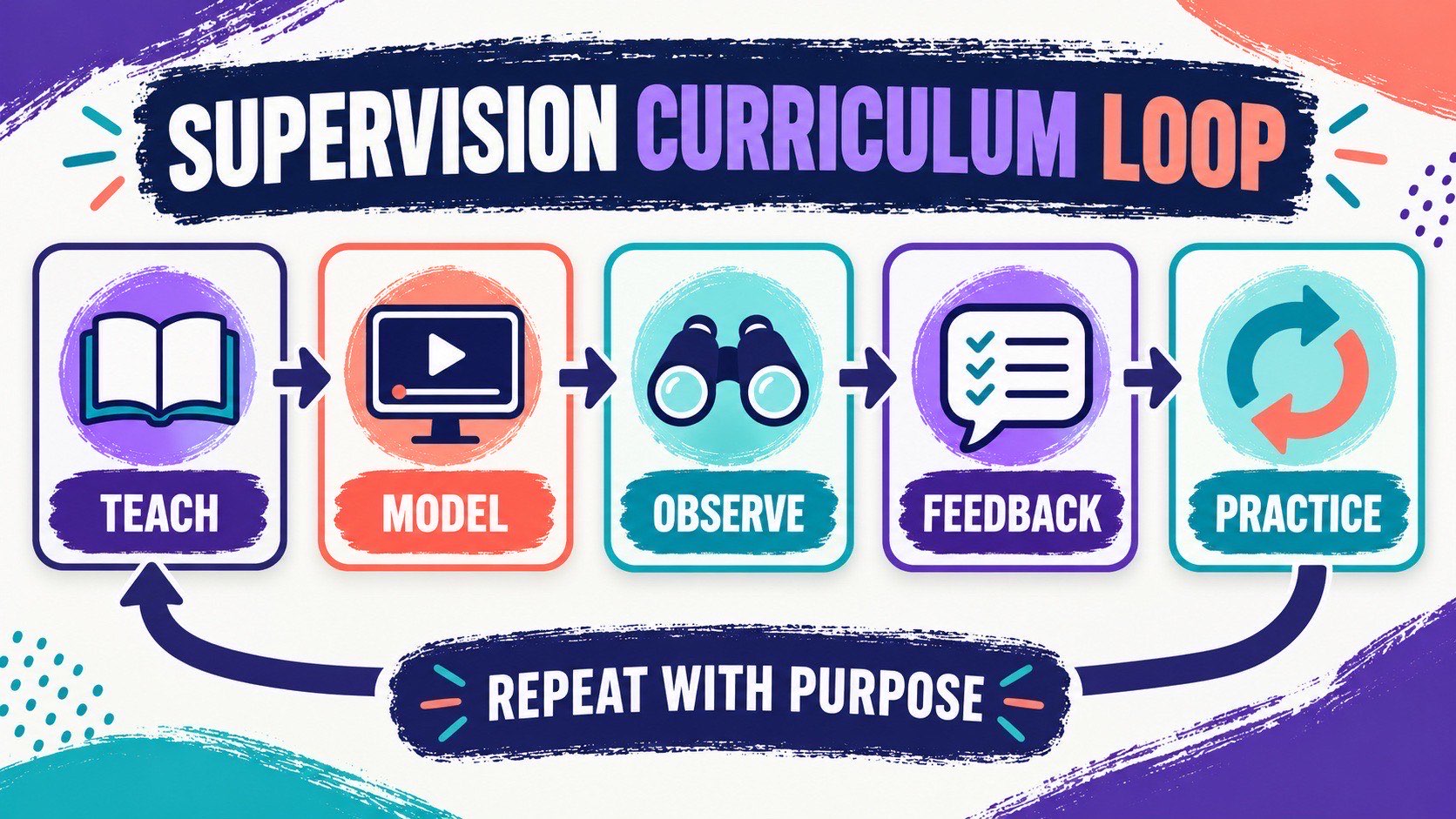
- Build a Teach–Model–Observe–Feedback Loop
- Choose Content From Current Responsibilities
- BCBA Supervision Curriculum Planning Matrix
- Individualize the Plan for the Trainee
- Document Progress Without Turning Supervision Into Paperwork
- Common BCBA Supervision Curriculum Mistakes
- Connect Supervision Learning to Exam Practice
- BCBA Supervision Curriculum FAQ
- Take the Free BCBA Mock Exam
The BACB provides a supervision, assessment, training, and oversight resource hub, including the Supervisor Training Curriculum Outline (2.0), fieldwork resources, and relevant handbooks. Use those official materials to verify current responsibilities. A private course, template, or supervision package can organize learning, but it does not replace the BACB requirements or the supervisor’s professional judgment.
BCBA Supervision Curriculum: What It Should Do
A strong curriculum answers three questions for every learning target: What should the trainee be able to do? What practice opportunity will show that skill? What feedback and follow-up will determine whether the skill is becoming reliable? If a plan only lists “ethics,” “assessment,” or “data collection,” it names a topic but does not yet define competent performance.
- Teach: introduce a concept, decision rule, ethical boundary, or technical skill with a current source.
- Model: demonstrate how the skill looks in a realistic case, conversation, data display, or written decision.
- Observe: watch the trainee apply the skill or review work connected to real clients and responsibilities.
- Give feedback: identify what was accurate, what needs to change, and what the trainee will try next.
- Practice: repeat the skill under a slightly different condition and record the evidence of growth.
This loop keeps supervision connected to practice. It also prevents a common failure mode: covering many topics once while giving the trainee too few opportunities to demonstrate competence. Supervision is not a race to finish a slide deck. It is a structured learning relationship with clear responsibilities and boundaries.
Build a Teach–Model–Observe–Feedback Loop
Start each learning unit with a narrow objective. “Understand functional assessment” is broad. “Given a referral question and sample data, identify the information still needed before selecting an assessment approach” is easier to teach, observe, and discuss. A narrow objective also makes it easier to choose a practice task that does not overclaim what the trainee can do.
Use examples that match the trainee’s setting, but do not turn client work into an unstructured lesson. Explain the purpose of the activity, protect privacy, and decide what the trainee may do independently versus what requires supervisor direction. If a simulated case is used, label it as practice rather than implying that simulation alone proves fieldwork competence.
Feedback should be specific and behavior-based. Instead of “be more precise,” identify the decision, statement, measurement, or interaction that needs revision. Ask the trainee to explain the reasoning, then provide a second opportunity to apply the feedback. A short written note—skill, evidence, correction, next practice—can make the next supervision meeting more productive.
Choose Content From Current Responsibilities
The curriculum should reflect the trainee’s actual work and the current BACB materials. Common content areas may include measurement, assessment, intervention design, behavior-change procedures, supervision, ethics, documentation, communication, and decision-making under uncertainty. The right emphasis depends on the trainee’s role, experience, cases, and pathway.
Use the current BCBA Test Content Outline as an exam-study map when appropriate, but do not mistake the TCO for a complete supervision curriculum. Fieldwork should prepare a person to practice, not merely to recognize terms on a test. The BACB’s Fieldwork: Getting It Right guidance is useful when checking whether learning activities remain connected to meaningful behavior-analytic work.
Review the content plan at regular intervals. A new case may reveal a need for consent or communication practice. A data-quality problem may require a measurement refresher. A boundary question may call for an ethics discussion and a clear escalation plan. Updating the curriculum is not a sign that the original plan failed; it is part of responsive supervision.
BCBA Supervision Curriculum Planning Matrix
Use this matrix to turn a topic into an observable learning unit. The supervisor can add the current source and the evidence expected for the trainee’s role.
| Learning target | Practice evidence | Feedback question |
|---|---|---|
| Measurement choice | Define the response, select a measure, and explain limitations using a case example. | Would the data answer the referral question? |
| Assessment reasoning | Separate known facts, missing information, hypotheses, and next assessment steps. | What evidence supports this decision, and what remains uncertain? |
| Ethical communication | Role-play a difficult conversation and write a clear, respectful follow-up. | Did the response protect dignity, consent, and professional boundaries? |
| Data-based revision | Interpret a graph, state a decision, and identify the next review point. | Can the trainee explain why the intervention should change or continue? |
Individualize the Plan for the Trainee
Two trainees can need different supervision even when they work in the same organization. One may need practice with operational definitions; another may need support with communicating recommendations to caregivers or teachers. Start with a baseline review, choose a small number of priorities, and revisit them with evidence rather than relying on a general impression.
Set a rhythm for the curriculum. A weekly plan might include one brief teaching target, one applied discussion, and one feedback note. A monthly review can look for patterns across cases and decide whether a target should be continued, advanced, or replaced. Keep the pace realistic for the available supervision time and the trainee’s responsibilities.
- Keep: a target when evidence shows the trainee is still building the skill.
- Advance: a target when the trainee can apply it accurately in a familiar condition.
- Reframe: a target when the evidence shows the teaching method or task needs to change.
Invite the trainee to bring questions and self-assessments. A curriculum becomes stronger when the trainee can name uncertainty before a problem becomes a pattern. The supervisor still owns the supervision responsibility, but shared agenda-setting can make the relationship more transparent and useful.
Document Progress Without Turning Supervision Into Paperwork
Documentation should show what was discussed, what the trainee practiced, what feedback was given, and what comes next. It should not be a collection of vague statements such as “reviewed ethics” or “student doing well.” Use short notes tied to the learning target and keep the records secure and consistent with the current BACB handbook and organizational policy.
Separate three records: the supervision meeting record, the fieldwork or service documentation required for the pathway, and the curriculum progress record. They may reference the same learning target, but they serve different purposes. A curriculum checklist does not replace a required verification form, and a fieldwork log does not by itself demonstrate the quality of feedback.
At the end of each unit, record a decision: continue practice, change the support, or move to a more complex condition. If progress is uncertain, write the question that will resolve it. This keeps the curriculum honest and gives the next meeting a concrete starting point.
Common BCBA Supervision Curriculum Mistakes
- Topic dumping: listing every domain without defining what the trainee should demonstrate.
- One-and-done teaching: covering a concept once without a second opportunity to apply feedback.
- Simulation confusion: treating a hypothetical exercise as proof of real-world fieldwork competence.
- Outdated sources: using a saved checklist without checking the current BACB handbook, ethics code, or supervision resources.
- Vague progress notes: recording praise without evidence, correction, or a next practice step.
A curriculum should make supervision more deliberate, not more bureaucratic. If the plan creates more paperwork than learning, reduce the number of fields and improve the quality of the evidence captured.
Connect Supervision Learning to Exam Practice
Applied supervision questions often reveal the concepts that need deeper study. When a trainee struggles to select a measure, interpret a graph, or distinguish two procedures, turn that struggle into a focused review task. Study the definition, apply it to a new scenario, and explain why the alternative answers are less appropriate.
For a timed checkpoint, try the free practice for BCBA supervision curriculum and BCBA exam preparation. Use the result to choose the next study block; it is not a BACB assessment and cannot replace supervision, fieldwork documentation, or the official examination.
BCBA Supervision Curriculum FAQ
What belongs in a BCBA supervision curriculum?: Include observable learning targets, current sources, practice opportunities, feedback, and a follow-up decision. The content should reflect the trainee’s actual responsibilities and the current BACB requirements. Is a supervision curriculum the same as the BCBA Test Content Outline?: No. The TCO can inform examination study, but a supervision curriculum should also develop applied decision-making, ethical communication, documentation, and professional behavior in the trainee’s real setting.
How often should a supervision curriculum be updated?: Review it regularly and whenever the trainee’s responsibilities, cases, or current BACB materials change. A monthly progress review is a practical minimum for deciding whether targets should continue or change.
Take the Free BCBA Mock Exam
When you are ready to apply the idea, use the free practice resource below for additional feedback. Take the Free BCBA Mock Exam



