
If you are searching for bcba certification california, start with one important distinction: the BCBA credential is issued by the national Behavior Analyst Certification Board (BACB), while California work, billing, employer, and payer requirements are handled through separate systems. California is not simply a “state exam” version of the BCBA pathway.
Table of Contents
- What Does BCBA Certification In California Require?
- Does California Require A Separate Behavior Analyst License?
- What Is The National BCBA Pathway?
- Which California Work Lane Are You Entering?
- Which Requirements Belong To Which Authority?
- What Do California Medi-Cal BCBAs Need To Check?
- How Should Candidates Plan Around 2027?
- Which California Mistakes Create Delays?
- BCBA Certification California FAQ
- What Should A California Candidate Do Next?
- Take the Free BCBA Mock Exam
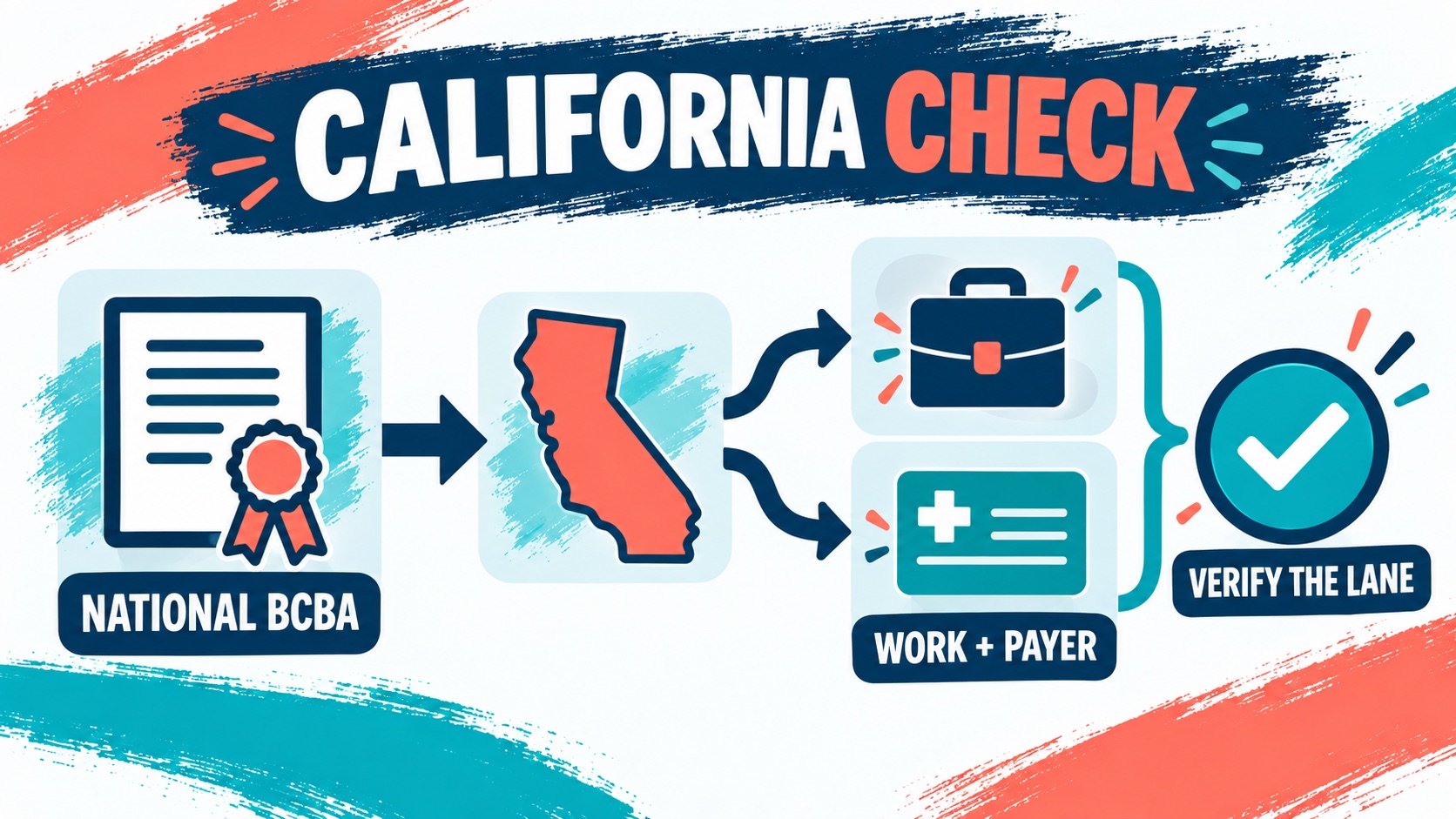
As of this guide’s review, the BACB’s current U.S. licensure map lists the states that require behavior analyst licensure and does not list California among those states. That does not mean a California BCBA can skip professional standards, employer checks, business rules, payer enrollment, or client-specific requirements. It means the planning question is different: complete the national certification, then verify the California practice and payment lane that applies to your role.
For example, the California Department of Health Care Services (DHCS) has a Qualified Autism Service (QAS) enrollment pathway for BCBAs who will enroll and bill Medi-Cal. That pathway can involve an NPI, business information, an established place of business or an applicable exception, and payer-specific documentation. This article maps the two layers without turning a payer checklist into a state license. Table of Contents
What Does BCBA Certification In California Require?
The short answer is to complete the current BACB BCBA eligibility pathway, apply through the BACB, pass the BCBA examination, and keep the national certification active. After that, identify the California work lane: employment, private business, school or public agency work, commercial insurance, Medi-Cal managed care, or Medi-Cal fee-for-service. Each lane can add evidence or enrollment steps.
The current BCBA Handbook is the source for the national degree, behavior-analytic coursework, fieldwork, application, examination, and maintenance requirements. California does not turn those requirements into a separate California BCBA examination. A California employer may still require a background check, a local business may need a city or county license, and a payer may require enrollment before claims can be submitted. Do not write “no California license means no paperwork.” Write a three-part plan instead:
- Credential: earn and maintain active BCBA certification through the BACB.
- Work: verify the employer, facility, school, contract, and scope-of-role requirements.
- Payment: complete the payer or program enrollment that applies before billing or treating a covered member.
Does California Require A Separate Behavior Analyst License?
The BACB’s U.S. licensure map says its table lists states that currently require behavior analyst licensure. California does not appear in that current list. For this article, that is the practical answer to the “California BCBA license” question as of the review date: California is not shown as a state with a separate behavior-analyst license in the BACB’s current state-licensure table.
That statement has a boundary. It is not a promise that every activity, job, health plan, local business, or public program accepts only a BCBA certificate. A psychologist, licensed clinician, school employee, company, or health-care provider may be governed by another California license, credential, contract, or facility rule. Use the credential name that actually applies to the role, and do not call a BCBA certificate a California state license.
The California Department of Health Care Services also publishes program-specific qualification and enrollment materials. Its Medi-Cal pages identify BCBAs as QAS providers who may enroll through the Medi-Cal provider enrollment system. That is a billing and program-enrollment layer, not evidence that California has created a separate BCBA license.
What Is The National BCBA Pathway?
Build the national file before researching California payer details. The BACB handbook describes the requirements in effect for the certification pathway, and the BACB’s BCBA page directs candidates to start with that handbook. Your file should show which eligibility pathway you used and why your degree, coursework, fieldwork, application, and exam records satisfy it. A California candidate should keep these records together:
- Degree and official transcript information used for the BCBA eligibility review.
- Behavior-analytic coursework and supervised fieldwork verification.
- BACB application confirmation, examination authorization, result, and active certification verification.
- Current ethics, continuing-education, and maintenance records applicable to the certification cycle.
The national certificate is portable in a way a state or payer contract is not. Moving to California may leave your BCBA status unchanged while changing the business license, employer, school, insurance, Medi-Cal, or telehealth questions that you must answer. Recheck those local layers every time your work arrangement changes.
Which California Work Lane Are You Entering?
“Working as a BCBA in California” is too broad for a useful checklist. First choose the lane that matches the next 90 days:
- Employee of an ABA organization: ask the employer which background, credential verification, supervision, documentation, and payer roster steps it handles.
- Independent or small-business provider: check the city or county business license, entity documents, tax setup, NPI, professional liability coverage, and contracts before accepting clients.
- Medi-Cal QAS provider: read the current DHCS enrollment FAQ and checklist, then determine whether you will enroll as an individual or organization and whether you will bill fee-for-service, a managed-care plan, or both.
- School or public agency role: confirm the employer’s credential, background, education-code, and position-specific requirements. A job description may ask for a BCBA certificate even when no state behavior analyst license is required.
Which Requirements Belong To Which Authority?
Use this table to prevent category errors. The same person can have all four rows in an evidence folder, but one row does not automatically satisfy another.
| Question | Authority or partner | Evidence to verify |
|---|---|---|
| Can I call myself a BCBA? | BACB | Active BCBA certification and compliance with BACB requirements. |
| Can I take this job or provide this service? | Employer, facility, school, contract, or other applicable California authority | Role scope, background check, credential verification, business and facility requirements. |
| Can I bill Medi-Cal? | California DHCS or the managed-care plan | QAS enrollment, NPI, business documents, service location, contract, and plan-specific enrollment. |
| Can I operate a private business? | City or county plus tax, insurance, and contract partners | Business entity, local license or permit, NPI, address, insurance, and payer contracts. |
Use the official page for the exact application version. A candidate who reads only a national certification page may miss the California business or payer layer, while a candidate who reads only a payer checklist may incorrectly think it is a professional license.
What Do California Medi-Cal BCBAs Need To Check?
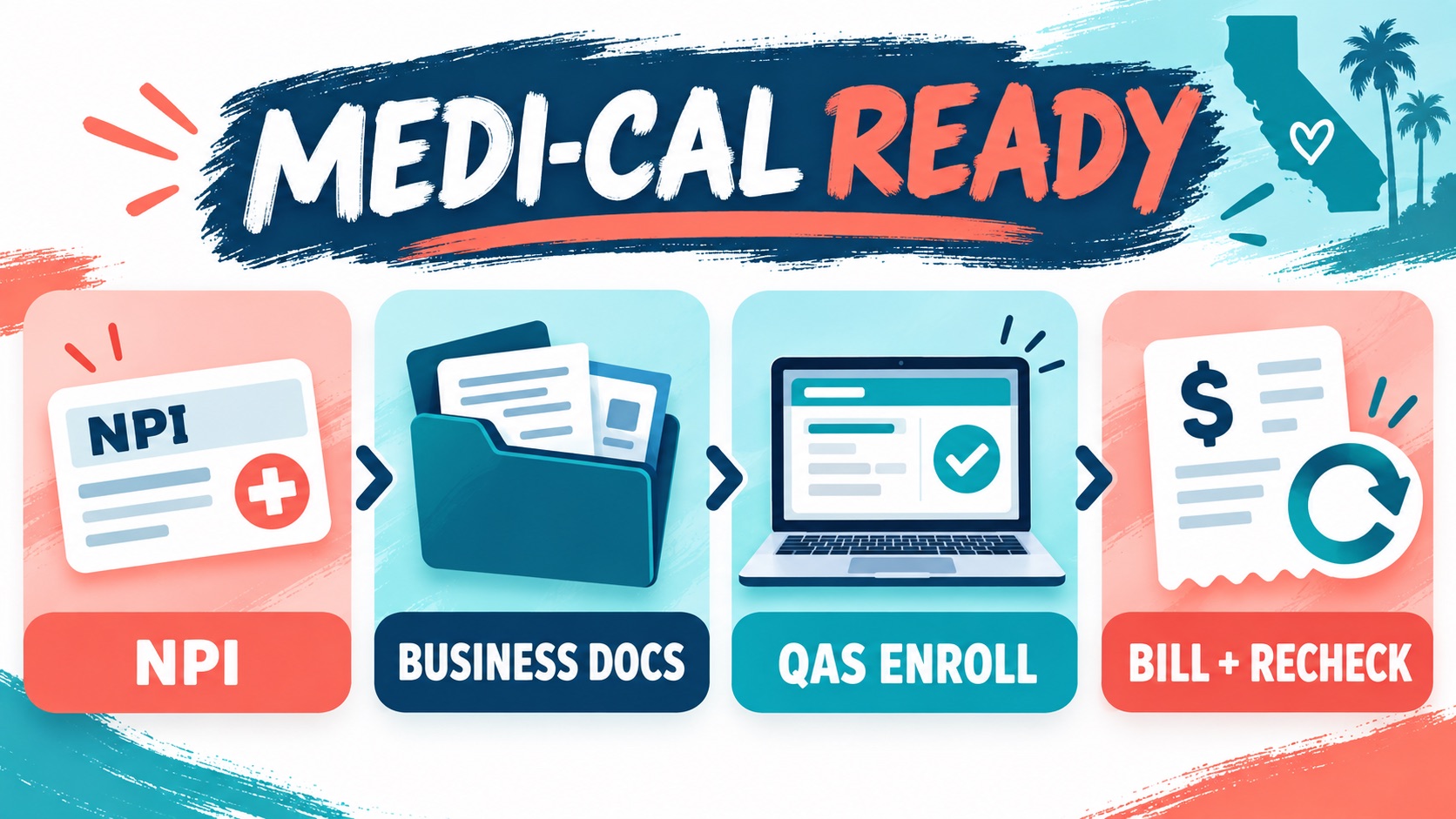
DHCS says its QAS enrollment pathway is for BCBAs and educational psychologists who will enroll as QAS providers through the Medi-Cal provider enrollment system. QAS providers may enroll as individuals or organizations. If you plan to bill Medi-Cal directly, treat enrollment as its own project with its own evidence list and approval status.
The current DHCS materials identify several items that may matter to an individual or organization, including an NPI, documentation of how the business operates, state-issued identification for applicable owners or applicants, and service or administrative location information. The enrollment checklist also warns that city or county business licenses, fictitious business name documents, workers’ compensation coverage, and other local requirements may apply depending on how the business operates.
There are operational differences between fee-for-service and managed care. DHCS says QAS providers who intend to bill or continue contracting with a managed-care plan should follow the enrollment requirements that apply to that plan. An employer or group may maintain the roster and attest to qualifications for people who work under it, while a solo BCBA who bills directly may have a different application. Before starting the enrollment, answer these questions:
- Will you bill fee-for-service Medi-Cal directly, work through a managed-care plan, or do both?
- Are you applying as an individual, sole proprietor, LLC, corporation, or QAS organization?
- Do you have the NPI, business documents, service address, and any local license or fictitious-name record that the checklist asks for?
- Will an organization report or attest to the qualifications of other QAS providers, professionals, or paraprofessionals?
How Should Candidates Plan Around 2027?
The BACB’s 2027 BCBA requirements page and current handbook distinguish future national eligibility and maintenance changes from the current pathway. If you are trying to complete an application under the 2022 requirements, the BACB guidance says the complete application, including payment and required documents, must be received by December 31, 2026.
California’s payer calendar is separate. Completing a national BCBA application by the BACB transition date does not enroll you with Medi-Cal, a managed-care plan, an employer, or a local business authority. Put two reminders on your calendar: one for the national BACB requirements and one for the current California work or billing lane. Recheck the BACB handbook, BACB 2027 page, and current DHCS FAQ immediately before submitting anything. California enrollment details can change without changing the national exam eligibility rule.
Which California Mistakes Create Delays?
These are the errors most likely to send a California candidate back to the beginning of the checklist:
- Searching for a “California BCBA license application” instead of first confirming whether the role requires a separate state behavior analyst license.
- Assuming that no state behavior analyst license means a BCBA can bill every insurer or public program automatically.
- Starting Medi-Cal enrollment without an NPI, business structure, matching address, or local business documents.
- Confusing QAS enrollment with a professional license or treating payer approval as permission to use a credential you do not hold.
- Using an old DHCS checklist or relying on an employer’s enrollment status after becoming an independent provider.
- Ignoring the 2027 BACB transition while waiting for a California employer or payer to finish credentialing.
Create one record for each decision: national certification, employment, business, and payer. Record the page date, contact channel, application receipt, and next action. That simple separation makes it easier to identify whether a delay belongs to the BACB, DHCS, a managed-care plan, a local jurisdiction, or an employer.
BCBA Certification California FAQ
Does California have a separate BCBA certification?: No. The BCBA is a national BACB certification. California work and payment requirements may still add employer, business, facility, or payer steps. Do not label a national BCBA certificate as a California state license.
Can I work as a BCBA in California without a state behavior analyst license?: The current BACB licensure map does not list California among the states requiring behavior analyst licensure. That answer is limited to the separate behavior-analyst license question. You still need an active BCBA certification and must check the employer, contract, school, business, telehealth, and payer rules that apply to your actual work.
Do California BCBAs need Medi-Cal enrollment?: If you will enroll and bill Medi-Cal as a QAS provider, DHCS has an enrollment pathway and checklist for BCBAs. If you work under an enrolled organization or only serve other payers, the process may be different. Confirm the current DHCS and managed-care-plan instructions before billing.
What Should A California Candidate Do Next?
Write down your next 90-day work lane: employee, independent provider, school or public agency, commercial payer, Medi-Cal QAS provider, or a combination. Then open the matching official checklist. If the BACB exam is the immediate bottleneck, use our free BCBA mock exam practice for bcba certification california study planning as a timed preparation checkpoint.
That practice resource is independent exam preparation, not BACB certification, a California license, Medi-Cal approval, legal advice, or a guarantee of a passing result. The clean California plan is simple to audit: active national BCBA credential, role-specific California requirements, and payer approval before billing.
Take the Free BCBA Mock Exam
When you are ready to apply the idea, use the free practice resource below for additional feedback. Take the Free BCBA Mock Exam



