
BACB Code Enforcement Procedures explain how the Board typically handles alleged ethics violations or competence concerns involving a certificant or applicant. The key is to separate a Notice of Alleged Violation from a finding, a summary action from a final consequence, and an appeal from a new investigation. This guide translates the current procedure document into a study-friendly map while keeping the BACB document as the controlling source.
Table of Contents
- BACB Code Enforcement Procedures: What Do They Cover?
- What Is the Basic Process Map?
- What Happens During Initial Review?
- What Happens After a Notice Is Accepted?
- What Resolutions Can Follow?
- What Are Corrective Actions and Sanctions?
- How Does the Appeal Process Fit?
- What Are the BCBA Exam Traps?
- BACB Code Enforcement FAQ
- Quick Review Checklist
- Take the Free BCBA Mock Exam
If you are studying for the BCBA exam, the most common mistake is to remember only the word “complaint.” A complaint starts a possible process; it does not prove that a violation occurred. The BACB reviews jurisdiction, timing, documentation, redaction, and other requirements before deciding whether a notice can move forward. Later steps have their own standards, response opportunities, and possible outcomes.
This article is an educational explanation, not legal or ethics advice for a specific case. Procedures, forms, deadlines, and documents can change. Before acting on a real notice, use the current BACB materials and obtain appropriate professional or legal advice. Table of Contents
BACB Code Enforcement Procedures: What Do They Cover?
The BACB Code-Enforcement Procedures document describes the steps the Board typically follows when there are alleged violations or competence concerns involving a certificant or applicant. It uses specific roles: the Notifier submits a Notice of Alleged Violation, and the Subject is the certificant or applicant alleged to have violated an ethics requirement.
The procedures can apply to current or former applicants and certificants in the categories covered by the document, including BCBA, BCaBA, RBT, and BCBA-D matters. The document also explains that the BACB does not have jurisdiction over every person or organization connected to behavior analysis. A trainee, noncertified individual, or organization may raise a separate regulatory or legal question, but that does not automatically place the person within the BACB’s code-enforcement jurisdiction.
The process is designed for professional standards and consumer protection. It is not a court proceeding, and it does not award monetary damages. That boundary is important when reading a study question: “the BACB may take action” is not the same statement as “a court has found liability.”
What Is the Basic Process Map?
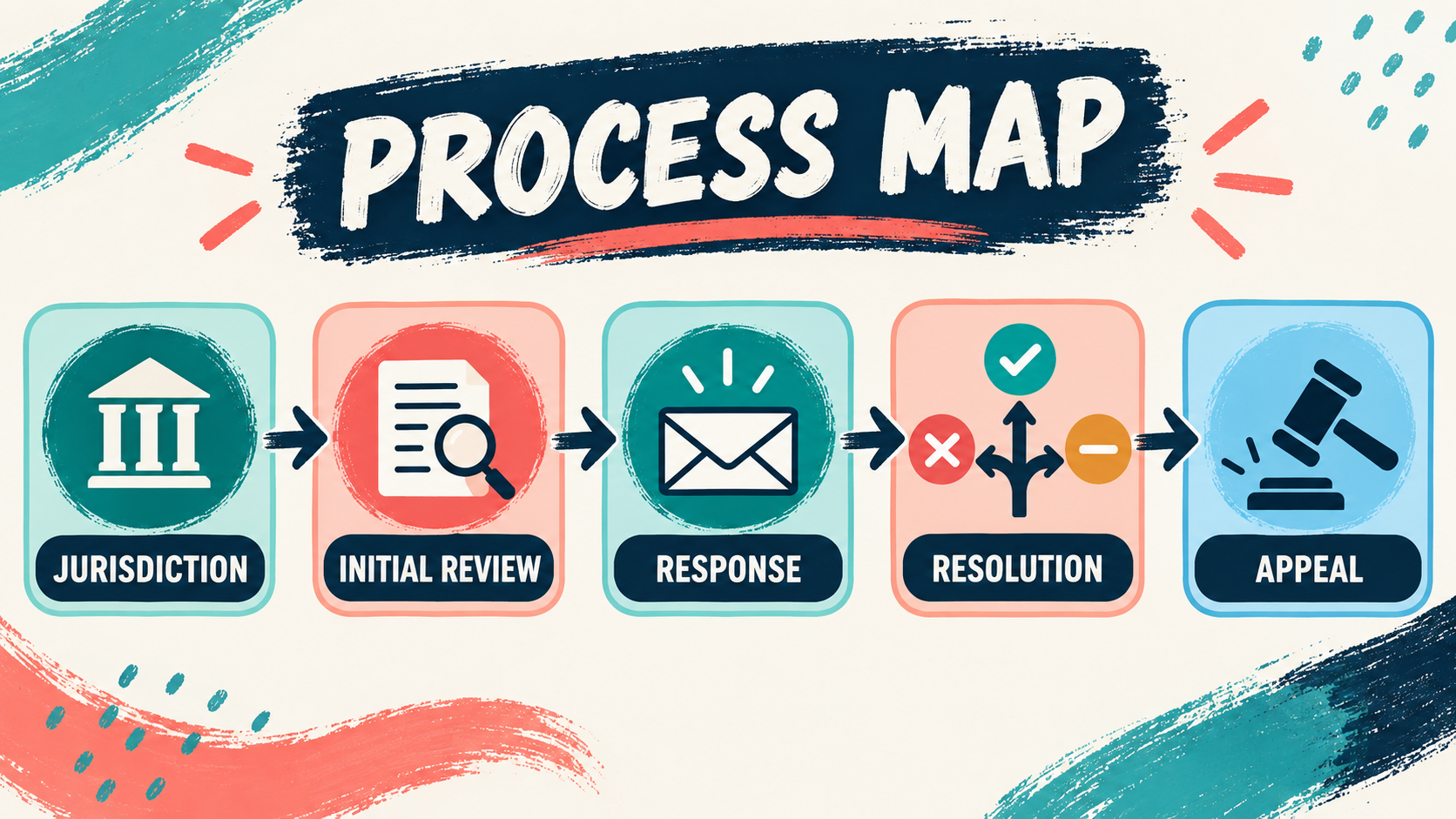
A useful way to remember the procedure is as a sequence of gates rather than one immediate punishment track. A matter may stop, pause, or change direction at several points.
| Stage | Question being considered | Possible direction |
|---|---|---|
| Notice submitted | Has someone submitted an allegation with the required information? | BACB staff begin the applicable review; a notice is not a finding. |
| Initial review | Does the matter meet jurisdiction, timing, documentation, signature, redaction, and page-limit requirements? | Decline, return for correction, defer, or accept for further processing. |
| Response stage | Has the Subject received the allegation and had an opportunity to respond? | The matter may be declined, deferred, or routed to an educational, consent, or disciplinary path. |
| Outcome or appeal | What action, if any, is supported by the documentation, and is an appeal available? | No further action, corrective action, sanction, or an appeal outcome such as uphold, modify, or overturn. |
This map is deliberately general. The document says the BACB may use summary actions or other procedures in circumstances that create immediate risk, involve competence concerns, or involve fraud, deceit, or failure to respond. Do not turn the map into a promise that every case follows the same timing or branch.
What Happens During Initial Review?
Initial review asks whether the notice is actionable under the current procedure document. The BACB’s listed criteria include whether the Subject is someone over whom the BACB has jurisdiction, whether the notice was submitted within the applicable period, whether it has a valid electronic signature, and whether it includes clear supporting documentation. The document also addresses unresolved commercial disputes, notices against regulators acting in their official capacity, redaction, and a page limit for the notice and supporting material.
Documentation should support the allegation rather than consist of speculation or unsubstantiated suspicion. Confidential identifying information must be properly redacted. A notice that misses a requirement may be declined or returned with a request to correct and resubmit. A notice may also be declined because it duplicates another notice or is otherwise not actionable.
Some complaints are deferred when they are connected to a matter already submitted to an agency with investigative powers, such as law enforcement, a licensure board, or a third-party payer. Deferral is not the same as dismissal. It means the BACB may postpone some or all of its processing while another agency’s matter is pending.
What Happens After a Notice Is Accepted?
After an accepted notice is processed, the Subject generally receives an opportunity to review the notice and supporting documentation and submit a response, subject to the procedure document and any applicable summary-action rules. A response should be accurate and complete. The current document warns that an inaccurate or misleading response can create additional allegations if discovered.
The response stage is part of due process. It does not mean the allegation has been proven, and it does not mean the Subject can ignore the request. The BACB’s ethics information page explains that failing to respond by the stated deadline can result in automatic suspension of certification, application eligibility, or another BACB status, with publication in the relevant record or disciplinary-actions information.
A current supervisor, consultant, or mentor may receive information in the circumstances described by the procedure document. The BACB may also require a Verification of Competence when evidence or disclosed conditions raise questions about safe and competent practice. These provisions are different from a final disciplinary determination; they are tools used during review or to protect consumers while the matter is addressed.
What Resolutions Can Follow?
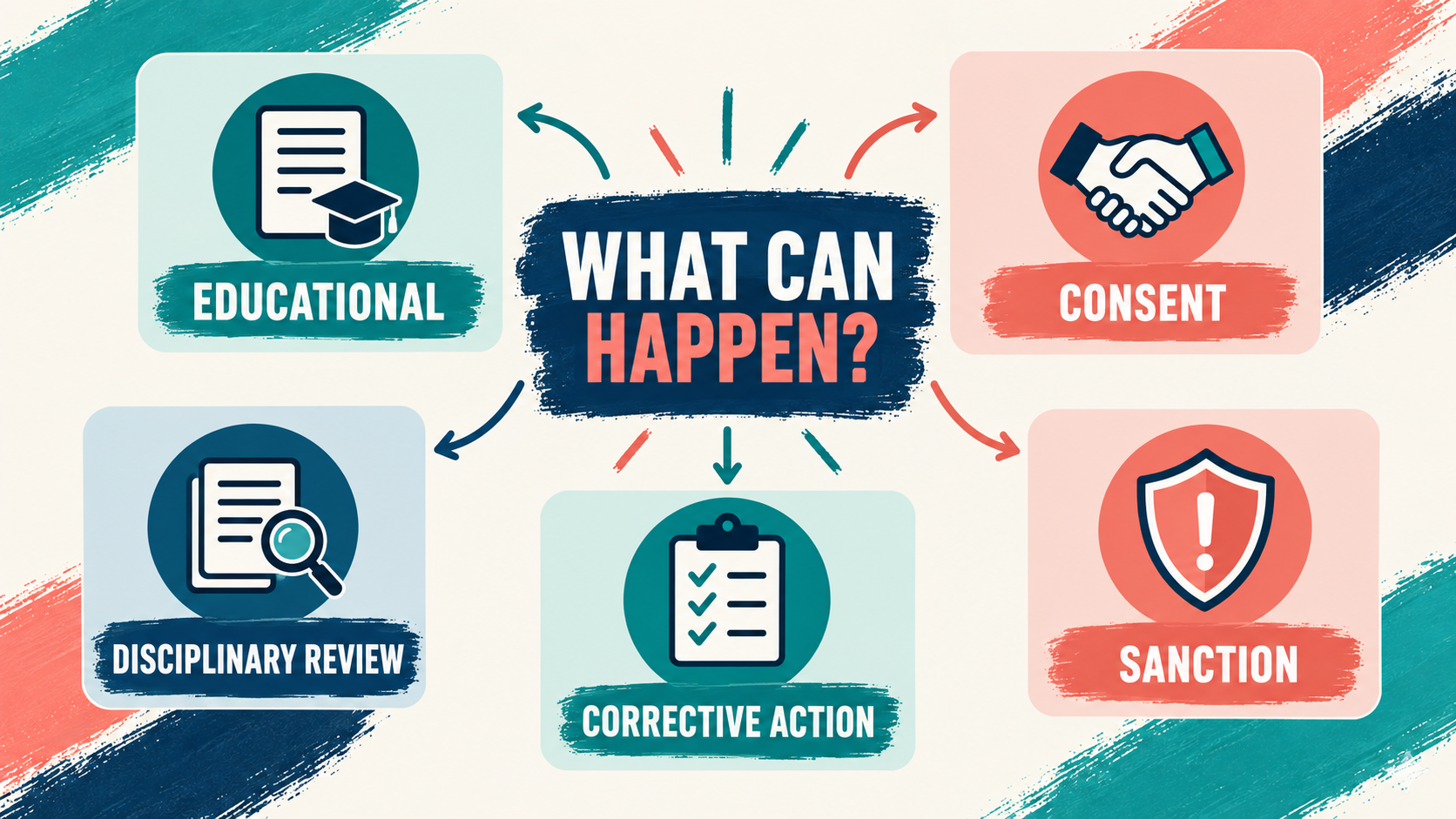
Once a response timeline expires, the document describes several possible directions. The best exam answer usually names the process that matches the facts instead of jumping directly to “revocation.”
| Resolution | What it means | Common mistake |
|---|---|---|
| Educational Memorandum | Guidance and support for allegations best addressed through nondisciplinary action or inconclusive facts. | Treating every educational response as a public sanction. |
| Consent Agreement | A voluntary resolution with specified terms and conditions, without admitting wrongdoing. | Assuming it is the same as a disciplinary finding or a court judgment. |
| Disciplinary Review | Reviewers decide whether the documentation supports the alleged violation and, if so, what consequences apply. | Calling the allegation itself proof of a violation. |
| No further action | A possible outcome when the available documentation does not support further action. | Assuming that every accepted notice ends in a sanction. |
In a disciplinary review, the current document describes a preponderance-of-the-documentation standard: the documentation must support a conclusion that it is more likely than not that the violation occurred. That is a process standard, not a shortcut for deciding whether a scenario in a multiple-choice question is ethical.
What Are Corrective Actions and Sanctions?
The BACB distinguishes corrective actions from sanctions. Corrective actions are steps intended to address a violation and reduce the chance of recurrence. Examples may include professional development, additional training, verification of competence, or supervision-related requirements. The procedure document states that corrective actions are not published on the BACB website, although other documentation and circumstances can affect what information is shared.
Sanctions can include restrictions, suspension, revocation, or other published consequences described in the current document. Fraud or deceit receives especially serious treatment: the BACB may invalidate a certification or restrict eligibility for a period described in the procedures. Failure to respond can also lead to summary suspension. These are not interchangeable facts. The scenario, the document version, the person’s status, and the applicable determination matter.
The process can also include immediate or interim action when a BACB requirement is violated or an imminent risk of harm is identified. A summary action does not necessarily prevent later disciplinary or other action, and some summary actions have an immediate appeal path. For an exam question, identify whether the fact pattern is asking about an interim protective step, a final consequence, or a corrective educational response.
How Does the Appeal Process Fit?
An appeal comes after an appealable consequence or summary action; it is not a way to reopen every earlier decision. The current procedure document explains that some outcomes, including Consent Agreements and Educational Memoranda, may not be appealed. When an appeal is available, the Subject must follow the written request and documentation windows stated by the BACB.
The Disciplinary Appeal Committee may uphold, modify, or overturn an appeal determination. A modification cannot be more adverse to the Subject under the procedure language. The appeal process is document-driven and is not the same as a courtroom trial: the procedure document explains limits on cross-examination and requires relevant evidence within the stated period. For study purposes, remember the sequence: allegation → review → response → determination → appeal when available. Reversing that order is a frequent distractor.
What Are the BCBA Exam Traps?
The current BCBA Test Content Outline expects candidates to apply ethical and professional standards, not memorize isolated words. When a question mentions a complaint, use this checklist:
- Identify the role: Is the person the Notifier, the Subject, a supervisor, a trainee, or an outside agency?
- Identify the stage: Is the question about filing, initial review, response, determination, consequence, or appeal?
- Separate allegation from proof: A Notice of Alleged Violation is not itself a finding.
- Look for evidence: Clear, accurate, relevant, redacted documentation is more important than speculation.
- Respect current authority: If a study guide and the current BACB procedure document conflict, verify the document version and use the current official source.
- Do not overclaim: A practice question may ask for the most ethical immediate action, not a prediction of BACB sanctions.
A free BCBA mock exam can help you practice this kind of stage-and-role discrimination. Use your results diagnostically: record which process stage you missed, which document rule you confused, and why the distractor sounded plausible.
BACB Code Enforcement FAQ
Does a BACB complaint automatically mean a violation occurred?: No. A complaint or Notice of Alleged Violation starts a process. The BACB may decline, defer, request correction, or accept the notice, and a later determination depends on the applicable documentation and procedure.
Can the BACB investigate anyone involved in ABA?: Not automatically. The current procedures define the BACB’s jurisdiction over the categories covered by the document. State licensing boards, employers, payers, courts, and other agencies may have separate authority.
What happens if a Subject does not respond?: The current BACB materials warn that failure to respond by the provided deadline can result in automatic suspension of certification, eligibility, or another status. Always read the actual notice and current procedure document for the required response.
Is a Consent Agreement the same as admitting wrongdoing?: Not under the current procedure description. A Consent Agreement can resolve a matter through specified terms and conditions without an admission of wrongdoing. The agreement’s actual terms control.
Can every BACB outcome be appealed?: No. The procedure document identifies outcomes that may not be appealed and describes the timing and documentation requirements for an available appeal. Do not assume that “appeal” is available at every stage.
The most reliable way to remember BACB Code Enforcement Procedures is to keep the branches separate: jurisdiction, initial review, response, resolution, consequence, and appeal. For exam questions, choose the action that matches the facts and stage. For a real matter, use the current BACB documents and qualified advice rather than relying on a study summary.
Quick Review Checklist
Use this final checklist to turn bacb code enforcement procedures into exam-ready reasoning. The goal is not to memorize a label in isolation; it is to identify the relevant evidence and explain why the best answer fits the scenario. Key ideas to review:
- State the central definition or decision point for bacb code enforcement procedures in your own words.
- Identify the detail that makes bacb code enforcement procedures different from its closest related ABA term.
- Separate the observable facts in a scenario from assumptions that are not supported by the facts.
- Write one example and one nonexample so you can recognize the concept in a new setting.
Exam application checks:
- Ask what the question is actually requesting before comparing the answer choices.
- Mark the antecedent, response, consequence, or other evidence that supports the selected answer.
- Look for a distractor that describes a related process but does not answer the specific question.
Final self-check:
- Explain how you would verify the interpretation with clear observations or data.
- Change one detail in the scenario and decide whether your answer should change.
- Give a one-sentence rationale that a supervisor or study partner could evaluate.
Take the Free BCBA Mock Exam
If you want a low-pressure way to check your recall, use the free practice resource below. Take the Free BCBA Mock Exam



