
Why the Four Functions of Behavior Are Foundational
Understanding the four functions of behavior represents a cornerstone of applied behavior analysis practice and examination preparation. This framework moves beyond simply describing what behavior looks like to explaining why it occurs—a critical shift from topography-based to function-based understanding.
Table of Contents
- Why the Four Functions of Behavior Are Foundational
- Defining and Illustrating the Four Functions
- Applying the Framework: From Assessment to Intervention
- Navigating Exam Questions on Behavioral Function
- References
The Core of Functional Analysis and Assessment
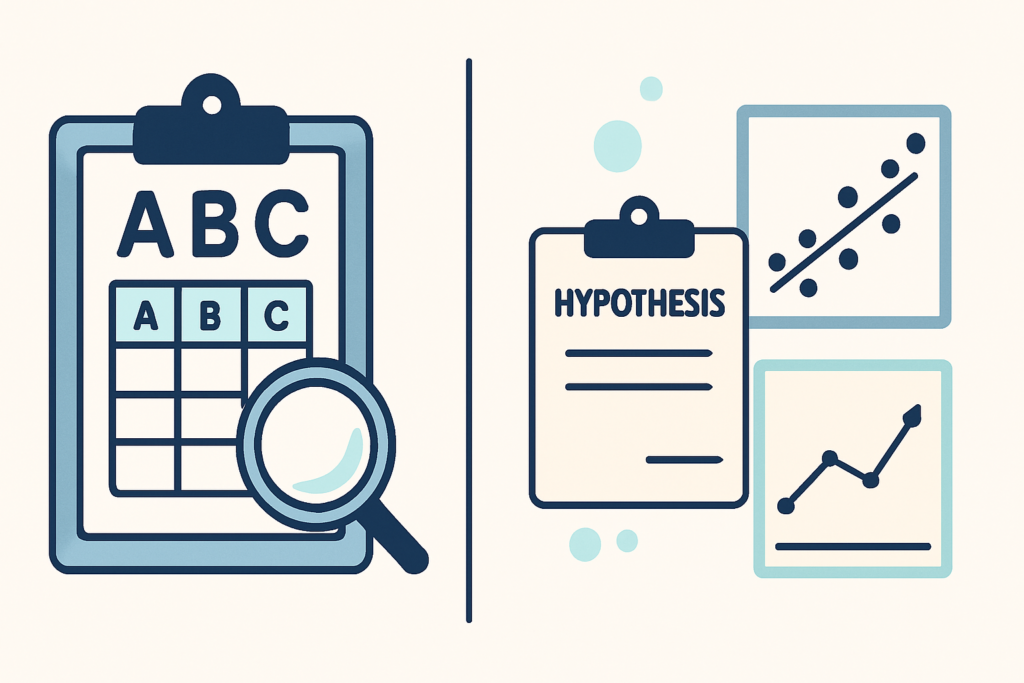
Every functional behavior assessment aims to identify the maintaining variables for challenging behaviors. The four functions provide the systematic framework for this investigation. When you conduct an FBA, you’re essentially testing hypotheses about which of these four functions maintains the target behavior.
Ethical intervention depends entirely on this distinction. A function-based intervention addresses the underlying motivation, while a topography-based approach might inadvertently reinforce the very behavior you’re trying to reduce.
Linking Functions to the BCBA Task List
This content maps directly to multiple sections of the BACB Task List. Specifically, you’ll find it in:
- Section B-1: Define and provide examples of behavior, response, and response class
- Section B-4: Define and provide examples of positive and negative reinforcement contingencies
- Section B-6: Define and provide examples of automatic and socially mediated contingencies
- Section F-3: Identify and prioritize socially significant behavior-change targets
Mastering these functions is essential for both examination success and ethical practice. For additional foundational concepts, review our guide on philosophical assumptions in behavior analysis.
Defining and Illustrating the Four Functions
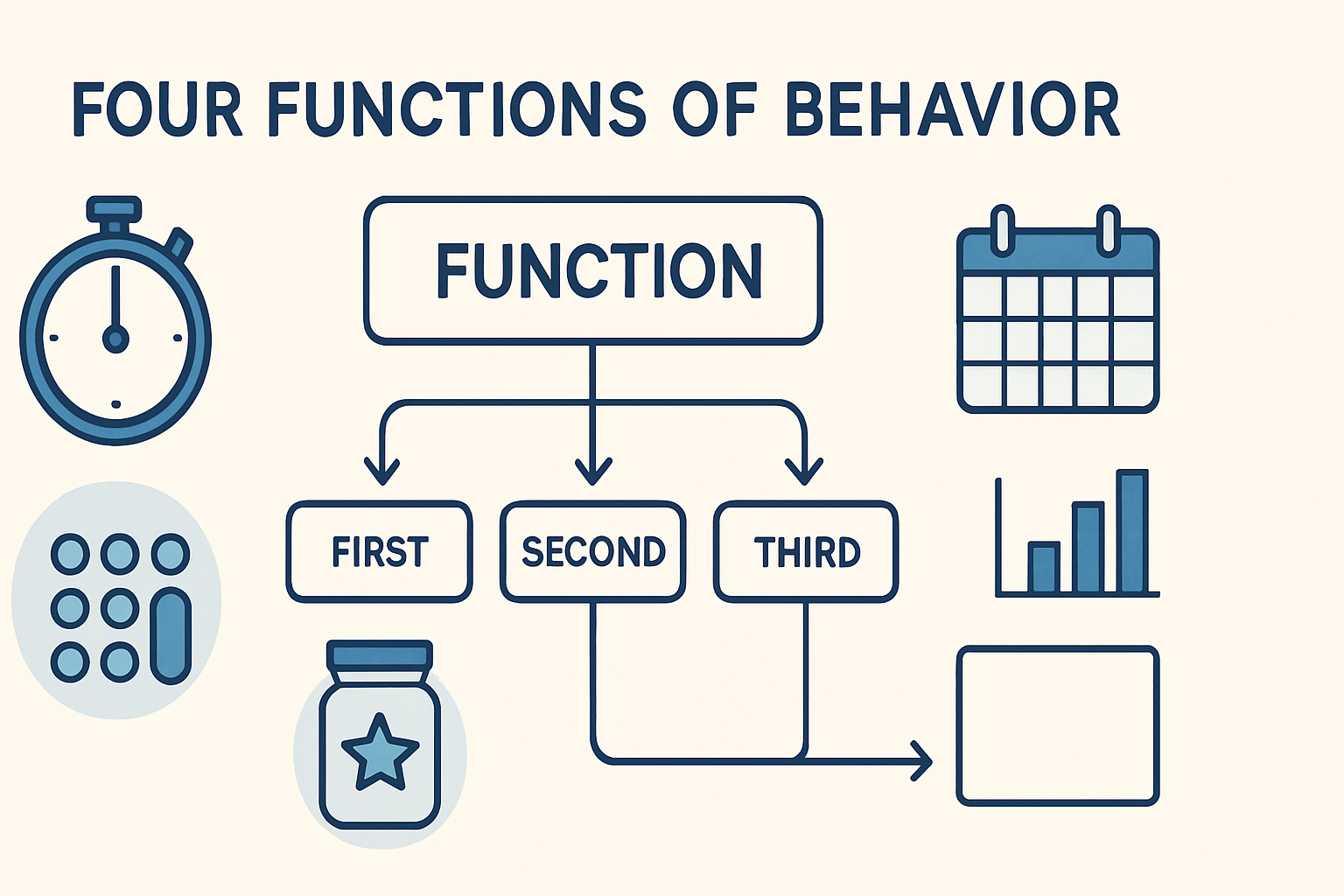
Each function represents a distinct type of reinforcement contingency that maintains behavior. Let’s examine each with clear definitions and practical examples.
1. Social Positive Reinforcement (Access to Tangibles/Activities/Attention)
Behavior is maintained by gaining access to something desirable through social mediation. This includes attention, tangible items, or preferred activities.
ABC Example: Antecedent: Parent says ‘no iPad.’ Behavior: Child screams and throws toys. Consequence: Parent gives iPad to calm child. Hypothesized Function: Access to tangible (iPad).
The behavior produces a socially mediated consequence where another person provides the reinforcing stimulus.
2. Social Negative Reinforcement (Escape/Avoidance)
Behavior is maintained by removing or avoiding an aversive stimulus through social mediation. This typically involves escape from demands or unpleasant situations.
ABC Example: Antecedent: Teacher presents difficult math worksheet. Behavior: Student puts head down and says ‘I can’t.’ Consequence: Teacher removes worksheet. Hypothesized Function: Escape from academic demand.
This represents negative reinforcement because the behavior results in removal of something aversive. For more on this concept, see our detailed guide on negative reinforcement in ABA.
3. Automatic Positive Reinforcement (Sensory Stimulation)
Behavior itself produces pleasing sensory input without social mediation. The reinforcement comes from the sensory consequences of the behavior.
ABC Example: Antecedent: Quiet free time with no demands. Behavior: Child rocks back and forth rhythmically. Consequence: Produces vestibular stimulation. Hypothesized Function: Automatic positive reinforcement.
These behaviors are sometimes called self-stimulatory and maintain through their sensory products. Learn more about automatic reinforcement in our dedicated guide.
4. Automatic Negative Reinforcement (Pain Attenuation)
Behavior reduces or alleviates an internal aversive state without social mediation. This often involves behaviors that provide relief from discomfort or pain.
ABC Example: Antecedent: Child experiences migraine headache. Behavior: Child hits own temple repeatedly. Consequence: Temporary reduction in pain intensity. Hypothesized Function: Automatic negative reinforcement.
This function is particularly important for medical considerations and requires careful medical evaluation before behavioral intervention.
Applying the Framework: From Assessment to Intervention
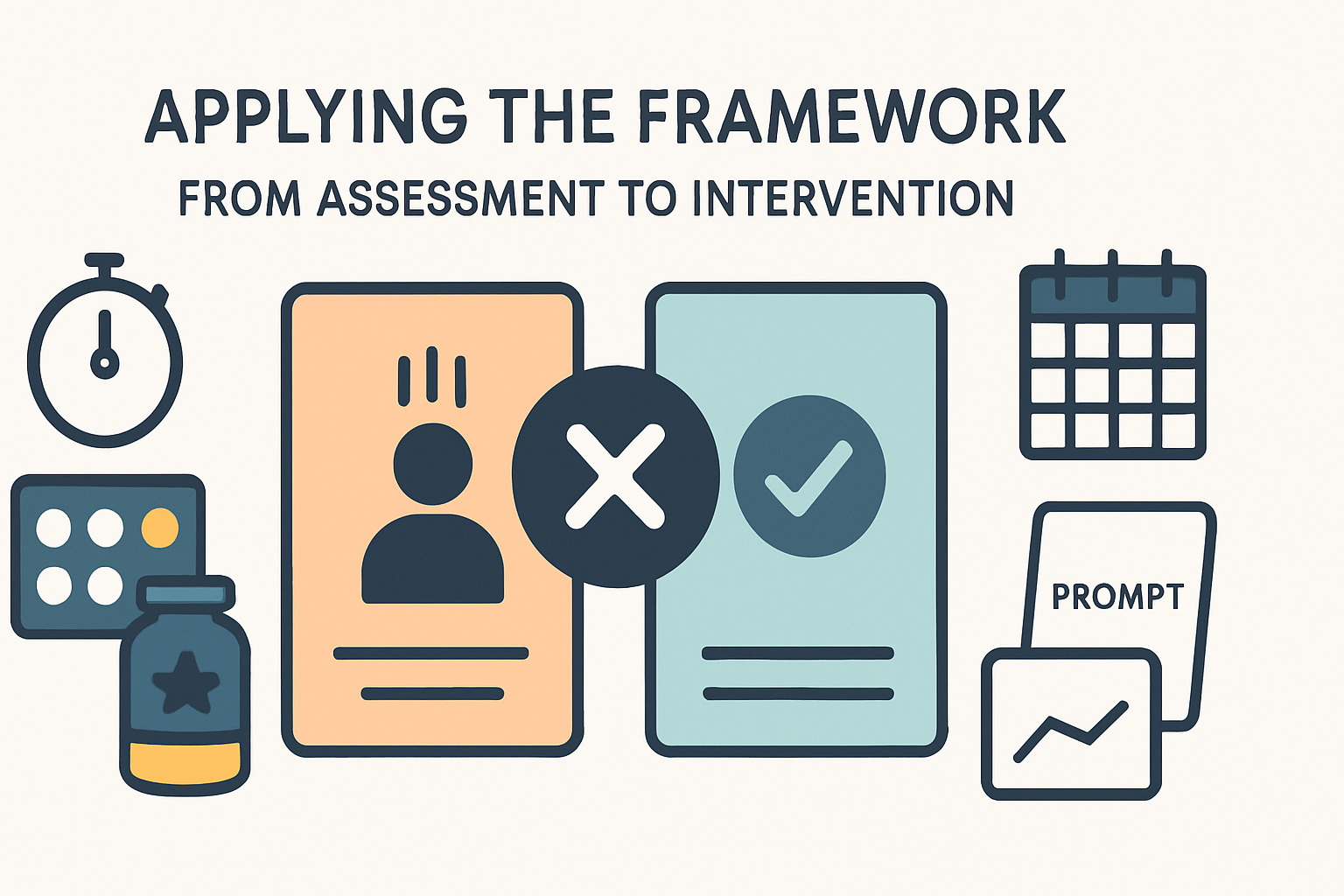
Identifying the function is only the first step. Effective practice requires translating this understanding into ethical intervention strategies.
Matching Intervention to Function
Function-based intervention means selecting strategies that address the maintaining variable. For escape-motivated behavior, you might teach a functional communication response like ‘break, please’ instead of using time-out, which would be contraindicated.
Consider these intervention matches:
- For attention-seeking: Teach appropriate attention-getting skills and provide non-contingent attention
- For escape-motivated: Teach request for break and modify task difficulty
- For automatic positive: Provide alternative sensory activities and environmental enrichment
- For automatic negative: Medical consultation and pain management strategies
A Quick Checklist for Hypothesis Testing
Use this practical checklist to test your functional hypotheses:
- If attention function: Does behavior decrease when you provide non-contingent attention?
- If tangible function: Does behavior decrease when you provide free access to the item?
- If escape function: Does behavior decrease when you remove demands or reduce difficulty?
- If automatic function: Does behavior persist even when social consequences are removed?
This systematic approach helps validate your functional assessment conclusions before implementing interventions.
Navigating Exam Questions on Behavioral Function
BCBA examination questions often test your ability to identify functions within complex scenarios. Understanding common pitfalls can improve your accuracy.
Common Exam Traps and How to Avoid Them
Watch for these frequent mistakes:
- Confusing topography with function: Remember that different behaviors can serve the same function, and similar behaviors can serve different functions
- Misidentifying automatic vs. social reinforcement: Look for whether the consequence requires another person’s action
- Selecting interventions that match the wrong function: Ensure your intervention choice logically addresses the maintaining variable
- Overlooking setting events and motivating operations: Consider how establishing operations affect the value of consequences
For more on how antecedent variables influence behavior, review our guide on antecedent strategies and common exam traps.
Sample Practice Scenarios
Test your understanding with these exam-style scenarios:
Scenario 1: During group instruction, a student consistently makes loud, inappropriate comments. The teacher redirects the student each time with verbal correction. The behavior continues throughout the session. What is the most likely function?
Scenario 2: A child engages in hand-flapping when alone in their room during quiet time. No one observes or responds to this behavior. The child continues hand-flapping for several minutes. What is the most likely function?
Scenario 3: During toothbrushing routine, a child screams and pushes away the toothbrush. The parent typically stops brushing and says ‘okay, we’re done.’ The child immediately stops screaming. What is the most likely function?
These scenarios test your ability to analyze ABC relationships and identify maintaining variables. Practice with varied examples to build your analytical skills.
Mastering the four functions of behavior provides the foundation for ethical assessment, effective intervention, and examination success. Remember that function-based practice represents the gold standard in ABA, moving beyond surface-level descriptions to address the true maintaining variables of behavior. For comprehensive exam preparation, explore our BCBA exam prep guide and additional resources on our site.


