

Behavior Assessment System BAS: What is a Behavior Assessment System (BAS) in ABA?
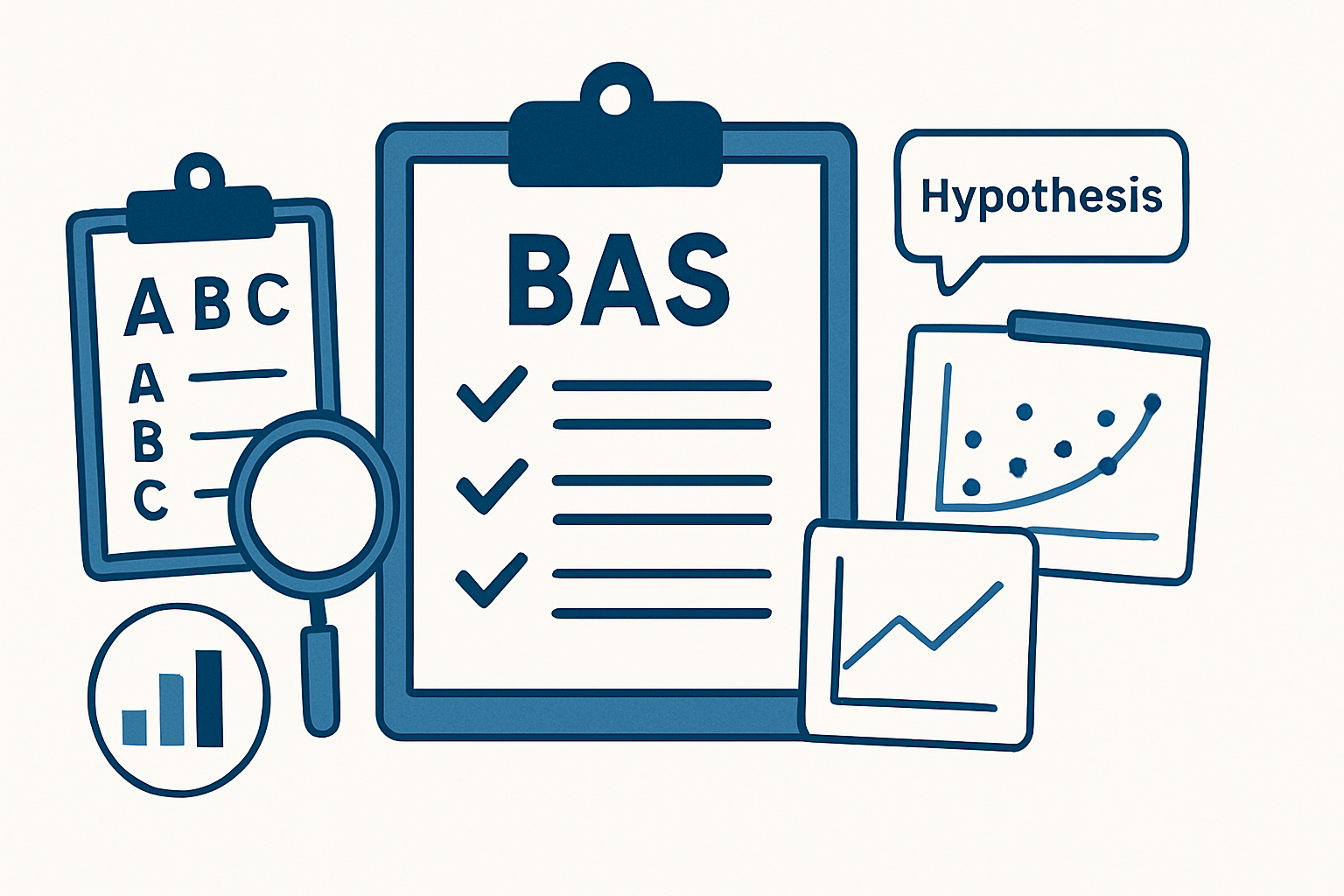
A Behavior Assessment System (BAS) represents a comprehensive, multi-method approach to understanding behavior within applied behavior analysis. Unlike a single assessment tool, a BAS integrates multiple assessment methods to gather comprehensive information about target behaviors, their environmental context, and maintaining variables.
Table of Contents
- Behavior Assessment System BAS: What is a Behavior Assessment System (BAS) in ABA?
- BAS in Action: Worked Examples for BCBA Candidates
- BAS on the BCBA Exam: Relevance and Common Traps
- Quick Checklist: Implementing an Ethical Behavior Assessment System
- Summary and Key Takeaways for Your Studies
This systematic approach ensures that behavior analysts develop interventions based on thorough understanding rather than assumptions.
Core Components of a Comprehensive BAS
Effective BAS implementation involves three primary assessment categories working together:
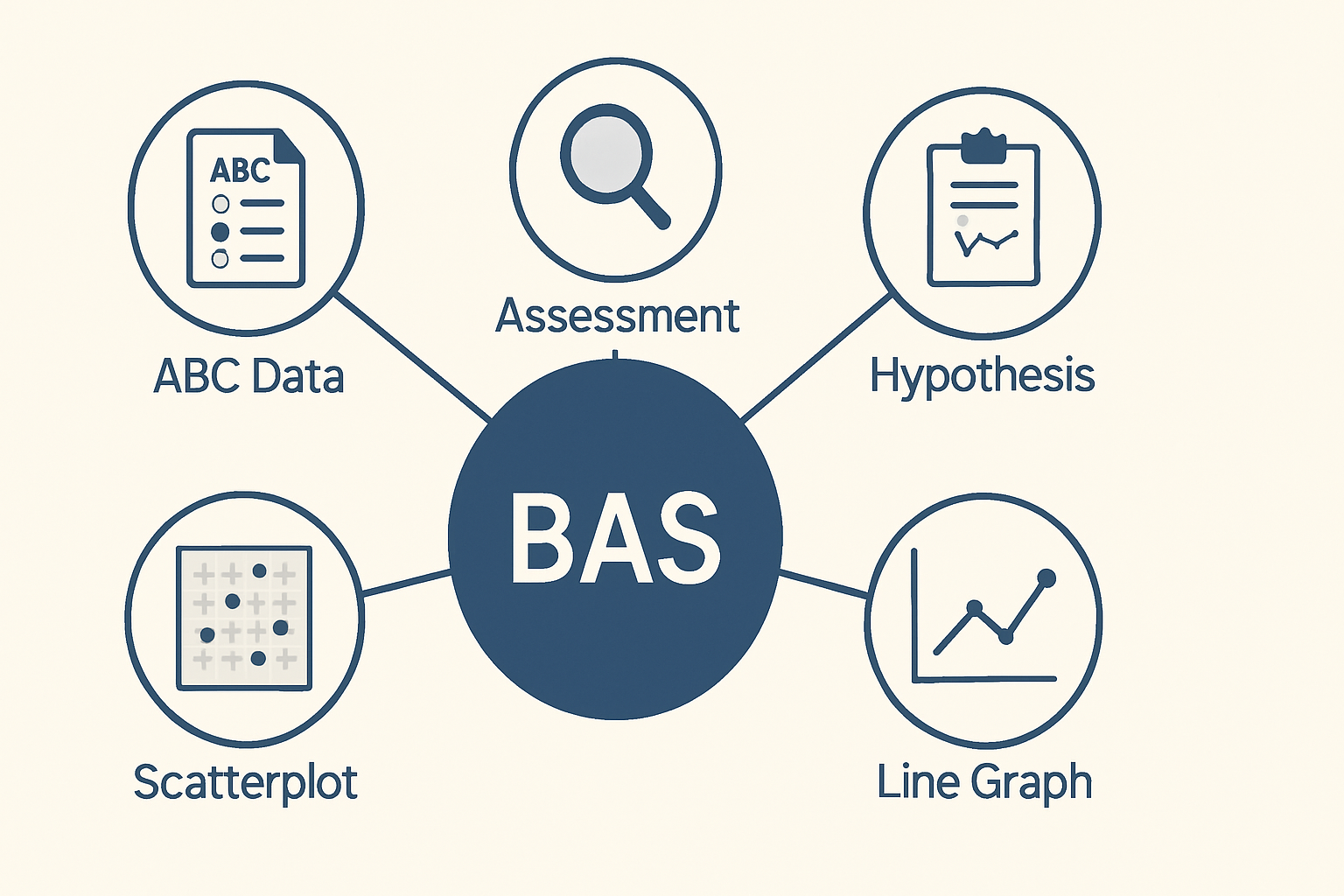
- Indirect assessment methods gather historical and contextual information through interviews, record reviews, and rating scales
- Direct descriptive assessment involves observing and recording behavior in natural settings using ABC data, scatterplots, and duration recording
- Functional analysis systematically tests hypotheses about behavior function through controlled environmental manipulations
The BAS is a dynamic process rather than a one-time event, with assessment data continuously informing intervention decisions.
The BAS and the BACB Ethics Code
The BACB Ethics Code explicitly requires systematic assessment before intervention. Code 2.01 mandates that behavior analysts conduct appropriate assessments before developing behavior-change programs.
This ethical requirement ensures that interventions are based on empirical evidence rather than assumptions, protecting client welfare and dignity. A proper BAS demonstrates compliance with Code 3.01’s requirement for professional competence in assessment procedures.
BAS in Action: Worked Examples for BCBA Candidates
Understanding BAS concepts requires seeing them applied to real scenarios. These examples demonstrate how different assessment methods work together.
Example 1: Addressing Elopement in a School Setting
A 9-year-old student frequently leaves the classroom without permission during math instruction. The BAS process unfolds systematically:
- Indirect assessment: Teacher interview reveals elopement occurs primarily during difficult math problems
- Direct descriptive assessment: ABC data shows antecedent is “difficult math worksheet,” behavior is “leaving seat and exiting classroom,” consequence is “teacher follows and redirects”
- Hypothesized function: Escape from academic demands
- Assessment conclusion: The BAS indicates escape-maintained behavior, leading to intervention planning focused on task modification and functional communication training
Example 2: Reducing Hand Mouthing During Demands
A 6-year-old child engages in hand mouthing when presented with transition demands. The BAS approach differs significantly:
- Indirect assessment</strong}: Parent report indicates hand mouthing occurs across multiple settings and times of day
- Direct observation: Duration recording shows behavior occurs for extended periods without apparent social consequences
- Medical consultation: Included in BAS to rule out medical causes for oral stimulation needs
- Hypothesized function: Automatic reinforcement (sensory stimulation)
- Assessment outcome: The comprehensive BAS suggests automatically maintained behavior, guiding intervention toward alternative sensory activities and response interruption
BAS on the BCBA Exam: Relevance and Common Traps
The BCBA exam frequently tests understanding of assessment systems and their proper application. Recognizing key concepts and avoiding common mistakes is essential for success.
Key Terms and Definitions You Must Know
Several assessment-related terms appear regularly on the BCBA exam:
- Functional Behavioral Assessment (FBA): A process for identifying the function of behavior
- Descriptive assessment: Observing and recording behavior in natural environments without manipulation
- Functional analysis: Systematic manipulation of environmental variables to test behavioral function
- Antecedent manipulation: Assessment strategy involving modification of environmental events preceding behavior
- Competing behavior pathway: Assessment tool mapping current behavior patterns and potential alternatives
Understanding these terms within the broader BAS context is crucial for exam success.
Frequent Exam Pitfalls and How to Avoid Them
Common mistakes on BAS-related questions include:
- Confusing assessment types: Mixing up descriptive assessment with functional analysis procedures
- Premature intervention selection: Choosing interventions before completing the assessment process
- Function misidentification: Assuming behavior function based on limited or biased data
- Overlooking indirect methods: Neglecting interview and record review components of the BAS
- Ignoring ethical considerations: Failing to consider assessment risks and client rights
To avoid these traps, always consider the comprehensive assessment process and follow ethical guidelines from the BACB Ethics Code.
Quick Checklist: Implementing an Ethical Behavior Assessment System
Use this practical checklist to ensure comprehensive BAS implementation:
- Begin with indirect assessment methods (interviews, records review)
- Conduct systematic direct observation using appropriate measurement procedures
- Develop and test function hypotheses through controlled analysis when appropriate
- Consider medical factors that might influence behavior presentation
- Document all assessment procedures and findings thoroughly
- Base intervention decisions on assessment data rather than assumptions
- Continuously monitor and adjust assessment procedures as needed
- Ensure assessment methods respect client dignity and rights
This systematic approach aligns with best practices in behavior assessment and ethical requirements.
Summary and Key Takeaways for Your Studies
The Behavior Assessment System represents a foundational component of ethical, effective ABA practice. Key points to remember include:
- A BAS is a comprehensive system, not a single assessment tool
- Multiple assessment methods (indirect, direct descriptive, functional analysis) work together
- Proper BAS implementation is an ethical requirement under the BACB Code
- Assessment should always precede intervention development
- Common exam traps involve confusing assessment types and premature intervention selection
- Understanding functional assessment procedures is essential for both exam success and competent practice
For further study of assessment concepts, explore resources on functional behavior assessment and review the BACB Ethics Code for specific assessment requirements. Mastery of BAS principles supports both exam performance and ethical, effective practice in applied behavior analysis.


