
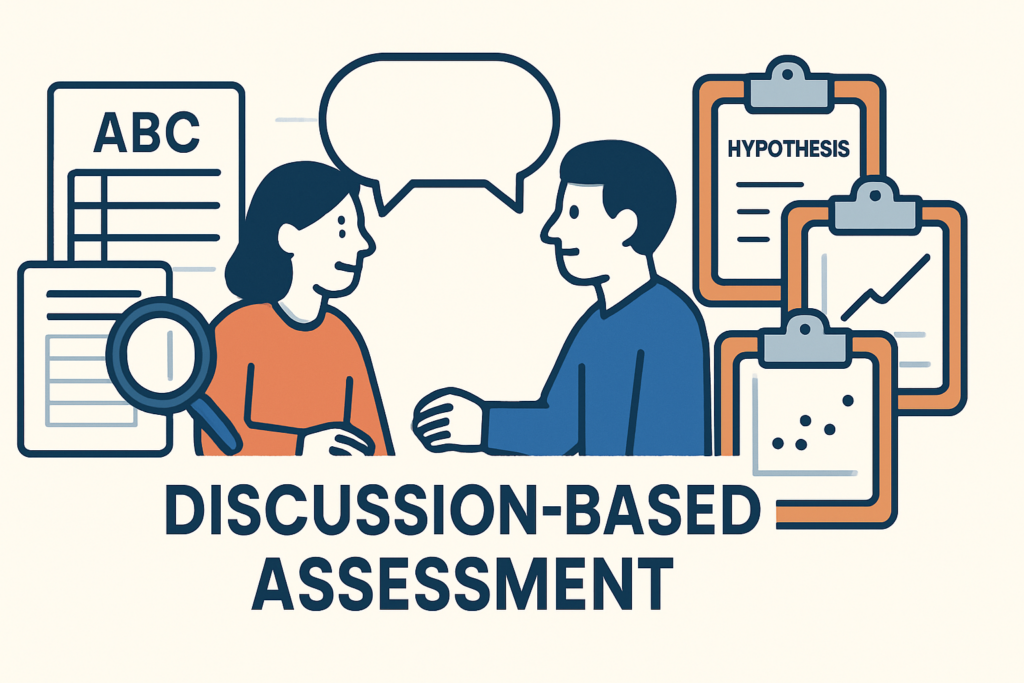
What is a Discussion-Based Assessment in ABA?
A discussion-based assessment is an indirect assessment method used within functional behavior assessment (FBA). It involves structured interviews or conversations with caregivers, teachers, or other stakeholders to gather information about a target behavior and its environmental context.
Table of Contents
- What is a Discussion-Based Assessment in ABA?
- Conducting an Ethical and Effective Discussion
- BCBA Exam Focus and Common Pitfalls
- Quick-Reference Checklist for Practitioners
- Summary and Key Takeaways
This approach serves as a preliminary step that informs subsequent direct observation and analysis.
Definition and Role in Functional Behavior Assessment
As an indirect assessment, discussion-based methods rely on verbal reports rather than direct measurement. They typically occur early in the assessment process to establish rapport and gather historical data that guides more systematic observation.
The primary role is to develop initial hypotheses about behavioral function, identify potential setting events, and pinpoint specific contexts for direct observation.
Key Advantages and Inherent Limitations
Discussion-based assessments offer several benefits but also carry important limitations that practitioners must recognize.
- Efficiency: Quick to administer compared to extended direct observation
- Historical perspective: Captures patterns across time that might not be observable in limited sessions
- Rapport building: Establishes collaborative relationships with stakeholders
- Memory bias: Subject to recall errors and selective reporting
- Observer bias: Influenced by stakeholder perceptions and interpretations
- Indirect evidence: Provides hypotheses, not conclusive data on behavioral function
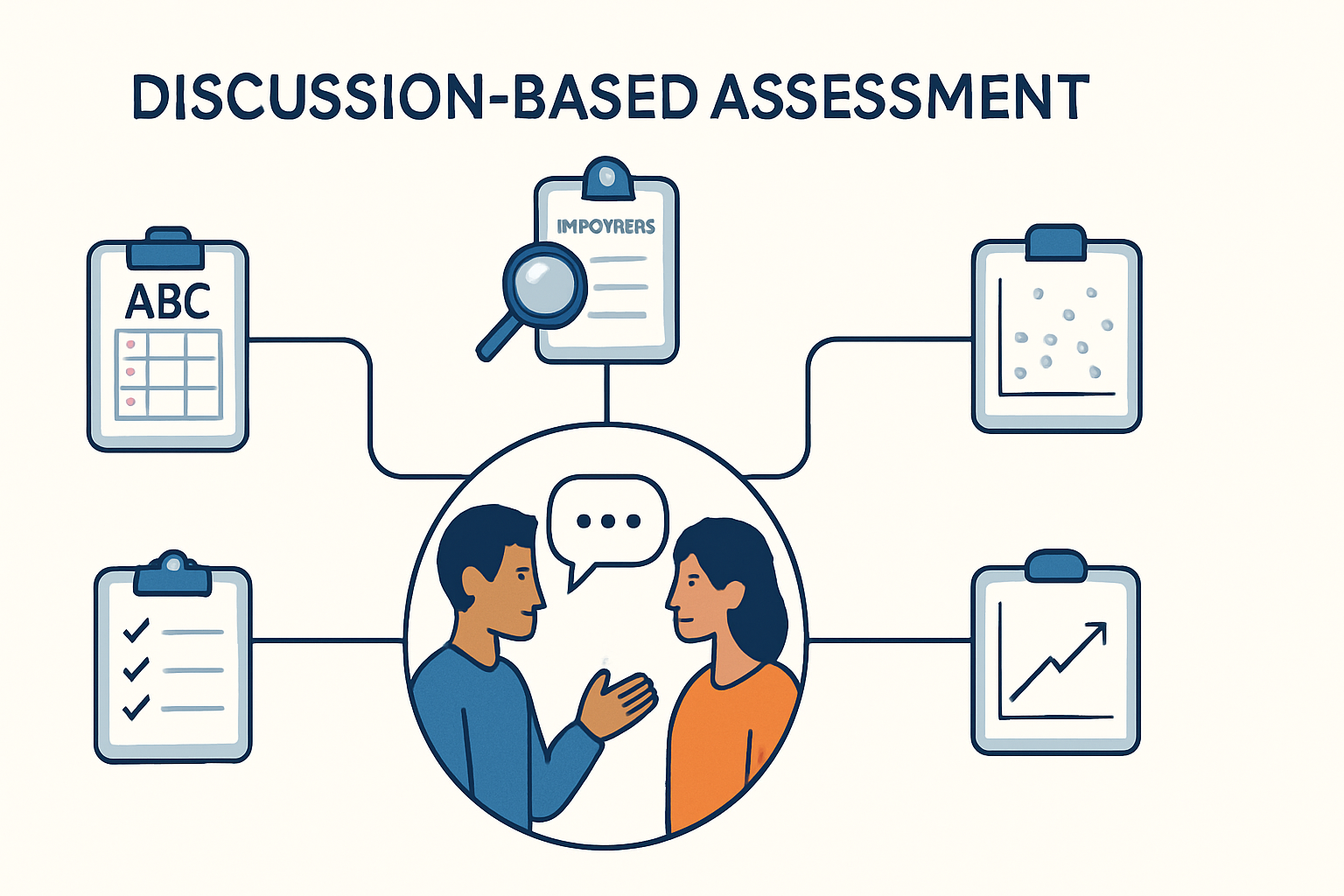
Conducting an Ethical and Effective Discussion
Effective implementation requires both technical skill and ethical awareness. The BACB Ethics Code provides essential guidance for conducting these assessments with professionalism and respect.
Ethical Foundations: Consent, Rapport, and Cultural Humility
Ethical practice begins with obtaining informed consent (Code 2.11) and maintaining client dignity (Code 1.01). Cultural responsiveness (Code 1.07) requires adapting your approach to match the stakeholder’s communication style and cultural background.
Key ethical considerations include using plain language, practicing active listening, and creating a comfortable environment that encourages honest sharing. For more on ethical practice, see our guide on ethics in ABA practice.
From Conversation to Hypothesis: Two Worked Examples
Let’s examine two practical scenarios demonstrating how discussion-based assessments generate functional hypotheses.
Example 1: School Elopement
Context: 8-year-old student leaves classroom without permission. Discussion with teacher reveals:
- Antecedent: Independent math worksheets
- Behavior: Walks out of room, goes to library
- Consequence: Avoids math work, gets librarian attention
Hypothesized function: Escape from academic demands with possible secondary access to preferred activities.
Example 2: Home-Based Screaming
Context: 5-year-old screams during therapy sessions at home. Parent interview indicates:
- Antecedent: Therapist presents matching task
- Behavior: Loud screaming, covering ears
- Consequence: Task removed, parent offers comfort
Hypothesized function: Escape from difficult tasks with potential automatic reinforcement from sensory consequences.
BCBA Exam Focus and Common Pitfalls
Discussion-based assessments appear in Section F of the BACB Task List, specifically addressing behavior assessment methods. Understanding their proper application is crucial for exam success.
Task List Alignment and Typical Question Formats
These assessments align with F-1 (Review records and available data) and F-2 (Identify and prioritize socially significant behavior-change goals). Exam questions may ask you to:
- Select discussion-based assessment as an appropriate preliminary method
- Sequence assessment methods within a comprehensive FBA plan
- Identify limitations that necessitate direct observation follow-up
- Recognize ethical considerations in conducting interviews
Exam Traps: What to Watch Out For
Several common misconceptions can lead to incorrect answers on the BCBA exam.
- Confusing indirect with direct: Mistaking discussion-based for descriptive assessment
- Over-reliance on verbal report: Selecting it as sufficient for determining final function
- Missing consent requirements: Forgetting informed consent procedures
- Incorrect sequencing: Placing it after rather than before direct observation
- Function determination error: Using it alone to identify behavioral function
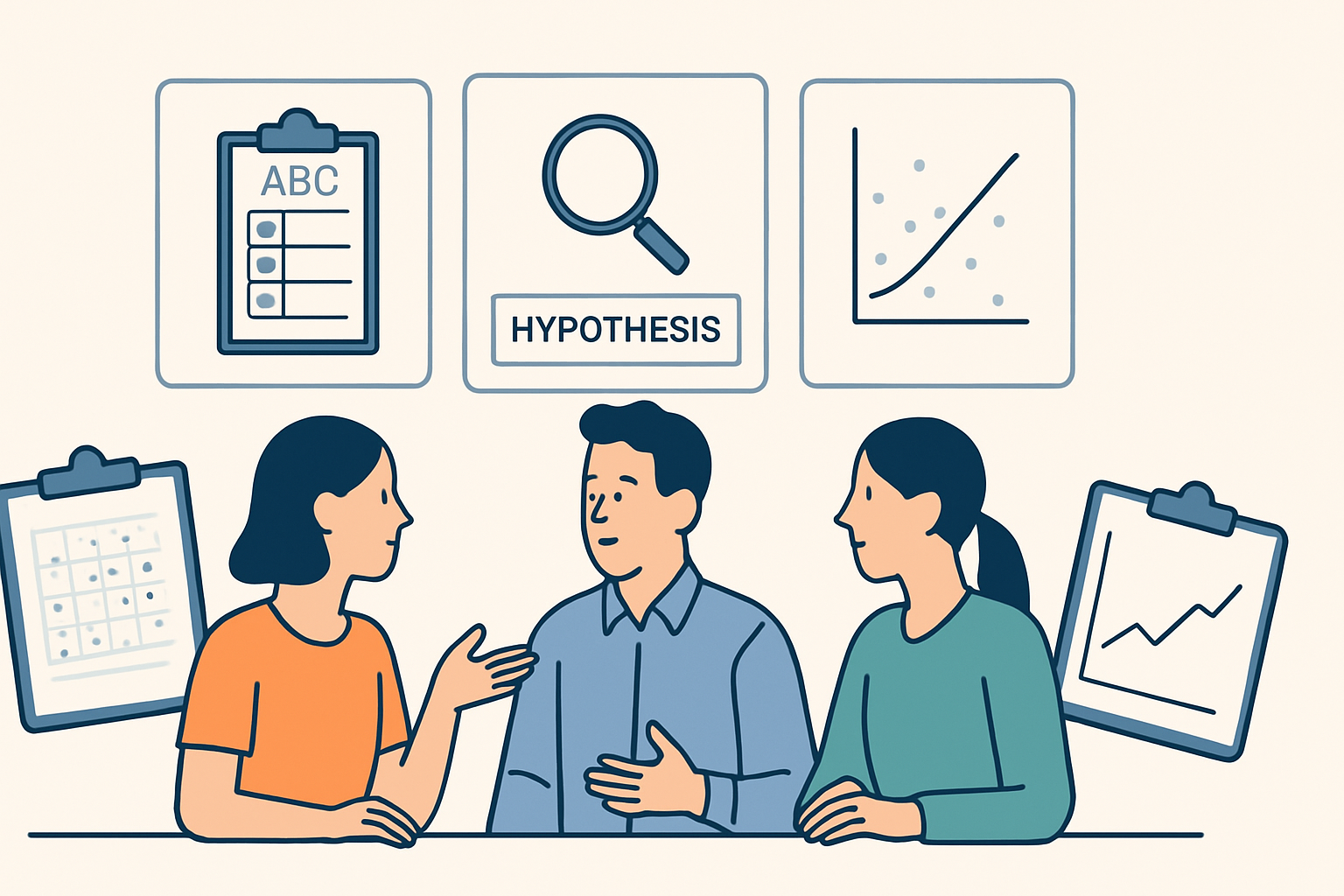
Quick-Reference Checklist for Practitioners
Use this actionable checklist to ensure comprehensive and ethical discussion-based assessments.
- Obtain informed consent before beginning
- Use open-ended questions to gather rich information
- Focus on observable behaviors and specific examples
- Probe for antecedents, behaviors, and consequences
- Document patterns across settings and times
- Identify potential setting events and motivating operations
- Generate testable hypotheses for direct observation
- Recognize limitations of verbal report data
- Plan follow-up assessment based on interview findings
Summary and Key Takeaways
Discussion-based assessments serve as valuable preliminary tools within comprehensive functional behavior assessments. They efficiently gather historical data and stakeholder perspectives while building collaborative relationships.
Remember that these methods provide hypotheses, not conclusive evidence of behavioral function. Always follow discussion-based assessment with direct observation methods like descriptive assessment or functional analysis.
Ethical implementation requires attention to informed consent, cultural responsiveness, and client dignity. For BCBA exam preparation, focus on understanding when to use this method, its limitations, and proper sequencing within assessment plans. The BACB Ethics Code provides essential guidance for ethical assessment practices.



