
What Is Stimulus Generalization?
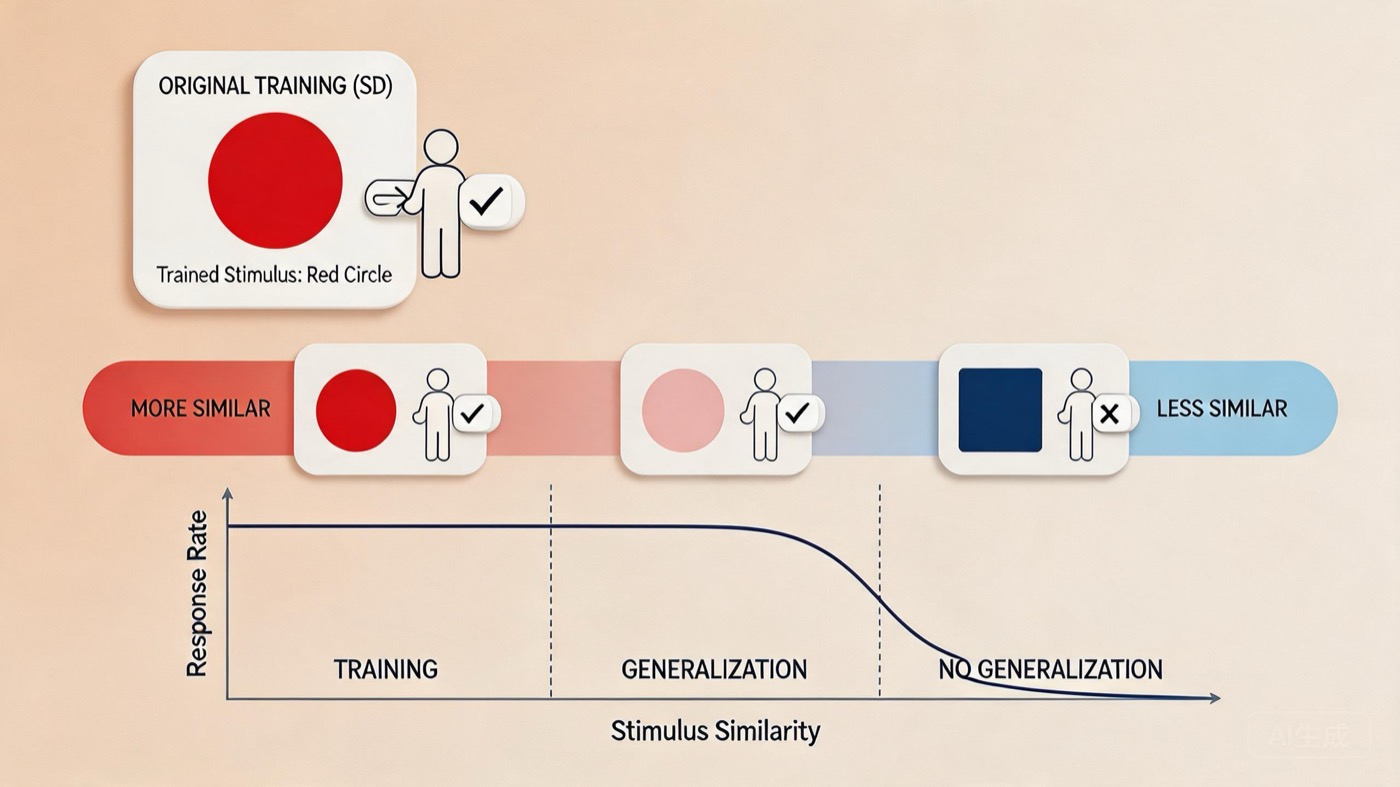
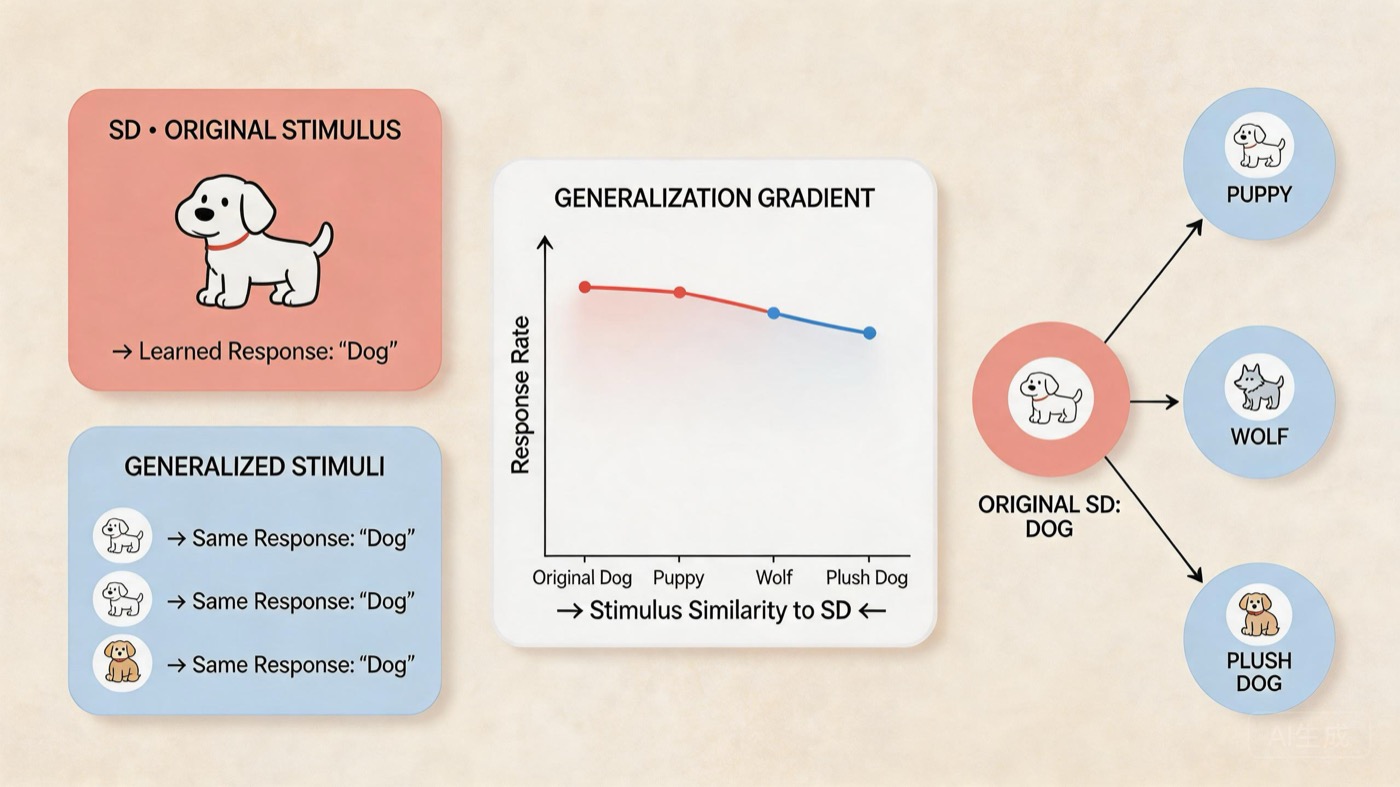
Stimulus generalization is the tendency for a learned behavior to occur in the presence of stimuli that are similar to the original discriminative stimulus (SD). In simple terms, it means that once an individual learns a response to one stimulus, they may display the same response to other, similar stimuli. This is a natural and adaptive learning process that allows for efficiency in behavior.
Table of Contents
- What Is Stimulus Generalization?
- Stimulus Generalization in ABA: Worked Examples with ABC Analysis
- Exam Relevance: How Stimulus Generalization Appears on the BCBA® Test
- Quick Checklist: Summarize Key Points for Last-Minute Review
- Final Summary
The stimulus generalization psychology definition emphasizes that the effect spreads not because of direct training, but because the new stimulus shares features with the original. For example, a child taught to say ‘please’ when asking for a snack from their parent may also say ‘please’ to a grandparent without explicit instruction. This spread happens because the grandparent’s voice, appearance, or context resembles the parent’s. In behavior analysis, stimulus generalization is essential for building flexible repertoires, but it can also lead to undesirable responses if not carefully programmed.
Understanding the mechanisms behind generalization helps BCBAs design interventions that ensure skills transfer to natural environments. For instance, teaching a child to request a break using a picture card at school should generalize to home and community settings. Without generalization, the behavior remains under restricted stimulus control, limiting its usefulness. The BCBA® exam often tests your ability to identify when generalization is occurring versus when it is absent, and to select strategies that promote or reduce it as needed.
Stimulus Generalization in ABA: Worked Examples with ABC Analysis
Understanding how stimulus generalization functions in applied settings is critical for the BCBA® exam. Below are three examples analyzed using the ABC (Antecedent-Behavior-Consequence) framework. Each example illustrates a different real-world application and highlights the function of the behavior.
Example 1: Treating Phobias Through Generalization
A child who is afraid of a neighbor’s dog may begin to fear all dogs. This is stimulus generalization of a fear response. The original stimulus (neighbor’s dog) evoked fear, and now similar stimuli (other dogs) evoke the same response.
- Antecedent: Seeing a dog of any breed
- Behavior: Crying and clinging to caregiver
- Consequence: Escape from the situation (e.g., caregiver removes child)
- Function: Negative reinforcement (avoidance)
This pattern suggests that treatment should target discrimination training to help the child differentiate safe dogs from threatening ones. For example, pairing a calm, leashed dog with high-value treats can create a new conditioned stimulus that competes with the fear. The BCBA® exam may ask you to identify the function or suggest an intervention to reduce overgeneralization. Remember that in phobia cases, generalization is often undesirable and requires systematic desensitization or differential reinforcement.
Example 2: Classroom Instruction and Generalization
A student learns to raise their hand when the teacher asks a question. Over time, the student begins to raise their hand in other classrooms and even with substitutes. This is beneficial generalization.
- Antecedent: Any adult presenting a question
- Behavior: Raising hand
- Consequence: Teacher calls on the student (attention)
- Function: Positive reinforcement (access to attention)
Here, stimulus generalization is beneficial and should be encouraged by programming for common stimuli. For instance, training across multiple instructors and settings can increase the likelihood of generalization. On the exam, you might be asked how to promote generalization in this scenario. Common strategies include teaching loosely, using multiple exemplars, and incorporating natural maintaining contingencies.
Example 3: Safety Skills Training
A child is taught to stop at the curb before crossing the street at one specific intersection. After training, the child stops at all curbs.
- Antecedent: Approaching any curb
- Behavior: Stopping and looking both ways
- Consequence: Praise from caregiver
- Function: Positive reinforcement (social praise)
This is a case where generalization is highly desirable, and programming should include multiple exemplar training across different curb types (e.g., sloped curbs, high curbs, painted curbs). The exam may ask which generalization strategy is being used or what additional steps are needed to ensure generalization across all settings. Always consider whether the consequence is available in the new context; if praise is only given at the trained intersection, generalization may fail.
Exam Relevance: How Stimulus Generalization Appears on the BCBA® Test
The BCBA® exam frequently tests your ability to identify stimulus generalization and distinguish it from related concepts. Below are common traps and a comparison with discrimination. Additionally, exam questions may present a scenario and ask you to determine whether generalization, discrimination, maintenance, or another process is occurring. Practice with vignettes that include multiple stimuli and responses.
Common Exam Traps and How to Avoid Them
- Confusing generalization with maintenance: Generalization involves a change in stimulus conditions; maintenance refers to behavior lasting over time. Read carefully whether the question mentions new stimuli or just time.
- Overgeneralization vs. faulty stimulus control: Overgeneralization is a natural spread to too many stimuli, while faulty stimulus control means the SD is not reliably evoking the behavior. Identify the function of the extra stimuli. For overgeneralization, the behavior occurs in the presence of stimuli that share features with the SD; for faulty control, the SD fails to evoke the response or other stimuli evoke it inappropriately due to a lack of discrimination training.
- Forgetting to identify the function: Always ask: Does the consequence maintain the behavior in the presence of the new stimulus? If not, it may not be true generalization. This is especially important when the behavior appears to generalize but actually is maintained by different reinforcers in each context.
Distinguishing from Stimulus Discrimination
The flip side of generalization is stimulus discrimination, where the behavior occurs only in the presence of a specific SD and not in the presence of similar stimuli. Exam questions often ask which concept is illustrated in a scenario. Use this quick guide:
- Stimulus generalization: Behavior occurs across similar stimuli. Example: Saying ‘hi’ to any adult.
- Stimulus discrimination: Behavior is restricted to a specific stimulus. Example: Saying ‘hi’ only to the teacher.
Practice with stimulus equivalence questions to sharpen your ability to differentiate. Also, be aware that generalization and discrimination are not binary; they exist on a continuum. The degree of generalization depends on the physical similarity between stimuli and the history of reinforcement.
Quick Checklist: Summarize Key Points for Last-Minute Review
Use this checklist to reinforce your understanding before the exam:
- Define stimulus generalization as responding to novel stimuli similar to the training SD.
- Identify the function of the behavior to confirm it is maintained by reinforcement in the new context.
- Differentiate generalization from maintenance: generalization involves new stimuli; maintenance involves time.
- Watch for overgeneralization in phobia cases where treatment requires discrimination training.
- Remember that generalization can be desirable (e.g., safety skills) or undesirable (e.g., fear).
- Use multiple exemplar training to promote desirable generalization.
- Always ask if the behavior occurs because of stimulus similarity or because of a new reinforcement contingency.
Final Summary
Stimulus generalization is a fundamental concept in behavioral psychology and a frequent topic on the BCBA® exam. By understanding its definition, recognizing it in ABC examples, and avoiding common traps, you can confidently answer exam questions. For deeper practice, explore our guide to generalization types and take a free BCBA mock exam to test your skills. Always remember: generalization is about spreading behavior across similar stimuli, not just over time.
For further reading, visit the BACB website for the task list and official resources.


