
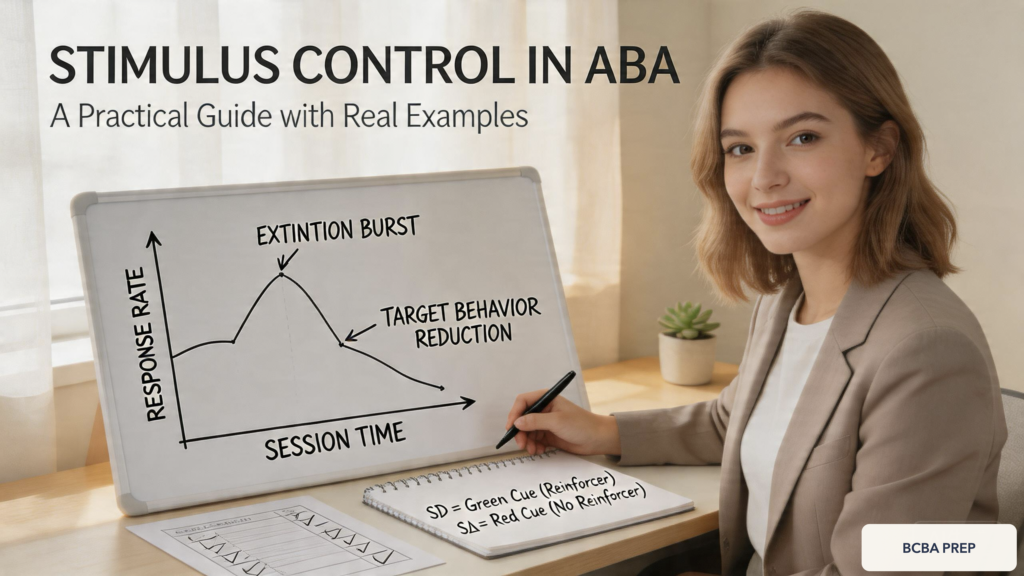
Understanding stimulus control is fundamental for behavior analysts and essential for BCBA exam success. This concept explains how environmental cues influence behavior through learning history, making it a cornerstone of effective intervention design. Mastering stimulus control ABA principles helps you analyze behavior patterns and implement precise teaching strategies.
Table of Contents
- Understanding Stimulus Control in Behavior Analysis
- Real-World ABA Examples of Stimulus Control
- Stimulus Control on the BCBA Exam: Common Traps and Tips
- Quick Checklist for Mastering Stimulus Control
- Summary and Next Steps for BCBA Prep
This guide breaks down stimulus control with clear definitions, practical examples, and exam-focused insights to strengthen your understanding.
Understanding Stimulus Control in Behavior Analysis
Stimulus control occurs when a specific behavior is more likely to occur in the presence of certain environmental cues than in their absence. This happens because those cues have been associated with reinforcement in the past. In applied behavior analysis, we systematically establish stimulus control to teach discriminative responding that’s appropriate to context.
The concept is distinct from general psychology interpretations, focusing specifically on observable behavior-environment relationships rather than internal cognitive processes.
Key Components: Discriminative Stimuli and Response Patterns
At the core of stimulus control are discriminative stimuli (Sᴰ) that signal reinforcement availability. When an Sᴰ is present, behaviors that have been reinforced in its presence become more probable. This relationship depends entirely on the individual’s reinforcement history with that stimulus.
- Discriminative stimulus (Sᴰ): A cue that signals reinforcement is available for a specific behavior
- Stimulus delta (Sˡ): A cue that signals reinforcement is NOT available for that behavior
- Response patterns: The specific behaviors evoked by Sᴰ versus Sˡ stimuli
- Stimulus generalization: When similar stimuli evoke the same response due to shared features
- Stimulus discrimination: When only specific stimuli evoke the response due to differential reinforcement
Effective stimulus control requires clear discrimination between Sᴰ and Sˡ, which practitioners establish through systematic teaching. For more on related concepts, see our guide to Sᴰ versus Sˡ differences.
Real-World ABA Examples of Stimulus Control
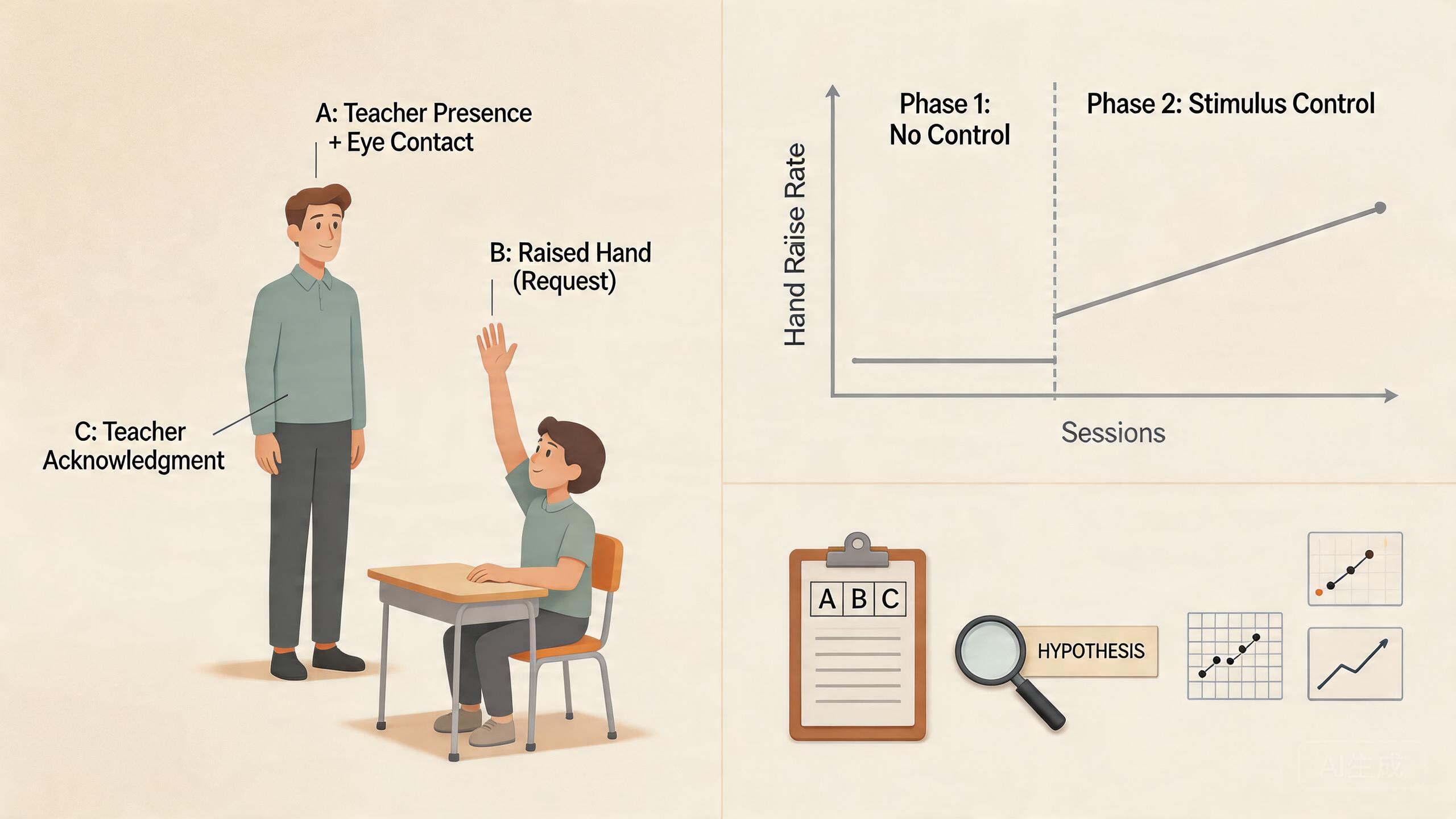
These practical examples demonstrate how stimulus control operates in everyday settings, using the ABC framework to clarify the relationships.
Example 1: Classroom Setting – Raising Hand for Teacher Attention
In a classroom, a student learns to raise their hand when they want to ask a question. The teacher’s presence and eye contact serve as the discriminative stimulus that signals hand-raising will likely result in attention.
- Antecedent: Teacher is present and looking toward students (Sᴰ)
- Behavior: Student raises hand
- Consequence: Teacher calls on student and responds to question
- Function: Access to teacher attention (social reinforcement)
- Reinforcement history: Previous instances where hand-raising resulted in teacher response
Without the teacher present (Sˡ), hand-raising doesn’t occur because it wouldn’t lead to reinforcement. This demonstrates clear stimulus discrimination.
Example 2: Home Environment – Child Requesting Snack with Picture Card
A child with limited verbal skills uses a picture exchange system to request snacks. The available picture card and presence of preferred snacks create the Sᴰ for handing the card to a caregiver.
- Antecedent: Picture card available + caregiver present + hunger (establishing operation)
- Behavior: Child hands “snack” picture card to caregiver
- Consequence: Caregiver provides preferred snack
- Function: Access to tangible item (food reinforcement)
- Generalization: Child may use similar cards for different snacks
This example shows how multiple stimuli can combine to establish stimulus control, with the picture card serving as the primary Sᴰ. For more on communication methods, explore verbal operants.
Stimulus Control on the BCBA Exam: Common Traps and Tips
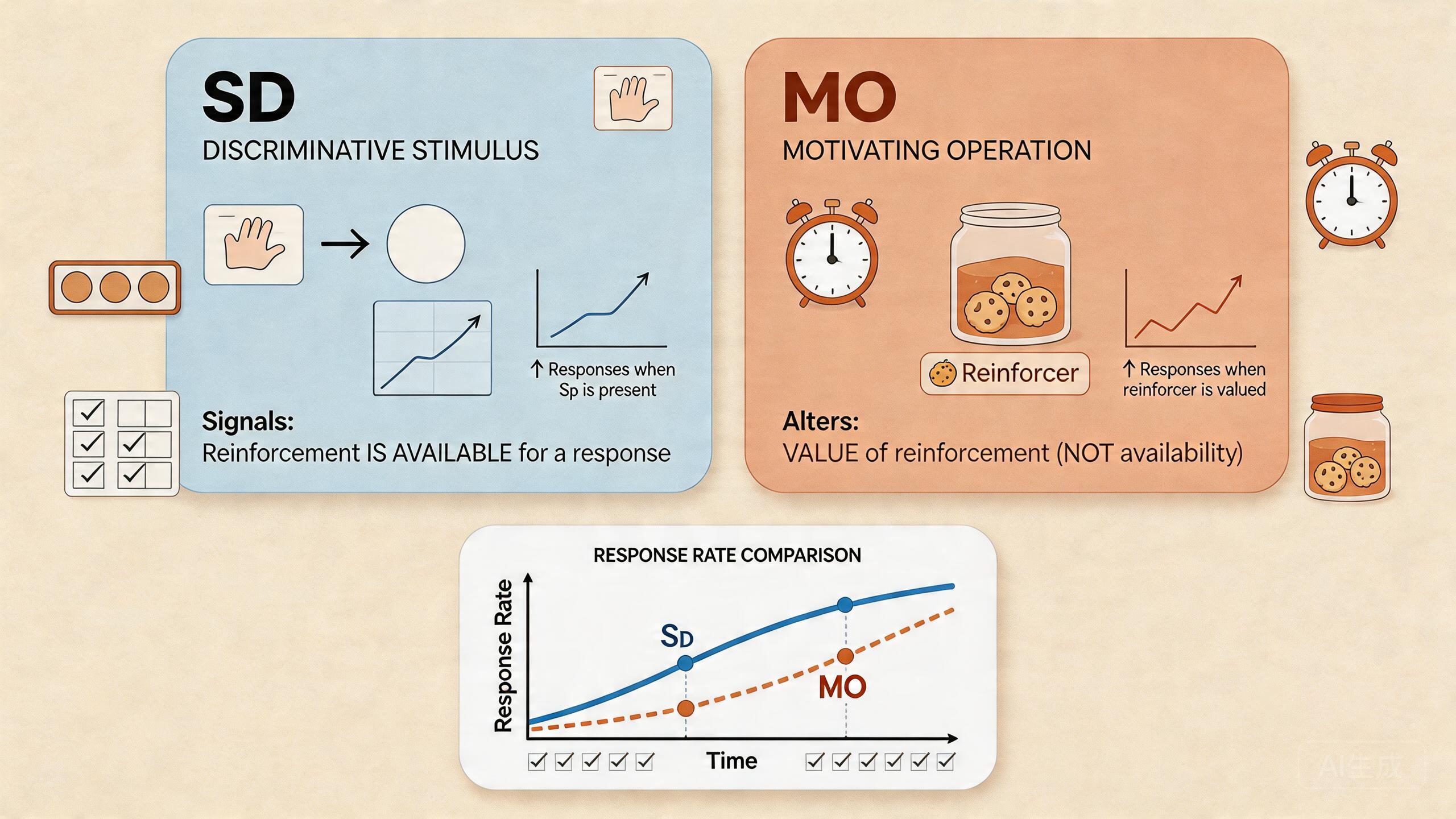
BCBA exam questions often test subtle distinctions within stimulus control concepts. Recognizing these patterns helps you avoid common mistakes.
Trap 1: Misidentifying Stimulus Control vs. Motivating Operations
Many candidates confuse discriminative stimuli with motivating operations (MOs). While both are antecedents, they function differently. An Sᴰ signals reinforcement availability based on past learning, while an MO alters the current value of reinforcement.
- Sᴰ example: Green traffic light signals it’s safe to proceed (reinforcement available)
- MO example: Being hungry increases the value of food reinforcement
- Key difference: Sᴰ signals availability; MO alters value/effectiveness
- Exam tip: Ask “Does this cue signal reinforcement is available?” (Sᴰ) vs. “Does this change how much the reinforcer matters?” (MO)
For a detailed comparison, see our resource on Sᴰ versus MO differences.
Trap 2: Overlooking Stimulus Generalization in Scenarios
Exam questions may describe situations where behavior occurs in the presence of stimuli similar to the original Sᴰ. This tests your understanding of stimulus generalization, which occurs when responses transfer to novel but similar stimuli.
- Generalization example: Child says “dog” to pictures of different dog breeds
- Discrimination example: Child says “dog” only to their specific pet
- Exam tip: Look for descriptions of “similar situations” or “different but related” stimuli
- Common mistake: Assuming all stimulus control requires perfect discrimination
Generalization is often desirable in programming, as it promotes skill application across environments. The BACB’s Task List includes generalization as a key intervention consideration.
Quick Checklist for Mastering Stimulus Control
Use this checklist to review your understanding and identify areas needing further study.
- Define stimulus control in your own words
- Distinguish between Sᴰ and Sˡ with original examples
- Explain how reinforcement history establishes stimulus control
- Differentiate stimulus generalization from discrimination
- Identify common exam traps related to antecedent variables
- Apply the ABC framework to analyze stimulus control examples
- Recognize when multiple stimuli combine to influence behavior
- Practice identifying stimulus control in diverse scenarios
Summary and Next Steps for BCBA Prep
Stimulus control represents a fundamental relationship between environmental cues and behavior probability. Mastery requires understanding how discriminative stimuli develop through reinforcement history and how they differ from other antecedent variables like motivating operations. The exam tests both conceptual understanding and practical application through scenario-based questions.
To strengthen your preparation, practice analyzing real-world examples using the ABC framework and focus on distinguishing between similar concepts. Consider exploring related topics like stimulus generalization and antecedent interventions to build comprehensive knowledge. Regular review with varied examples will help solidify these essential behavior analysis principles.



