
stimulus control ABA: What is Stimulus Control? A Behavioral Definition
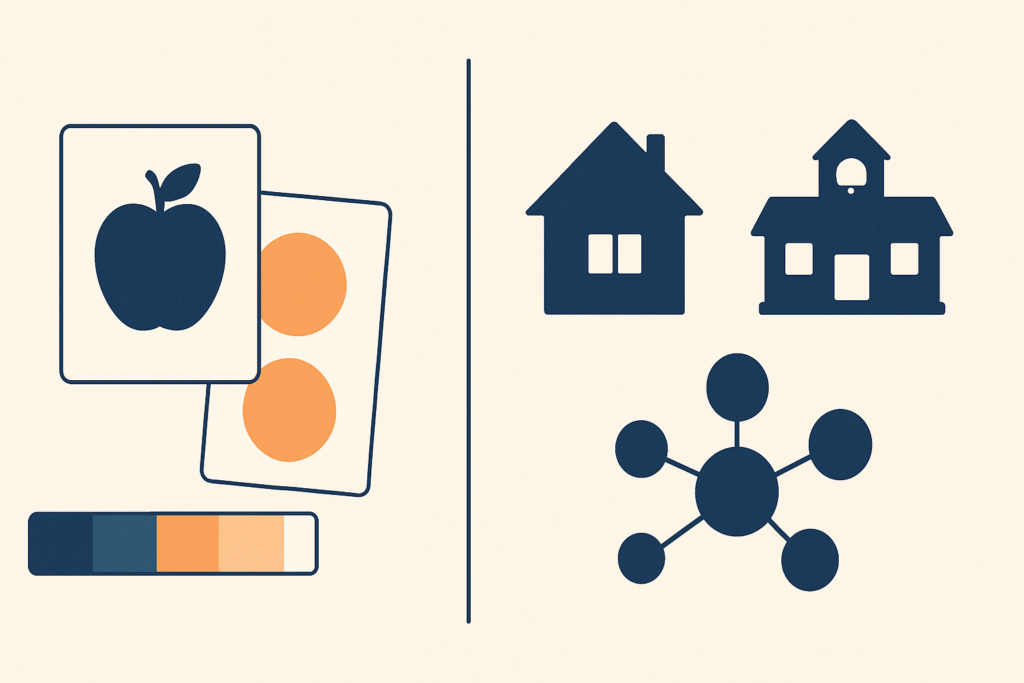
Stimulus control refers to a situation where a specific behavior occurs more frequently in the presence of a particular antecedent stimulus due to a history of reinforcement. This fundamental concept explains why we respond differently to different environmental cues.
Table of Contents
- stimulus control ABA: What is Stimulus Control? A Behavioral Definition
- Stimulus Control in Action: Worked ABA Examples
- Stimulus Control and the BCBA Exam: Relevance and Common Traps
- Quick-Study Checklist and Summary
When stimulus control is established, behavior becomes predictable and context-appropriate.
The Core Principle: Discriminative Stimulus (Sd) vs. S-Delta
A discriminative stimulus (Sd) is an antecedent in whose presence a response has been reinforced. In contrast, an S-delta is a stimulus in whose presence the same response has not been reinforced.
- Sd (Discriminative Stimulus): Signals reinforcement is available for a specific behavior
- S-delta: Signals reinforcement is NOT available for that behavior
- The difference is determined by the reinforcement history, not just physical characteristics
- Effective discrimination training creates clear stimulus control

Stimulus Control vs. Motivating Operations
While both are antecedent variables, they serve different functions. Motivating operations (MOs) alter the value of consequences and the frequency of behavior related to those consequences.
Stimulus control signals the availability of reinforcement for a specific response. An MO might make food more valuable (establishing operation), while an Sd signals that food is available if you perform a particular behavior.
For a deeper understanding of this distinction, see our guide on Sd vs MO differences.
Stimulus Control in Action: Worked ABA Examples
Real-world examples clarify how stimulus control operates in everyday situations and clinical practice.
Example 1: Manding for a Preferred Item
A child says “cookie” only when the cookie jar is visible on the counter. When the jar is put away in the cabinet, the mand doesn’t occur.
- Antecedent: Cookie jar visible on counter (Sd)
- Behavior: Child says “cookie”
- Consequence: Receives cookie (reinforcement)
- Function: Tangible access
- S-delta: Cookie jar in cabinet (no mand occurs)
Example 2: Raising a Hand in Class
A student raises their hand only when the teacher is facing the class and asking a question. When the teacher is writing on the board, hand-raising doesn’t occur.
- Antecedent: Teacher asks question to class (Sd)
- Behavior: Student raises hand
- Consequence: Called on, provides answer (attention)
- Function: Attention/social reinforcement
- S-delta: Teacher writing on board
Example 3: Discriminating Between ‘Sit’ and ‘Stand’ Cues
A learner sits when the instructor says “sit” and stands when they say “stand.” The word “table” doesn’t evoke either response.
This demonstrates multiple stimulus controls and the importance of discrimination training. Each verbal cue serves as a specific Sd for a different response.
Stimulus Control and the BCBA Exam: Relevance and Common Traps
Understanding stimulus control is essential for exam success and ethical practice.
How Stimulus Control Appears on the Task List
Stimulus control concepts appear throughout the BACB Task List, particularly in Domain B (Concepts and Principles).
- B-10: Define and provide examples of stimulus control
- B-11: Define and provide examples of discrimination and generalization
- B-12: Use prompting and transfer of stimulus control procedures
- These concepts connect to ethical prompting and fading strategies
For comprehensive exam preparation, review our Task List 6th Edition study guide.
Top 3 Exam Traps to Avoid
Many candidates stumble on these common misunderstandings.
- Confusing Sd with an MO: Remember that “being hungry” is an MO (alters food value), while the refrigerator light being on could be an Sd (signals food is available if you open it)
- Misidentifying the controlling feature: In complex stimuli, identify which specific feature actually has stimulus control
- Forgetting the reinforcement history: Stimulus control depends on past reinforcement, not just physical presence
Quick-Study Checklist and Summary
Use this checklist to assess your readiness and solidify key concepts.
Your Stimulus Control Readiness Checklist
- Can I define discriminative stimulus (Sd) and S-delta in my own words?
- Can I generate a novel example of stimulus control with ABC data?
- Do I understand how to establish stimulus control through discrimination training?
- Can I name common transfer of stimulus control procedures (prompt fading, delay, etc.)?
- Can I clearly distinguish stimulus control from motivating operations?
- Do I recognize how stimulus control relates to generalization and maintenance?
Key Takeaways for Your Study
Stimulus control means behavior is more likely in the presence of a specific Sd due to reinforcement history. This foundational concept enables effective teaching of discrimination skills and is central to ethical prompting and fading procedures.
Mastering stimulus control helps you design interventions that promote context-appropriate behavior and prevent prompt dependency. For related concepts, explore our guide on stimulus and response generalization.
For authoritative reference, consult the BACB 6th Edition Task List and Cooper, Heron, and Heward’s Applied Behavior Analysis textbook.


