
What is Multiple Stimulus Without Replacement (MSWO)?
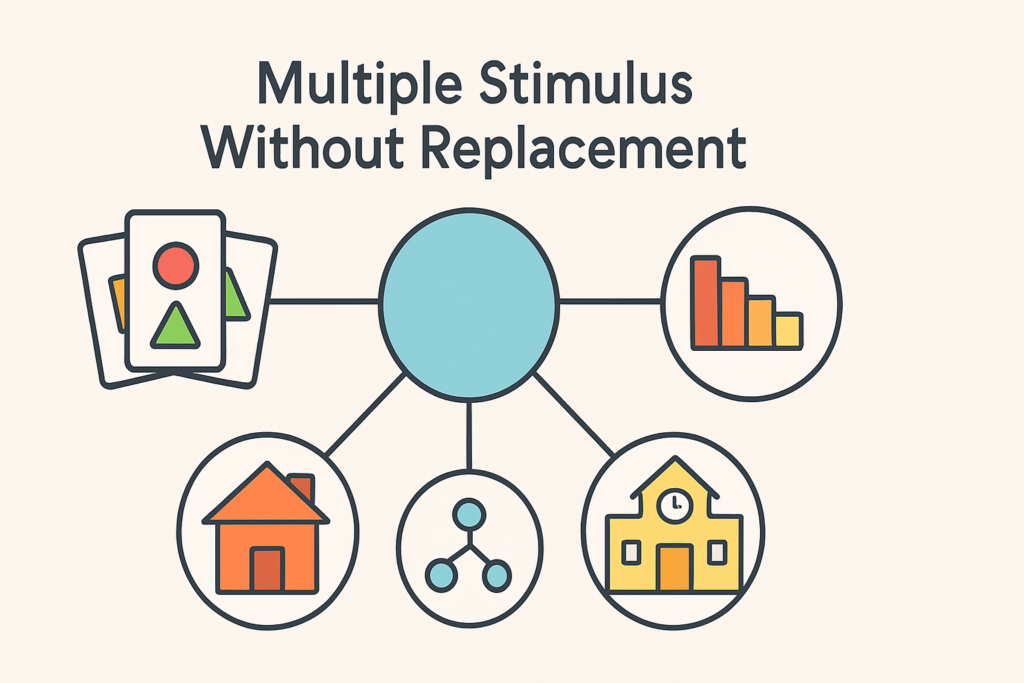
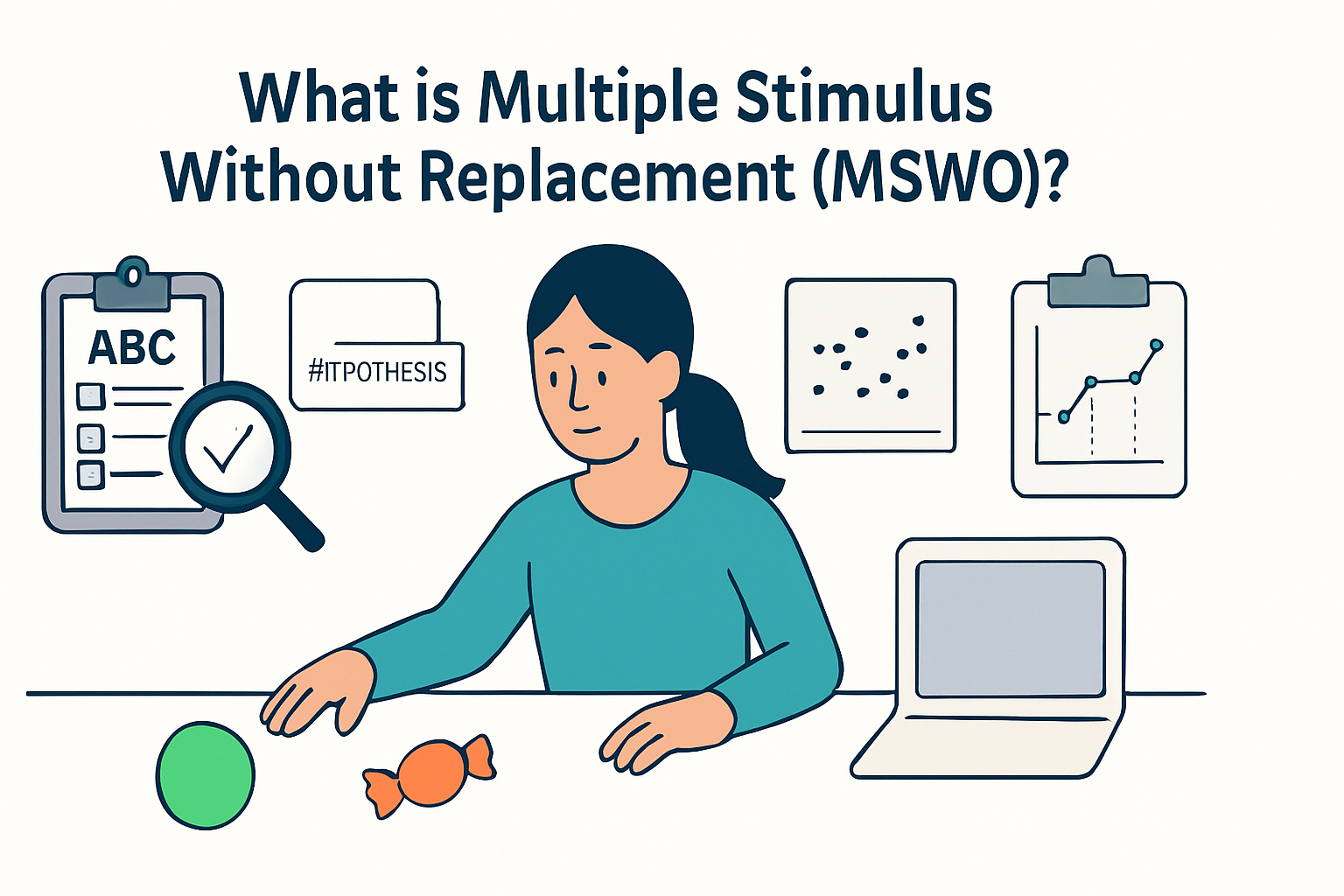
Multiple Stimulus Without Replacement (MSWO) is a systematic preference assessment method used in applied behavior analysis to identify potential reinforcers efficiently. This approach presents multiple items simultaneously, and once a client selects an item, it is removed from the array for subsequent trials.
Table of Contents
- What is Multiple Stimulus Without Replacement (MSWO)?
- How to Conduct an MSWO Assessment: A Step-by-Step Guide
- MSWO in Practice: Worked ABA Examples
- MSWO on the BCBA Exam: Relevance and Common Traps
- Quick Checklist and Summary
The primary purpose of MSWO is to establish a hierarchy of preferences that can guide intervention planning and reinforcement selection.
Core Definition and Purpose
MSWO is a single-stimulus presentation method where chosen items are not returned to the array. Each selection trial reduces the number of available options, creating a clear preference ranking based on selection order.
The assessment’s goal is to identify potential reinforcers quickly while establishing their relative value. This efficiency makes MSWO particularly valuable in clinical settings where time is limited.
MSWO vs. Other Preference Assessments
Understanding how MSWO differs from other assessment methods is crucial for proper application. The key distinction from Multiple Stimulus With Replacement (MSW) is that selected items remain available in MSW but are removed in MSWO.
Compared to Paired Stimulus assessments, MSWO is generally faster because it presents all items simultaneously rather than in pairs. However, it may be less sensitive for identifying subtle preference differences between items.
How to Conduct an MSWO Assessment: A Step-by-Step Guide
Proper implementation of MSWO requires systematic preparation and execution. Following these steps ensures reliable results and clinical utility.
Step 1: Preparation and Stimulus Selection
Begin by identifying potential reinforcers through indirect assessment methods like interviews or checklists. Select 5-7 items that are likely to be motivating for the client.
- Arrange items in a straight line or semi-circle on a table
- Ensure equal spacing between items (approximately 2-3 inches)
- Position the client so all items are equally accessible
- Obtain client assent and explain the procedure simply
- Consider environmental factors like lighting and distractions
Step 2: The Presentation and Choice Procedure
Each trial follows a consistent sequence to maintain procedural integrity. The practitioner gives a clear instruction like “Pick one” or “Choose what you want.”
- Record the client’s first selection as their highest preference
- Immediately remove the chosen item from the array
- Reposition remaining items to maintain equal spacing
- Present the reduced array for the next selection
- Continue until only one item remains
Step 3: Data Collection and Interpretation
Accurate data collection is essential for valid results. Record selections in order, with the first choice receiving the highest rank.
Calculate results by assigning points based on selection order, or simply rank items from most to least preferred. Create a preference hierarchy that can guide reinforcement selection in interventions.
Video Study: Preference Assessment
Watch: Preference Assessments Explained | 6th ed. | BCBA Exam Prep
Watch this lesson alongside the assessment procedures below, then compare the selection logic with the examples in this guide.
Prefer a second pass? Open this lesson on YouTube.
MSWO in Practice: Worked ABA Examples
Understanding theoretical concepts is important, but seeing MSWO applied in real scenarios provides practical insight. These examples demonstrate how assessment results translate to intervention planning.
Example 1: Increasing Manding in a Preschool Setting
A 4-year-old child with limited vocal mands participates in an MSWO assessment with five toys. The hierarchy shows: 1) spinning top, 2) puzzle, 3) blocks, 4) book, 5) crayons.
During teaching sessions, the practitioner presents the spinning top as a potential reinforcer for mand attempts. ABC data shows: Antecedent: “What do you want?” with preferred item visible; Behavior: Vocal mand “top”; Consequence: Immediate access to spinning top.
The function identified through MSWO was access to tangibles, allowing targeted intervention planning.
Example 2: Identifying Reinforcers for a Dressing Routine
An adolescent with resistance to morning routines participates in MSWO with seven items including edibles and activities. Results show weak preference differentiation, with all items selected at similar frequencies.
This outcome suggests the need for alternative assessment methods or indicates that automatic reinforcement may be maintaining the resistance behavior. The practitioner might consider a free operant assessment to identify naturally occurring reinforcers.

MSWO on the BCBA Exam: Relevance and Common Traps
MSWO appears frequently on behavior analyst certification exams, requiring both procedural knowledge and application skills. Understanding common testing approaches helps with exam preparation.
How MSWO is Tested
Exam questions typically assess three areas: procedural identification, scenario-based selection, and results interpretation. You might encounter questions asking you to:
- Identify MSWO from a procedural description
- Select it as the best assessment given specific client characteristics
- Interpret selection data to establish a preference hierarchy
- Differentiate MSWO from other preference assessment methods
Frequent Exam Pitfalls to Avoid
Several common mistakes can lead to incorrect answers on exam questions about MSWO. Being aware of these traps improves your chances of selecting the correct response.
- Confusing MSWO with Multiple Stimulus With Replacement (MSW)
- Misidentifying it as a reinforcer assessment rather than preference assessment
- Selecting MSWO when free operant assessment is more appropriate
- Forgetting ethical considerations like client assent
- Overlooking the importance of equal item positioning
Quick Checklist and Summary
Use this checklist to ensure proper MSWO implementation and exam readiness. Each item represents a critical component of the assessment process.
- Select 5-7 items based on indirect assessment
- Arrange items with equal spacing and accessibility
- Obtain client assent before beginning
- Record first selection as highest preference
- Remove chosen items from subsequent trials
- Continue until only one item remains
- Rank items based on selection order
- Use hierarchy to guide reinforcement selection
- Consider alternative assessment methods if results are unclear
- Document procedures and results thoroughly
Multiple Stimulus Without Replacement provides an efficient method for establishing preference hierarchies in clinical practice. When implemented correctly, it offers valuable data for reinforcement selection and intervention planning. Remember that MSWO identifies potential reinforcers, and its effectiveness should be verified through direct observation of behavior change.
For comprehensive information on behavior assessment methods, refer to the BACB Ethics Code and consider exploring functional assessment approaches for more complex cases.
Ready to test what you just learned?
Put it into practice with a free, full-length BCBA mock exam — real exam-style questions, instant scoring, and answer explanations.
Complete BCBA Exam Prep
Turn this topic into exam-day practice
Practice concepts in context with five full-length 6th Edition mock exams, two bonus practice exams, a 6th Edition study guide, and key-term flashcards—all in one $120 USD package.
Get the $120 All-in-One Prep Pack
Review everything included on the product page before ordering. No pass guarantee is implied.



