

The search question Medicaid ABA therapy Colorado is not a single yes-or-no benefit that applies to every family, age, diagnosis, provider, or service request. Health First Colorado uses program rules for pediatric behavioral therapy, medical-necessity review, provider qualifications, authorization, and documentation. The exact member eligibility file and current Colorado Department of Health Care Policy and Financing (HCPF) instructions control the practical answer.
Table of Contents
- Medicaid ABA Therapy Colorado: Does Medicaid Cover ABA Therapy?
- What Is Colorado’s Pediatric Behavioral Therapy Benefit?
- Who May Provide the Services?
- What Eligibility and Clinical Questions Matter?
- How Do Authorization and EVV Fit?
- What Should Families Ask Before Starting?
- What If the Request Is Denied or Delayed?
- Colorado Medicaid ABA FAQ
- Key Takeaway
- Take the Free BCBA Mock Exam
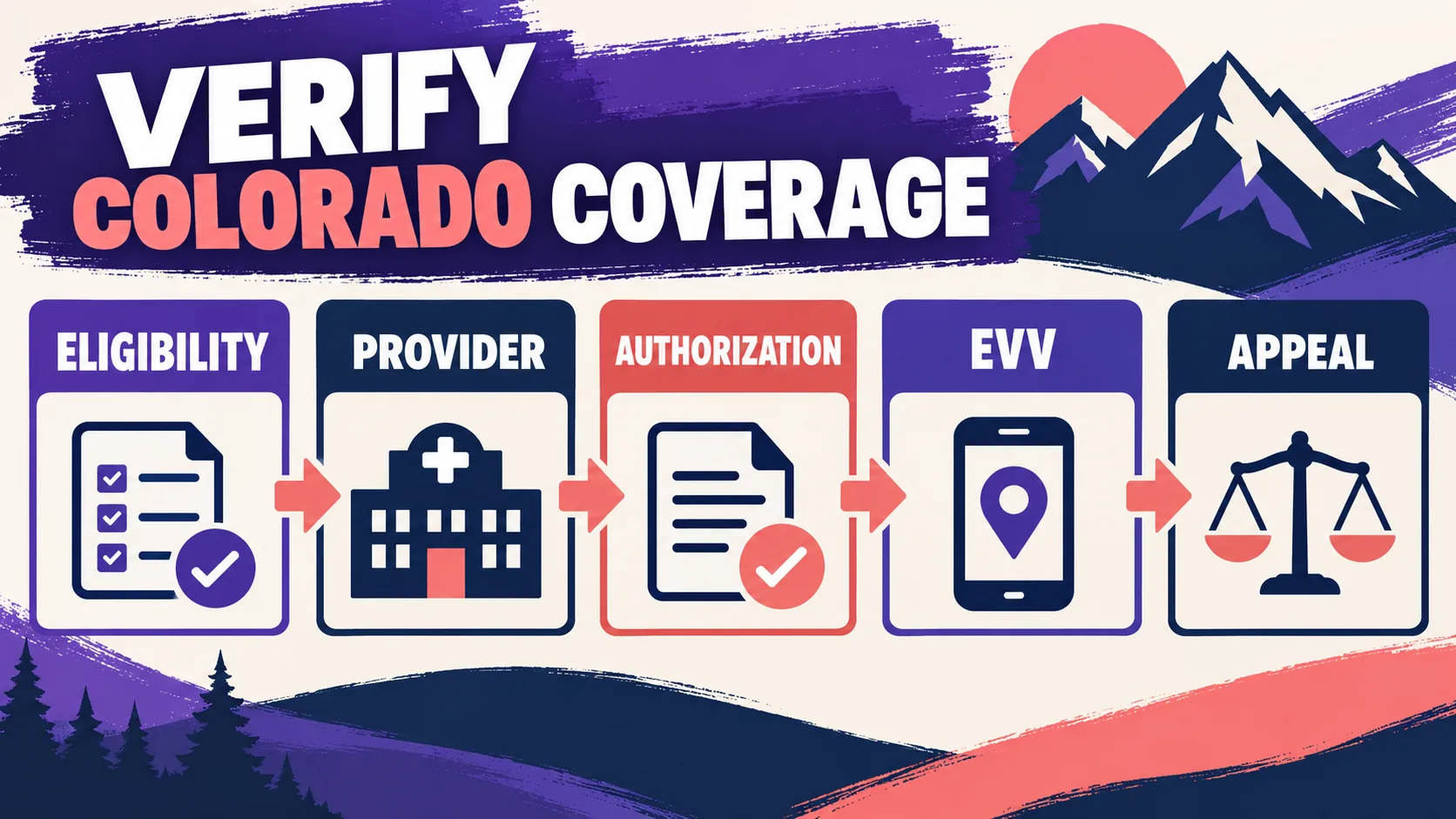
For a family, the safest approach is to treat “ABA coverage” as a verification workflow. Confirm the child’s Health First Colorado eligibility, ask which pediatric behavioral therapy benefit and managed-care contact apply, verify the provider type, and find out whether prior authorization or electronic visit verification is required before services begin. A provider’s statement that Colorado Medicaid covers ABA is a useful starting point, not a guarantee that every requested hour or code will be approved.
Medicaid ABA Therapy Colorado: Does Medicaid Cover ABA Therapy?
Colorado Medicaid can cover medically necessary behavioral-health services for eligible members, but the word “ABA” does not replace the program’s actual benefit and authorization rules. A request may be evaluated under Colorado’s Pediatric Behavioral Therapy (PBT) framework, related behavioral-health coverage, or another applicable pathway. Age, eligibility category, clinical documentation, provider enrollment, service setting, and the requested codes can all affect the result.
Start by identifying the program, not by relying on a search result or an old provider webpage. Health First Colorado members may receive instructions through HCPF, a regional organization or managed-care contact, and the enrolled provider’s authorization team. Ask which current document applies to the child and which entity makes the authorization decision.
What Is Colorado’s Pediatric Behavioral Therapy Benefit?
HCPF publishes separate documents for provider types, policy clarification, behavioral-therapy criteria, and program implementation. Read them together. The Pediatric Behavioral Therapy policy clarification and the PBT provider-type document are more useful for a current Colorado question than a generic article about commercial ABA insurance.
The public documents do not mean that every child automatically receives a fixed number of ABA hours. A benefit still has to be connected to an eligible member, an appropriate service, a qualified and enrolled provider, supporting clinical information, and the authorization process. For children under 21, Medicaid’s EPSDT framework may also be relevant, but the family should ask HCPF or the plan how that rule is being applied to the specific request rather than assuming that it overrides every program procedure.
Colorado also distinguishes the service from the person delivering it. A BCBA, BCaBA, behavior technician, licensed clinician, or other provider type may have different qualifications, enrollment rules, and supervision responsibilities. The Colorado Medicaid behavioral-therapy criteria should be read with current HCPF updates because older criteria documents may not answer every current operational question.
Who May Provide the Services?
Do not choose a provider only because the website says “we accept Medicaid.” Ask whether the provider is enrolled for the relevant Colorado Medicaid service, whether the supervising clinician meets the program’s requirements, and whether the proposed location and staff are included in the authorization. A provider can be licensed or credentialed in a general sense and still need separate Medicaid enrollment or program approval.
| Verification layer | Question to answer | Who can confirm it |
|---|---|---|
| Member eligibility | Is coverage active on the dates of service? | Health First Colorado or the member’s plan contact |
| Benefit pathway | Which PBT or behavioral-health benefit applies? | HCPF, plan/RAE contact, and enrolled provider |
| Provider enrollment | Is the organization and rendering staff enrolled for the service? | Provider enrollment team and HCPF rules |
| Authorization | Are the codes, units, dates, setting, and staff approved? | Authorization entity and provider |
For credential context, the BACB consumer resources can help a family understand behavior-analytic credentials. They do not replace Colorado Medicaid enrollment rules. Always ask the provider to explain who supervises treatment, who delivers direct services, and who is responsible for documentation.
What Eligibility and Clinical Questions Matter?
Before an authorization request is submitted, collect the facts that the program and provider are likely to need. Keep the questions specific:
- Is the child currently eligible for Health First Colorado on the planned service dates?
- Which diagnosis, functional need, or developmental concern is documented?
- What assessment or treatment plan supports the requested service?
- What setting is requested: home, clinic, school-related, community, or another location?
- Which provider type, supervising clinician, and direct-service staff will be listed?
- Which codes, units, frequency, and authorization period are being requested?
A diagnosis by itself does not answer all coverage questions. The request must describe the member’s needs and why the proposed service is medically necessary under the applicable Colorado criteria. If the plan asks for records, send the requested information through the approved channel and keep a copy of what was submitted.
How Do Authorization and EVV Fit?
Ask whether prior authorization is required before the first session and whether a separate review is required to continue services. Confirm the effective dates, approved units, codes, setting, rendering provider, supervising provider, and documentation deadline. An approval for one period does not automatically approve future periods or a change in service intensity.
Electronic visit verification (EVV) may matter for services that fall within Colorado’s EVV rules. The provider—not the family alone—should explain how visits are recorded, corrected, and matched to the authorized service. Ask what happens when a visit is missed, the location changes, a caregiver participates, or the staff member changes. A service can be clinically appropriate and still create a payment problem if the required record is missing or does not match the authorization. Before the first appointment, save these items:
- The member ID and current eligibility confirmation.
- The name and contact information of the plan, regional organization, or authorization department.
- The authorization number, effective dates, codes, units, and approved setting.
- The provider enrollment or network confirmation and supervising clinician information.
- The EVV or visit-documentation instructions, if applicable.
What Should Families Ask Before Starting?
A short call is more useful when the family has a written checklist. Ask for the answer in the context of the child’s actual member ID and the requested provider:
- Which Colorado Medicaid benefit and current policy document apply?
- Is the provider enrolled for that benefit and service location?
- Is prior authorization required, and who submits it?
- What information is missing before the request can be reviewed?
- How are approved units, cancellations, caregiver training, school coordination, and telehealth handled?
- What notice will the family receive if the request is reduced, denied, or delayed?
Record the date, department, representative or reference number, documents requested, and next step. If the answer conflicts with a provider webpage or an older HCPF PDF, ask which current source controls. A written explanation is easier to use in an appeal than a general verbal assurance.
What If the Request Is Denied or Delayed?
Read the notice carefully. A denial may concern eligibility, a missing record, provider enrollment, medical necessity, an excluded service, authorization timing, coding, or a documentation mismatch. Ask the provider for the clinical and billing information used in the request, then follow the appeal or reconsideration instructions in the notice. Deadlines and routes can differ by the responsible plan or program, so do not rely on a generic internet deadline. Build a simple appeal file:
- The denial or delay notice and the date it was received.
- The assessment, treatment plan, progress information, and provider explanation.
- Eligibility records, authorization numbers, and submitted codes or units.
- Call logs, reference numbers, names, and copies of uploaded or mailed documents.
- The exact appeal deadline and the requested outcome.
If the family cannot tell whether the issue is HCPF policy, the managed-care plan, or provider billing, ask the notice issuer to identify the decision-maker. That distinction helps route the appeal to the correct place.
Colorado Medicaid ABA FAQ
Does Colorado Medicaid pay for ABA for every autistic child?: No automatic promise applies to every child or every request. Eligibility, the applicable benefit, medical necessity, provider enrollment, authorization, and documentation all matter. Is “Pediatric Behavioral Therapy” the same as unlimited ABA?: No. PBT is a Colorado Medicaid program framework with its own provider, documentation, and authorization rules. Ask HCPF or the member’s plan how the requested service is classified and reviewed.
Can a Colorado ABA clinic confirm coverage?: A clinic can help verify enrollment, submit a request, and explain its process. The family should still confirm member-specific eligibility and authorization with the responsible Colorado Medicaid contact. Does an authorization guarantee every claim will be paid?: Not necessarily. The claim must match eligibility, the authorization, provider status, codes, service record, and other program rules. Keep the authorization and visit documentation.
Key Takeaway
When researching Medicaid ABA therapy in Colorado, begin with Health First Colorado and current HCPF pediatric behavioral therapy documents. For the query Medicaid ABA therapy Colorado, verify the member, benefit pathway, provider enrollment, clinical documentation, authorization, EVV instructions, and appeal route in that order. If you are separately preparing for a behavior-analysis credential, the free BCBA mock exam is available as a study resource; it does not determine Medicaid eligibility or coverage. For targeted review, use our medicaid aba therapy colorado practice questions to apply the concept in exam-style scenarios.
Take the Free BCBA Mock Exam
When you are ready to apply the idea, use the free practice resource below for additional feedback. Take the Free BCBA Mock Exam



