
Success on the BCBA certification exam requires more than content knowledge—it demands strategic analysis of how questions are constructed. Understanding the question structure and answer patterns transforms your preparation from memorization to application. This guide provides a systematic approach to breaking down BCBA exam questions, analyzing scenarios, and avoiding common pitfalls.
Table of Contents
- What Defines a BCBA Exam Question?
- Deconstructing Scenario-Based BCBA Exam Questions
- Navigating Common Traps and Exam Pitfalls
- Your Strategic Checklist for Exam Day
- From Question Analysis to Confident Answers
What Defines a BCBA Exam Question?
BCBA exam questions follow specific patterns designed to assess applied competence. Each item tests your ability to analyze situations and select the most appropriate intervention based on behavior analytic principles.
Anatomy of an Exam Item: Stem, Options, and the ‘Best’ Answer
Every question consists of three key components. The scenario-based stem presents a realistic situation requiring analysis. Four answer options follow—one correct and three plausible distractors. The correct answer represents the most appropriate response based on current best practices and ethical guidelines.
Linking Question Types to the BACB Task List
Questions align directly with the BACB Task List domains. Assessment items test your ability to select appropriate measurement procedures, while intervention questions evaluate your skill in designing effective behavior change programs. Ethical scenarios require application of the BACB Ethics Code to complex situations.

Deconstructing Scenario-Based BCBA Exam Questions
Scenario questions present the greatest challenge for many candidates. These items require you to analyze behavior within context and select interventions based on functional assessment.
Worked Example 1: Escape-Maintained Behavior in a School Setting
Consider this scenario: “During independent work time, when presented with math worksheets, a student leaves their desk and walks to the reading corner. The teacher redirects them back to their seat but does not require completion of the worksheet.”
Analysis reveals the antecedent (math worksheet presentation), behavior (elopement), and consequence (removal of work demand). The function is escape from academic demands. The correct answer would identify this function and suggest interventions like task modification or teaching functional communication.
Worked Example 2: Tangible-Maintained Behavior During Transitions
Scenario: “When told it’s time to leave the playground, a child begins crying and hitting. The parent offers a favorite snack to calm them, and the behavior stops.”
The antecedent is the transition announcement, behavior is crying and hitting, and consequence is access to preferred food. This demonstrates tangible reinforcement. A common trap is selecting ‘attention’ because the parent is present, but the functional consequence is clearly access to the snack.
Worked Example 3: Ethical Dilemma Involving Confidentiality
Scenario: “A BCBA receives a request from a school district to share assessment results with teachers who are not directly involved in the student’s program. The parents have not consented to this specific sharing.”
This requires reference to Section 2 of the BACB Ethics Code regarding confidentiality. The correct answer prioritizes client welfare and adherence to informed consent procedures, refusing to share information without proper authorization.
Navigating Common Traps and Exam Pitfalls
Understanding common errors helps you avoid them. Many candidates lose points not from lack of knowledge, but from falling into carefully constructed traps.
The ‘Plausible but Incorrect’ Distractor
Distractors often contain true statements that don’t answer the specific question. They may describe valid procedures but aren’t the most appropriate for the given scenario. Always ask: “Does this directly address what the question is asking?”
Over-Engineering Simple Solutions
Candidates often select complex interventions when simpler, evidence-based solutions exist. The exam favors least restrictive and most efficient approaches. If a basic reinforcement procedure would work, don’t choose a complex multi-component intervention.
Misapplying Familiar Terms
Traps include using common terms like ‘positive reinforcement’ in technically incorrect ways. For example, an option might describe adding a stimulus after behavior but misidentify it as reinforcement when it’s actually punishment. Always verify the functional definition matches the scenario.
Your Strategic Checklist for Exam Day
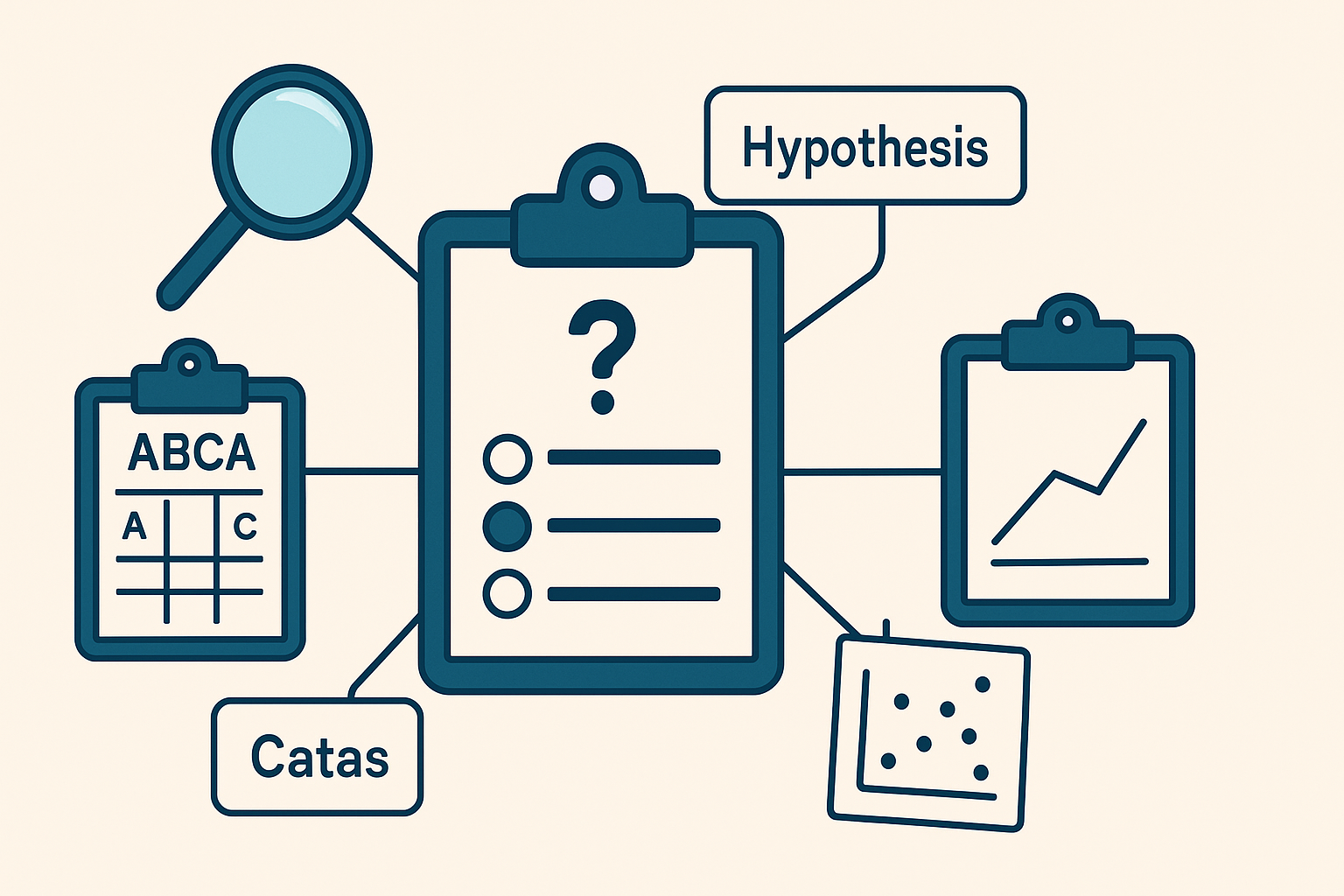
Apply this systematic approach to every question:
- Read the stem carefully—identify the key behavior and context
- Conduct ABC analysis—determine antecedents, behavior, consequences
- Hypothesize function—escape, attention, tangible, or automatic
- Eliminate distractors—remove options containing incorrect terms or procedures
- Select best fit—choose the most appropriate, ethical, evidence-based answer
- Verify alignment—ensure your selection matches the question’s specific requirements
From Question Analysis to Confident Answers
Mastering BCBA exam questions transforms your preparation approach. By understanding question construction and developing systematic analysis skills, you move beyond content recall to applied competence. Practice with mock exams that simulate actual question patterns, and review ethical scenarios to build confidence in complex situations.
Remember that the exam tests your ability to apply behavior analytic principles to real-world situations. Focus on developing analytical thinking rather than memorization, and use resources like the BACB content outlines to guide your study priorities. With strategic preparation and systematic question analysis, you can approach the exam with confidence in your ability to select the most appropriate answers.



