

Understanding the mand definition is crucial for BCBA candidates and practicing behavior analysts. This verbal operant represents one of the most functionally significant forms of communication in applied behavior analysis. A proper grasp of mands goes beyond textbook definitions to practical application in assessment, intervention, and ethical practice.
Table of Contents
- Mand definition ABA: The Precise Definition of a Mand in ABA
- Identifying Mands: Worked Examples and Common Variations
- Mands on the BCBA Exam: Relevance, Traps, and Ethical Application
- Quick-Reference Checklist and Summary
Mand definition ABA: The Precise Definition of a Mand in ABA
A mand is a verbal operant where the response is controlled by a motivating operation and reinforced by a specific consequence. This functional definition emphasizes that the form of the response matters less than its controlling variables.
Skinner’s Verbal Operant: The Foundation
B.F. Skinner’s analysis of verbal behavior established the mand as one of several verbal operants. Unlike traditional linguistic approaches that focus on grammar and syntax, Skinner’s framework examines the functional relationships between verbal responses and their environmental consequences.
The mand is unique because it directly benefits the speaker. This contrasts with other verbal operants that primarily serve social functions or are controlled by different antecedents.
Key Components: Antecedent, Behavior, Consequence
To identify a mand, analyze these three components:
- Antecedent: A motivating operation establishes the value of a specific reinforcer. This could be deprivation (hunger, thirst) or aversive stimulation (pain, discomfort).
- Behavior: Any verbal response that specifies the needed reinforcer. This includes spoken words, signs, gestures, picture exchanges, or text.
- Consequence: The specific reinforcer that matches what was requested. The consequence must directly relate to the motivating operation.
Identifying Mands: Worked Examples and Common Variations
Moving from definition to application requires analyzing real scenarios. These examples demonstrate how to apply ABC analysis to identify mands accurately.
Example 1: The Basic Mand for a Tangible
Consider a child who hasn’t had a cookie all day. The child sees cookies on the counter and says “cookie.” The parent gives the child a cookie.
- Antecedent: Deprivation from cookies (establishing operation) + presence of cookies (discriminative stimulus)
- Behavior: Vocal response “cookie”
- Consequence: Receives cookie (specific reinforcement)
- Function: Access to tangible item
This example shows a pure mand where the response form directly specifies the reinforcer. Variations could include using PECS, sign language, or a communication device.
Example 2: The Mand for Attention or Information
A learner during transition time asks “What’s next?” The teacher responds “We’re going to the playground.”
- Antecedent: Uncertainty about schedule (establishing operation) + transition context (discriminative stimulus)
- Behavior: Question “What’s next?”
- Consequence: Receives information about schedule
- Function: Access to information (conditioned reinforcement)
This demonstrates a mand for information, which is reinforced by receiving specific knowledge. Other examples include mands for attention, help, or removal of aversive stimuli.
What a Mand is NOT: Distinguishing from Tacts and Intraverbals
Confusing mands with other verbal operants is a common exam error. Key distinctions:
- Tact: Labeling or describing, reinforced by social acknowledgment. Example: Seeing a red ball and saying “red ball” to get praise.
- Intraverbal: Response to other verbal behavior, reinforced by continuation of conversation. Example: Answering “What’s your name?” with “Alex.”
- Mand: Requesting, reinforced by specific item/action. Example: Saying “water” when thirsty to get water.
The critical difference lies in the reinforcing consequence. Mands produce specific, often tangible outcomes, while tacts and intraverbals produce social or conversational outcomes.
Mands on the BCBA Exam: Relevance, Traps, and Ethical Application
Understanding mands is essential for both exam success and ethical practice. The BCBA exam tests this concept through various question formats that require careful analysis.
Common Exam Question Formats and How to Approach Them
Exam questions typically follow these patterns:
- “Which of the following is a mand?” – Look for responses under control of a motivating operation
- “Identify the verbal operant…” – Analyze the ABC relationship
- “The controlling variable for a mand is…” – Select motivating operation as the correct answer
Your strategy should involve identifying the establishing operation first, then checking if the consequence matches what was requested.
Three Frequent Exam Traps to Avoid
These common mistakes can cost you points:
- Form over function: Assuming any request is a mand without checking the motivating operation. Example: A rote “please” without actual desire.
- Weak MOs: Overlooking subtle establishing operations like boredom, curiosity, or mild discomfort.
- Generalized mands: Confusing mands that specify reinforcers with generalized requests like “help” or “more.”
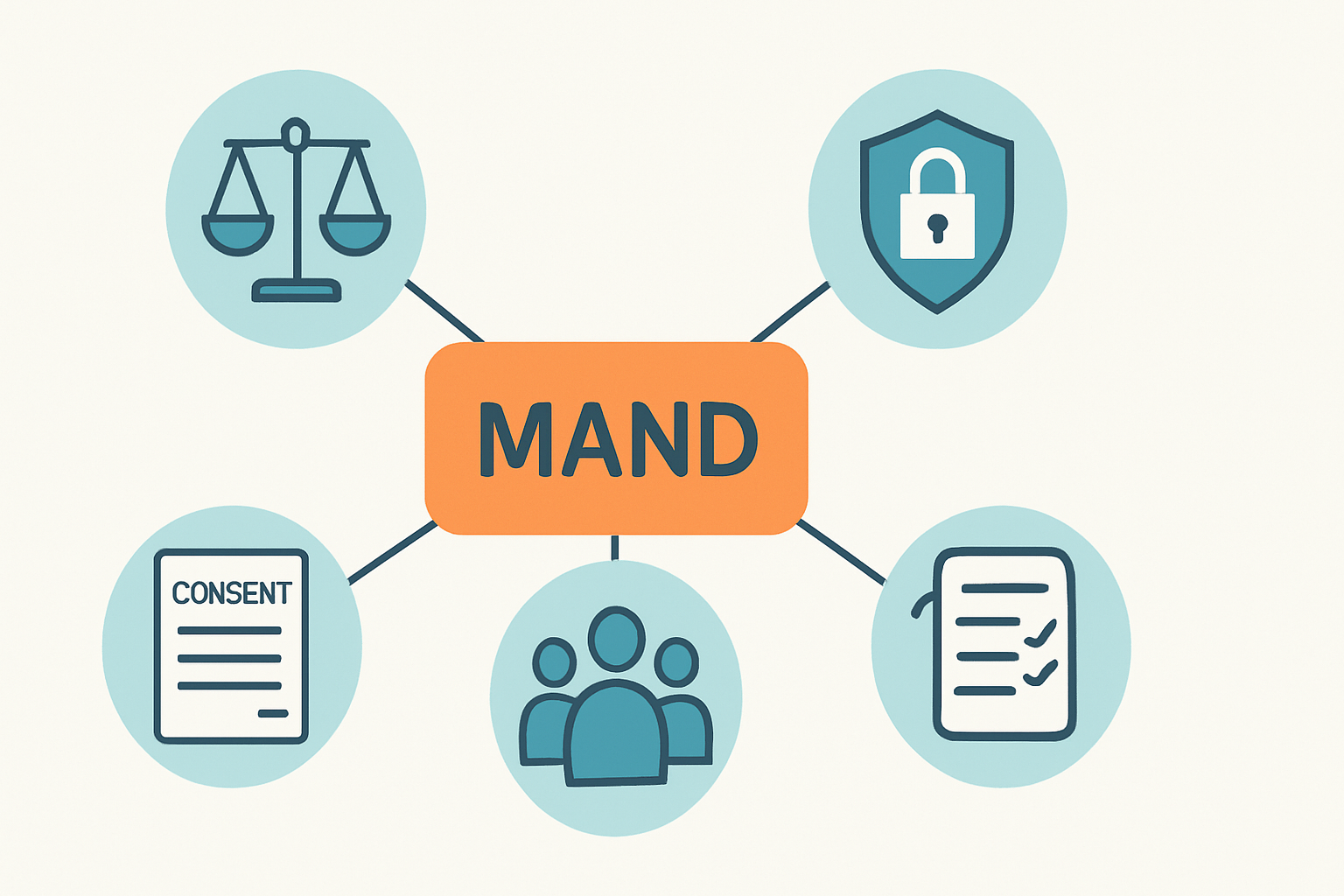
From Definition to Dignity: The Ethical Mandate of Teaching Mands
Teaching mands operationalizes compassionate care and respects client dignity. When individuals can effectively communicate their needs, they gain:
- Autonomy in making choices about their environment
- Reduced frustration from unmet needs
- Functional alternatives to challenging behaviors
- Social inclusion through effective communication
This ethical perspective connects technical mastery with client-centered practice. For more on ethical considerations, see our guide on compassionate care in ABA.
Quick-Reference Checklist and Summary
Use this checklist to verify mand identification:
- ✓ Identify the motivating operation (deprivation, aversive stimulation)
- ✓ Check if response specifies needed reinforcer
- ✓ Verify consequence matches requested item/action
- ✓ Ensure reinforcement is specific, not social
- ✓ Distinguish from tacts and intraverbals
- ✓ Consider ethical implications of teaching/not teaching mands
The mand definition represents more than exam content—it’s a cornerstone of effective, ethical ABA practice. By mastering the functional analysis of mands, you prepare for exam success while developing skills that honor client autonomy and promote meaningful communication. Remember that teaching mands often serves as the foundation for functional communication training, a critical intervention for reducing challenging behaviors.
For additional study resources on related concepts, explore our guide to verbal operants and the official BACB Task List for comprehensive exam preparation.



