

Understanding fixed ratio schedules is essential for effective behavior intervention and exam success. This fundamental concept appears frequently in applied settings and on certification assessments. A fixed ratio schedule delivers reinforcement after a consistent number of responses, creating predictable patterns that clinicians must recognize and utilize strategically.
Table of Contents
- What is a Fixed Ratio Schedule of Reinforcement?
- Applied Fixed Ratio Schedule Examples in ABA
- Fixed Ratio Schedules on the BCBA Exam: Relevance and Common Traps
- Quick-Study Checklist and Summary
What is a Fixed Ratio Schedule of Reinforcement?
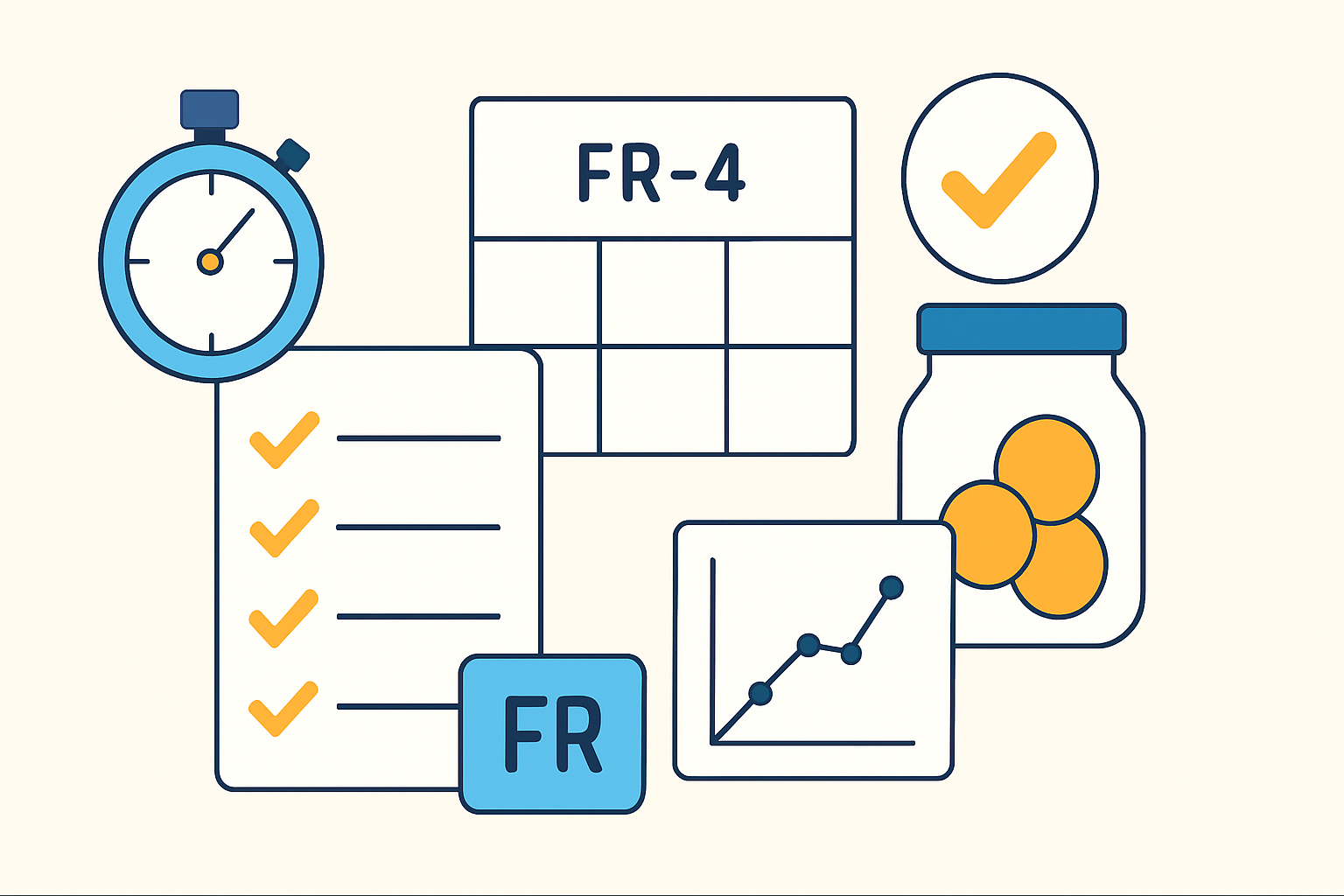
A fixed ratio schedule (abbreviated as FR) provides reinforcement after a specific, unchanging number of responses. The notation FR-X indicates that reinforcement follows exactly X responses. This schedule produces a distinctive pattern characterized by high response rates with brief pauses after reinforcement delivery.
The Core Definition and Key Characteristics
The defining feature of an FR schedule is the fixed number requirement that must be met before reinforcement occurs. Unlike time-based schedules, FR focuses exclusively on response count. This produces a post-reinforcement pause where responding temporarily decreases immediately after reinforcement, followed by rapid responding until the next reinforcement.
Common examples include piecework pay systems where workers receive payment after completing a set number of items. In educational settings, students might earn a break after completing a specific number of problems. The response pattern typically shows bursts of activity separated by brief pauses.
Applied Fixed Ratio Schedule Examples in ABA
Real-world applications demonstrate how FR schedules shape behavior in clinical and educational settings. These examples illustrate the practical implementation of ratio requirements across different domains.
Example 1: Academic Task Completion (FR-5)
In this scenario, a student earns a two-minute tablet break after completing five math problems. The antecedent is presentation of the worksheet, the behavior involves writing answers to five consecutive problems, and the consequence is access to the preferred tablet activity.
The hypothesized function is positive reinforcement through access to tangibles. Clinicians might initially use this FR-5 schedule to build task engagement, then systematically thin the schedule to FR-10 or higher as performance stabilizes. This approach increases work tolerance while maintaining reinforcement effectiveness.
Example 2: Vocational Skill Training (FR-10)
An adult in a vocational program receives a token after correctly assembling ten product components. The antecedent includes the workstation setup with necessary parts, the behavior requires assembling ten units meeting quality standards, and the consequence involves token delivery exchangeable for snacks.
This arrangement utilizes a token economy system where tokens function as conditioned reinforcers. The FR-10 requirement promotes work stamina and quality consistency. The schedule could be gradually increased to match actual workplace expectations while maintaining reinforcement density appropriate for the learner’s current skill level.
Example 3: Behavior Reduction via DRA (FR-1 to FR-3)
Teaching alternative communication involves thinning reinforcement schedules systematically. Initially, every appropriate mand (FR-1) results in immediate toy access when a child says ‘Toy, please’ instead of grabbing. The antecedent is toy visibility, the behavior is the verbal request, and the consequence is toy access.
As the skill stabilizes, the schedule thins to FR-3, requiring three appropriate requests before reinforcement. This schedule thinning promotes response maintenance under more natural conditions. The intervention combines differential reinforcement of alternative behavior with systematic ratio increases to build communication persistence.
Fixed Ratio Schedules on the BCBA Exam: Relevance and Common Traps
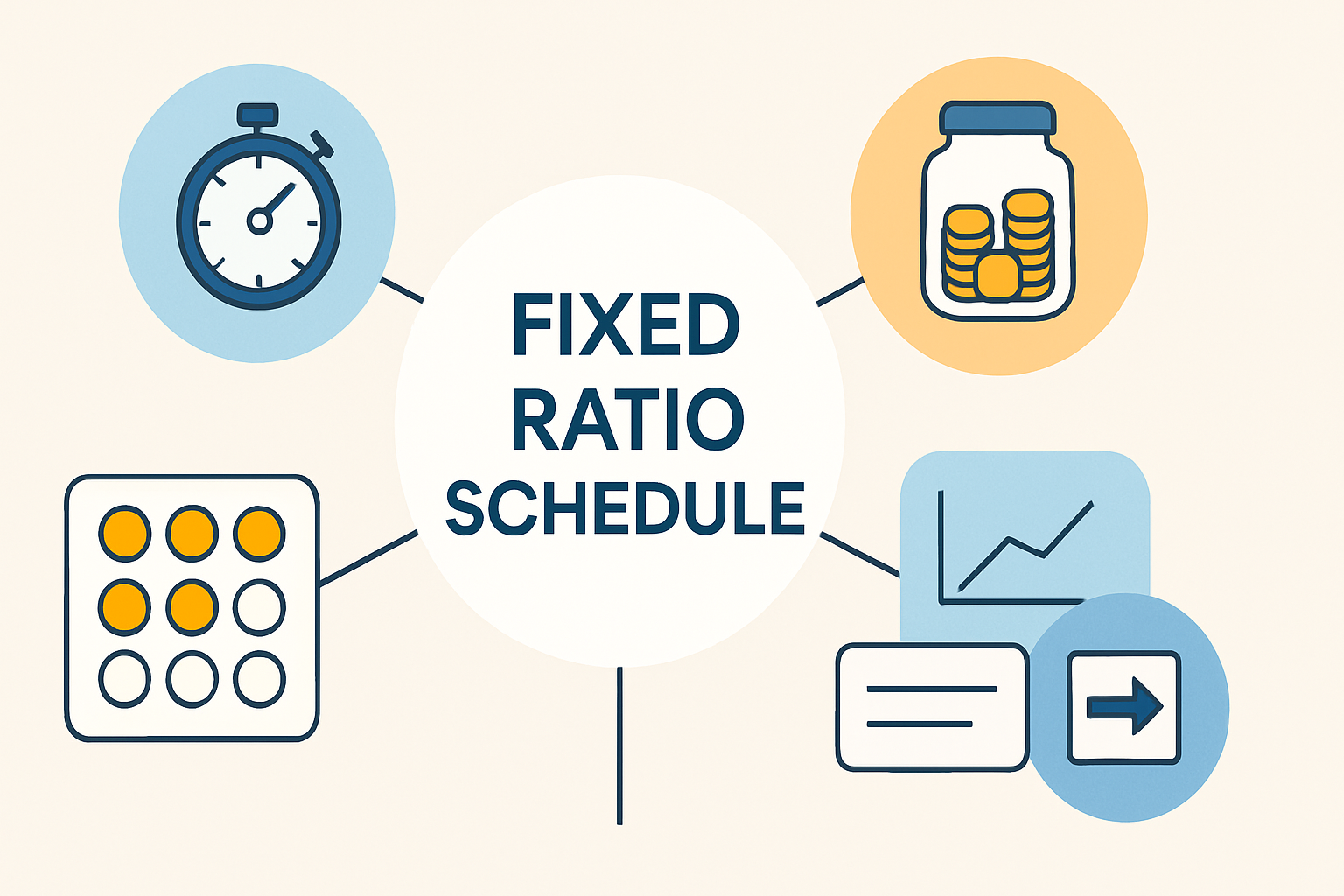
Exam questions frequently test understanding of reinforcement schedules through scenario analysis and application questions. Recognizing FR schedules and predicting their effects requires careful attention to response-count requirements.
How the Exam Tests Your Understanding of FR Schedules
Questions typically require identifying the schedule from descriptive scenarios, predicting characteristic response patterns, or selecting appropriate schedules for intervention goals. You might need to differentiate FR from variable ratio (VR), fixed interval (FI), or variable interval (VI) schedules based on described contingencies.
Scenario-based questions often describe reinforcement following a specific number of responses. Successful identification requires counting responses mentioned in the vignette. Application questions might ask which schedule would best build response fluency or maintain high rates of appropriate behavior.
Frequent Exam Mistakes and How to Avoid Them
Common errors include confusing ‘fixed number’ with ‘fixed time’ requirements, misidentifying FR-1 as exclusively continuous reinforcement (though CRF is technically FR-1), overlooking post-reinforcement pauses as diagnostic features, and forgetting that ratio schedules primarily impact response rate rather than duration or latency.
To avoid these traps, carefully count responses in scenarios, note whether reinforcement follows a consistent number versus variable numbers, and remember that FR produces high rates with predictable pauses. When reviewing compound schedules, distinguish FR components from other schedule types.
Quick-Study Checklist and Summary
This concise review tool helps consolidate understanding before assessments. Use it to verify mastery of key concepts and application principles.
Fixed Ratio Schedule Study Checklist
- ✓ Reinforcement delivered after a fixed number of responses
- ✓ Abbreviated as FR-X (X = required responses)
- ✓ Produces high, steady response rates with brief pauses
- ✓ Characterized by post-reinforcement pauses
- ✓ Used to build response fluency and work tolerance
- ✓ Common applications: piecework, token economies, academic tasks
- ✓ Different from interval schedules which are time-based
Key Takeaways for Your Exam Prep
Fixed ratio schedules represent a fundamental reinforcement arrangement with predictable effects on behavior. Mastery requires recognizing the consistent response-count requirement and anticipating the characteristic high-rate pattern with brief pauses. On exam questions, carefully count responses in scenarios and distinguish number-based from time-based contingencies.
For comprehensive exam preparation, explore our guide to differential reinforcement procedures and review the seven dimensions of ABA for contextual understanding.



