
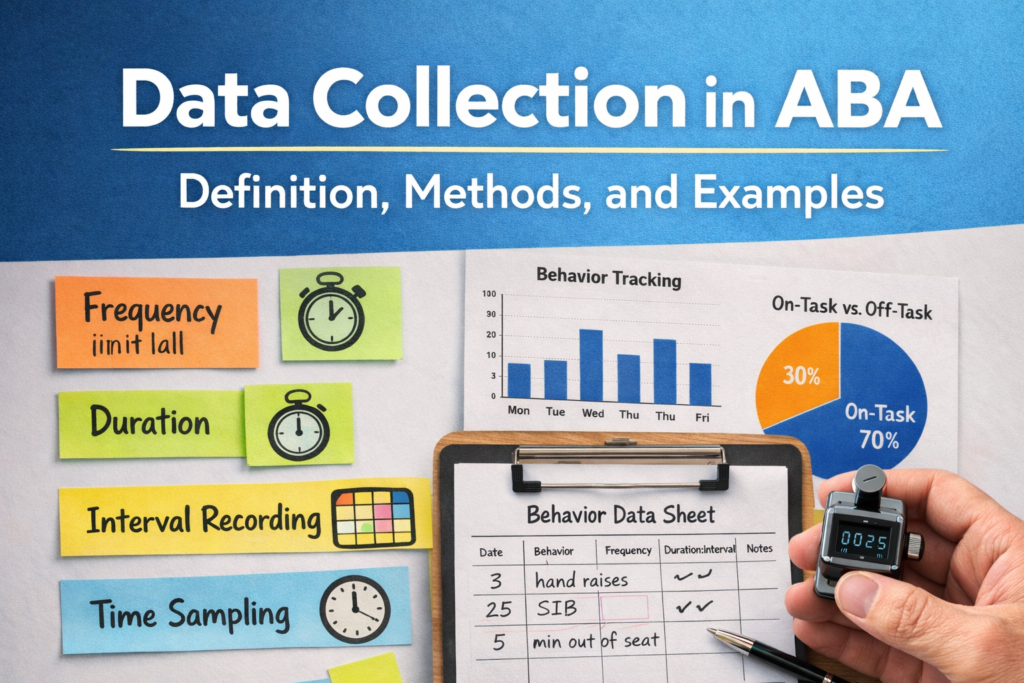
Data Collection in ABA: Definition, Methods, and Examples
Data collection is a cornerstone of applied behavior analysis (ABA). It is used to track and measure behaviors, monitor progress, and inform decision-making about interventions. Whether you are preparing for the BCBA exam or working as a behavior analyst, understanding data collection methods is crucial for effective practice.
In this article, we will cover the definition of data collection, different data collection methods, and examples of how to use them in ABA settings. We will also explore why accurate data collection is essential for measuring behavior and ensuring successful interventions.
What Is Data Collection in ABA?
Definition of Data Collection
Data collection in ABA refers to the systematic process of recording and analyzing behavior. The goal of data collection is to objectively measure behavior in a way that provides insights into its frequency, intensity, duration, or other measurable aspects. This data is used to:
-
Assess the effectiveness of interventions
-
Monitor progress over time
-
Make informed decisions about treatment plans

Common Data Collection Methods in ABA
In ABA, there are several data collection methods that are used to track behavior in different contexts. The choice of method depends on the type of behavior being measured and the specific goals of the intervention. Below are the most commonly used methods:
1. Frequency Recording
Frequency recording involves counting the number of times a behavior occurs within a specified period. This method is useful when the behavior occurs frequently and can be easily counted. For example, a behavior analyst might count the number of times a child raises their hand during class.
Example:
-
Behavior: Hand-raising
-
Data: 10 hand-raises in a 30-minute period
2. Duration Recording
Duration recording tracks how long a behavior lasts. This method is used when the length of time a behavior occurs is important. For instance, if a child engages in disruptive behavior, you may want to know how long the behavior lasts in order to measure progress and determine if the behavior is decreasing over time.
Example:
-
Behavior: Out-of-seat behavior
-
Data: 5 minutes of out-of-seat behavior in a 15-minute observation period
3. Interval Recording
Interval recording involves observing whether the behavior occurs or does not occur during specific intervals within the observation period. It is often used when measuring behaviors that are difficult to track continuously. There are two types of interval recording:
-
Whole Interval Recording: The behavior must occur throughout the entire interval to be counted.
-
Partial Interval Recording: The behavior is recorded if it occurs at any point during the interval.
Example:
-
Behavior: On-task behavior
-
Data: 3 out of 5 intervals of 1 minute showed on-task behavior
4. Time Sampling
Time sampling is a method where observations are made at regular, predetermined intervals. It’s similar to interval recording, but the data is recorded only at specific points in time rather than during the entire observation period. This method is useful for behaviors that are less frequent or that require less attention.
Example:
-
Behavior: Aggressive behavior
-
Data: Observations made every 5 minutes, recording the occurrence of aggression.
Why Is Data Collection Important in ABA?
Data collection is essential for several reasons:
-
Measuring Behavior: Accurate data provides a clear picture of the behavior, which is crucial for designing effective interventions.
-
Tracking Progress: Data allows behavior analysts to monitor changes over time and adjust interventions if necessary.
-
Making Informed Decisions: Data helps practitioners decide whether an intervention is working or if it needs to be modified.
-
Accountability: Collecting data ensures that interventions are evidence-based and that the practitioner can demonstrate the success or failure of their interventions.
Without reliable data, behavior analysts cannot effectively evaluate or alter interventions. This is why understanding and implementing proper data collection methods is fundamental in ABA practice.
Examples of Data Collection in ABA Settings
Let’s take a look at some real-world examples where data collection methods are used in ABA:
Example 1: Teaching Communication Skills
A behavior analyst is teaching a child to use a communication device to request items. The frequency of the child using the device to make requests is recorded each day. Over time, the frequency of requests increases, showing progress in the child’s communication skills.
Example 2: Reducing Disruptive Behavior
A teacher uses duration recording to measure how long a student spends out of their seat during a lesson. Initially, the student spends 10 minutes out of the seat during a 30-minute class. After a few weeks of intervention, the duration decreases to 2 minutes, showing a reduction in disruptive behavior.
Example 3: Reinforcing On-Task Behavior
A behavior analyst uses interval recording to measure how often a student stays on task during a 10-minute independent work period. The data shows that the student remains on task during 8 out of 10 intervals, indicating a high level of engagement.
Key Takeaways
-
Data collection is a critical skill in ABA, used to measure and track behavior for the purpose of making informed decisions and improving interventions.
-
Common methods include frequency recording, duration recording, interval recording, and time sampling.
-
Accurate data allows for the assessment of intervention effectiveness and helps identify areas where modifications may be needed.
-
BCBA candidates should be familiar with different data collection methods to apply them effectively in practice and on the exam.


