
Cumulative Record ABA: What is a Cumulative Record in Applied Behavior Analysis?
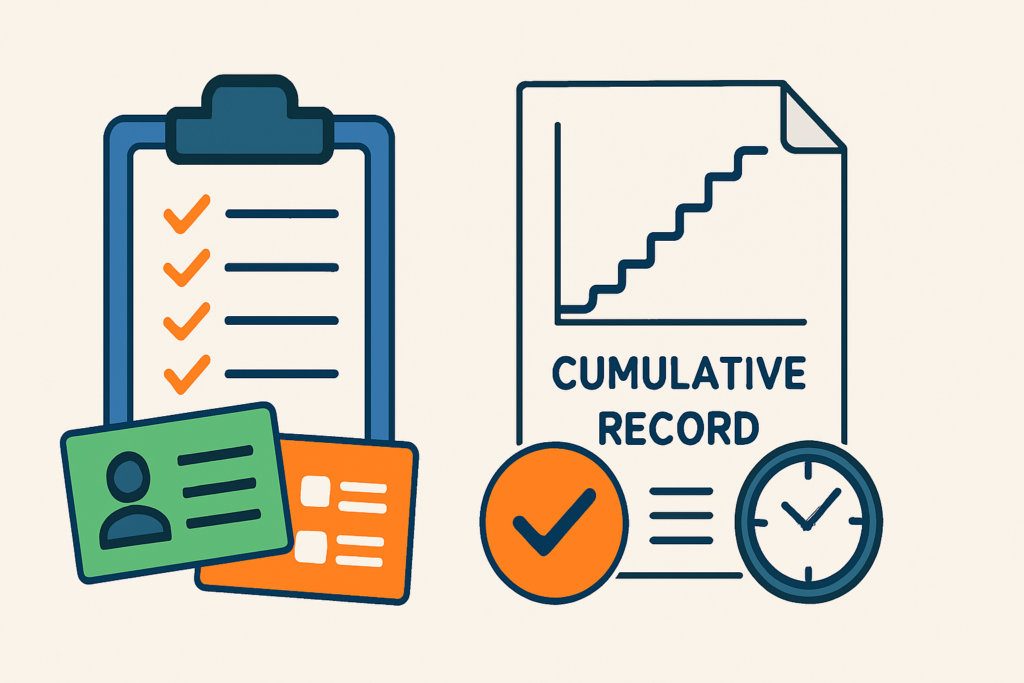
A cumulative record is a specialized graph that displays the total number of responses emitted since measurement began. This measurement tool provides a visual representation of behavior accumulation over time, showing an ever-increasing line that never decreases.
Table of Contents
- cumulative record ABA: What is a Cumulative Record in Applied Behavior Analysis?
- Cumulative Record Examples in Practice
- Cumulative Records and the BCBA Exam
- Quick-Reference Checklist for Cumulative Records
- Summary and Key Takeaways
- References
Unlike other graphs that might show rate per session or momentary data, the cumulative record’s distinctive feature is its step-like progression. Each response adds to the total count, creating a visual record of cumulative achievement.
Core Definition and Visual Signature
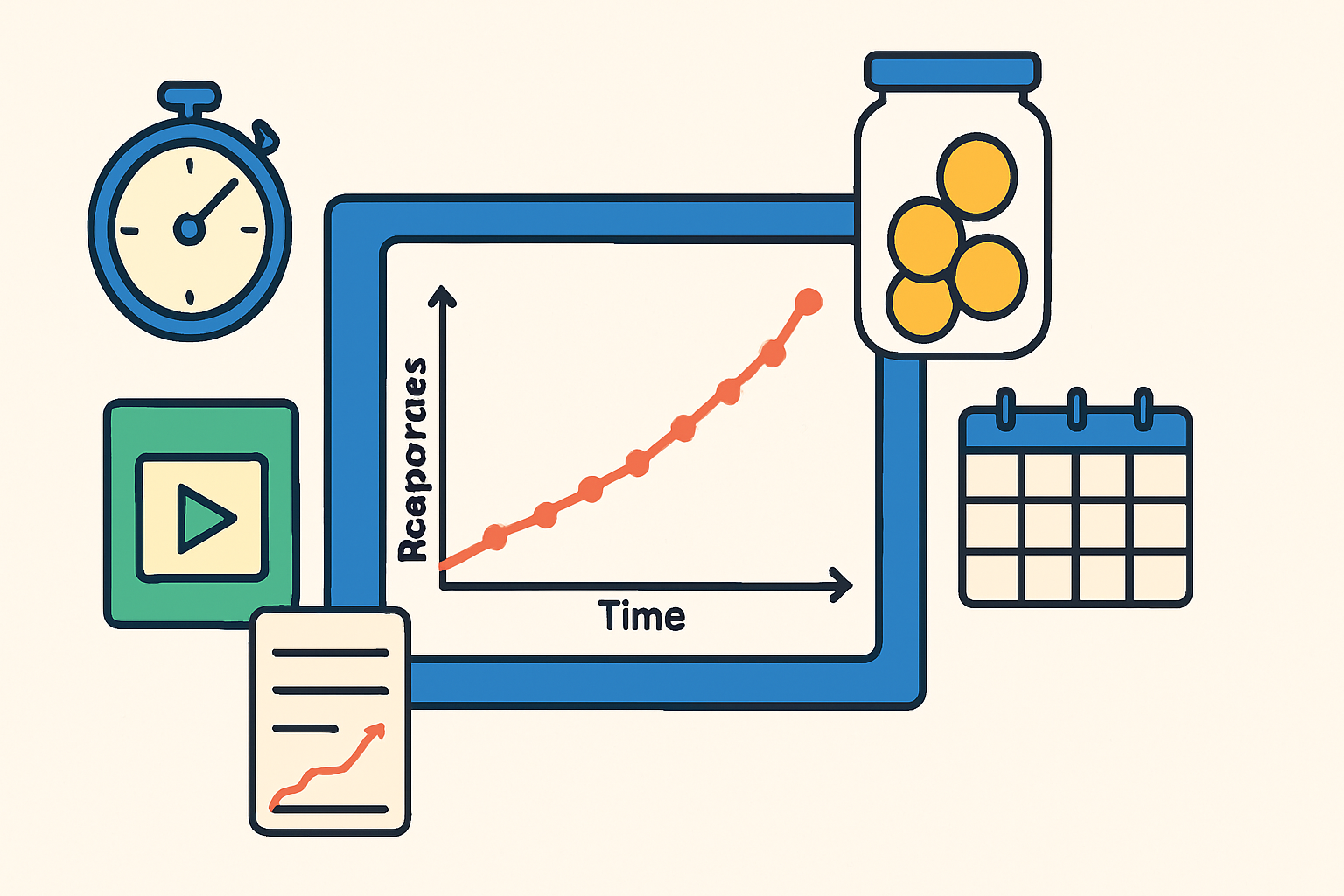
The cumulative record’s defining characteristic is its monotonically increasing nature. The line moves upward with each recorded response and never drops down. This creates a visual signature that’s immediately recognizable to behavior analysts.
Contrast this with rate graphs or frequency graphs that reset between sessions. The cumulative record maintains a running total, making it ideal for tracking long-term progress toward mastery goals.
When to Choose a Cumulative Record Over Other Measures
Select a cumulative record when the total count of behaviors is more meaningful than session-by-session rates. This measurement approach excels in several specific scenarios.
- Skill acquisition tracking: When monitoring total number of correct responses across multiple sessions
- Vocational productivity: Measuring total items completed or tasks mastered over time
- Academic progress: Tracking cumulative words read, problems solved, or concepts mastered
- Behavior reduction: When measuring cumulative intervals of appropriate behavior
- Clear beginning/end behaviors: Discrete responses with definite start and completion points
Cumulative Record Examples in Practice
Understanding cumulative records requires seeing them in action. These practical examples demonstrate how this measurement tool informs behavior analysis and intervention planning.
Example 1: Academic Skill Acquisition
Consider a student working on independent math problem completion. The behavior analyst tracks the cumulative number of correct problems solved without prompts.
ABC data reveals: Antecedent – worksheet presented; Behavior – completes problem independently; Consequence – automatic reinforcement from task completion. The hypothesized function is automatic reinforcement combined with escape from adult attention.
The cumulative record’s slope shows learning progress. A steeper slope indicates faster acquisition, while plateaus might suggest need for additional teaching procedures. This visual analysis complements traditional data collection methods.
Example 2: Vocational Task Completion
In a vocational setting, a client sorts packages by destination. The cumulative record tracks total packages sorted per day across multiple sessions.
ABC analysis shows: Antecedent – packages arrive on conveyor; Behavior – sorts to correct bin; Consequence – peer acknowledgment and break opportunity. The function appears to be social reinforcement combined with access to preferred activities.
Plateaus in the record clearly indicate session breaks or prompt delivery periods. The cumulative nature allows supervisors to see total productivity rather than momentary fluctuations, supporting better socially significant behavior measurement.
Cumulative Records and the BCBA Exam
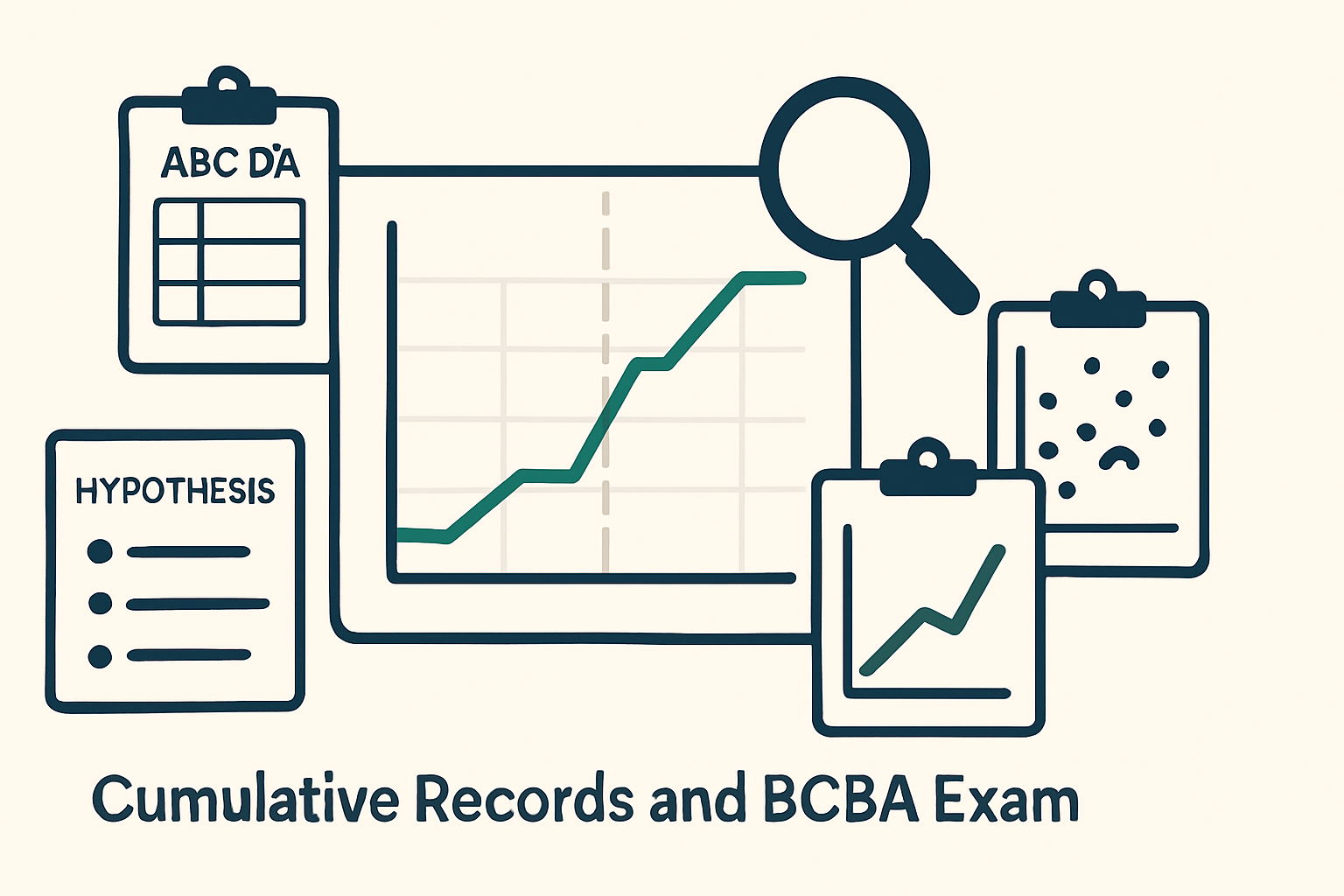
Understanding cumulative records is essential for BCBA exam success. This measurement tool appears in multiple exam domains, particularly those related to measurement and data analysis.
Key Exam Terms and Distinctions
BCBA candidates must distinguish cumulative records from other measurement approaches. Several key terms frequently appear together in exam questions.
- Celeration: The rate of change in behavior over time, often analyzed from cumulative records
- Cumulative recorder: The mechanical or digital device that produces cumulative records
- Line graphs: Show rate or frequency per session, not cumulative totals
- Bar charts: Display discrete data points without cumulative progression
- Total count: The fundamental measurement principle behind cumulative recording
Common Exam Traps and How to Avoid Them
Several predictable traps await unprepared candidates. Recognizing these patterns can prevent costly exam errors.
The most frequent mistake involves confusing cumulative records with rate-per-session graphs. Remember that cumulative records never reset to zero between sessions.
- Flat line misinterpretation: A horizontal line means no behavior occurred, not session end
- Inappropriate application: Don’t choose cumulative recording for behaviors without clear beginnings
- Momentary time sampling confusion: These measure presence/absence at moments, not cumulative totals
- Slope analysis errors: Steeper slopes mean faster responding, not necessarily better quality
- Session boundary confusion: Cumulative records continue across sessions without resetting
Quick-Reference Checklist for Cumulative Records
Use this actionable checklist during study sessions and clinical practice to ensure proper application of cumulative recording principles.
- Verify behavior suitability: Ensure the target behavior has discrete beginning and end points
- Confirm measurement goal: Total count must be more meaningful than session rates
- Check graph characteristics: Line should increase monotonically with each response
- Analyze slope patterns: Steeper slopes indicate faster responding or learning
- Identify plateaus correctly Horizontal segments show periods of no responding
- Compare alternatives: Consider if rate or percentage recording would be more appropriate
- Review exam relevance: Practice distinguishing from other graphing methods
Summary and Key Takeaways
Cumulative records provide unique insights into behavior accumulation over time. Their monotonically increasing nature makes them ideal for tracking total progress toward mastery goals.
Remember that cumulative records excel when total count matters more than momentary rates. They’re particularly valuable for skill acquisition, vocational productivity, and academic progress tracking.
For BCBA exam preparation, focus on distinguishing cumulative records from other measurement approaches. Practice identifying when this tool is most appropriate and avoid common interpretation traps. Mastery of cumulative recording supports better data-based decision making in clinical practice.
The Behavior Analyst Certification Board provides additional guidance on measurement procedures in their Professional and Ethical Compliance Code. Always ensure measurement methods align with client needs and intervention goals.
References
Complete BCBA Exam Prep
Turn this topic into exam-day practice
Practice concepts in context with five full-length 6th Edition mock exams, two bonus practice exams, a 6th Edition study guide, and key-term flashcards—all in one $120 USD package.
Get the $120 All-in-One Prep Pack
Review everything included on the product page before ordering. No pass guarantee is implied.



