
Understanding confounding variables is essential for both BCBA exam success and ethical practice in applied behavior analysis. These hidden factors can systematically influence your results, threatening the internal validity of your interventions and potentially leading to incorrect conclusions about treatment effectiveness. This guide provides practical strategies for identifying and controlling these variables in real-world ABA scenarios.
Table of Contents
- Defining Confounding Variables in Applied Behavior Analysis
- Identifying Confounds: Real-World ABA Examples
- Why This Matters: Exam Relevance and Ethical Practice
- Your Action Plan: Controlling for Confounding Variables
Defining Confounding Variables in Applied Behavior Analysis
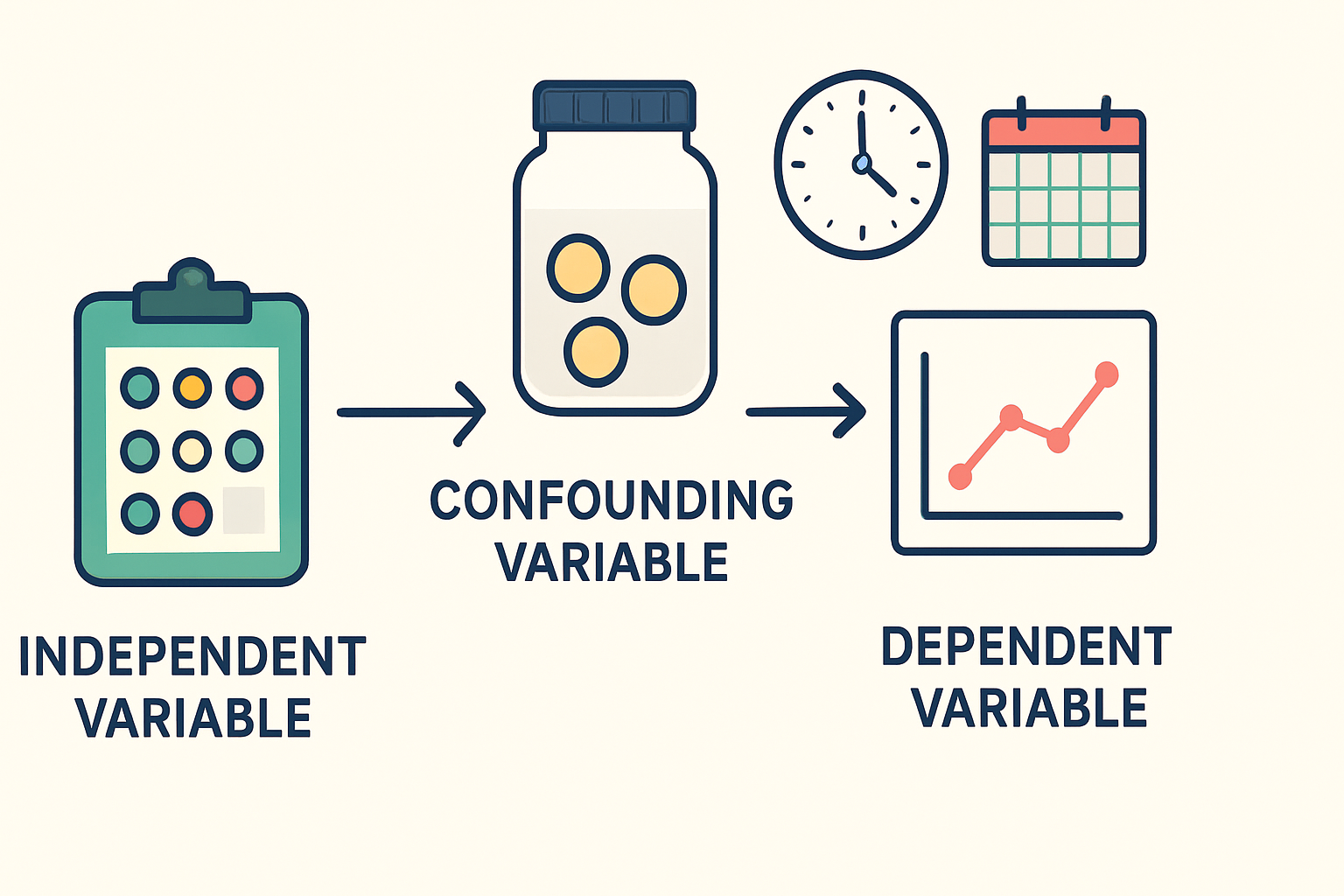
A confounding variable represents a specific type of extraneous factor that systematically covaries with your independent variable. This systematic relationship creates ambiguity about whether observed changes in the dependent variable result from your intervention or from the confounding factor.
The Core Definition: More Than Just an Extraneous Factor
Unlike general extraneous variables that might randomly affect your data, a confounding variable changes in a predictable pattern with your intervention. This systematic covariation makes it difficult to determine whether behavior changes stem from your independent variable or from the confound. The presence of such variables directly threatens the internal validity of your study or clinical intervention.
Confounds vs. Extraneous Variables: Knowing the Difference for the Exam
All confounding variables are extraneous variables, but not all extraneous variables become confounds. The critical distinction lies in the systematic relationship: a confound must change with the IV in a predictable manner. Random environmental noise or occasional measurement errors typically don’t qualify as confounds unless they systematically coincide with your intervention phases.
For exam purposes, remember this key distinction: if a variable could provide an alternative explanation for your results because it changed at the same time as your intervention, it’s likely a confound rather than just an extraneous variable.
Identifying Confounds: Real-World ABA Examples
Let’s examine practical scenarios where confounding variables might appear in ABA practice. These examples illustrate how easily confounds can enter both research studies and clinical interventions.
Example 1: The New Therapist & The Token Economy
You implement a token economy to increase math worksheet completion. Concurrently, a new therapist joins the team and begins working with the client. The ABC analysis shows: Antecedent (instruction to complete worksheet), Behavior (worksheet completion), Consequence (token delivery). The confounding variable here is the therapist change, which might function as novel social reinforcement or create a novelty effect that increases engagement independently of the token system.
Example 2: Medication Change During an FCT Intervention
While implementing Functional Communication Training to reduce aggression, the client’s medication dosage is adjusted. The ABC sequence involves: Antecedent (difficult demand), Behavior (aggression versus mand), Consequence (escape from demand). The medication change represents a confounding variable that could alter establishing operations for escape behavior, making it unclear whether reduced aggression results from FCT or pharmacological effects.
Example 3: Parent Training and Concurrent School Break
You measure the effect of parent training on home compliance, but the intervention begins during summer break. The ABC analysis shows: Antecedent (parent request), Behavior (compliance), Consequence (parent praise). The school break serves as a confounding variable that changes the client’s routine and potentially reduces stress, creating an alternative explanation for improved compliance that might not generalize to the school year.
Why This Matters: Exam Relevance and Ethical Practice
Proper identification and control of confounding variables extends beyond exam preparation to ethical practice. Failing to address these factors can lead to ineffective interventions and wasted resources.

Common Exam Traps and Question Formats
BCBA exam questions often test your ability to identify confounding variables in vignettes. Common traps include:
- Confusing correlation with causation when a third variable explains the relationship
- Missing subtle confounds like personnel changes or medication adjustments
- Selecting inappropriate control methods for specific confound types
- Overlooking setting or routine changes that coincide with intervention phases
Typical question stems might ask: ‘Which variable threatens the internal validity of this study?’ or ‘What alternative explanation exists for the behavior change?’
From Exam to Ethics: Ensuring Valid and Responsible Outcomes
Failing to control confounding variables violates ethical standards outlined in the BACB Ethics Code, particularly Section 2.09 regarding treatment efficacy. When confounds remain unaddressed, you cannot confidently attribute behavior change to your intervention, potentially leading to:
- Ineffective treatments being continued based on false positive results
- Effective treatments being abandoned due to false negative findings
- Wasted resources and client time on interventions with uncertain efficacy
- Potential harm from inappropriate treatment decisions
Your Action Plan: Controlling for Confounding Variables
Developing systematic approaches to identify and control confounds is essential for both exam success and clinical competence. This action plan provides practical strategies you can implement immediately.
Quick Checklist for Identifying Potential Confounds
- Document everything that changed when you introduced or withdrew your intervention
- List all plausible alternative explanations for observed behavior changes
- Track personnel changes, setting modifications, and routine adjustments
- Monitor concurrent medication changes or health status variations
- Consider seasonal factors, holidays, or schedule changes that might influence behavior
- Review measurement procedures for consistency across phases
Key Strategies for Control and Summary
Several experimental design strategies help control confounding variables. Steady state responding establishes stable baselines before introducing interventions. Experimental designs like reversal or multielement arrangements help separate intervention effects from confounds. Direct systematic replication across different conditions or settings strengthens your conclusions.
For comprehensive understanding of experimental control, explore our guide on single-subject experimental designs.
Remember that a confounding variable systematically covaries with your independent variable, providing alternative explanations for behavior change. Mastering identification and control of these factors is crucial for both BCBA exam success and ethical, effective practice in applied behavior analysis. By implementing systematic checks and using appropriate experimental designs, you can enhance the validity of your interventions and make more confident treatment decisions.
Complete BCBA Exam Prep
Turn this topic into exam-day practice
Practice concepts in context with five full-length 6th Edition mock exams, two bonus practice exams, a 6th Edition study guide, and key-term flashcards—all in one $120 USD package.
Get the $120 All-in-One Prep Pack
Review everything included on the product page before ordering. No pass guarantee is implied.



