

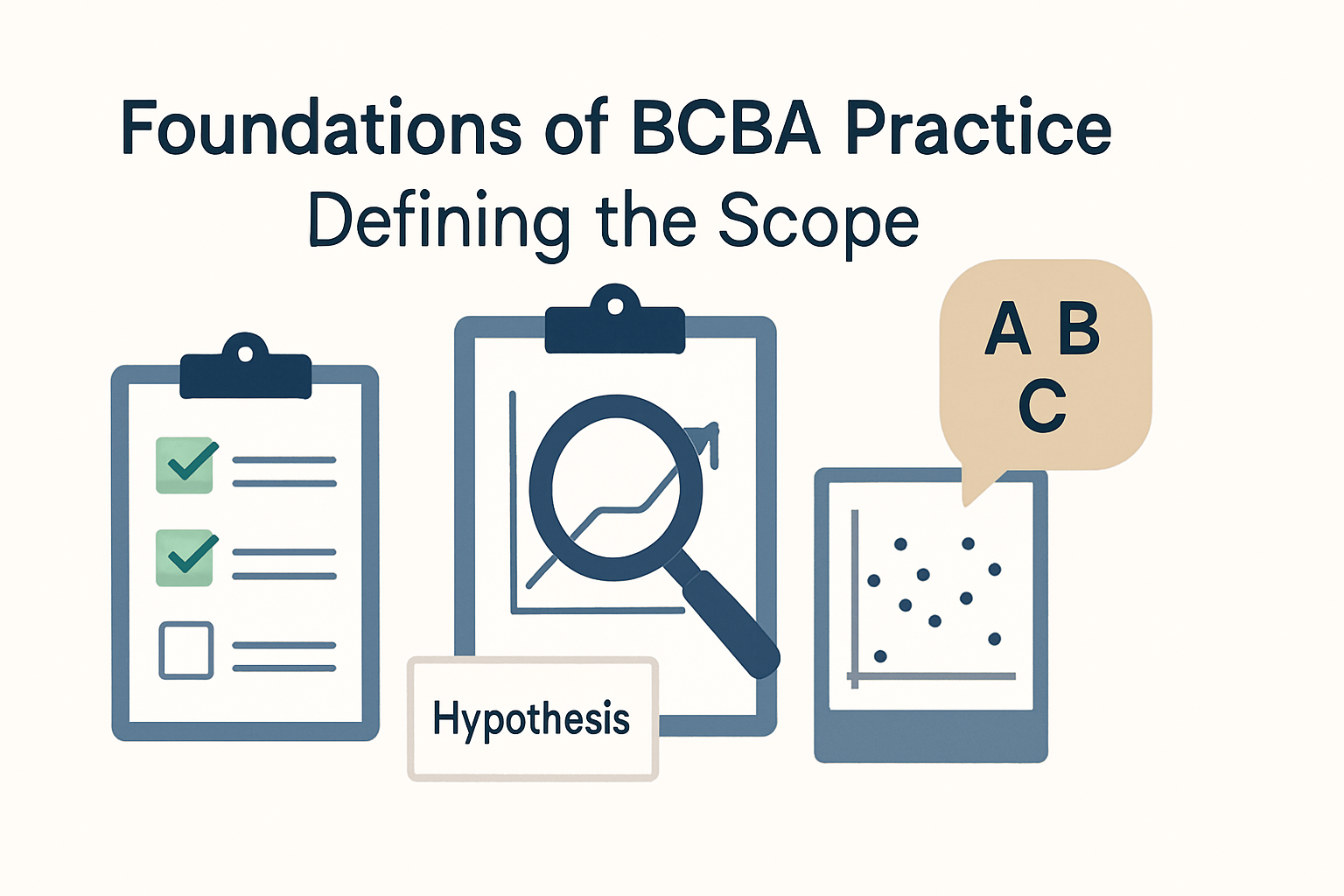
BCBA exam concepts: Foundations of BCBA Practice: Defining the Scope
Becoming a Board Certified Behavior Analyst requires mastery of specific competencies that extend far beyond basic behavioral principles. The BACB Task List outlines these essential skills across assessment, intervention, implementation, and supervision domains.
Table of Contents
- BCBA exam concepts: Foundations of BCBA Practice: Defining the Scope
- From Concept to Application: Worked Examples for the BCBA Exam
- Navigating the BCBA Exam: Common Traps and Study Strategies
- Essential Resources and Final Preparation Tips
What Does a BCBA Actually Do? Beyond the Job Title
A BCBA’s work centers on applying behavioral science to improve socially significant behaviors. This involves systematic assessment, data-driven intervention design, and ongoing evaluation of effectiveness.
- Conduct functional assessments to identify environmental variables maintaining target behaviors
- Design evidence-based interventions aligned with client needs and preferences
- Implement measurement systems to track progress and make data-based decisions
- Provide supervision to behavior technicians and other practitioners
- Ensure treatment integrity and social validity throughout service delivery
The Ethical Bedrock: BACB Code and Professional Boundaries
The BACB Ethics Code serves as the mandatory framework guiding all professional activities. This code emphasizes client dignity, autonomy, and welfare while establishing clear professional boundaries.
Key ethical principles include obtaining informed consent, maintaining confidentiality, and practicing within one’s scope of competence. These requirements directly impact exam scenarios where ethical dilemmas must be resolved appropriately.
From Concept to Application: Worked Examples for the BCBA Exam
Scenario-based questions test your ability to apply theoretical knowledge to practical situations. Understanding how concepts translate to real-world application is crucial for exam success.
Example 1: Assessing Function with Respect for Autonomy
Consider a client who consistently refuses academic tasks by engaging in disruptive behavior. ABC data collection reveals the behavior occurs primarily when difficult assignments are presented and stops when tasks are removed.
The hypothesized function is escape from demands. An ethical intervention might involve teaching functional communication training (FCT) where the client learns to appropriately request breaks. This approach respects client autonomy while addressing the behavioral function.
This scenario tests both functional assessment skills and ethical application of interventions that promote client dignity and participation.
Example 2: Ethical Considerations in Supervision
A Registered Behavior Technician (RBT) implements a prompting procedure inconsistently across sessions. As the supervising BCBA, your responsibilities include several ethical considerations.
- Ensure client welfare by addressing implementation errors promptly
- Provide corrective feedback and additional training to the RBT
- Monitor treatment integrity through direct observation and data review
- Document supervision activities according to BACB requirements
This scenario highlights the BCBA’s responsibility for ensuring competent implementation of behavioral procedures, a key element of the ethics code.

Navigating the BCBA Exam: Common Traps and Study Strategies
Many exam questions present plausible but incorrect answers that test your ability to prioritize ethical principles and apply concepts correctly. Recognizing these patterns improves your chances of selecting the best response.
Spotting the “Almost Right” Answer: Ethics in Scenario Questions
Exam questions often include options that are technically effective but ethically problematic. Common traps include:
- Choosing interventions that violate informed consent requirements
- Prioritizing data collection over immediate client safety concerns
- Selecting procedures that compromise client dignity or autonomy
- Recommending interventions outside one’s scope of competence
When answers conflict, always prioritize ethical principles over procedural efficiency. The BACB Ethics Code provides clear guidance for resolving such dilemmas.
Your BCBA Readiness Checklist
Use this checklist to assess your preparation across key domains tested on the exam:
- I can identify the four functions of behavior from descriptive data
- I understand the core sections of the BACB Ethics Code and their application
- I can analyze ABC datasets to hypothesize behavioral function
- I recognize which Task List domain a scenario question addresses
- I can differentiate between evidence-based practices and experimental procedures
- I understand supervision requirements for RBTs and other supervisees
- I can identify when cultural variables should be considered in assessment
Essential Resources and Final Preparation Tips
Successful exam preparation requires strategic use of quality resources and focused study methods. The BACB Task List 6th Edition serves as your primary study guide, outlining all content areas tested.
For comprehensive exam preparation, consider these additional resources:
- The official BACB Ethics Code for detailed ethical guidelines
- Practice exams to familiarize yourself with question formats
- Study groups focused on scenario analysis and ethical decision-making
Remember that the BCBA exam tests both conceptual understanding and practical application. Focus on how principles apply to real-world situations rather than memorizing definitions in isolation. Regular review of worked examples and ethical scenarios will build the critical thinking skills needed for exam success.


