
What Is an ABA Wizard?
An ABA wizard is a behavior analyst who has mastered the art of analyzing behavior-environment relations with precision and speed. This skill is critical for BCBA candidates because exam questions often require split-second identification of functions, contingencies, and appropriate interventions. The term highlights the ability to see beyond surface behaviors and focus on what truly drives them.
Table of Contents
- What Is an ABA Wizard?
- ABA Wizard in Action: Real-World Examples
- Exam Relevance and Common Traps
- Quick Checklist: Becoming an ABA Wizard
- Summary
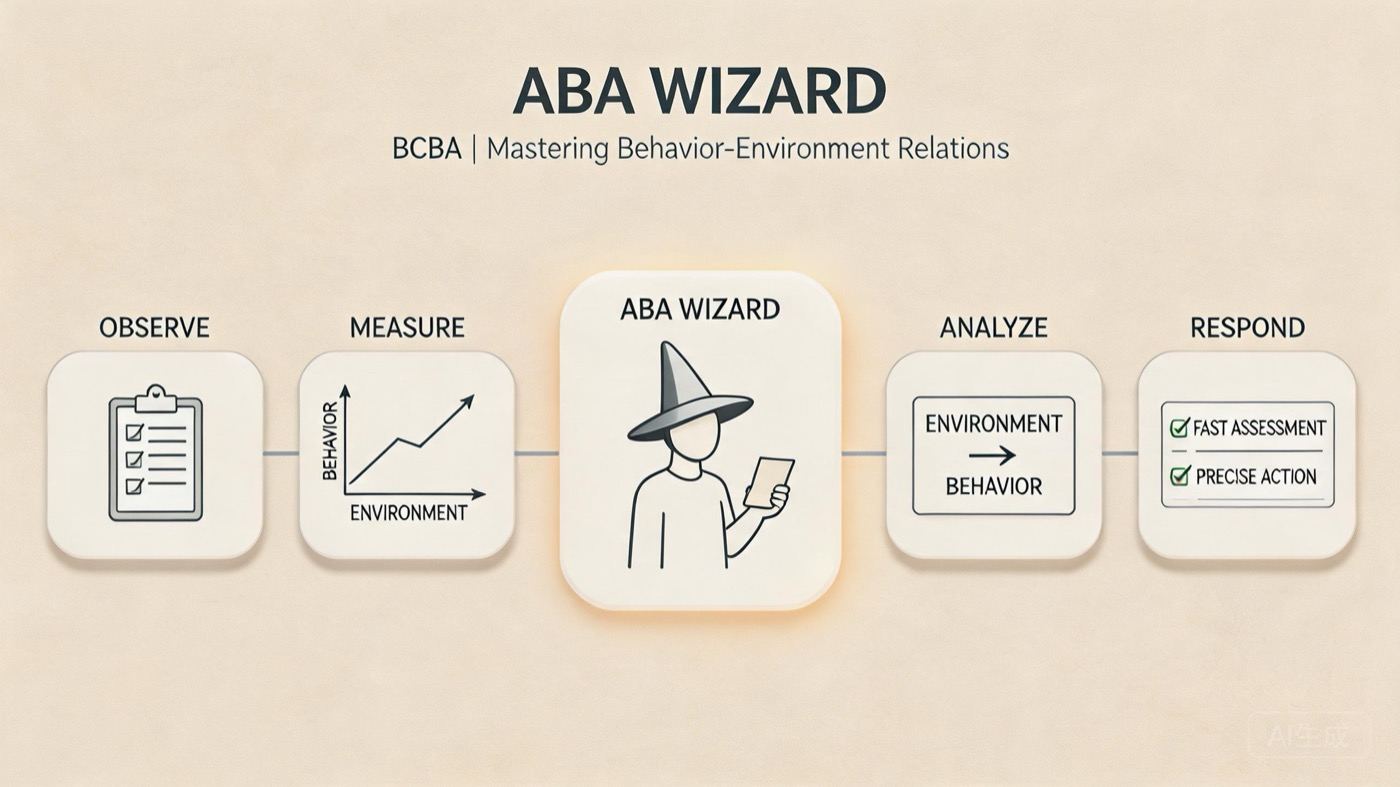
The core skills of an ABA wizard include accurate data collection, function-based thinking, and effective intervention design. These are the same competencies tested on the BCBA exam.
The Core Skills of an ABA Wizard
- Accurate data collection: Recording antecedents, behaviors, and consequences (ABC) without bias. Precision in data is non-negotiable for identifying patterns.
- Function-based thinking: Automatically hypothesizing whether a behavior serves escape, attention, tangible, or sensory functions. This is the heart of applied behavior analysis.
- Effective intervention design: Selecting strategies that match the function, such as teaching replacement behaviors or altering antecedents. A true wizard knows that interventions must be individualized.
Why It Matters for the BCBA Exam
The BCBA exam rewards this wizard-level analysis. Many questions present a brief vignette and ask you to identify the function of behavior or choose the best intervention. Without a sharp analytical eye, it is easy to fall into common traps. Developing an ABA wizard mindset helps you approach each scenario with clarity and confidence.
ABA Wizard in Action: Real-World Examples
To truly understand what an ABA wizard does, examine how ABC data reveals function. Below are three examples that demonstrate the wizard’s approach.
Example 1: Escape from Task Demands
Antecedent: Teacher presents a math worksheet to a student. Behavior: Student whines and pushes the paper away. Consequence: Teacher removes the worksheet and says, ‘Take a break.’ The hypothesized function is escape from task demands. A wizard notices that the consequence reinforces the behavior by allowing the student to avoid the aversive task. Variations might include the student crying or making verbal protests. Recognizing the function is key to designing an intervention like teaching a request for help or using a break card.
Example 2: Access to Tangible Items
Antecedent: A child is told they cannot have candy before dinner. Behavior: The child hits the parent. Consequence: Parent gives the child a piece of candy to stop the hitting. The hypothesized function is access to tangibles. The behavior is reinforced by receiving the item. A wizard would think of an alternative intervention such as teaching the child to request politely or to wait for a timer to end. This is a classic example of how consequences inadvertently strengthen problem behavior.
Example 3: Attention from Peers
Antecedent: A peer is working quietly, ignoring the child. Behavior: The child yells loudly. Consequence: The peer looks up and says, ‘What?’ The hypothesized function is attention. The yelling produced social attention. A wizard recognizes that even negative attention can reinforce behavior. Instead of reprimanding, an effective intervention would provide non-contingent attention or teach appropriate attention-seeking comments. Function-based thinking prevents misinterpreting the behavior as merely disruptive.
Example 4: Automatic Reinforcement
Antecedent: Alone time in a quiet room. Behavior: Hand flapping. Consequence: No immediate social response, but the behavior persists. The hypothesized function is automatic reinforcement (sensory stimulation). This is trickier because the reinforcer is internal. A wizard would consider providing alternative sensory activities or using environmental enrichment to reduce the behavior. This example highlights the importance of considering all four functions.
Exam Relevance and Common Traps
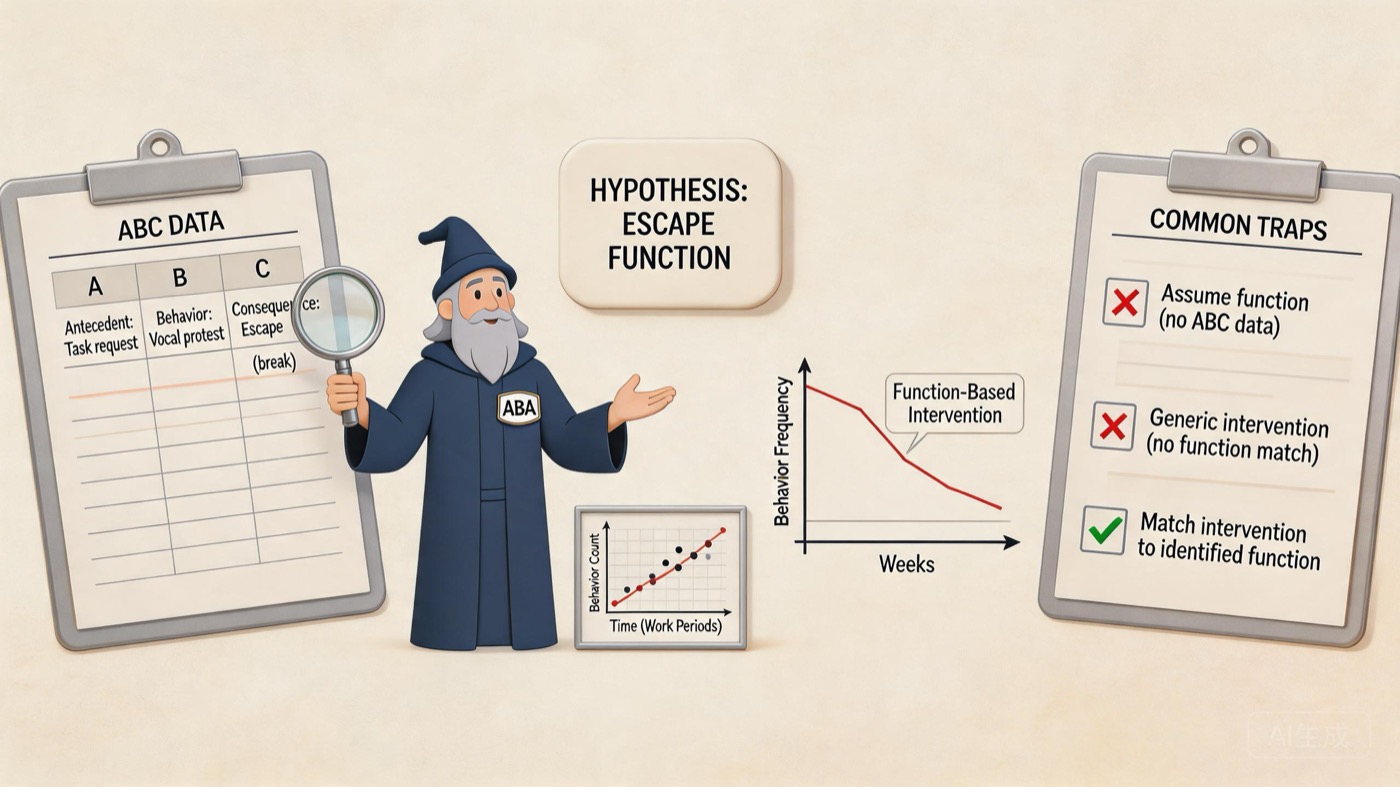
The BCBA exam frequently tests your ability to identify function from ABC data and select interventions based on that function. Understanding the mindset of an ABA wizard can save you from several common mistakes.
How the BCBA Exam Tests These Concepts
- Function identification: You will see a scenario and must choose the most likely function (e.g., escape, attention, tangible, sensory).
- Intervention selection: Given a function, pick the appropriate strategy (e.g., for escape, use demand fading; for attention, provide differential reinforcement of alternative behavior).
- Data interpretation: Graphs or ABC narratives require you to hypothesize the maintaining contingency.
Pitfalls to Watch For
- Confusing consequence with punishment: A consequence that increases behavior is reinforcement, not punishment. Do not assume negative outcomes always punish.
- Missing establishing operations: Deprivation or aversive conditions can alter the value of reinforcers. For example, being hungry makes food more potent; a wizard considers context.
- Assuming function without data: The exam may ask you to identify function based on limited info. Always rely on the ABC pattern provided, not assumptions.
- Overlooking automatic sensory functions: When no social consequence is present, consider automatic reinforcement. This is a common oversight.
Quick Checklist: Becoming an ABA Wizard
Use this checklist to sharpen your analytical skills for the exam. Each item reinforces a wizard-level approach.
Master the ABC Contingency
- Identify antecedents: What happened immediately before the behavior?
- Describe behavior clearly: Use observable, measurable terms.
- Record consequences: What happened immediately after? Is it likely to increase or maintain the behavior?
Practice Function-Based Thinking
- For each behavior, ask: Is the function escape, attention, tangible, or sensory?
- Consider setting events: Has there been deprivation, satiation, or illness?
- Look for patterns across multiple occurrences: One instance is not enough to confirm a function.
Apply to Mock Questions
- Use BCBA mock exams to simulate wizard-level analysis. Time yourself on function identification questions.
- Review your mistakes: Did you miss a subtle antecedent? Did you assume a function without ABC evidence?
- Discuss scenarios with peers: Explaining your reasoning solidifies the skill.
Summary
Becoming an ABA wizard means developing a sharp, data-driven perspective on behavior. This guide has defined the term, provided four real-world ABC examples, highlighted exam relevance and common traps, and offered an actionable checklist. For deeper practice, explore the resources at our guide to the four functions of behavior and try our 6th edition BCBA mock exam to test your skills. Also refer to the BACB website for official exam content outlines. Strengthen your wizard abilities through consistent practice, and you will approach the BCBA exam with confidence.
Next step for BCBA exam prep
Turn this topic into exam-day practice
Use this topic as a focused review, then test it in exam-style conditions with a free mock before deciding whether five full-length mocks are the right next step.
Start the Free BCBA Mock ExamContinue with Five Full-Length Mocks — $99
Review the included materials and access details before ordering. No pass guarantee is implied.



