

Understanding the distinction between fixed interval and fixed ratio reinforcement schedules is essential for both effective ABA practice and BCBA exam success. These two simple schedules of reinforcement produce dramatically different behavioral patterns and require precise identification in clinical settings.
Table of Contents
- Fixed Interval vs Fixed Ratio: Core Definitions: Fixed Interval and Fixed Ratio Schedules
- Applied Examples: Seeing FI and FR in Practice
- Exam Relevance and Common Traps
- Quick-Study Checklist and Summary
Fixed Interval vs Fixed Ratio: Core Definitions: Fixed Interval and Fixed Ratio Schedules
Before examining practical applications, establish clear operational definitions for each schedule type. The fundamental difference lies in what triggers reinforcement delivery.
What is a Fixed Interval (FI) Schedule?
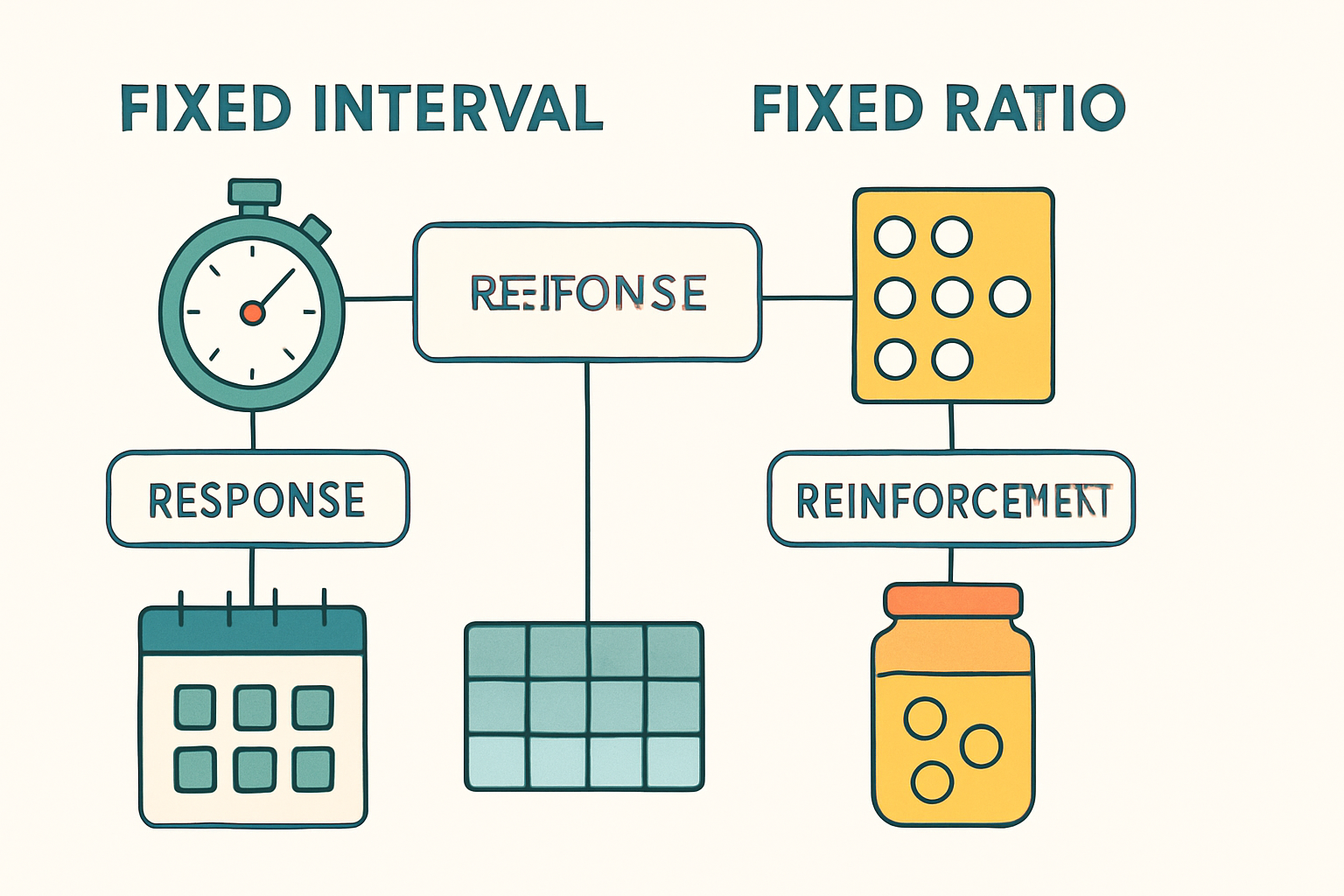
A fixed interval schedule delivers reinforcement after the first response following a predetermined, fixed amount of time. The critical contingency is time-based rather than response-based. This schedule typically produces a scallop pattern on cumulative records, with slow responding immediately after reinforcement that accelerates as the interval endpoint approaches.
Key characteristics include:
- Reinforcement depends on time elapsed since last reinforcement
- Only the first response after the interval ends produces reinforcement
- Produces a characteristic scalloped response pattern
- Common real-world analogy: weekly paycheck or scheduled medication administration
What is a Fixed Ratio (FR) Schedule?
A fixed ratio schedule delivers reinforcement after a fixed, predictable number of responses. The contingency is purely response-based, creating a high, steady rate of responding. This schedule produces a post-reinforcement pause followed by rapid responding until the ratio requirement is met.
Essential features include:
- Reinforcement depends on response count
- Produces break-and-run patterns on cumulative records
- Typically generates high response rates
- Common real-world analogy: piecework pay or sales commissions
Applied Examples: Seeing FI and FR in Practice
Translating definitions into practical scenarios solidifies understanding. These ABA examples demonstrate how each schedule operates in real intervention settings.
FI Example: The Weekly Token Economy
In a classroom setting, a student earns tokens for appropriate behavior throughout the week but can only exchange them for preferred items on Friday afternoons. This creates an FI 1-week schedule where reinforcement availability depends on time passage.
Behavior pattern: Minimal token-seeking early in the week, with increasing requests as Friday approaches. The function is access to tangibles, and the schedule teaches delayed gratification while maintaining motivation across the interval.
FR Example: Piecework Payroll in Vocational Training
A client in a vocational program earns a 5-minute break after assembling 10 widgets. This FR 10 schedule creates predictable reinforcement based on response count.
Behavior pattern: Rapid, consistent widget assembly followed by a brief pause after each break. The function is access to escape from work demands, and the schedule builds work stamina while maintaining productivity.
FI vs FR in Skill Acquisition Programs
Contrast these applications in teaching scenarios:
- FI 2-minute schedule for on-task behavior: Teacher provides praise after the first instance of on-task behavior following each 2-minute interval
- FR 5 schedule for math problems: Student earns a sticker after completing 5 correct math problems
The FI schedule focuses on time-based engagement, while the FR schedule emphasizes response productivity. Understanding when to apply each requires analyzing the target behavior’s characteristics and learning objectives.
Exam Relevance and Common Traps
BCBA exam questions frequently test your ability to distinguish between these schedules in described scenarios. Recognizing common question patterns and traps is crucial for exam success.
Key Discriminative Stimuli and Patterns
Identify the schedule by analyzing the described contingency. Look for these discriminative features:
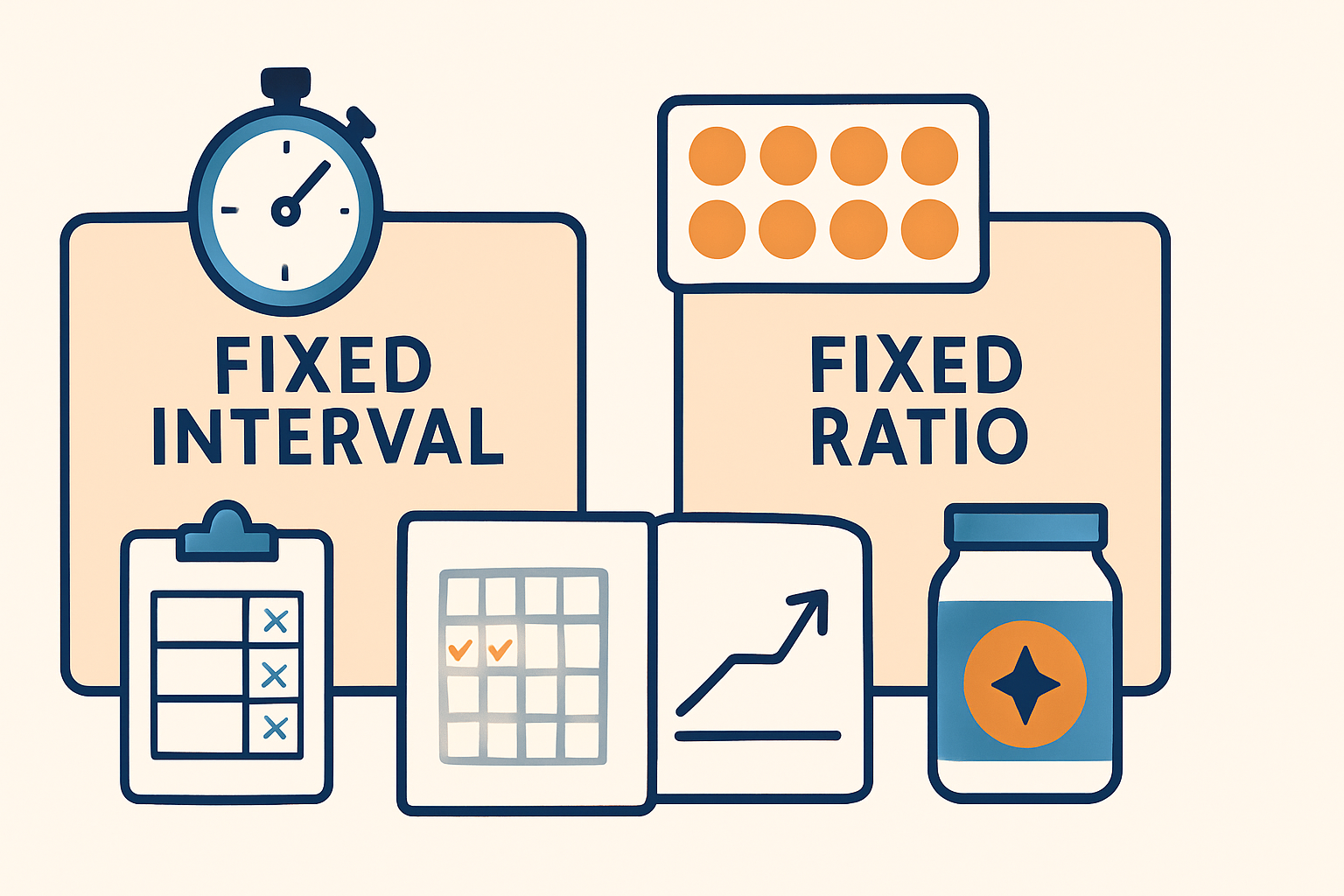
- Time-based language: “after X minutes/hours/days” suggests FI
- Response-count language: “after X number of responses” indicates FR
- Graph patterns: Scalloped curves = FI; Break-and-run = FR
- Behavioral patterns: Accelerating responding = FI; Steady high rate = FR
Tricky Wording and Scenario-Based Questions
Exam questions often mix terminology or describe complex scenarios. Common traps include:
- Questions describing time requirements but not specifying “first response after”
- Scenarios where both time and responses are mentioned but only one is the reinforcement contingency
- Descriptions of post-reinforcement pauses without clear ratio indicators
- Questions testing your understanding of schedule effects rather than just identification
To dissect these questions: First identify what directly produces reinforcement. If reinforcement depends on time passage, it’s interval-based. If it depends on response completion, it’s ratio-based. Remember that fixed schedules have predictable requirements, unlike variable schedules.
Quick-Study Checklist and Summary
Use this checklist for last-minute review and to reinforce key distinctions between these fundamental reinforcement schedules.
FI/FR Differentiation Checklist
- What triggers reinforcement? Time passage = FI; Response count = FR
- Typical graph pattern? Scalloped curve = FI; Break-and-run = FR
- Response rate pattern? Accelerating = FI; High steady = FR
- Post-reinforcement pattern? Minimal pause = FI; Significant pause = FR
- Real-world analogy? Paycheck = FI; Piecework = FR
Putting It All Together
The critical distinction between fixed interval and fixed ratio schedules lies in the reinforcement contingency: time versus response count. FI schedules produce scalloped patterns with accelerating responding, while FR schedules generate high, steady rates with post-reinforcement pauses.
Mastering this distinction is vital for both exam success and ethical practice. In clinical settings, choosing the appropriate schedule affects skill acquisition rates, motivation maintenance, and behavioral momentum. For further study of related concepts, explore our guide to compound vs simple schedules of reinforcement and our comprehensive resource on reinforcement principles in ABA.
For authoritative reference, consult the Behavior Analyst Certification Board resources.


