
SAFMEDS ABA: What Are SAFMEDS? Definition and Core Principles
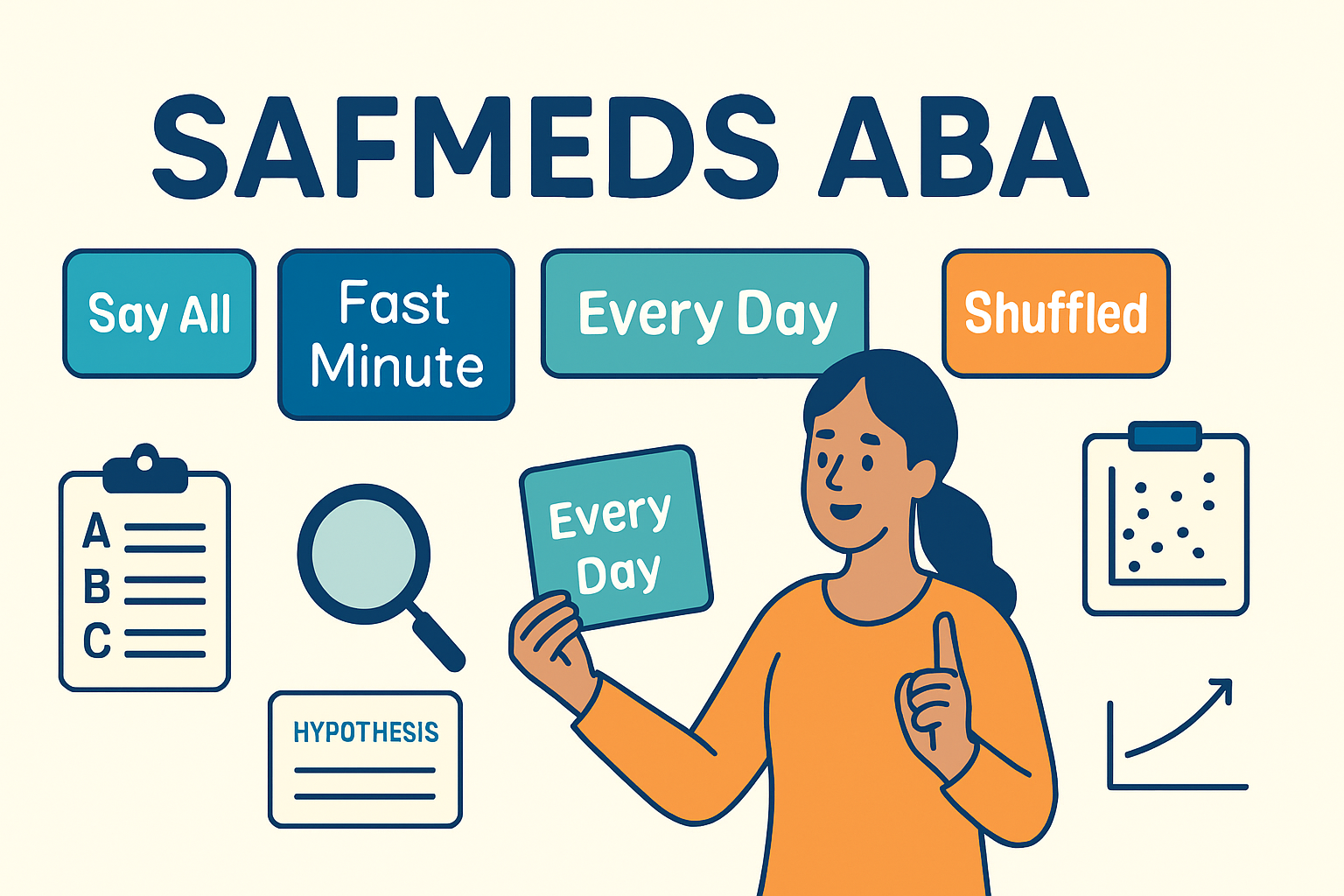
SAFMEDS stands for Say All Fast Minute Every Day Shuffled, a precision teaching method designed to build behavioral fluency. Unlike traditional flashcards, SAFMEDS targets both accuracy and speed to create automatic, effortless performance.
Table of Contents
- SAFMEDS ABA: What Are SAFMEDS? Definition and Core Principles
- Applying SAFMEDS in ABA Practice: Worked Examples
- SAFMEDS and the BCBA Exam: Relevance and Common Traps
- Your SAFMEDS Implementation Checklist
- Key Takeaways and Next Steps for Mastery
This approach originates from Ogden Lindsley’s work in precision teaching and emphasizes fluency building rather than simple memorization.
The SAFMEDS Acronym Explained
Each component of the acronym serves a specific purpose in the learning process:
- Say All: The learner attempts to respond to every card in the set
- Fast: Responses must be both accurate and rapid to build fluency
- Minute: Practice sessions are timed for one minute to measure progress
- Every Day: Consistent daily practice prevents skill decay
- Shuffled: Cards are randomized to prevent order effects and promote generalization
SAFMEDS vs. Traditional Study Methods
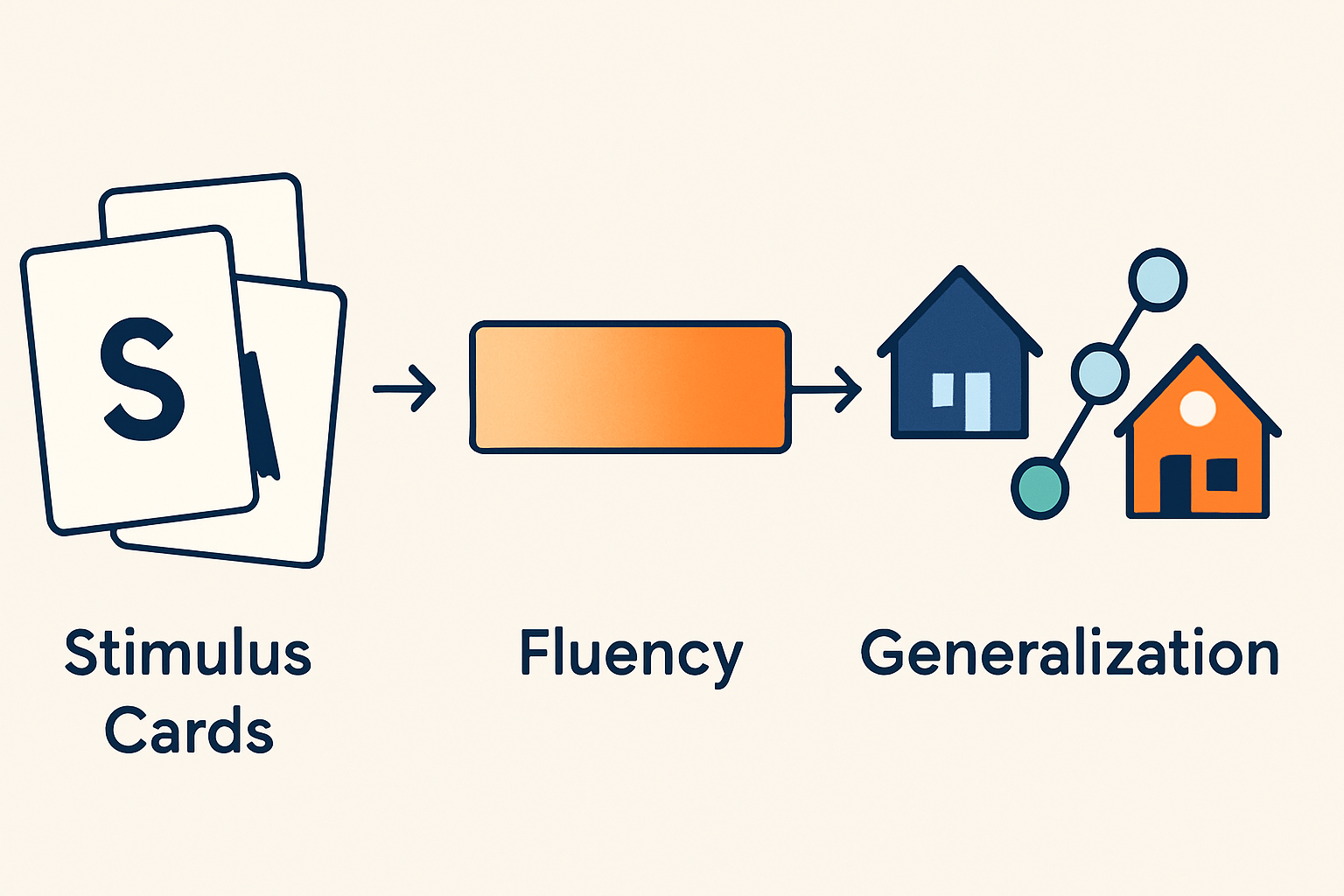
Traditional flashcards focus on acquisition and recall, while SAFMEDS targets behavioral fluency. Fluency combines accuracy with speed to create automatic responding that transfers to real-world applications.
This distinction is critical for BCBA candidates who need to apply concepts quickly during exams and clinical practice.
Applying SAFMEDS in ABA Practice: Worked Examples
SAFMEDS extends beyond exam preparation to practical applied behavior analysis settings. These examples demonstrate how fluency building improves staff performance and client outcomes.
Example 1: Building Staff Fluency with Behavior Principles
A supervisor trains an RBT on reinforcement definitions using SAFMEDS cards. Each card presents a scenario requiring identification of positive reinforcement, negative reinforcement, or other behavioral principles.
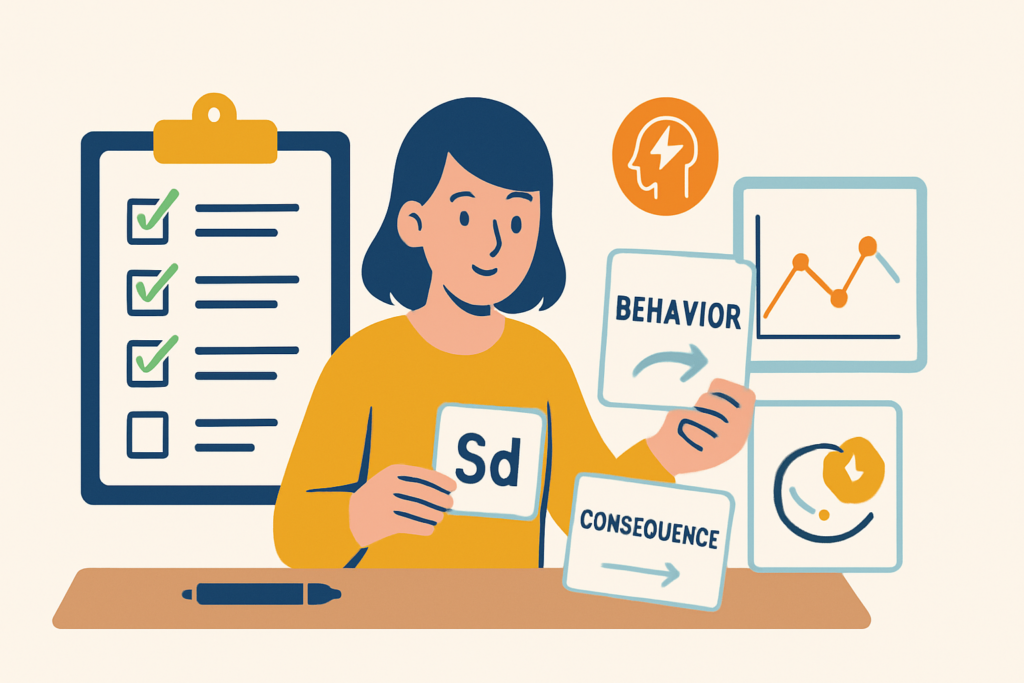
The antecedent is the SAFMEDS card presentation, the behavior is the RBT’s verbal response, and the consequence is immediate feedback. After achieving fluency, the RBT demonstrates improved treatment integrity during sessions.
Example 2: Teaching a Client Core Communication Symbols
For a learner using PECS (Picture Exchange Communication System), SAFMEDS builds fluency in matching symbols to requests. The hypothesized function is access to tangibles served by faster communication.
Cards show symbols for preferred items, and the learner must quickly name or match them. This fluency training reduces latency between stimulus presentation and communication response, increasing functional communication rates.
SAFMEDS and the BCBA Exam: Relevance and Common Traps
Understanding SAFMEDS is essential for BCBA candidates, as questions may test knowledge of precision teaching methods and fluency-based instruction.
How SAFMEDS Appears on the Task List
SAFMEDS relates to several BACB Task List items, particularly in Domain G (Behavior-Change Procedures). It serves as a method for promoting stimulus generalization and response generalization through varied practice.
Specifically, it connects to items addressing procedures to promote generalization and maintenance of behavior change. For comprehensive exam preparation, review our guide to the BACB Task List 6th Edition.
Frequently Confused Concepts and Exam Pitfalls
Candidates often make these critical errors when encountering SAFMEDS questions:
- Confusing fluency with simple mastery or acquisition
- Misidentifying SAFMEDS as a discrete trial training procedure
- Selecting SAFMEDS when another intervention like shaping or chaining is more appropriate
- Overlooking the importance of daily practice and shuffled order components
Remember that SAFMEDS specifically targets rate of responding, not just accuracy. For more on related concepts, explore our article on precision teaching in ABA.
Your SAFMEDS Implementation Checklist
Follow this actionable checklist to implement SAFMEDS effectively in your study or practice:
- Create cards with clear stimulus-response pairs
- Time one-minute practice sessions daily
- Shuffle cards before each session to prevent order effects
- Record both correct responses and response rate
- Set fluency aims based on celeration charts or performance standards
- Continue practice until responses become automatic and effortless
- Monitor for generalization to applied settings
Key Takeaways and Next Steps for Mastery
SAFMEDS represents a powerful precision teaching tool that builds behavioral fluency through timed, daily practice with shuffled materials. Its emphasis on both accuracy and speed distinguishes it from traditional study methods.
For BCBA candidates, understanding SAFMEDS supports exam success and enhances clinical practice. To integrate this knowledge effectively:
- Apply SAFMEDS to high-frequency exam concepts like verbal operants or experimental designs
- Practice with varied exemplars to promote generalization
- Monitor your progress using celeration charts to visualize improvement
- Combine SAFMEDS with other study methods from our BCBA exam study framework


