
Stimulus Generalization ABA: What is Stimulus Generalization?
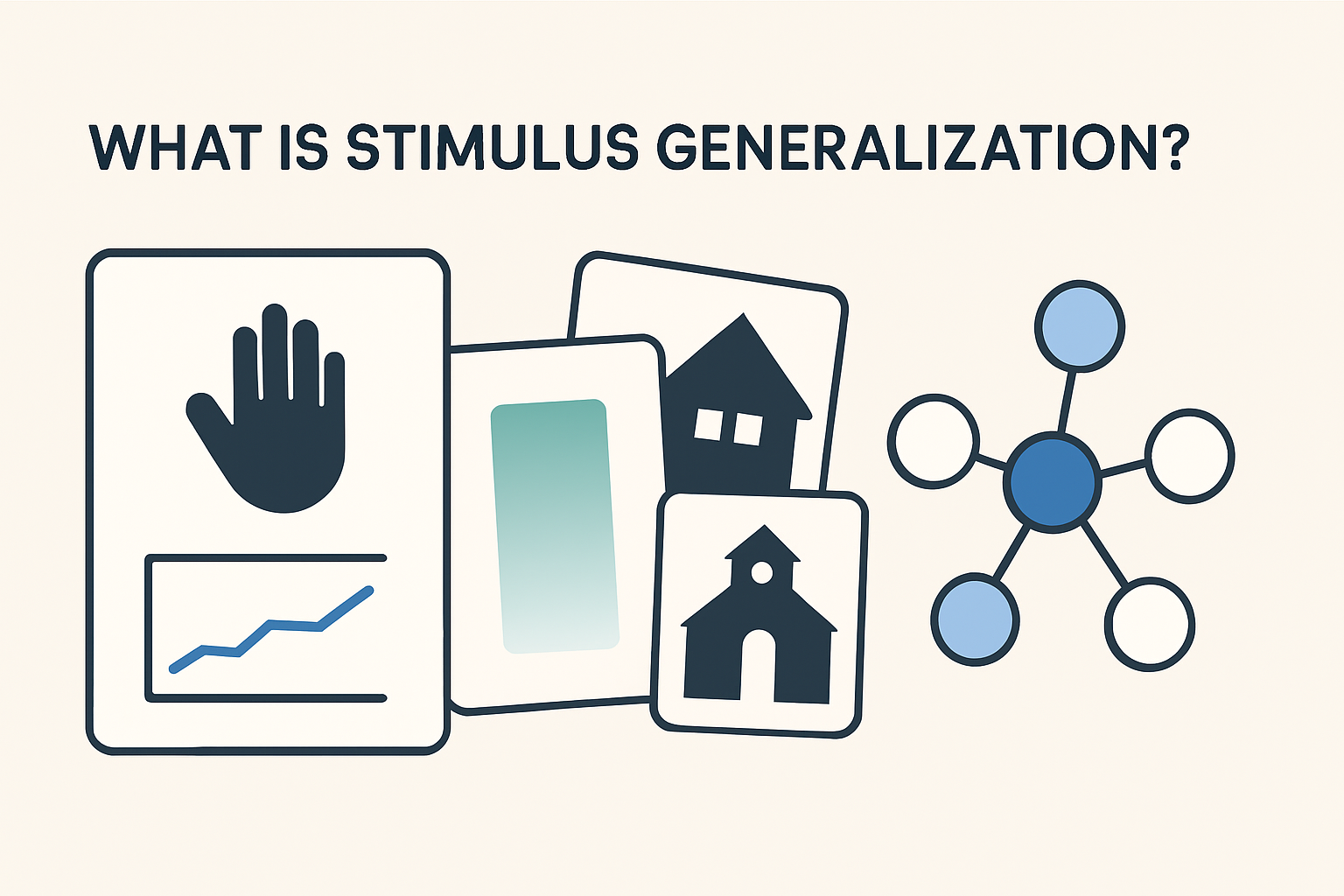
Stimulus generalization occurs when a behavior learned in the presence of one specific discriminative stimulus (SD) begins to occur in the presence of other stimuli that share similar properties. This fundamental concept in applied behavior analysis demonstrates how learning transfers across related environmental conditions.
Table of Contents
- Stimulus Generalization ABA: What is Stimulus Generalization?
- Stimulus Generalization in Practice: ABA Examples
- Stimulus Generalization and the BCBA Exam
- Quick Checklist for Programming and Analysis
- Summary and Key Takeaways
The key distinction lies in the antecedent stimulus changing while the behavior remains essentially the same. This differs from response generalization, where the behavior itself varies while the stimulus remains constant.
Core Definition and Key Features
Stimulus generalization represents the breadth of stimulus control rather than a failure to discriminate. When properly programmed, it indicates successful learning transfer across relevant environmental variations.
- Original SD: The initial stimulus where behavior was reinforced
- Generalized stimuli: Similar stimuli that now evoke the same behavior
- Shared properties: Physical characteristics, functions, or contextual features
- Reinforcement history: Maintains generalized responding across stimuli
Stimulus Generalization in Practice: ABA Examples
Understanding stimulus generalization ABA concepts requires examining practical scenarios. These examples demonstrate how behaviors transfer across different therapists, settings, and instructional formats.
Example 1: Greeting Across Therapists
A child learns to say ‘Hi’ when their primary therapist arrives wearing a blue badge. The behavior generalizes to saying ‘Hi’ to other staff members wearing similar badges or clinic uniforms.
- Antecedent: Therapist/staff presence with clinic identification
- Behavior: Verbal greeting ‘Hi’
- Consequence: Social attention and reciprocal greeting
- Function: Access to social reinforcement
Example 2: Manding in Different Settings
A learner masters requesting ‘break’ using a picture card in the therapy room. The behavior generalizes to requesting ‘break’ in the classroom, playground, and home settings when work demands are present.
- Antecedent: Work demand in any setting
- Behavior: Handing ‘break’ card or verbal request
- Consequence: Removal of work demand
- Function: Escape from non-preferred activities
Example 3: Discriminative Stimulus Fading
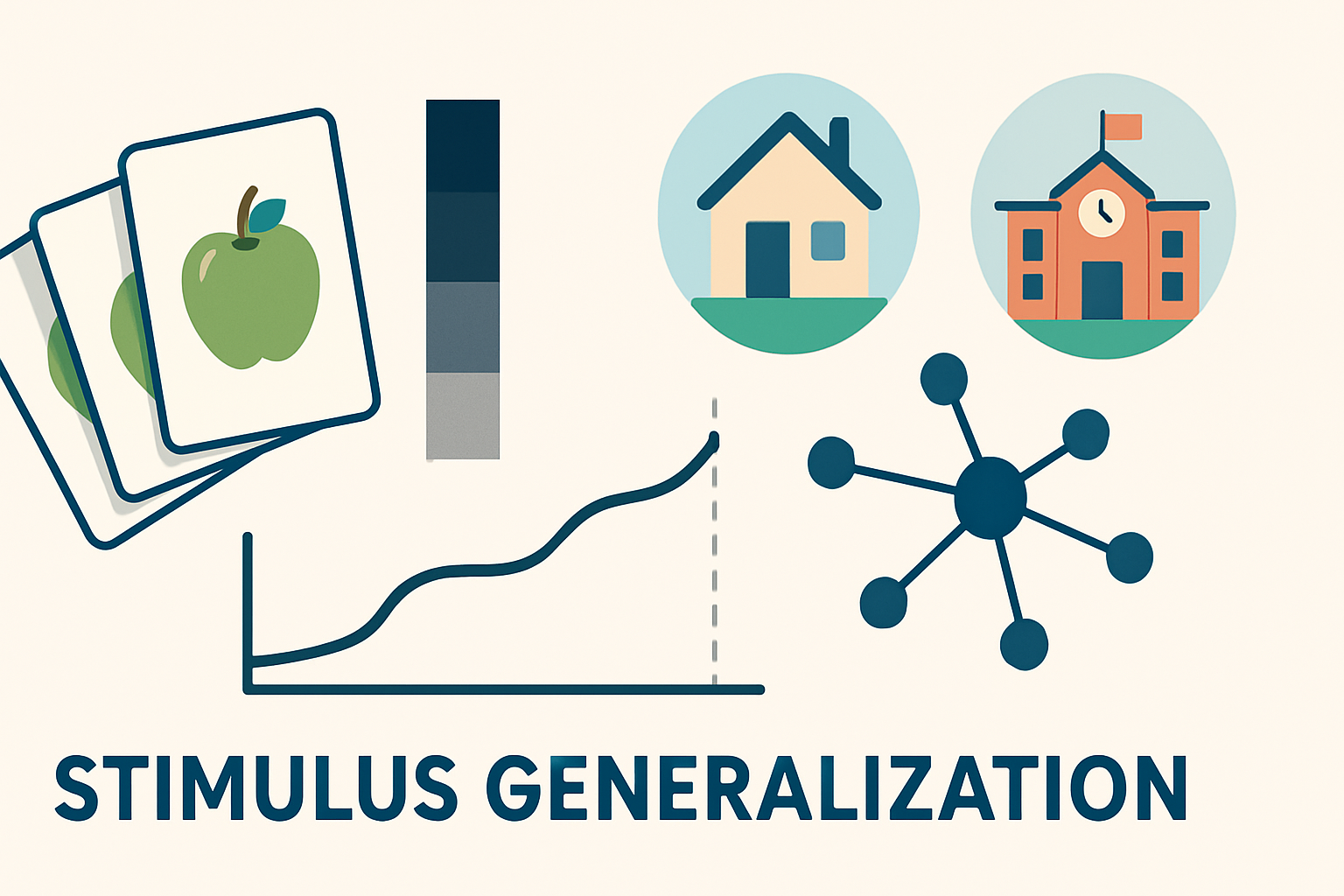
A child learns handwashing when a large picture cue is placed on the sink. Through stimulus fading, the picture size gradually reduces until the behavior occurs with minimal or no visual prompt.
- Original SD: Large picture cue on sink
- Faded stimuli: Progressively smaller pictures
- Generalized control: Sink context alone evokes handwashing
- Programming technique: Systematic prompt fading
Stimulus Generalization and the BCBA Exam
This concept appears frequently on the BCBA examination, often testing your ability to distinguish it from related concepts and apply it to clinical scenarios.
Common Exam Traps and How to Avoid Them
Several patterns consistently challenge candidates. Recognizing these exam traps improves your accuracy on test questions.
- Confusing with response generalization: Remember stimulus generalization involves the same behavior across different stimuli, while response generalization involves different behaviors with the same stimulus
- Mistaking for discrimination failure: Generalization represents appropriate breadth of control, not failure to discriminate between relevant stimuli
- Overlooking reinforcement history: Generalized responding depends on reinforcement occurring across multiple stimulus conditions
- Missing stimulus fading connections: Recognize how systematic fading procedures promote generalization to natural stimuli
Practice Identifying Stimulus Generalization
Test your understanding with these exam-style scenarios. Consider whether each describes stimulus generalization or another concept.
- Scenario 1: A child who learned to say ‘cookie’ when shown a chocolate chip cookie now says ‘cookie’ when shown oatmeal raisin and sugar cookies. (Answer: Stimulus generalization – same behavior across similar stimuli)
- Scenario 2: A student who raises their hand to answer questions in math class also raises their hand during science and history classes. (Answer: Stimulus generalization – behavior transfers across different class contexts)
- Scenario 3: A learner who was taught to request ‘water’ by saying ‘water’ now also uses signs, pictures, and gestures to request water. (Answer: Response generalization – different behaviors for same stimulus)
Quick Checklist for Programming and Analysis
Use this practical checklist when programming for generalization or analyzing whether it has occurred in clinical practice.
- Identify target stimuli: Determine which stimulus variations should control the behavior
- Program multiple exemplars: Teach with varied examples to promote generalization
- Use natural maintaining contingencies: Ensure reinforcement occurs in generalization settings
- Monitor across conditions: Track behavior occurrence with different stimuli
- Assess stimulus control: Verify behavior occurs only with appropriate stimulus variations
- Modify as needed: Adjust programming if generalization isn’t occurring appropriately
Summary and Key Takeaways
Mastering stimulus generalization requires understanding its definition, recognizing practical examples, and avoiding common misconceptions. This knowledge is essential for both clinical practice and BCBA exam preparation.
Remember these critical points: stimulus generalization involves the same behavior occurring across different but similar stimuli, it represents appropriate breadth of stimulus control, and it can be systematically programmed using techniques like multiple exemplar training. For related concepts, explore our guide on stimulus vs. response generalization and learn more about stimulus control principles.
For authoritative definitions and standards, refer to the Behavior Analyst Certification Board resources.


