

Duration Measurement ABA: What is Duration Measurement in ABA?
Duration measurement tracks the length of time a behavior occurs from its onset to offset. This continuous measurement method provides crucial information about how long behaviors persist, which is essential for both assessment and intervention planning.
Table of Contents
- Duration Measurement ABA: What is Duration Measurement in ABA?
- When and Why to Measure the Length of Time a Behavior Occurred
- Applied Examples: Recording and Calculating Duration
- BCBA Exam Focus: Common Traps and Practice
- Duration Measurement Quick-Reference Checklist
- Summary and Next Steps for Mastery
- References
Unlike frequency counting, duration focuses on temporal extent rather than how many times something happens. This distinction makes it particularly valuable for behaviors where persistence matters more than repetition.
The Formal Definition and Formula
In technical terms, duration measures the total elapsed time between the start and end of a behavior. The basic calculation involves summing individual durations and dividing by the number of occurrences.
The standard formula is: Average Duration = Sum of durations ÷ Number of occurrences. This differs from total duration per session, which simply adds all behavioral time without averaging.
Duration vs. Latency and Interresponse Time (IRT)
These three temporal measures often confuse exam candidates. Duration measures behavior length – how long it lasts. Latency tracks the time to start a behavior after a discriminative stimulus (SD). IRT measures the time between two responses.
For example, if a student takes 30 seconds to begin working after instruction, that’s latency. If they work continuously for 5 minutes, that’s duration. If they pause 10 seconds between math problems, that’s IRT.
When and Why to Measure the Length of Time a Behavior Occurred
Choosing duration recording depends on the behavior’s characteristics and your clinical questions. This measurement method answers specific questions about behavioral persistence and endurance.
Ideal Behaviors for Duration Recording
Duration works best for behaviors with clear start and stop points that naturally extend over time. Common examples include:
- Tantrums or crying episodes
- On-task behavior during academic work
- Social engagement with peers
- Time in seclusion or time-out
- Exercise periods or physical activity
- Independent play or leisure skills
These behaviors matter more for how long they last than how often they occur. For instance, a 2-minute tantrum differs significantly from a 20-minute tantrum in terms of disruption and intervention urgency.
From Data to Decision: Interpreting Duration
Duration data informs both functional hypotheses and intervention efficacy. Decreasing duration of problem behavior suggests effective intervention, while increasing duration of appropriate behavior indicates skill acquisition.
For example, if tantrum duration decreases after implementing functional communication training, you have evidence of treatment effectiveness. Similarly, increasing duration of independent play suggests growing skill and self-management.
Applied Examples: Recording and Calculating Duration
Let’s walk through concrete examples to demonstrate how duration recording works in practice. These step-by-step scenarios show the complete process from definition to analysis.
Example 1: Duration of Tantrum Behavior
Operational definition: Tantrum behavior includes crying louder than conversational volume, throwing materials, and refusing to follow instructions for longer than 5 seconds.
Session data (30-minute observation):
- Tantrum 1: 2:15 PM – 2:22 PM (7 minutes)
- Tantrum 2: 2:35 PM – 2:38 PM (3 minutes)
- Tantrum 3: 2:45 PM – 2:47 PM (2 minutes)
Calculations: Total duration = 12 minutes. Average duration = 12 ÷ 3 = 4 minutes. This data suggests possible escape-maintained behavior, as tantrums occur during work demands.
Example 2: Duration of Independent Play
Operational definition: Independent play involves manipulating toys appropriately without adult prompts or assistance for continuous periods.
Session data (20-minute observation):
- Play period 1: 3 minutes
- Play period 2: 5 minutes
- Play period 3: 7 minutes
Calculations: Total engagement = 15 minutes. Average duration = 15 ÷ 3 = 5 minutes. Increasing durations suggest successful shaping procedures and potential automatic reinforcement from play activities.
BCBA Exam Focus: Common Traps and Practice
The BCBA exam frequently tests your ability to select appropriate measurement procedures. Understanding common pitfalls helps you avoid costly mistakes on test day.
Tricky Scenarios and Vocabulary Pitfalls
Watch for these exam traps:
- Confusing duration with rate/frequency – duration measures time, frequency counts occurrences
- Misapplying duration to discrete, rapid behaviors like hand flapping (partial-interval may be better)
- Selecting wrong measures based on vignette details about behavioral function
- Overlooking whether the question asks for average duration vs. total duration
- Forgetting that duration requires clear onset/offset definitions
Sample Exam-Style Practice Prompts
1. “A teacher wants to know how long a student engages in off-task behavior during 45-minute class periods. The behavior involves looking away from work materials and talking to peers. What measurement procedure is most appropriate?”
Answer: Duration recording, because the question focuses on length of time engaged in a continuous behavior.
2. “A behavior analyst needs to measure how quickly a client responds to safety instructions. What measurement should they use?”
Answer: Latency, because the question asks about time to start a behavior after an instruction.
Duration Measurement Quick-Reference Checklist
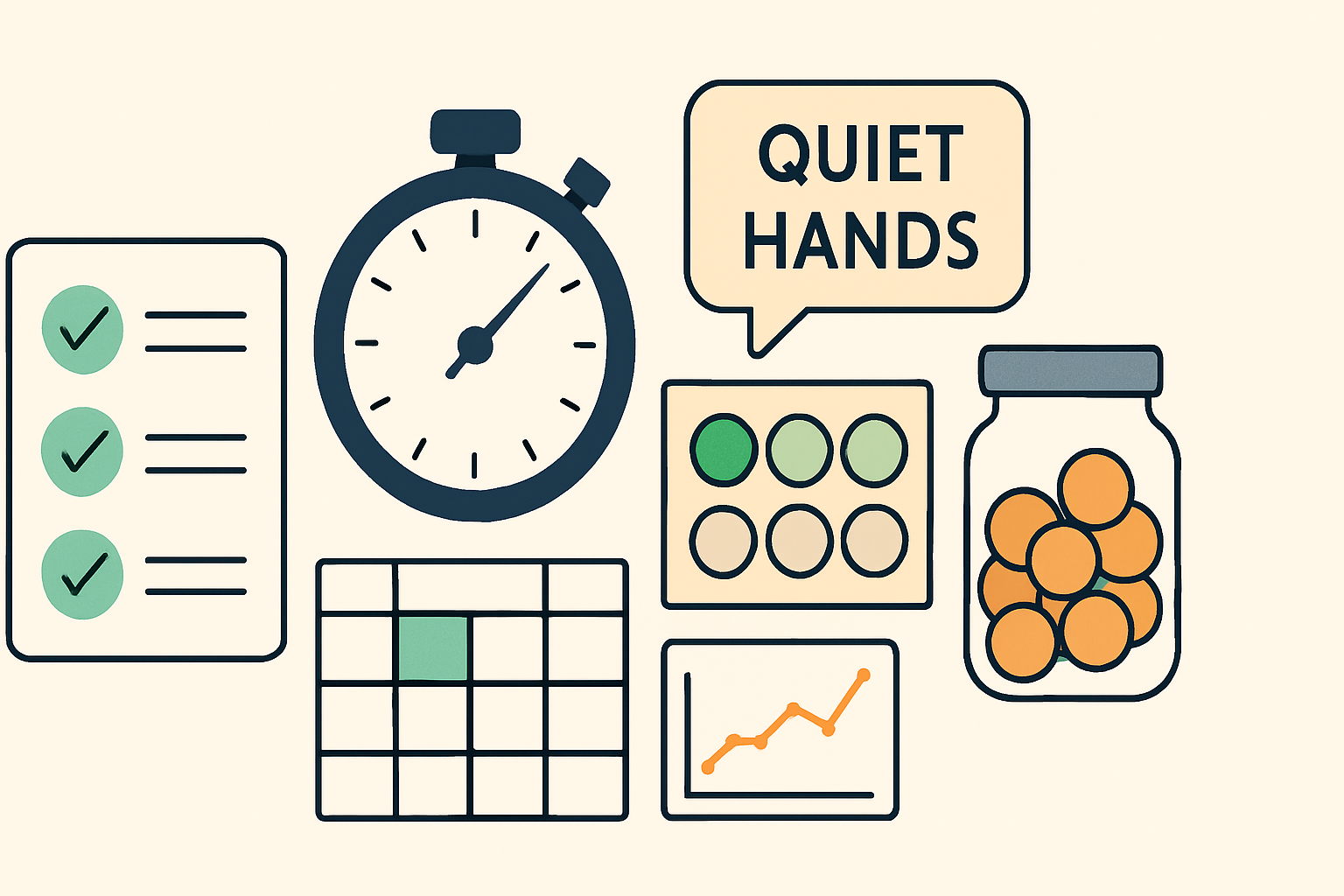
Use this checklist to ensure proper implementation of duration recording:
- Define behavior with clear onset and offset criteria
- Use reliable timing device (stopwatch, timer)
- Record start and stop times for each occurrence
- Calculate both total duration and average duration
- Graph data to visualize trends over time
- Consider session length when interpreting results
- Compare duration data with other measures like data collection methods for comprehensive analysis
Summary and Next Steps for Mastery
Duration measurement provides essential information about behavioral persistence that frequency alone cannot capture. Mastering this concept requires understanding when to use it, how to calculate it accurately, and how to interpret the results clinically.
For comprehensive exam preparation, explore related topics like continuous measurement methods and other temporal dimensions of behavior. Remember that measurement selection directly impacts your ability to detect meaningful behavior change and make data-based decisions.
Practice with various scenarios to build fluency in selecting appropriate measurement procedures based on behavioral characteristics and assessment questions. This skill is fundamental to effective behavior analysis practice and BCBA exam success.



