
What is a Fixed Ratio Schedule?
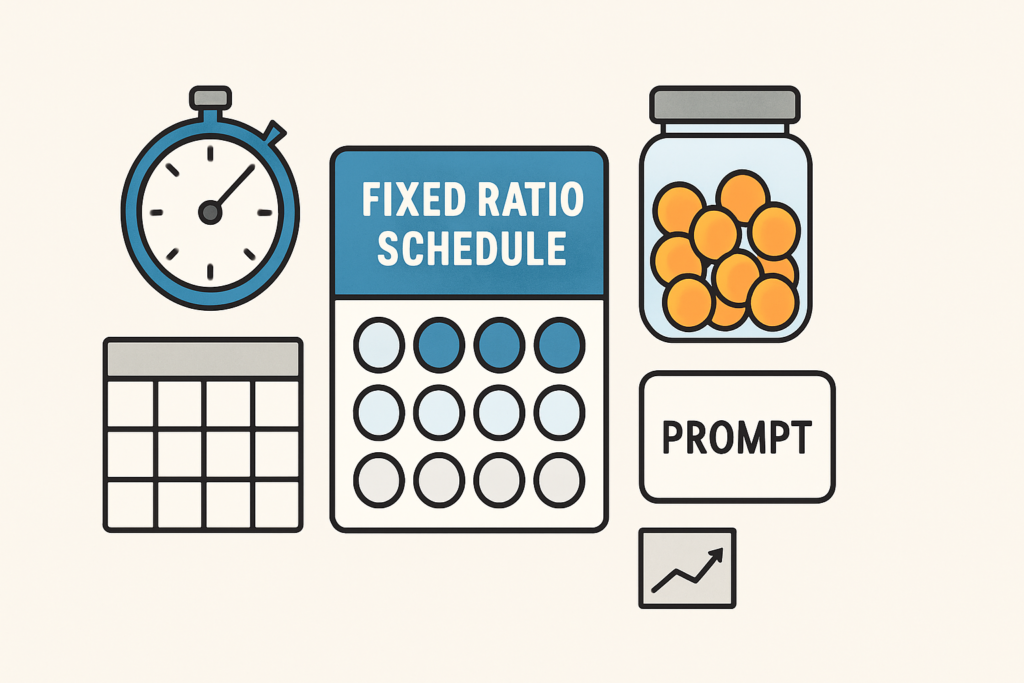
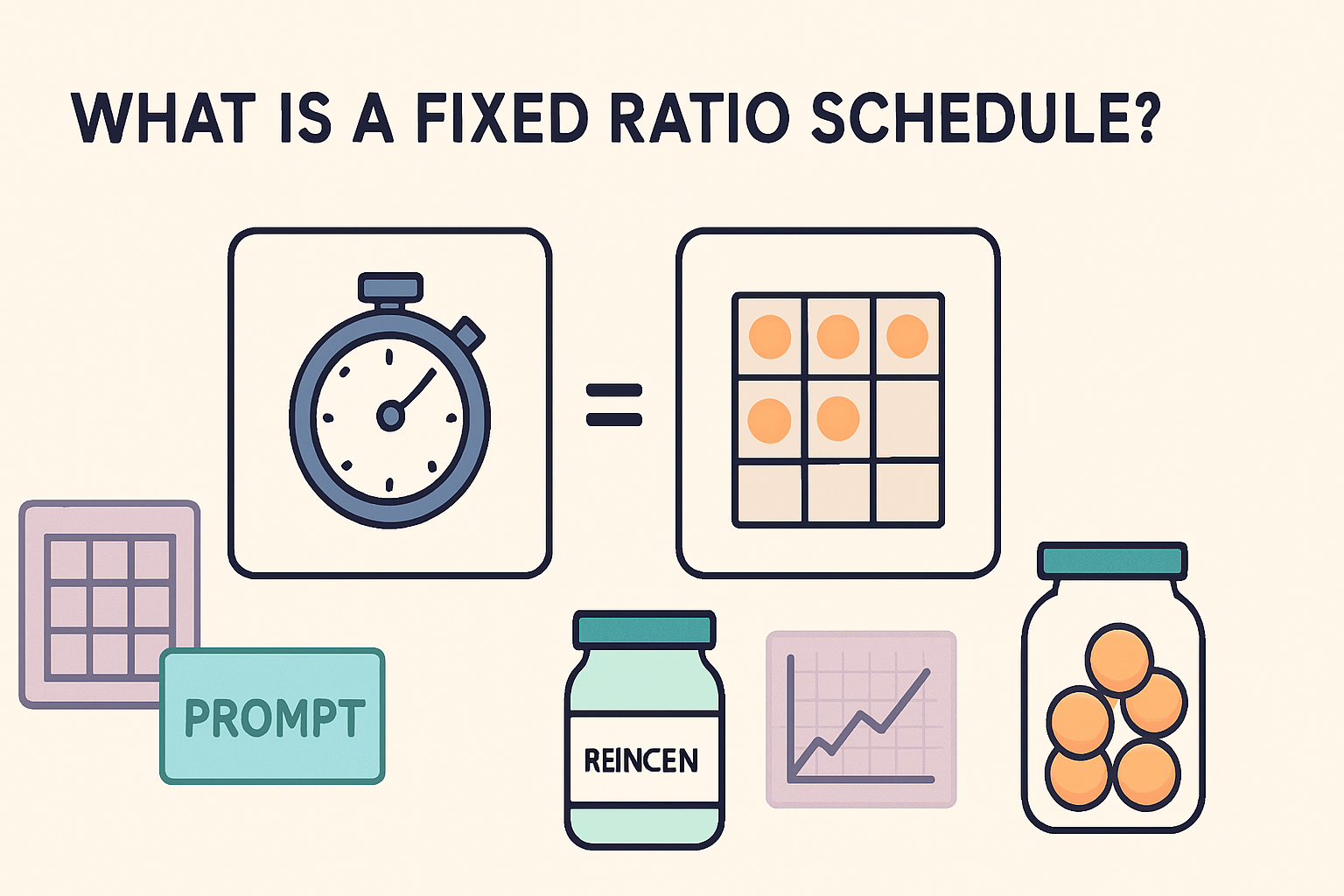
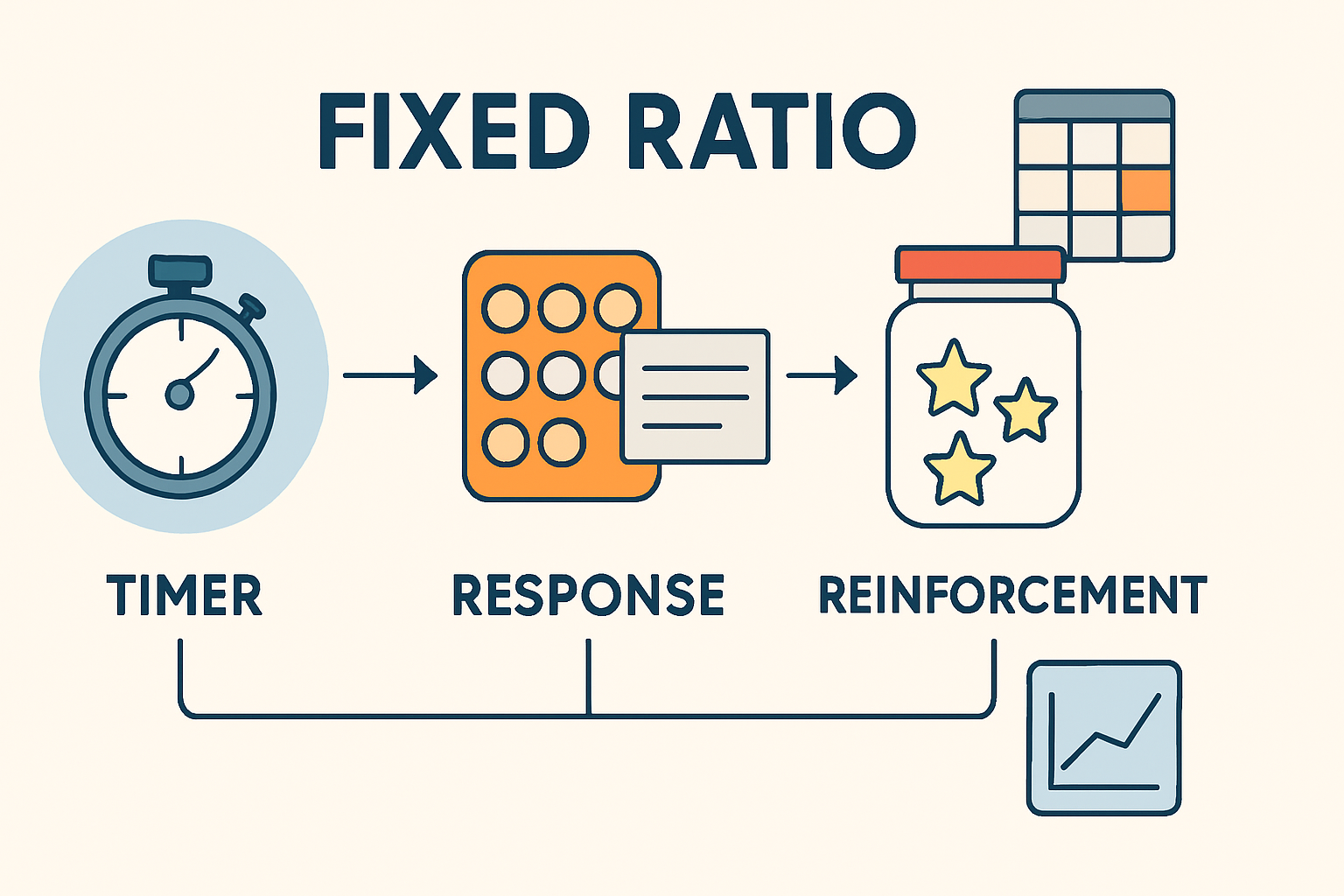
A fixed ratio schedule is a fundamental concept in applied behavior analysis where reinforcement is delivered after a consistent, predetermined number of responses. This schedule produces a distinctive pattern of behavior characterized by high, steady response rates followed by brief pauses after reinforcement delivery.
Table of Contents
- What is a Fixed Ratio Schedule?
- Fixed Ratio Schedule in Action: ABA Examples
- Fixed Ratio on the BCBA Exam: What to Expect
- Quick-Study Checklist and Summary
- References
The Formal Definition and Key Features
In technical terms, a fixed ratio schedule (abbreviated as FR) specifies that reinforcement occurs only after a fixed number of responses have been emitted. The key characteristics include:
- Reinforcement follows a constant number of responses (e.g., FR5 means every 5th response)
- Produces a high rate of responding once the behavior begins
- Typically shows a post-reinforcement pause after each reinforcement
- Creates a step-like pattern on cumulative records
- Is sensitive to ratio strain if requirements increase too rapidly
This schedule differs significantly from variable ratio schedules, where reinforcement occurs after an average number of responses that varies unpredictably.
Why It Matters in Applied Behavior Analysis
Fixed ratio schedules have important clinical applications in skill acquisition and building behavioral momentum. They’re particularly useful for establishing new behaviors and increasing response rates. However, practitioners must be aware of potential ratio strain, which occurs when the response requirement becomes too demanding, leading to decreased responding or even extinction.
Understanding these schedules helps behavior analysts design effective intervention programs and predict behavioral patterns. For more on reinforcement fundamentals, see our guide to reinforcement in ABA.
Fixed Ratio Schedule in Action: ABA Examples
Let’s examine practical applications of fixed ratio schedules through real-world scenarios that you might encounter in clinical practice or on the BCBA exam.
Example 1: Academic Task Completion
Consider a child who earns a sticker after completing 5 math problems. The antecedent is the presentation of math worksheets, the behavior is completing problems, and the consequence is receiving a sticker after the 5th completion.
- Schedule: FR5 (fixed ratio 5)
- Function: Access to tangible reinforcement (sticker)
- Pattern: Rapid problem-solving with brief pauses after each sticker
- Data: Cumulative record shows step-like increases every 5 responses
This example demonstrates how fixed ratio schedules can increase academic productivity while maintaining motivation through predictable reinforcement.
Example 2: Vocational Skills Training
In a vocational setting, staff might receive a bonus after assembling 20 units. This FR20 schedule maintains high productivity while providing clear performance expectations.
- Schedule: FR20 (fixed ratio 20)
- Function: Access to monetary reinforcement
- Considerations: Ratio size must match skill level to avoid strain
- Practical application: Builds work endurance and quality consistency
When implementing such schedules, behavior analysts must consider the individual’s current skill level and gradually increase ratio requirements to prevent ratio strain.
Example 3: Identifying FR in a Clinical Graph
On the BCBA exam, you’ll often need to identify reinforcement schedules from graphical data. A fixed ratio schedule typically shows:
- Steep, consistent response slopes between reinforcements
- Clear pauses (flat periods) immediately after reinforcement delivery
- Regular, predictable pattern of reinforcement points
- Step-like cumulative record progression
These visual patterns distinguish FR schedules from other reinforcement schedules like variable ratio or fixed interval. For more on data analysis, explore our graphing and visual analysis guide.
Fixed Ratio on the BCBA Exam: What to Expect
The BCBA exam frequently tests your understanding of reinforcement schedules, including fixed ratio applications and identification. Being prepared for common question formats and traps is essential for success.
Common Exam Traps and Misconceptions
Several common mistakes can trip up even well-prepared candidates:
- Confusing FR with VR based on ‘average’ descriptions – remember FR has a fixed number, not an average
- Misidentifying the schedule when extinction is introduced alongside ratio requirements
- Forgetting about the characteristic post-reinforcement pause when analyzing behavioral patterns
- Overlooking ratio strain effects when requirements increase too rapidly
- Mistaking ratio schedules for interval schedules based on time elements
These traps often appear in scenario-based questions that require careful reading and application of fundamental principles.
Practice Application Prompts
Test your understanding with these exam-style scenarios:
- A rat receives a food pellet every 10th lever press. What schedule is this?
- A student earns computer time after completing 8 worksheets. Identify the schedule and predict the behavioral pattern.
- An employee gets paid after packaging 50 items. What would the cumulative record look like, and what characteristic pause would you expect?
For additional practice questions, check our free BCBA mock exam practice questions.
Quick-Study Checklist and Summary
Use this concise review tool to reinforce your understanding of fixed ratio schedules before the exam.
Your Fixed Ratio Mastery Checklist
- ✓ Reinforcement is delivered after a fixed number of responses
- ✓ Produces a high, steady rate with a post-reinforcement pause
- ✓ Is sensitive to ratio strain if requirements increase too quickly
- ✓ Different from VR because the number is constant, not variable
- ✓ Creates step-like patterns on cumulative records
- ✓ Useful for building behavioral momentum and skill acquisition
Key Takeaways for Your Studies
Remember these critical points: Fixed ratio schedules reinforce after a consistent number of responses, produce characteristic pauses after reinforcement, and are valuable tools for increasing response rates in clinical applications. Understanding the distinction between ratio and interval schedules, as well as fixed versus variable schedules, is essential for BCBA exam success.
For comprehensive exam preparation, review the BACB Task List 6th Edition guide to ensure you cover all necessary content areas.


