
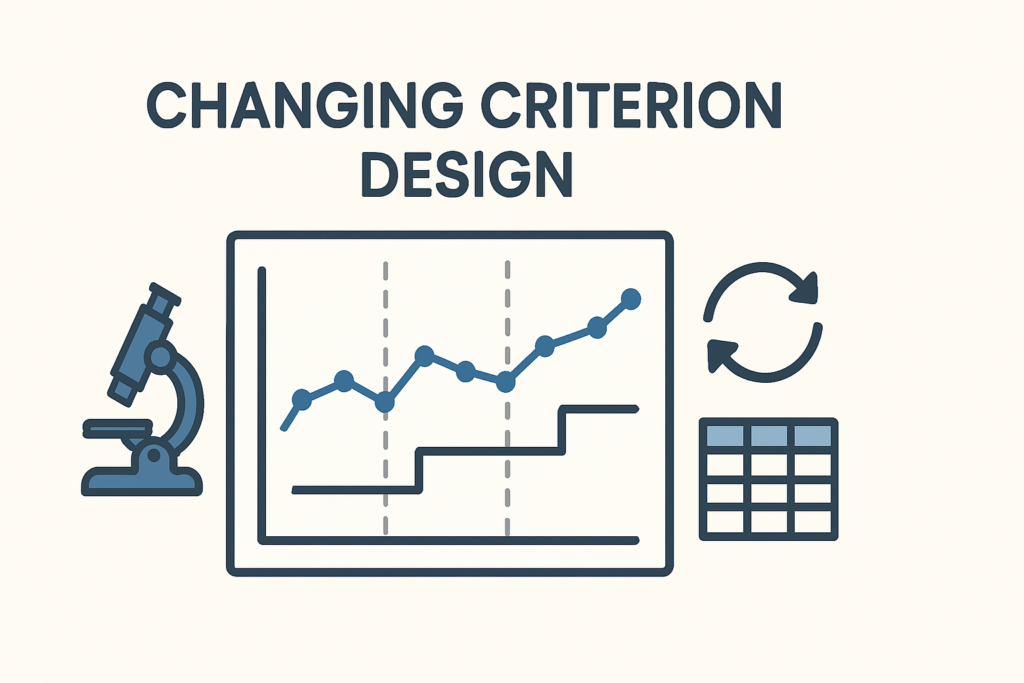
The changing criterion design represents a specialized single-subject experimental approach that systematically shapes behavior through gradual, stepwise criterion changes. This design occupies a unique position within the BCBA Task List (G-9) as it demonstrates experimental control through successive approximations rather than traditional reversal or multiple baseline methods.
Table of Contents
- What is a Changing Criterion Design?
- Changing Criterion Design in Action: ABA Examples
- Exam Focus: Identification and Common Pitfalls
- Implementation Checklist for Practitioners
- Summary and Key Takeaways
Understanding this design is crucial for both clinical practice and examination success, as it addresses situations where immediate behavior change is impractical or unethical.
What is a Changing Criterion Design?
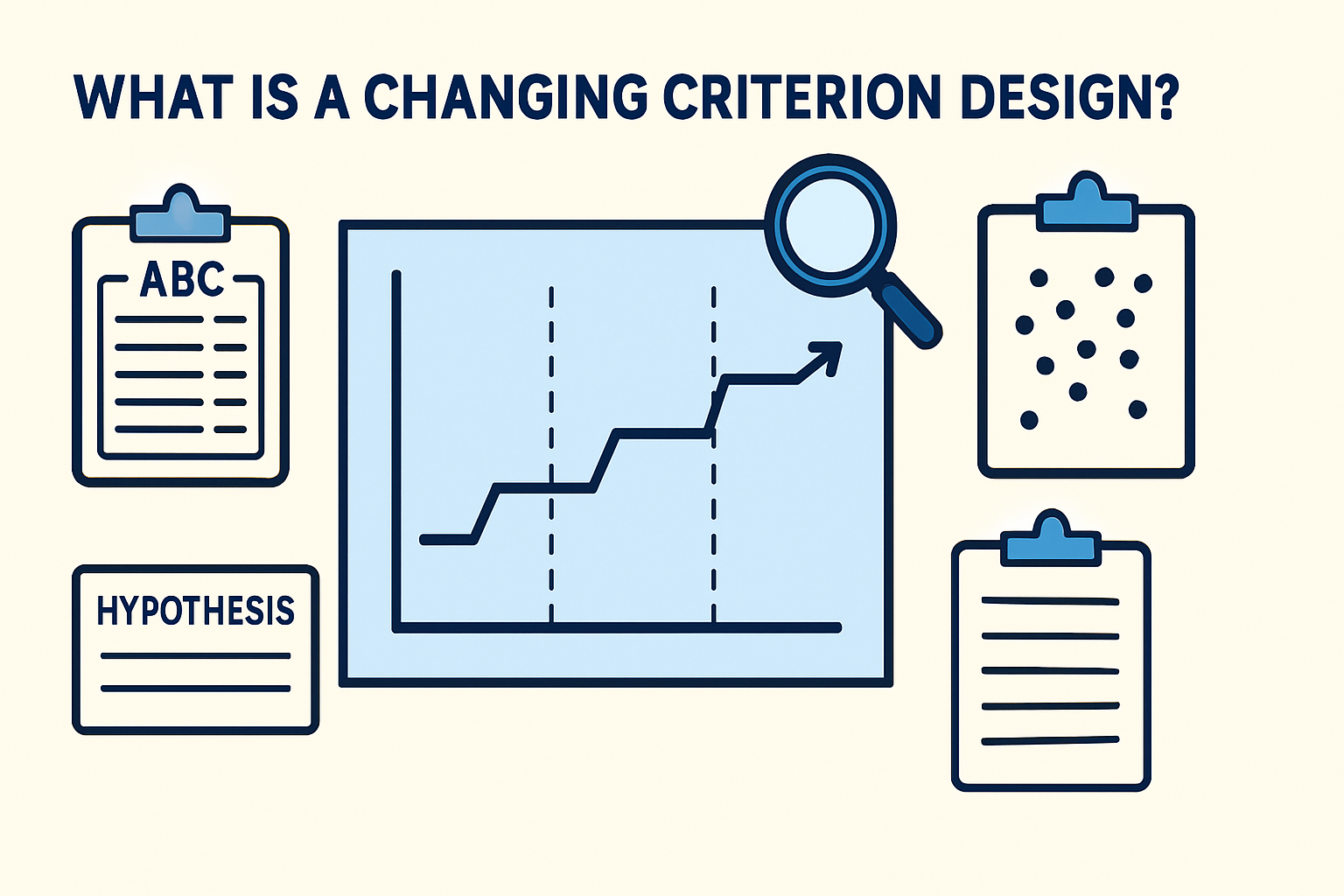
This experimental design systematically evaluates intervention effects by establishing sequential performance criteria that gradually shape behavior toward a terminal goal. The design demonstrates experimental control through the stepwise relationship between criterion changes and corresponding behavior changes.
Core Definition and Key Components
The changing criterion design requires three essential components for proper implementation. First, a stable baseline phase establishes the initial performance level. Second, intervention phases feature stepwise criterion changes that systematically increase or decrease expectations. Third, the behavior must reliably meet each new criterion before progressing to the next phase.
This design’s hallmark is the functional relationship demonstrated when behavior consistently matches each new performance standard.
When to Use This Design in Practice
This design excels in specific clinical situations where gradual behavior shaping is necessary. It’s particularly effective for acquisition programs targeting new skills, behavior reduction plans requiring systematic decreases, and situations where establishing a stable baseline proves challenging.
The design is less appropriate for rapid behavior change needs or when immediate intervention effects must be demonstrated. For broader experimental design concepts, see our guide on single-subject experimental designs.
Changing Criterion Design in Action: ABA Examples
Practical examples illustrate how this design functions in real-world ABA applications. These scenarios demonstrate the design’s versatility across different behavior functions and client populations.
Example 1: Increasing Independent Work Duration
A child with ADHD struggles with sustained seatwork during classroom activities. The baseline data shows an average of 2 minutes of independent work before escape behaviors emerge. The intervention implements a systematic shaping procedure with three criterion phases.
The first criterion requires 5 minutes of work before accessing a preferred break activity. Once this criterion is met consistently across sessions, the standard increases to 8 minutes, then finally to 12 minutes. The hypothesized function is escape-maintained behavior, with the design managing motivation through achievable, incremental goals.
Example 2: Decreasing Caffeine Intake
An adult client seeks to reduce daily coffee consumption from six cups to three cups for health reasons. Baseline data confirms the 6-cup pattern maintained by automatic reinforcement. The intervention employs self-monitoring with successive criterion reductions.
The first intervention phase sets a maximum of 5 cups daily, followed by 4 cups, and finally 3 cups. Each criterion must be maintained for a predetermined period before progression. This example demonstrates the design’s application to self-management programs and habit modification.
Exam Focus: Identification and Common Pitfalls
BCBA examination questions frequently test recognition and application of this design. Understanding visual patterns and common misconceptions is essential for exam success.
How to Spot It on a Graph
The visual hallmark of a changing criterion design is a distinctive step-ladder pattern. The behavior data path should closely follow a stepwise criterion line that changes at predetermined points. This pattern differs significantly from multiple baseline designs, which show staggered intervention starts across different conditions.
Unlike reversal designs that return to baseline conditions, this design maintains intervention throughout while systematically adjusting performance expectations. For more on data interpretation, review our graphing and visual analysis guide.
Frequent Exam Traps and Misconceptions
Several common errors appear regularly on BCBA examinations. First, candidates often confuse this design with multiple baseline designs when criteria change across different behaviors. Second, many incorrectly believe the design requires a reversal phase to demonstrate experimental control.
Third, forgetting that behavior must reliably meet each criterion before progression leads to incorrect answers. Fourth, misidentification occurs when criterion changes aren’t sequential or gradual enough to demonstrate a functional relationship.
Implementation Checklist for Practitioners
Follow this systematic approach when implementing a changing criterion design in clinical practice. Each step ensures methodological rigor and practical effectiveness.
- Collect baseline data to establish current performance levels across multiple sessions
- Define terminal goal and determine appropriate stepwise increments for criterion changes
- Establish clear criteria for progressing to each subsequent phase (typically 80-90% success)
- Implement intervention with the first criterion and collect ongoing data
- Monitor performance against the current criterion before considering progression
- Systematically adjust criteria only when behavior consistently meets current standards
- Document each phase change with clear dates and performance data
- Evaluate functional relationship by analyzing behavior changes following criterion adjustments
This systematic approach ensures both experimental validity and clinical effectiveness. For ethical considerations in implementation, consult our ethics in ABA practice guide.

Summary and Key Takeaways
The changing criterion design offers a powerful tool for systematically shaping behavior through gradual criterion adjustments. Its unique approach demonstrates experimental control through successive approximations rather than traditional design elements.
Key examination points include recognizing the distinctive step-ladder pattern on graphs, understanding that no reversal phase is required, and remembering that behavior must meet each criterion before progression. In practice, this design excels for acquisition programs, behavior reduction plans, and situations requiring gradual change.
For additional study resources on experimental designs and other BCBA examination topics, explore our comprehensive BCBA exam prep guide and reference the official BACB Task List for complete coverage of experimental design requirements.


