
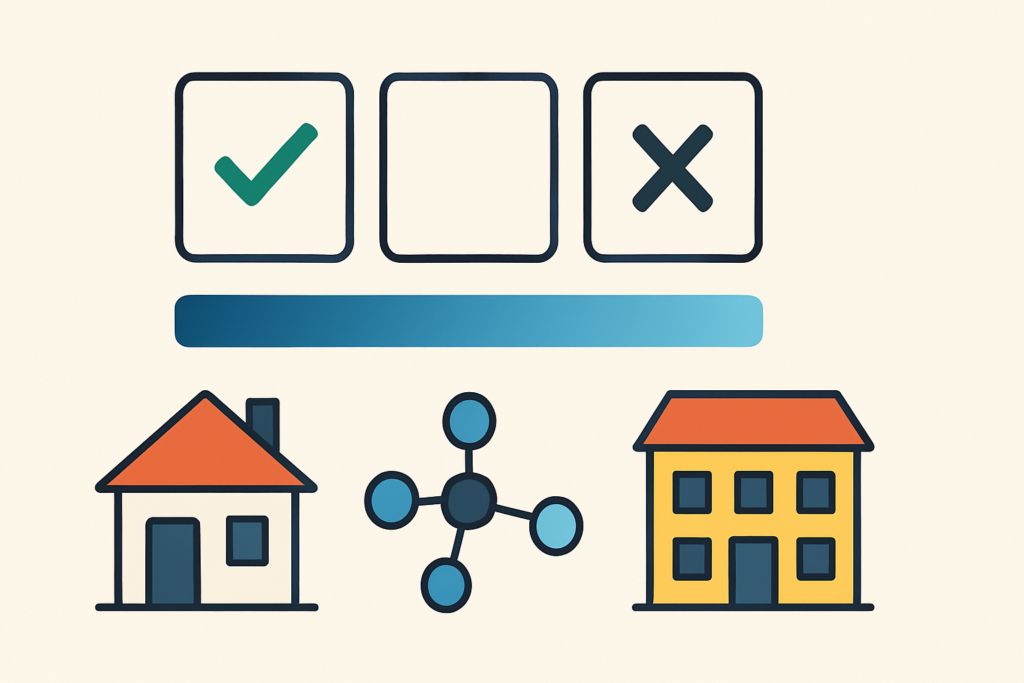
In applied behavior analysis, understanding stimulus control is essential for effective intervention. A stimulus delta (SΔ) represents a critical component of discrimination learning, signaling when a behavior will not be reinforced. This concept appears frequently on the BCBA exam and in clinical practice.
Table of Contents
- What is a Stimulus Delta? The Foundation of Discriminative Control
- Stimulus Delta in Action: Worked Examples from Simple to Complex
- Stimulus Delta on the BCBA Exam: What to Expect and How to Prepare
- Key Takeaways and Next Steps for Mastery
What is a Stimulus Delta? The Foundation of Discriminative Control
A stimulus delta is an antecedent stimulus in the presence of which a particular behavior has been reinforced less often or not at all. It signals that reinforcement is unavailable for that specific response under current conditions.
Core Definition and Role in the Three-Term Contingency
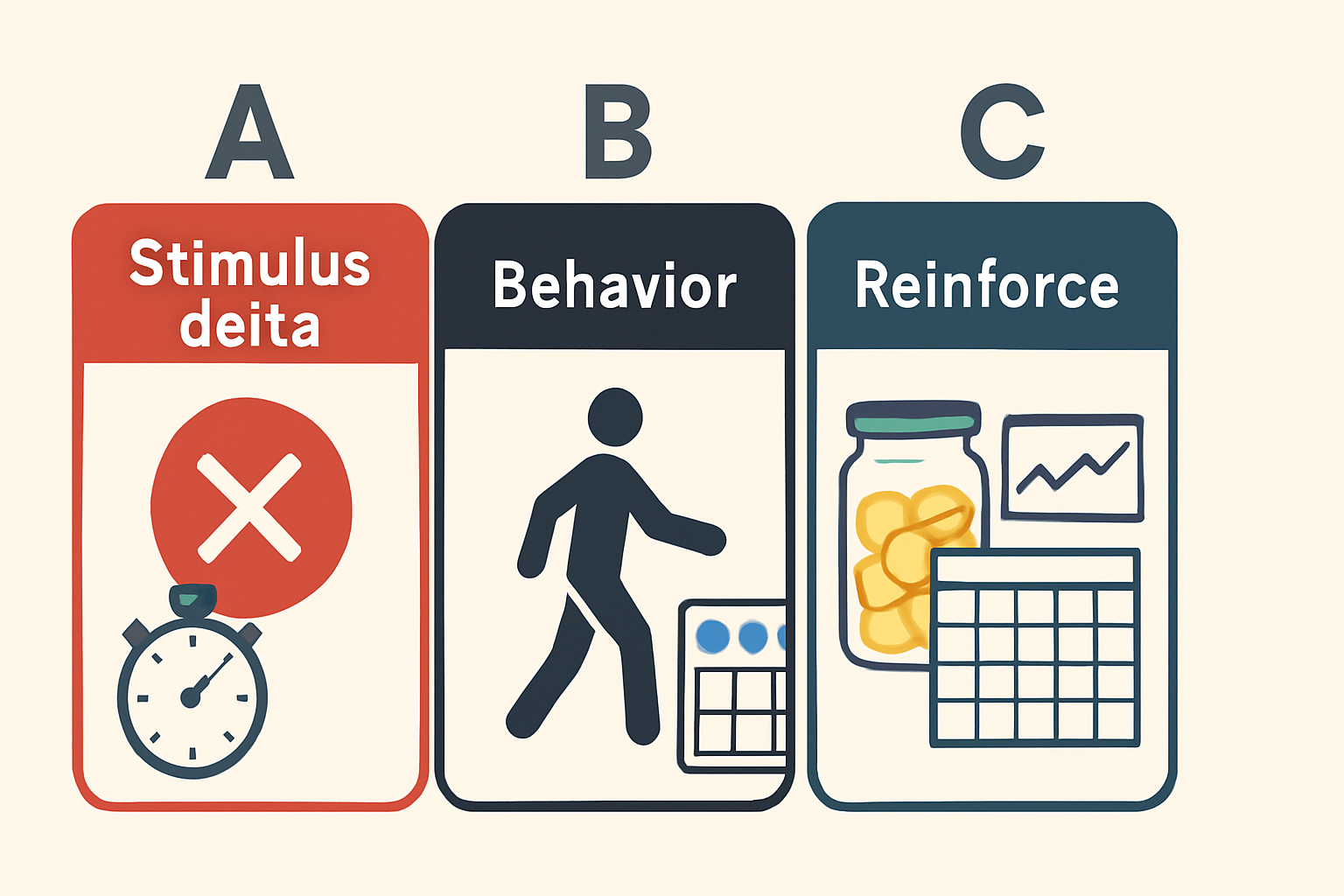
Within the three-term contingency (A-B-C), the SΔ occupies the antecedent position. When this stimulus is present, the target behavior either doesn’t occur or occurs at a lower rate because it won’t be followed by reinforcement. This creates discriminative control over behavior.
Consider this simple framework:
- Antecedent: SΔ is present
- Behavior: Target response occurs (or doesn’t)
- Consequence: No reinforcement follows
This pattern teaches organisms to discriminate between situations where responding pays off and those where it doesn’t.
Stimulus Delta vs. Discriminative Stimulus (Sᴰ): A Critical Comparison
Discrimination learning requires both Sᴰ and SΔ. Think of a traffic light: green signals go (Sᴰ) while red signals stop (SΔ). Both stimuli control behavior through their reinforcement histories.
Key differences include:
- Sᴰ signals reinforcement availability for a specific response
- SΔ signals reinforcement unavailability for that same response
- Both develop through differential reinforcement history
- Effective discrimination requires responding in Sᴰ and not responding in SΔ
Understanding this distinction is crucial for both clinical programming and exam success. For more on discriminative stimuli, see our guide on SD in ABA.
Stimulus Delta in Action: Worked Examples from Simple to Complex
Let’s examine practical applications across different settings and behavioral functions.
Example 1: Teaching Discriminations in an Early Learner
A child learns to ask for cookies only when the jar is open. The open jar serves as the Sᴰ (asking is reinforced with a cookie). The closed jar becomes the SΔ (asking receives no cookie).
ABC Analysis:
- Antecedent: Cookie jar closed (SΔ)
- Behavior: “Cookie please”
- Consequence: No cookie provided (extinction)
The function is access to tangibles. Through repeated exposure, the child learns to discriminate between reinforcement availability conditions.
Example 2: SΔ in Adult Workplace Behavior
An employee learns to ask questions when their supervisor is at their desk (Sᴰ) but not when the supervisor is on a phone call (SΔ). The phone call signals that questions won’t be answered immediately.
ABC Analysis:
- Antecedent: Supervisor on phone (SΔ)
- Behavior: Asking work-related question
- Consequence: No answer/delayed response
The function involves access to information and potentially escape from errors. The SΔ helps the employee discriminate appropriate timing for questions.
Example 3: Identifying SΔ in a Behavior Reduction Plan
A behavior intervention plan targets attention-maintained hand-flapping. The plan specifies that when the therapist wears headphones (SΔ), attention is not provided for the behavior.
ABC Analysis:
- Antecedent: Therapist wearing headphones (SΔ)
- Behavior: Hand-flapping
- Consequence: No attention (extinction)
The headphones signal extinction for attention-seeking behavior. This SΔ helps establish stimulus control over when attention is available. For more on behavior reduction strategies, see our guide on differential reinforcement.
Stimulus Delta on the BCBA Exam: What to Expect and How to Prepare
Exam questions about SΔ test your conceptual understanding and application skills. They often appear in scenario-based formats requiring discrimination between related concepts.
Common Exam Question Formats and Traps
Be prepared for these question types:
- Definitional questions: “Which best defines a stimulus delta?”
- Scenario identification: “In this scenario, what serves as the SΔ?”
- Application questions: “How would you establish an SΔ for this behavior?”
- Comparative questions: “How does SΔ differ from Sᴰ in this example?”
Watch for these common traps:
- Confusing SΔ with an abolishing operation (AO affects value, SΔ affects availability)
- Mistaking a neutral stimulus for an SΔ (neutral has no history, SΔ has extinction history)
- Overlooking that SΔ specifically signals no reinforcement for a particular response
- Forgetting that both Sᴰ and SΔ develop through differential reinforcement

Your Quick-Reference Study Checklist
Use this checklist to assess your mastery:
- I can define stimulus delta in my own words
- I can identify SΔ and Sᴰ in given scenarios
- I understand how SΔ relates to extinction procedures
- I can explain the role of SΔ in discrimination training
- I recognize common exam traps involving SΔ
- I can design interventions using SΔ principles
For comprehensive exam preparation, explore our BCBA exam prep guide.
Key Takeaways and Next Steps for Mastery
A stimulus delta is more than just an exam concept—it’s a practical tool for establishing stimulus control. Remember these essential points:
- SΔ signals that reinforcement is unavailable for a specific response
- Effective discrimination requires both Sᴰ and SΔ
- SΔ develops through differential reinforcement history
- In clinical practice, SΔ helps teach when behaviors will and won’t be reinforced
- On the exam, focus on the reinforcement history signaled by the stimulus
To deepen your understanding, practice identifying SΔ in real-world scenarios and review related concepts like stimulus control and discrimination training. The BACB’s task list includes stimulus control as a key content area.
For further study, consider exploring stimulus generalization and how it contrasts with discrimination. These interconnected concepts form the foundation of effective behavior change programming.


