

Latency in ABA: What is Latency in Applied Behavior Analysis?
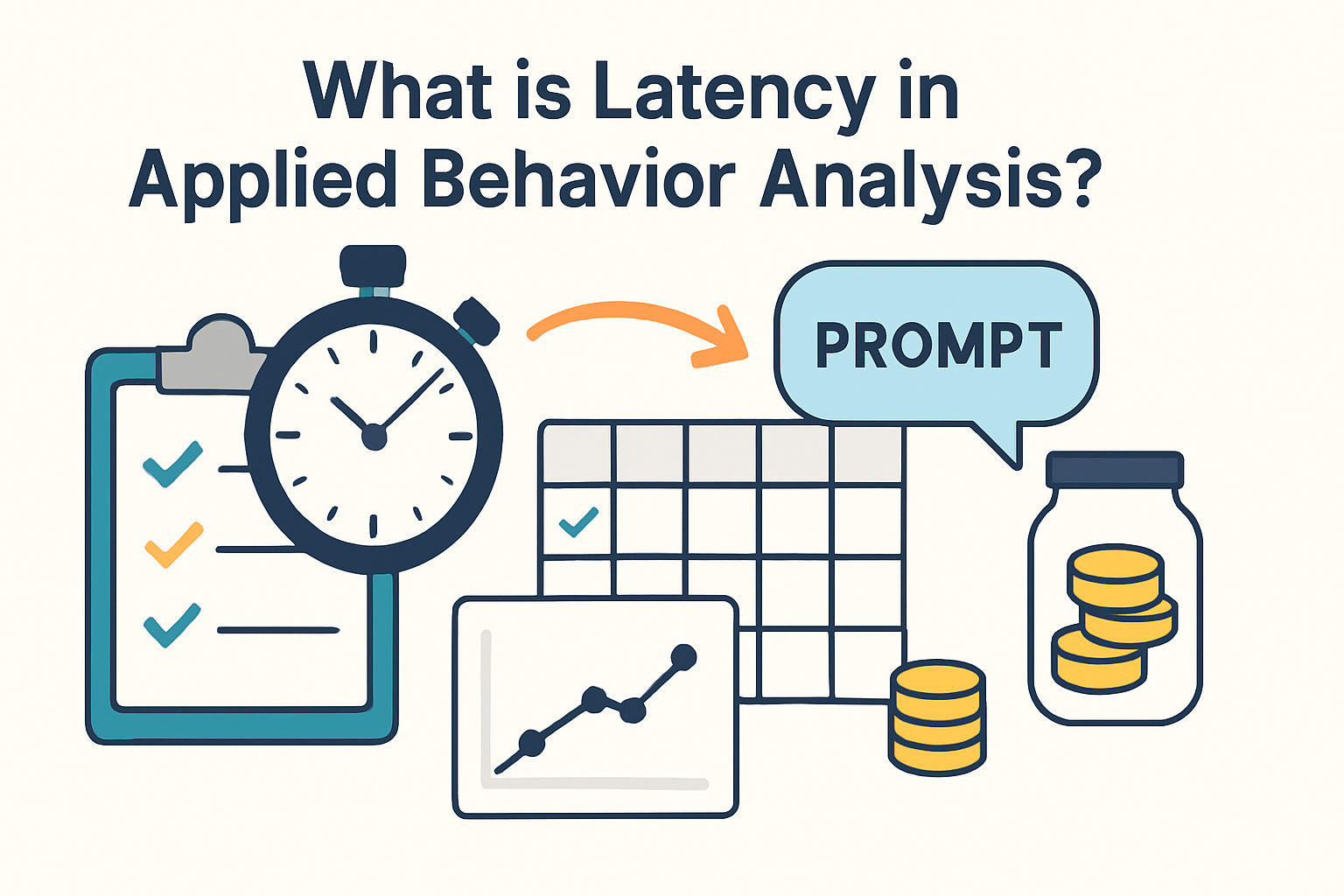
In Applied Behavior Analysis, latency refers to the time interval between the onset of a specific antecedent stimulus and the initiation of the target behavior. This measurement dimension helps practitioners understand how quickly a learner responds to environmental cues.
Table of Contents
- Latency in ABA: What is Latency in Applied Behavior Analysis?
- Measuring Latency: Procedures and Worked Examples
- Latency on the BCBA Exam: Relevance and Common Traps
- Quick Checklist for Latency Measurement
- Summary and Key Takeaways
Unlike other measurement types, latency specifically focuses on response initiation timing rather than frequency or duration.
The Official Definition and Key Characteristics
The technical definition of latency is the elapsed time from the presentation of a discriminative stimulus (SD) or other antecedent event to the beginning of the target response. This differs from duration measurement, which tracks how long a behavior lasts, and frequency counting, which records how many times a behavior occurs.
Key characteristics include:
- Clear start point: The stimulus onset must be precisely defined
- Behavior initiation: The exact moment the behavior begins
- Time measurement: Typically recorded in seconds or minutes
- Clinical relevance: Provides insight into motivation and skill fluency
Why Latency Matters in Assessment and Intervention
Latency data offers valuable clinical information that other measurement dimensions cannot provide. It helps identify prompt dependency by showing how quickly a learner responds independently versus with assistance.
This measurement also assesses motivational variables and skill acquisition progress. Decreasing latency often indicates increasing fluency and stronger stimulus control.
Measuring Latency: Procedures and Worked Examples
Accurate latency measurement requires careful planning and consistent procedures. The process involves identifying clear stimulus onset and response initiation points.
Data Collection Methods for Latency
Common tools for collecting latency data include digital stopwatches, timing apps, and specialized data sheets with time-stamp columns. The procedure follows these steps:
- Define the antecedent stimulus clearly
- Identify the exact behavior initiation criterion
- Start timing immediately at stimulus presentation
- Stop timing when the behavior begins
- Record the elapsed time accurately
Example 1: Latency to Compliance Following an Instruction
Consider a scenario where a practitioner gives the instruction “Please put your shoes on.” The antecedent is the verbal instruction, the behavior is the child starting to put on shoes, and the consequence is praise upon completion.
If the child begins the behavior 45 seconds after the instruction, the latency is recorded as 45 seconds. This data helps assess compliance patterns and potential escape-maintained behavior.
Example 2: Latency to Request for a Desired Item
In a communication training session, a preferred toy is placed within sight but out of reach. The antecedent is the toy presentation, the behavior is the learner signing “toy,” and the consequence is access to the toy.
A decreasing latency to mand over sessions indicates improving communication fluency and stronger motivational control. This data helps track skill acquisition progress effectively.
Latency on the BCBA Exam: Relevance and Common Traps
Understanding latency is essential for BCBA exam success. Questions often test your ability to select appropriate measurement procedures and interpret latency data correctly.
How the Exam Tests Your Understanding of Latency
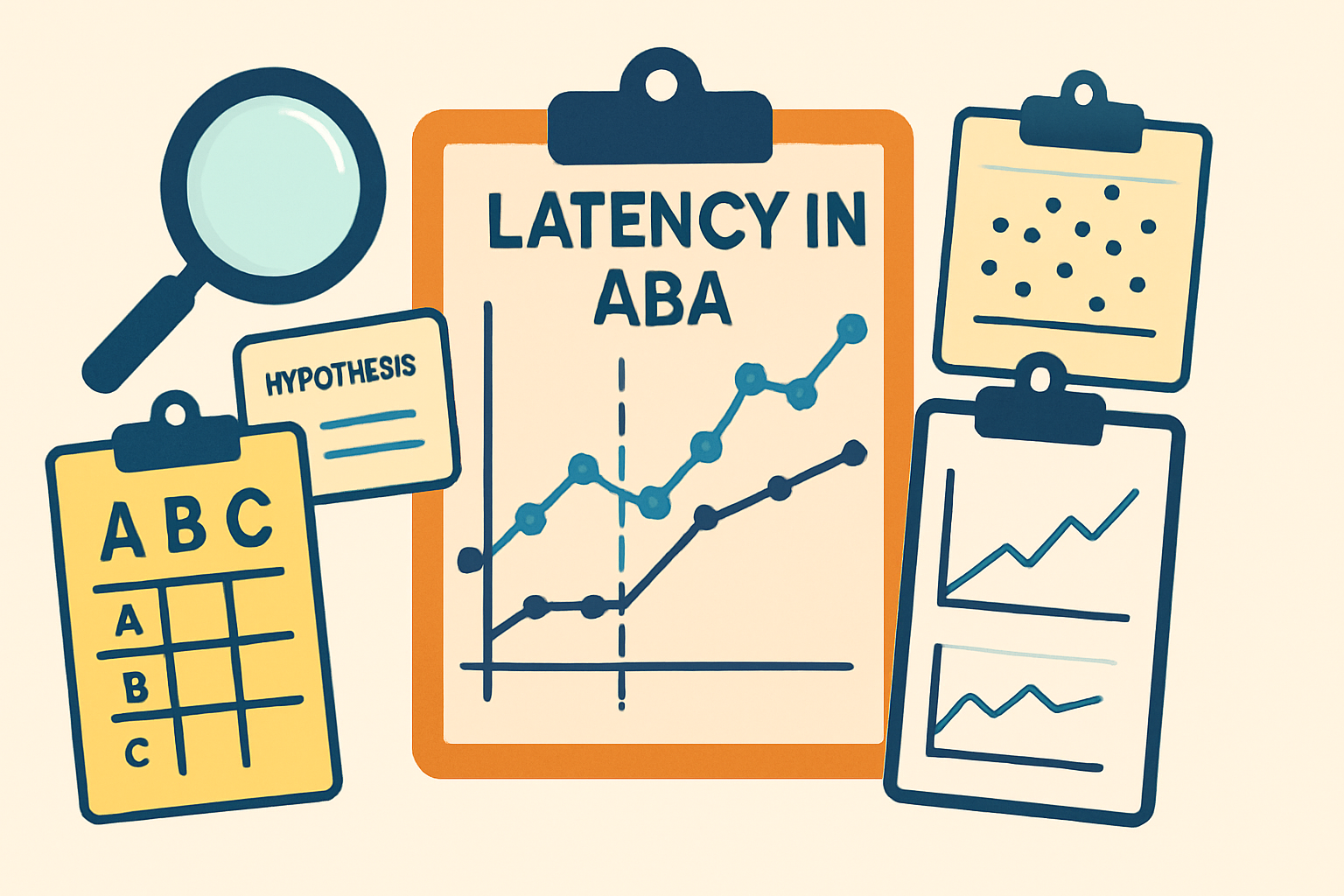
Exam questions typically present clinical scenarios requiring you to identify when latency measurement is most appropriate. You might need to interpret graphed data showing changes in response time or select the correct measurement procedure for specific assessment goals.
Common question formats include:
- Selecting the measurement dimension for a described scenario
- Interpreting latency reduction in intervention data
- Identifying measurement errors in described procedures
- Choosing appropriate data collection methods for latency
Frequent Misconceptions and Exam Distractors
Several common traps can lead to incorrect answers on latency-related questions. One major confusion is between latency and duration – remember that latency measures time to start, while duration measures time engaged.
Other common mistakes include:
- Confusing latency with interresponse time (IRT)
- Misidentifying the stimulus onset point
- Selecting frequency measurement when latency is appropriate
- Overlooking the importance of precise timing procedures
Quick Checklist for Latency Measurement
Use this checklist to ensure accurate latency data collection and interpretation:
- Define the antecedent stimulus clearly and consistently
- Establish precise behavior initiation criteria
- Use reliable timing tools (stopwatch, app, timer)
- Record elapsed time immediately after behavior begins
- Document environmental variables that might affect timing
- Compare latency data across multiple sessions for trends
- Consider motivational factors when interpreting results
Summary and Key Takeaways
Latency is a critical measurement dimension in ABA that provides unique insights into response patterns. It measures the time interval between stimulus presentation and behavior initiation, offering valuable information about skill fluency and motivational variables.
For BCBA exam preparation, focus on distinguishing latency from other measurement dimensions, understanding proper data collection procedures, and recognizing common exam traps. Practice interpreting latency data in various clinical scenarios to build confidence.
Remember that decreasing latency often indicates improving skill acquisition and stronger stimulus control. For more information on measurement dimensions, see our guide on data collection methods in ABA.


