
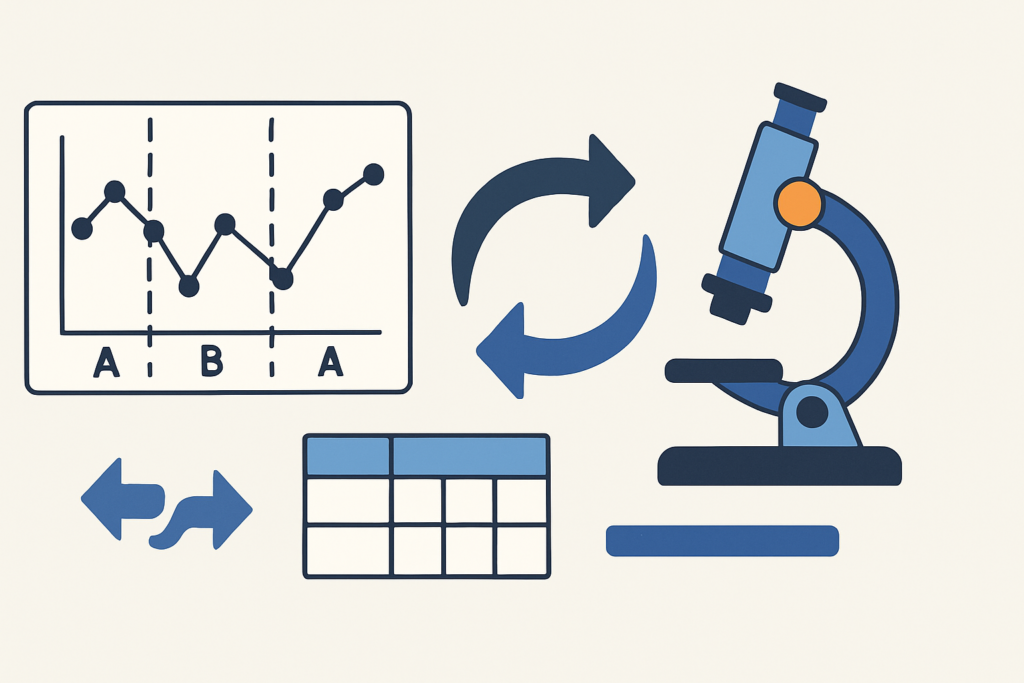
Quick answer: A multielement design (also called an alternating treatment design) rapidly alternates two or more conditions — each linked to a distinct stimulus — to compare their effects on the same behavior. Experimental control is demonstrated when the conditions’ data paths separate with little overlap.
Understanding multielement design is crucial for BCBA candidates who need to evaluate multiple interventions efficiently. This single-subject experimental design, also known as alternating treatments design, allows practitioners to compare the effects of different independent variables on behavior. In this guide, we’ll explore how this design works, provide practical ABA examples, and highlight key considerations for the BCBA exam.
Table of Contents
- Multielement design ABA: What is a Multielement Design in ABA?
- Multielement Design in Practice: Worked ABA Examples
- Multielement Design on the BCBA Exam: Relevance and Common Traps
- Quick Checklist: Implementing and Analyzing a Multielement Design
- Summary and Key Takeaways
What Is a Multielement Design in ABA?
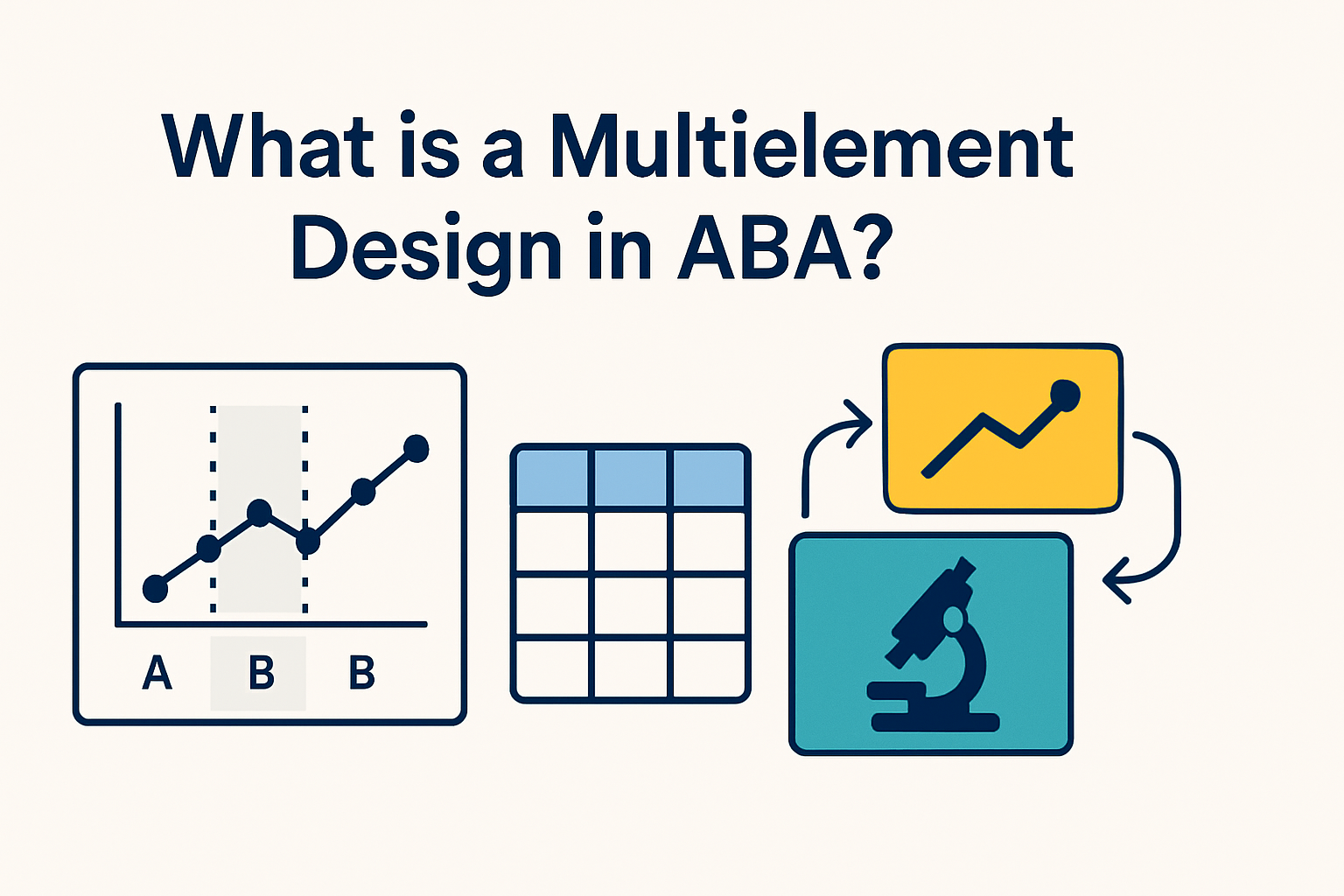
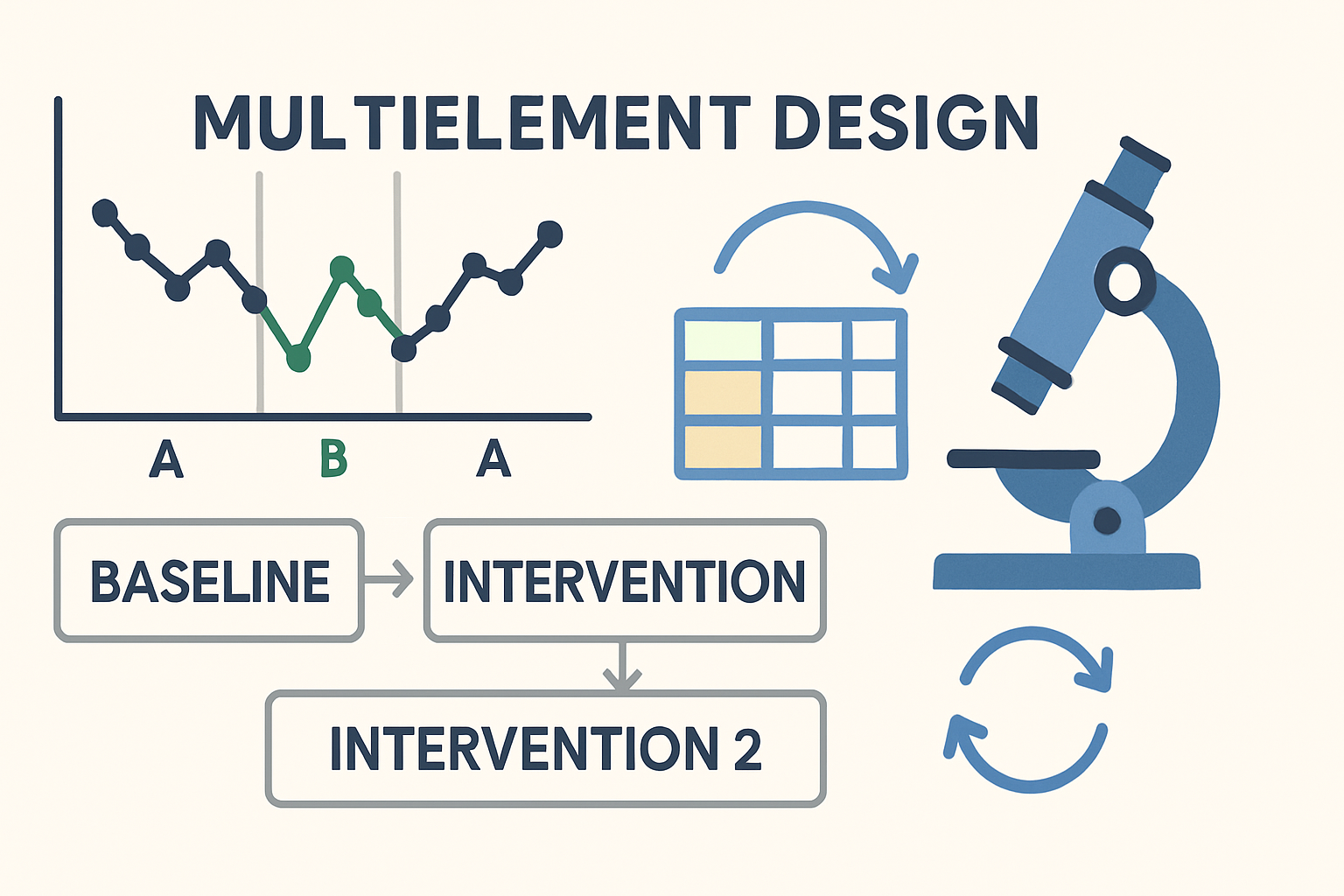
A multielement design (also called an alternating treatments design) is a single-subject experimental design in which two or more conditions are rapidly alternated and compared on the same behavior. Each condition is paired with a distinct discriminative stimulus so the learner can tell them apart.
- How it shows experimental control: by separation (fractionation) between the data paths — when one condition consistently produces different responding, you have a functional relation. No withdrawal of treatment is required.
- Reading the graph: all conditions appear on one graph with a separate data path/marker per condition; the visual gap between paths shows the effect.
- Strengths: fast, no reversal needed, good for comparing two treatments, works for behaviors that should not be reversed.
- Limitation: multiple-treatment interference (carryover between rapidly alternated conditions).
Exam tip: “multielement” and “alternating treatments design” describe the same design; effect = separation between data paths, not a change after a phase line.
Multielement design ABA: What is a Multielement Design in ABA?
The multielement design is a powerful tool for comparing two or more interventions simultaneously. Unlike other designs that require extended baseline phases, this approach alternates conditions rapidly to assess relative effectiveness.
Core Definition and Purpose
A multielement design systematically compares the effects of different independent variables on a dependent variable. The primary purpose is to identify which intervention produces the most significant behavior change in the shortest time. This design is particularly useful when you need to determine the relative effectiveness of multiple treatments without lengthy baseline periods.
Key Characteristics and Visual Analysis
In this design, data points for each condition are plotted in alternating sequence on the same graph. Experimental control is demonstrated through clear separation and stability of data paths rather than phase changes. The visual analysis focuses on whether data paths remain distinct and consistent across conditions.
Multielement Design in Practice: Worked ABA Examples
Let’s examine three realistic scenarios where a BCBA might implement this design. Each example connects to functional assessment knowledge and demonstrates practical application.
Example 1: Comparing Antecedent Strategies for Task Refusal
A student exhibits task refusal during math instruction, with assessment suggesting escape-maintained behavior. The BCBA implements two antecedent interventions: High-p sequence (presenting easy tasks before difficult ones) and choice offering (allowing selection of worksheet order). The dependent variable is percentage of tasks initiated within 30 seconds.
Data patterns show the high-p sequence produces 85% initiation while choice offering yields 60%. The clear separation indicates the high-p sequence is more effective for this learner. This example demonstrates how multielement design can quickly identify optimal antecedent interventions.
Example 2: Evaluating Consequence Interventions for Attention-Maintained Behavior
A child engages in pencil tapping maintained by peer attention. The BCBA compares two consequence-based strategies: planned ignoring with praise for on-task behavior versus differential reinforcement of other behavior (DRO). The dependent variable is rate of pencil taps per minute.
The data reveals DRO reduces behavior to 2 taps/minute while planned ignoring maintains 8 taps/minute. This comparison helps select the most efficient intervention for attention-maintained behaviors. For more on differential reinforcement strategies, see our guide on differential reinforcement techniques.
Example 3: Assessing Medication Dosages (Collaborative)
When collaborating with physicians, BCBAs can use multielement design to evaluate behavioral effects of different medication dosages. The BCBA measures target behaviors across dosage conditions while the physician manages prescription changes. This demonstrates the design’s utility in interdisciplinary collaboration while maintaining appropriate professional boundaries.
Multielement Design on the BCBA Exam: Relevance and Common Traps
This design appears frequently on the BCBA exam, particularly in sections covering experimental design and data interpretation. Understanding its proper application and limitations is essential for success.
Why This Design is Tested
The multielement design tests your ability to select appropriate experimental designs based on clinical questions. It aligns with the BACB Task List requirements for evaluating intervention effectiveness and demonstrating experimental control. Mastery requires understanding when to use this design versus alternatives like reversal or multiple baseline designs.
Frequent Exam Pitfalls to Avoid
- Confusing terminology: Remember that multielement design and alternating treatments design are synonyms. Exam questions may use either term.
- Misidentifying the design: Don’t mistake rapid alternation for a reversal design. Look for multiple conditions presented in alternating sequence without return to baseline.
- Overlooking limitations: Multiple treatment interference is a key limitation where interventions may interact, affecting results.
- Minimum requirements: This design requires at least two independent variables. Single interventions with alternating conditions don’t qualify.
- Visual analysis errors: Focus on separation and stability of data paths, not just overall level differences.
Quick Checklist: Implementing and Analyzing a Multielement Design
Use this practical checklist when planning or evaluating a multielement design:
- Define clear independent variables: Ensure each condition represents a distinct intervention you want to compare.
- Select appropriate dependent variable: Choose a measurable behavior that responds to your interventions.
- Establish counterbalancing: Randomize or systematically vary condition order to control for sequence effects.
- Collect sufficient data points: Obtain at least 3-5 data points per condition for reliable analysis.
- Analyze separation patterns: Look for clear, stable differences between condition data paths.
- Consider multiple treatment interference: Evaluate whether interventions might be interacting with each other.
- Document condition changes: Clearly note when each condition begins and ends on your graph.
For more on experimental design fundamentals, explore our comprehensive guide to single-subject experimental designs.
Summary and Key Takeaways
The multielement design offers an efficient method for comparing multiple interventions in ABA practice. Its primary strength is rapid comparison without extended baseline phases, making it ideal for clinical decision-making. However, practitioners must remain aware of multiple treatment interference as a significant limitation.
For BCBA exam preparation, focus on recognizing this design’s distinctive alternating pattern and understanding when it’s appropriate to use. Remember that clear separation of data paths demonstrates experimental control, and the design requires at least two independent variables. By mastering these concepts, you’ll be well-prepared for exam questions on this important experimental design.
To deepen your understanding of related concepts, consult peer-reviewed literature on alternating treatments methodology.
Test yourself on experimental design
Practice with a free, full-length BCBA mock exam — real exam-style questions, instant scoring, and answer explanations.
Frequently Asked Questions
What is a multielement design in ABA?
A single-subject design that rapidly alternates two or more conditions on the same behavior to compare their effects; experimental control is shown by separation between the data paths.
Is a multielement design the same as an alternating treatments design?
Yes — they are two names for the same design. “Multielement” is common in Cooper et al.; “alternating treatments design” is the other widely used term.
How does a multielement graph show an effect?
By fractionation — visible separation between the data paths of the different conditions. Overlapping paths mean no clear effect.
References
- Cooper, J. O., Heron, T. E., & Heward, W. L. (2020). Applied Behavior Analysis (3rd ed.). Pearson.
- Behavior Analyst Certification Board. BACB.com — BCBA 6th Edition Test Content Outline.



