
Applied Behavior Analysis examples: Why Concrete Examples Are Crucial for Mastering ABA
Understanding applied behavior analysis requires more than memorizing definitions. Concrete examples bridge the gap between theoretical concepts and practical application. They transform abstract principles into tangible skills you can use in assessment and intervention.
Table of Contents
- Applied Behavior Analysis examples: Why Concrete Examples Are Crucial for Mastering ABA
- Deconstructing Behavior: The ABC Framework in Practice
- Beyond the ‘What’: Identifying Function in Applied Behavior Analysis
- From Examples to Exam Success: Common Traps and Tips
- Putting It All Together
Working through real-world scenarios builds the analytical thinking needed for both clinical practice and certification exams. This approach helps you recognize patterns, identify maintaining variables, and develop effective interventions.
Deconstructing Behavior: The ABC Framework in Practice
The ABC framework provides the foundation for behavioral analysis. This three-component model examines what happens before, during, and after a target behavior. Mastering this framework is essential for accurate assessment and effective intervention planning.
Example 1: The Classroom Escape
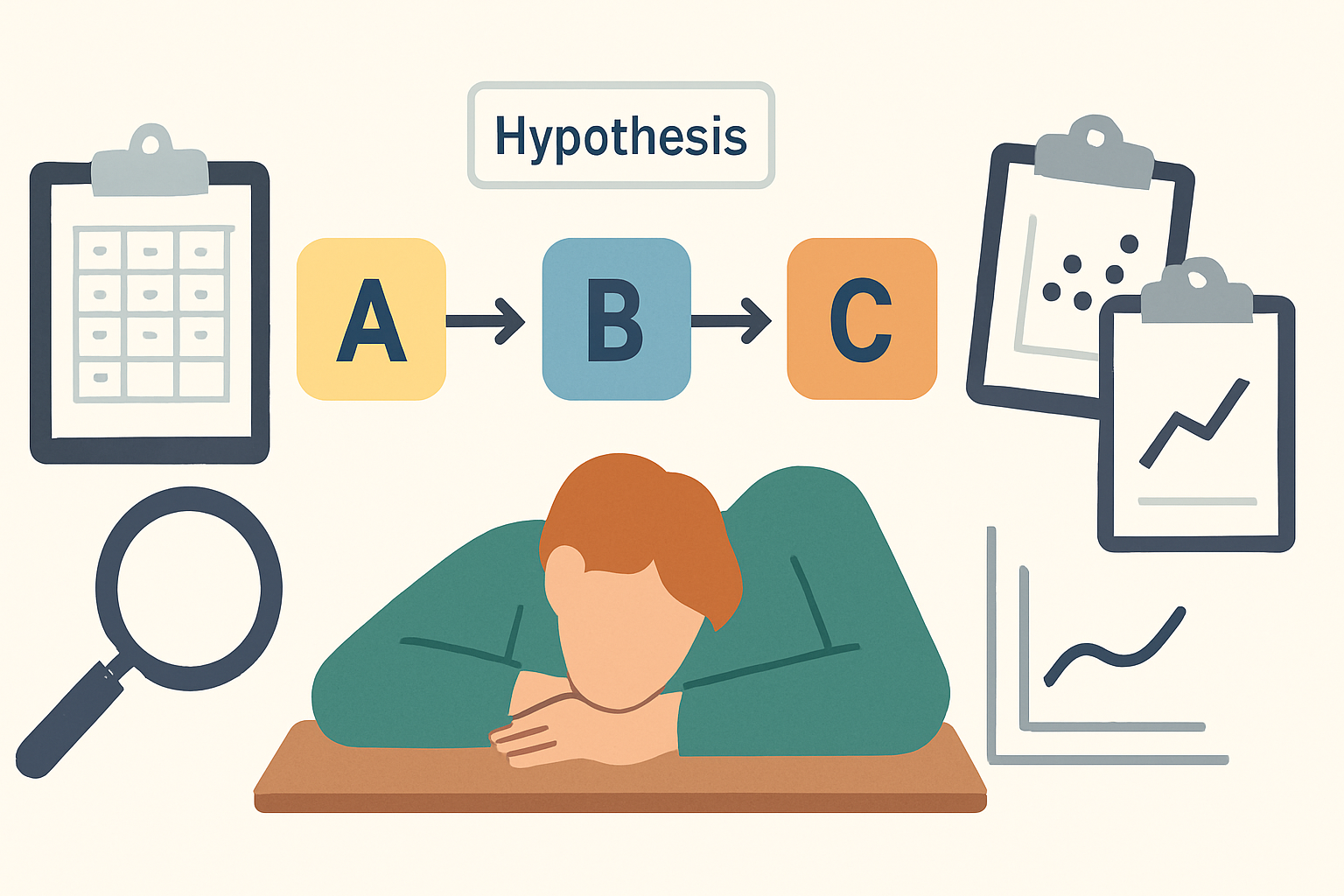
Consider a student who puts their head down when given independent math work. Let’s break this down using the ABC model:
- Antecedent: Teacher presents difficult math worksheet and says “Complete problems 1-10 independently”
- Behavior: Student places head on desk, closes eyes, and makes no attempt to engage with the worksheet
- Consequence: Teacher approaches, asks if student is okay, and eventually removes the worksheet saying “We’ll try again later”
This example demonstrates how the immediate environmental events surrounding behavior provide critical information. The consequence here (task removal) may be reinforcing the escape behavior.
Beyond the ‘What’: Identifying Function in Applied Behavior Analysis
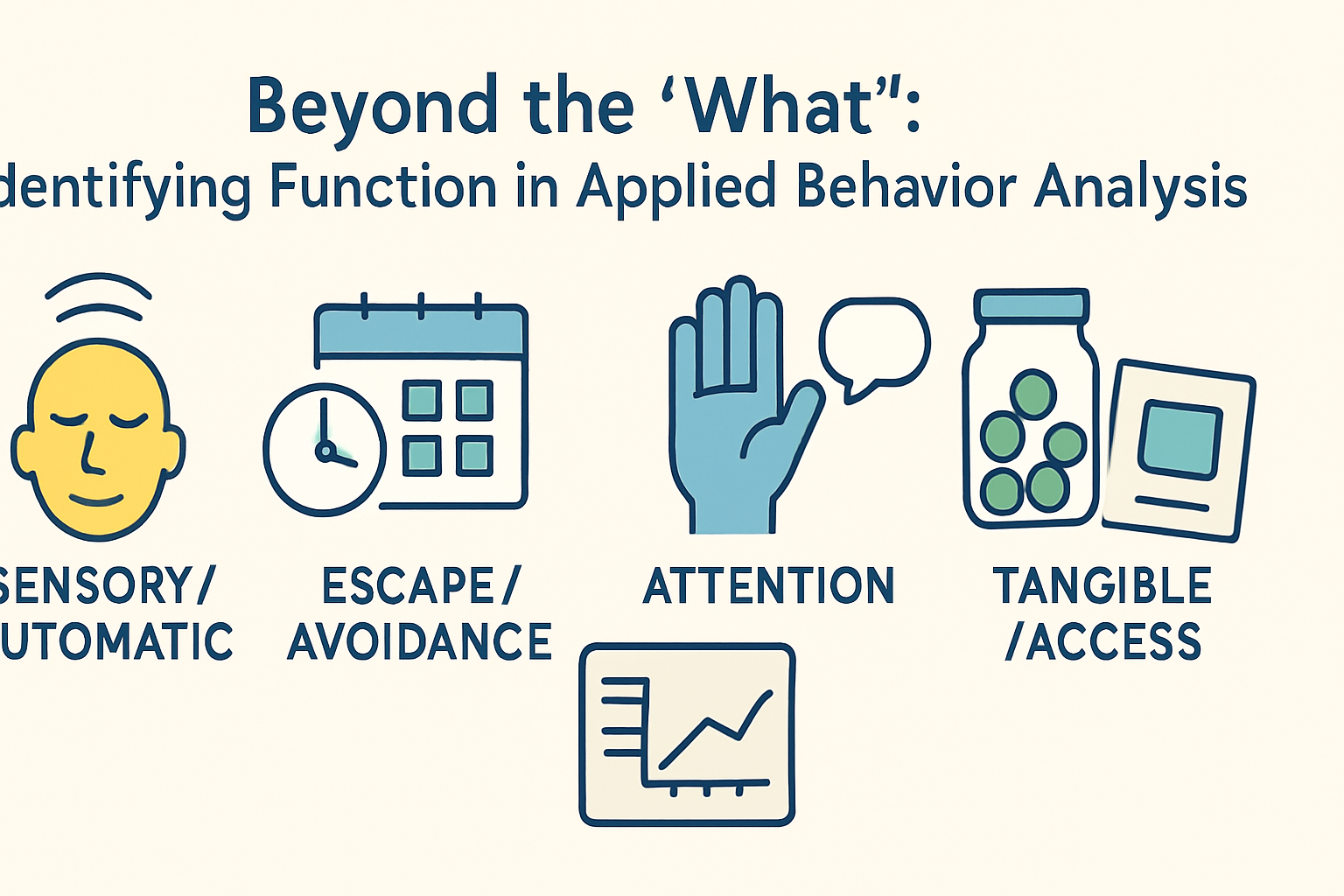
While ABC analysis describes what happens, function identification explains why behavior occurs. The four primary functions (often remembered as SEAT) include: Sensory/Automatic, Escape/Avoidance, Attention, and Tangible/Access. Understanding function is crucial for developing effective interventions.
Example 2: The Tangible-Seeking Tantrum
A child begins screaming and dropping to the floor while walking through the candy aisle at a grocery store. The parent initially says “no candy today” but eventually gives in to stop the disruption.
- Antecedent: Child sees favorite candy on shelf, parent says “not today”
- Behavior: Loud screaming, dropping to floor, kicking legs
- Consequence: Parent sighs, picks up candy, says “just this once” and gives it to child
- Hypothesized Function: Access to tangibles (candy)
This scenario shows how the behavioral function differs from the immediate consequence. The candy access reinforces future tantrum behavior in similar situations.
Example 3: The Attention-Maintained Behavior
During team meetings, a colleague consistently makes off-topic comments that disrupt the agenda. Other team members respond with laughter or engage in the tangent, while the meeting leader attempts to redirect.
- Antecedent: Meeting reaches a serious or technical discussion point
- Behavior: Colleague interjects with humorous or unrelated anecdote
- Consequence: Team members laugh, make eye contact, and engage with the tangent
- Hypothesized Function: Social attention from peers
This workplace example illustrates how social reinforcement can maintain behavior even when it’s disruptive to the group’s goals. The attention from colleagues strengthens the pattern.
From Examples to Exam Success: Common Traps and Tips
Translating example analysis into exam performance requires awareness of common pitfalls. Many certification questions test your ability to distinguish between surface-level observations and deeper behavioral principles.
Trap 1: Confusing Consequence with Function
A frequent error involves treating the immediate consequence as the function. Remember that function refers to the reinforcing effect on behavior, not just what happened immediately after.
- Consequence: Teacher says “Stop tapping your pencil”
- Possible Function: Access to teacher attention (even if reprimanding)
- Key Question: What did the behavior produce or avoid?
For more on distinguishing these concepts, see our guide on four functions of behavior.
Trap 2: Overlooking Setting Events
Setting events are environmental conditions that alter the value of reinforcers or punishers. They don’t immediately precede behavior but influence its likelihood.
- Child missed morning medication (setting event)
- Math worksheet presented (antecedent)
- Task refusal occurs (behavior)
- The missed medication increases escape value
Understanding motivating operations helps explain why the same antecedent produces different behaviors on different days. Learn more about this in our motivating operations guide.
Your ABA Example Analysis Checklist
Use this systematic approach when analyzing behavioral scenarios:
- Operationally define the target behavior in observable, measurable terms
- Identify the immediate antecedent stimulus that preceded the behavior
- Note the immediate consequence that followed the behavior
- Hypothesize the behavioral function using the SEAT framework
- Consider relevant setting events or motivating operations
- Check for patterns across multiple occurrences
Putting It All Together
Mastering applied behavior analysis through examples builds essential clinical skills. The journey from observation to hypothesis involves systematic analysis using the ABC framework and function identification.
These analytical skills translate directly to effective assessment and intervention planning. They also prepare you for certification exams that test your ability to apply principles to novel scenarios.
Remember that ethical practice requires accurate assessment before intervention. For comprehensive exam preparation, explore our BCBA exam prep guide and additional resources on the BACB website.


