

In applied behavior analysis (ABA), consequences plays a crucial role in shaping behavior. A consequence is any event or stimulus that follows a behavior and influences whether that behavior will occur again in the future. Understanding how a consequence works in ABA is critical for both BCBA exam preparation and real-world behavior management. This article explains the different types of consequences, how it affects behavior, and why it is fundamental in behavior modification.
What Is a Consequence in ABA?
Definition of Consequences in Behavior Analysis
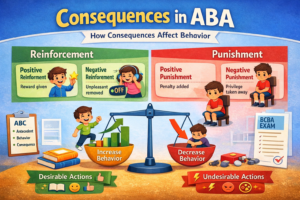
In ABA, a consequence refers to an event that occurs after a behavior and can either increase or decrease the likelihood of that behavior happening again. The two major types of consequence are:
-
Reinforcers: A consequence that increases the likelihood of a behavior.
-
Punishers: A consequence that decreases the likelihood of a behavior.
A consequence is a core component of behavior analysis because it determines whether a behavior is likely to occur in the future, depending on whether the consequence was reinforcing or punishing.
How a Consequence Influences Behavior in ABA
A consequence directly affects behavior. When a behavior is followed by a positive or negative consequence, it either strengthens or weakens the likelihood of that behavior being repeated. This mechanism is essential in modifying behavior, whether to increase positive behaviors or reduce negative ones.
Positive Reinforcement: A Powerful Consequence
Positive reinforcement involves adding a pleasant stimulus after a behavior, increasing the likelihood of that behavior occurring again.
Example:
A child receives praise after completing their homework, which increases the likelihood of them doing homework again in the future.
Negative Reinforcement: Strengthening Behavior by Removal
Negative reinforcement involves removing an unpleasant stimulus following a behavior, which also increases the likelihood of that behavior being repeated.
Example:
A teenager completes chores to avoid being nagged by their parents. The removal of nagging reinforces the completion of chores.
Types of Consequences in ABA
Positive Punishment: Decreasing Undesirable Behaviors
Positive punishment involves adding an unpleasant stimulus after a behavior to decrease its occurrence.
Example:
A child receives a time-out for yelling in class, which reduces the likelihood of the child yelling again in the future.
Negative Punishment: Removing Pleasurable Stimuli
Negative punishment involves removing a pleasant stimulus following a behavior, making the behavior less likely to occur.
Example:
A teenager loses their phone for breaking curfew. The removal of the phone discourages the undesirable behavior.
Why a Consequence Matters in ABA
A consequence is vital in ABA because it directly influences the future occurrence of behavior. Using the right consequence can help practitioners reduce problem behaviors and increase desired behaviors. When a behavior is followed by reinforcing consequences, that behavior is more likely to happen again. Conversely, when a behavior is followed by punishment, it is less likely to be repeated.
In addition, consequences guide the behavior change process and are a key focus on the BCBA exam.
How Consequences Appears on the BCBA Exam
BCBA exam questions often require candidates to apply their knowledge of consequences to different scenarios. Key topics to focus on include:
-
The difference between reinforcement and punishment
-
How positive consequences and negative consequences affect behavior
-
Real-world examples of how consequences are used to modify behavior
Quick Study Checklist for Consequences in ABA
Before the exam or in clinical practice, make sure you can:
-
Define consequences in ABA
-
Identify examples of reinforcement and punishment
-
Apply the correct consequences to modify behavior
-
Understand the impact of a consequences on behavior in various settings
Final Thoughts on a Consequence in ABA
A consequence is an essential aspect of ABA, whether you’re working with clients or preparing for the BCBA exam. By understanding how consequences impacts behavior, behavior analysts can design effective interventions to increase desirable behaviors and decrease undesirable ones. For BCBA candidates, mastering the concept of consequences is key to exam success and effective practice.



