
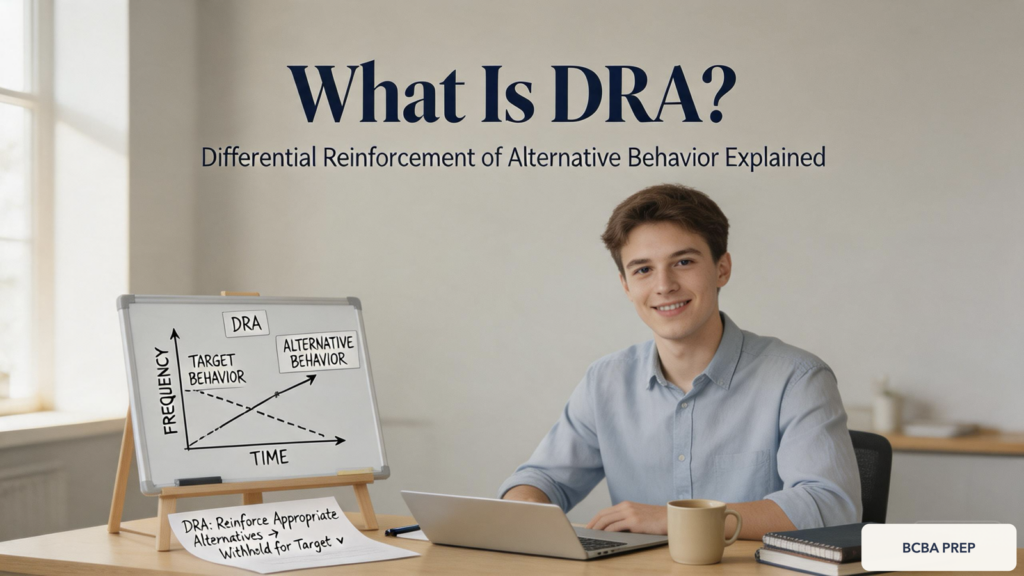
What Is DRA? A Definition for BCBA Can
In applied behavior analysis, differential reinforcement of alternative behavior is a procedure used to reduce problem behavior by reinforcing a specific appropriate behavior while withholding reinforcement for the problem behavior. This approach is central to the BCBA exam and is one of the most frequently tested differential reinforcement procedures.
Practice this concept
Table of Contents
- What Is DRA? A Definition for BCBA Can
- DRA in Practice: Worked Examples with ABC Analysis
- Why DRA Matters for the BCBA Exam: Common Traps and Tips
- DRA Quick Checklist
- Summary: Mastering DRA for the BCBA Exam
Core Components of DRA
To implement DRA correctly, you must:
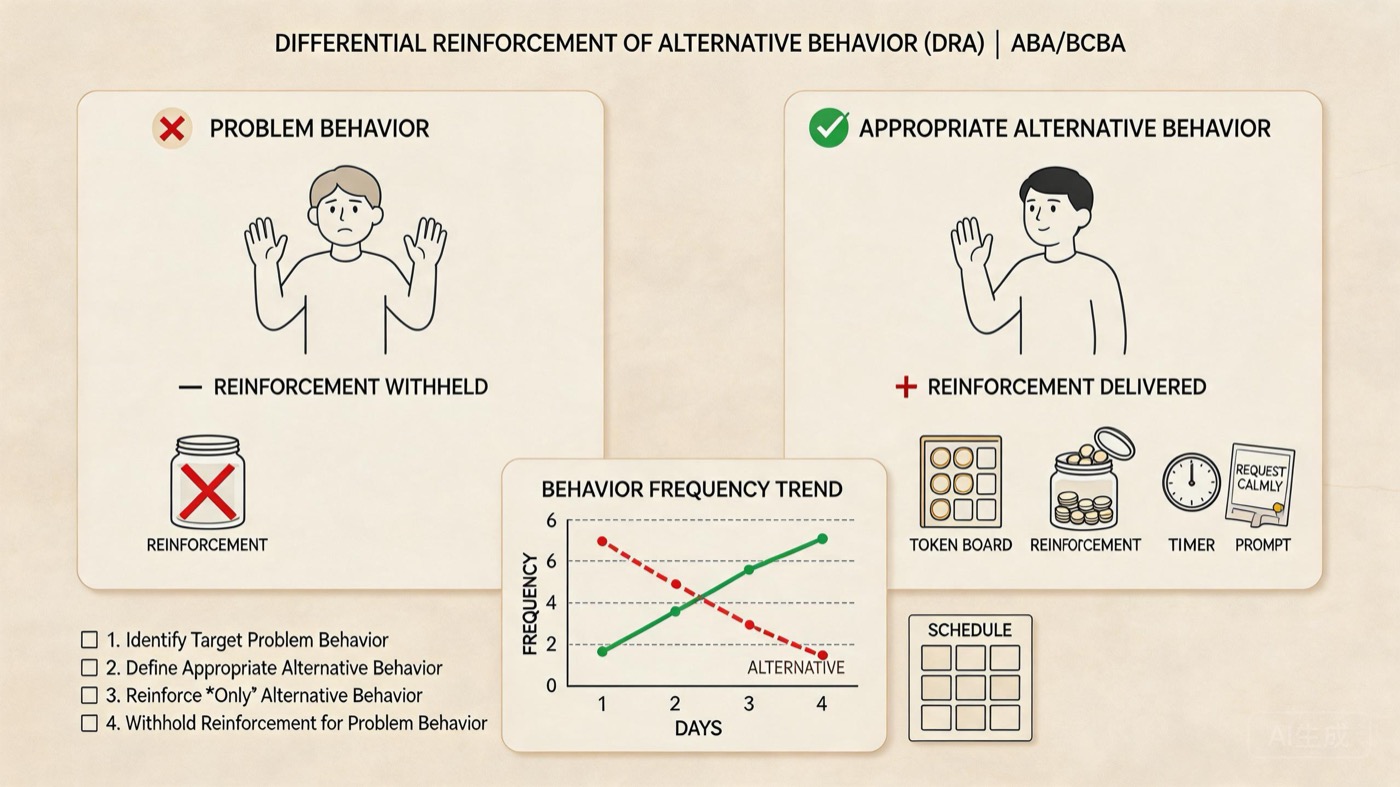
- Select an alternative behavior that serves the same function as the problem behavior. For example, if a child hits to get attention, you teach them to request attention verbally.
- Provide reinforcement consistently for the alternative behavior. The reinforcer must be functionally equivalent to what maintained the problem behavior.
- Withhold reinforcement for the problem behavior (extinction). This means ignoring or not delivering the functional reinforcer following the problem behavior.
- Ensure the alternative is in the learner’s repertoire or is taught systematically. If the learner cannot perform the alternative, DRA will not be effective.
How DRA Differs from DRO and DRI
DRA is often confused with other differential reinforcement procedures. DRO (differential reinforcement of other behavior) reinforces any behavior other than the problem behavior; it does not specify a particular alternative. DRI (differential reinforcement of incompatible behavior) reinforces a behavior that is physically incompatible with the problem behavior—for example, sitting instead of running. DRA, by contrast, reinforces a specific alternative behavior that may not be physically incompatible but serves the same function.
DRA in Practice: Worked Examples with ABC Analysis
Understanding DRA through concrete examples is essential for exam success. Each example below uses the ABC format (Antecedent, Behavior, Consequence) and links the alternative behavior to the hypothesized function.
Example 1: Attention-Maintained Aggression
A child engages in hitting peers when ignored. The ABC analysis: Antecedent: peer ignores child; Behavior: hitting; Consequence: staff attention (reprimand). The hypothesized function is access to adult attention. With DRA, the BCBA teaches the child to say “Excuse me” or tap the adult’s shoulder politely. Every time the child uses this alternative, the adult provides immediate attention. When the child hits, attention is withheld. Over time, the alternative behavior becomes more likely.
Example 2: Escape-Maintained Task Refusal
A student throws pencils when given a math worksheet. ABC: Antecedent: math worksheet; Behavior: throws pencil; Consequence: teacher removes worksheet. The function is escape from math. DRA involves reinforcing a request for a break (e.g., “I need a break”) while not allowing escape after throwing. The student is taught to raise a break card; when they do, they receive a 2-minute break. After throwing, the worksheet remains on the desk until completed.
Example 3: Tangible-Maintained Screaming
A child screams when a preferred toy is removed. ABC: Antecedent: toy taken away; Behavior: screaming; Consequence: toy returned. The function is access to the tangible. With DRA, the child is taught to sign “more” or hand over a picture of the toy. Each appropriate request results in the toy being returned. Screaming is placed on extinction—the toy is not returned until the child uses the alternative.
Hypothesized Function and DRA Selection
The success of DRA hinges on matching the alternative behavior to the function of the problem behavior. If the problem behavior is maintained by attention, the alternative must also produce attention. If it is maintained by escape, the alternative must allow escape (e.g., requesting a break). This functional match is a common exam point.
Why DRA Matters for the BCBA Exam: Common Traps and Tips
DRA questions appear frequently on the BCBA exam in both task list and scenario-based formats. Knowing the nuances can help you avoid common mistakes.
Common Exam Traps
- Confusing DRA with DRO: Many test-takers select DRO when the scenario describes reinforcing a specific alternative. Remember: DRA targets a specific behavior; DRO reinforces the absence of the problem behavior.
- Forgetting extinction: DRA requires extinction of the problem behavior. If the scenario does not mention withholding reinforcement for the problem behavior, the answer may not be DRA.
- Misidentifying the function: If you choose an alternative that does not match the function (e.g., teaching a break request when attention is the function), the procedure is not DRA.
- Alternative not in repertoire: The learner must already be able to perform the alternative or be taught it. If the alternative is too complex, DRA may not be appropriate.
Exam Tips for DRA Questions
When you see a DRA question, follow these steps:
- Identify the function first from the consequence described.
- Look for a specific alternative behavior that produces the same reinforcer.
- Check that extinction is implemented for the problem behavior.
- Ensure the alternative is developmentally appropriate and already taught.
Remember, DRA is often the first choice among differential reinforcement procedures because it teaches a replacement skill. For more on differential reinforcement, see our comprehensive guide.
DRA Quick Checklist
Use this checklist during your exam prep to ensure you have mastered DRA:
- Define DRA in your own words: reinforce alternative behavior, extinguish problem behavior.
- Identify the function of the problem behavior from ABC data.
- Select an alternative that accesses the same reinforcer.
- Teach the alternative if not already in the learner’s repertoire.
- Reinforce every occurrence of the alternative initially.
- Withhold reinforcement for the problem behavior consistently.
- Differentiate DRA from DRO and DRI in exam scenarios.
Summary: Mastering DRA for the BCBA Exam
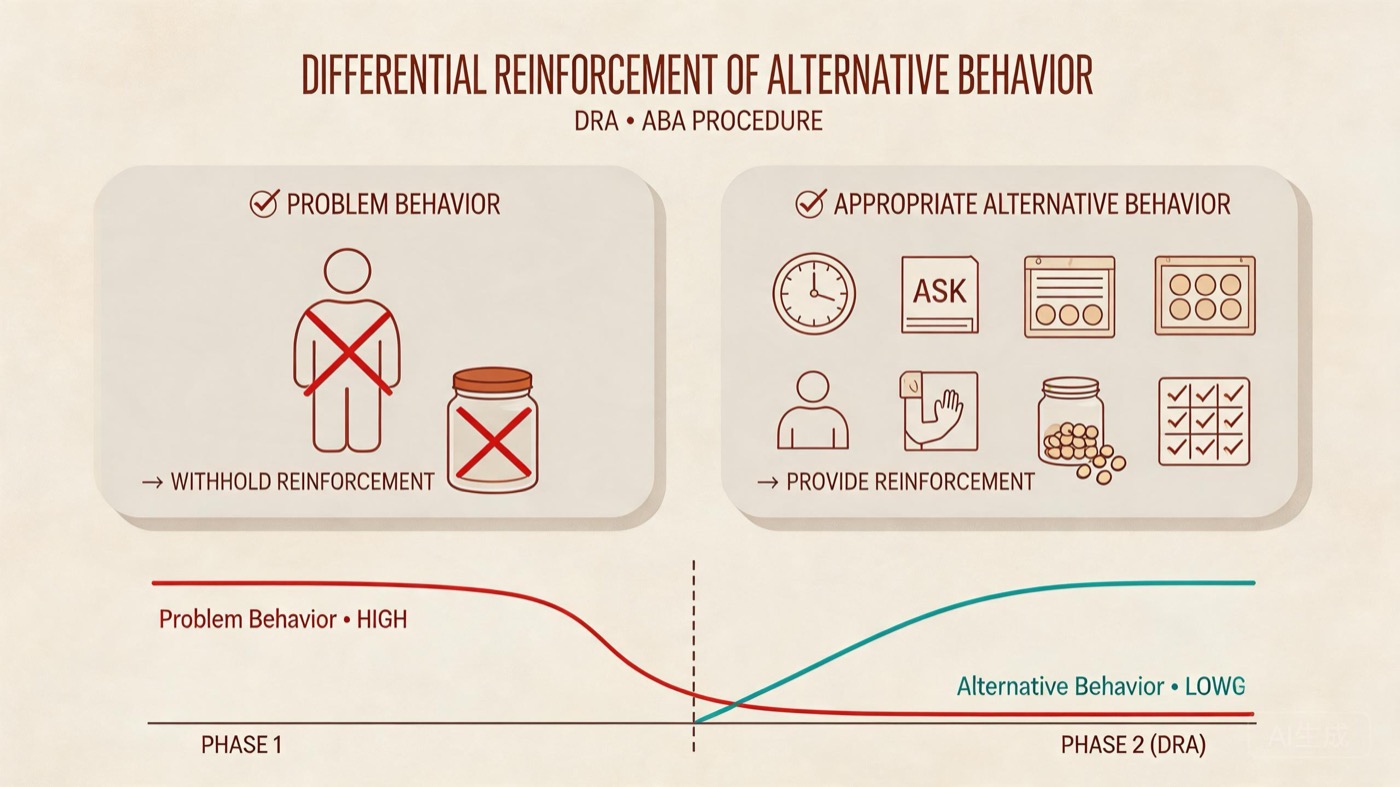
DRA is a foundational procedure in ABA that combines positive reinforcement of an alternative behavior with extinction of a problem behavior. For the BCBA exam, you must be able to define DRA, identify its components, apply it to function-based scenarios, and distinguish it from other differential reinforcement procedures. Practice with mock questions and always begin by determining the function of behavior. Mastering DRA will not only help you pass the exam but also improve your clinical skills. For additional exam prep, check out our BCBA mock exam and other resources. The BACB Task List (6th ed.) includes DRA under intervention and behavior change procedures; see the BACB website for official details.



