
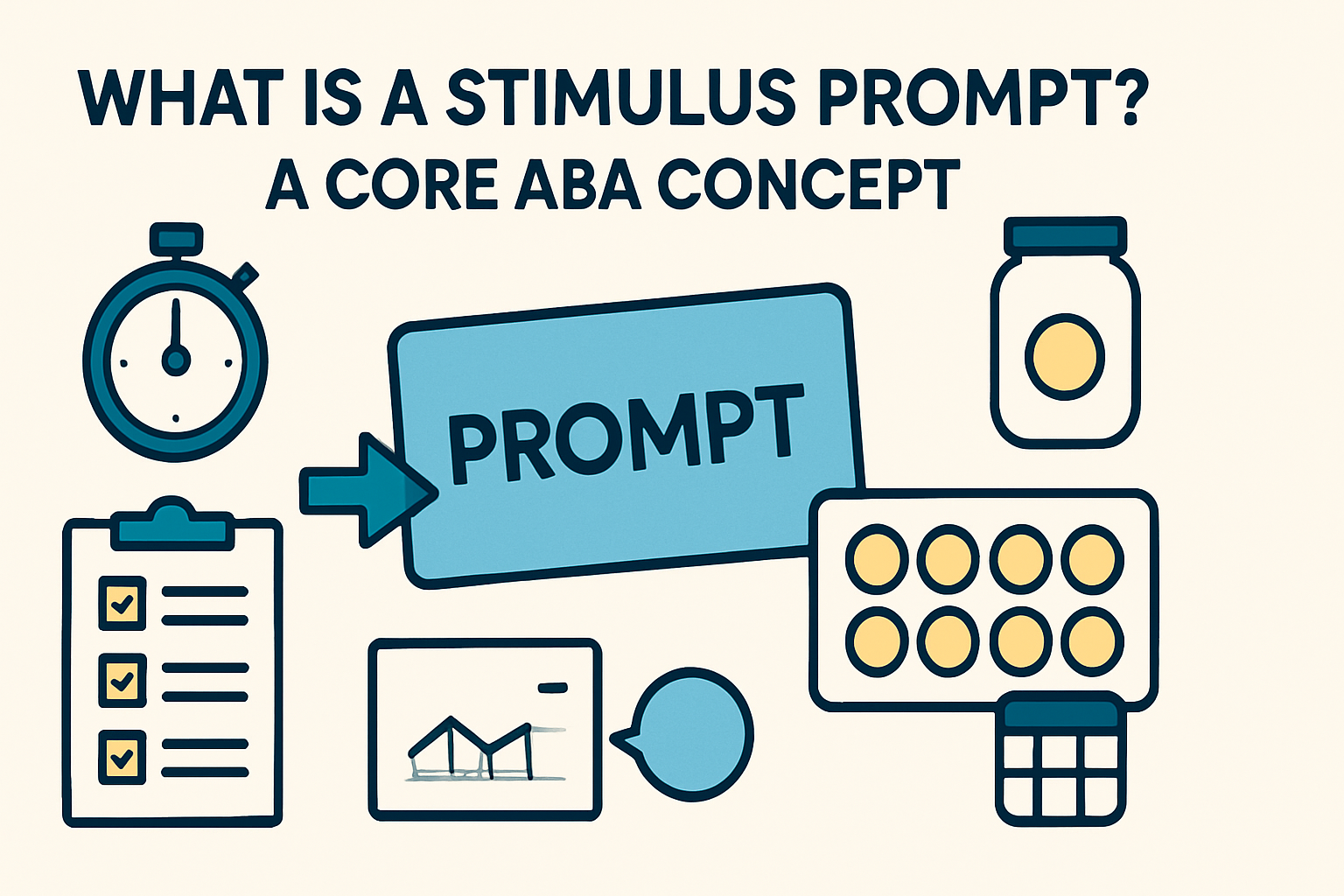
stimulus prompt ABA: What is a Stimulus Prompt? A Core ABA Concept
A stimulus prompt is an antecedent intervention that modifies the discriminative stimulus or its environment to increase the likelihood of a correct response. Unlike response prompts that guide the behavior directly, stimulus prompts change the antecedent conditions to make the correct choice more salient. This approach is fundamental to errorless learning procedures and helps establish stimulus control efficiently.
Table of Contents
- stimulus prompt ABA: What is a Stimulus Prompt? A Core ABA Concept
- Stimulus Prompts in Action: Worked ABA Examples
- Stimulus Prompts on the BCBA Exam: What to Expect
- Quick Checklist: Implementing and Fading Stimulus Prompts
- Summary and Key Takeaways
- References
Stimulus prompts work by altering how the target stimulus appears or by adding supplementary cues. The goal is to help learners discriminate between correct and incorrect options without requiring physical guidance or verbal instructions about the response itself.
Stimulus Prompt vs. Response Prompt: The Critical Distinction
Understanding this distinction is essential for both clinical practice and exam success. The key difference lies in what gets modified:
- Stimulus prompts change the SD or its environment – you’re modifying the antecedent stimulus
- Response prompts act on the behavior itself – you’re guiding the learner’s response
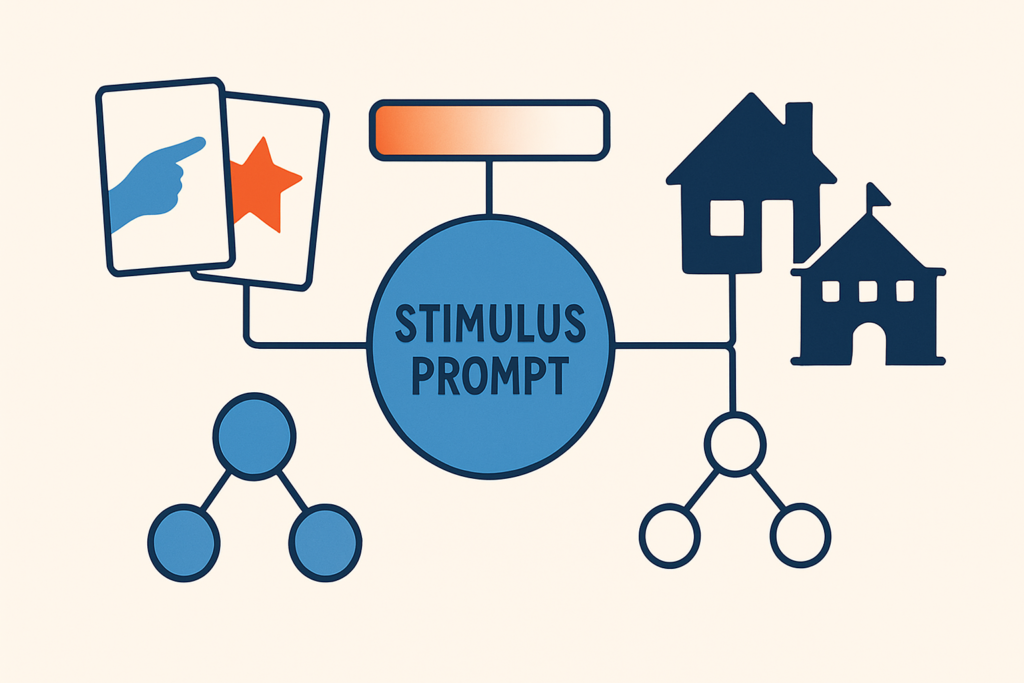
For example, making a correct choice card larger is a stimulus prompt, while physically guiding a hand to point to the correct card is a response prompt. This distinction matters because stimulus prompts often lead to better stimulus control transfer and reduced prompt dependency.
Common Types of Stimulus Prompts
Stimulus prompts fall into two main categories, each serving different instructional purposes:
- Within-stimulus prompts: Modifying a feature of the target stimulus itself, such as size, color, position, or brightness
- Extra-stimulus prompts: Adding a supplementary cue to the environment, like arrows, highlighting, or placement cues
Within-stimulus prompts are often more effective for establishing discrimination skills because they directly enhance the relevant stimulus features. Extra-stimulus prompts can be useful for initial teaching but require careful fading to avoid creating dependency on the added cue.
Stimulus Prompts in Action: Worked ABA Examples
Let’s examine practical applications of stimulus prompts through realistic teaching scenarios. These examples demonstrate how different types of prompts function in actual instructional settings.
Example 1: Teaching Color Discrimination
Scenario: Teaching a child to point to ‘red’ when presented with multiple colored cards.
- Antecedent: Present red and blue cards side by side
- Prompt: Make the red card significantly larger and brighter (within-stimulus prompt)
- Behavior: Child points to the red card
- Consequence: Reinforcement delivered immediately
- Function: Skill acquisition for color discrimination
This example shows how modifying stimulus features can help establish initial discriminative control. The prompt makes the correct choice more noticeable, reducing errors during early learning phases.
Example 2: Following a Visual Schedule
Scenario: A learner struggles with transitioning from play to work activities using a visual schedule.
- Antecedent: Time for work transition indicated on schedule
- Prompt: Place a glowing border around the ‘work’ symbol (extra-stimulus prompt)
- Behavior: Learner moves to work area independently
- Consequence: Social praise and access to preferred work materials
- Function: Establishing stimulus control for compliance with schedule
This application demonstrates how extra-stimulus prompts can support complex behavioral chains. The added visual cue helps the learner attend to the relevant schedule component without needing verbal reminders.
Stimulus Prompts on the BCBA Exam: What to Expect
Exam questions about stimulus prompts often test your ability to distinguish them from other prompting types and select appropriate applications. Understanding common question patterns can help you avoid typical mistakes.
Spotting the Key Phrases in Question Stems
Look for these indicators that a question involves stimulus prompts:
- ‘Changing the materials’ or ‘modifying the stimulus’
- ‘Adding a cue to the environment’
- ‘Highlighting a feature of the SD’
- ‘Making the correct choice more noticeable’
- ‘Altering how the stimulus appears’
These phrases typically signal that the intervention involves modifying antecedent conditions rather than guiding responses directly.
Common Exam Traps and Distractors
Several patterns consistently trip up exam candidates:
- Confusing stimulus prompts with response prompts: The most frequent error – remember stimulus prompts change the SD, response prompts guide the behavior
- Mistaking prompt fading for elimination: Fading involves gradual reduction, not sudden removal
- Selecting ‘most-to-least prompting’: This refers to response prompt hierarchies, not stimulus modifications
- Overlooking within-stimulus vs extra-stimulus distinctions: Know when each type is appropriate
To avoid these traps, carefully analyze whether the described intervention modifies the stimulus or guides the response. This fundamental distinction will guide you to the correct answer.
Quick Checklist: Implementing and Fading Stimulus Prompts
Follow this practical guide for effective stimulus prompt implementation in clinical settings:
- Identify the target discrimination: Clearly define what the learner needs to distinguish
- Select prompt type: Choose within-stimulus or extra-stimulus based on the skill
- Make prompts salient but not distracting: Ensure prompts are noticeable but don’t overshadow the natural stimulus
- Plan fading from the start: Design a systematic fading procedure before implementation
- Monitor prompt dependency: Track whether prompts are being reduced appropriately
- Use errorless learning principles: Minimize errors during initial teaching phases
- Collect data on prompt levels: Document which prompt levels are effective
- Generalize to natural stimuli: Ensure skills transfer to un-prompted situations
This checklist supports ethical practice by preventing prompt dependency and ensuring skill acquisition. For more on avoiding prompt dependency, see our guide on prompt dependency in ABA.
Summary and Key Takeaways
Stimulus prompts are essential tools for establishing stimulus control and supporting discrimination learning. Their proper use requires understanding several key principles:
- Stimulus prompts modify antecedent stimuli, not responses
- Two main types exist: within-stimulus and extra-stimulus prompts
- Effective implementation requires systematic fading procedures
- Proper use supports errorless learning and reduces prompt dependency
- Exam success depends on distinguishing stimulus prompts from response prompts
Mastering stimulus prompts enhances both clinical effectiveness and exam performance. These interventions represent a proactive approach to teaching that minimizes errors and builds independent responding. For related concepts, explore our guide on stimulus control in ABA and learn about errorless learning procedures.
Remember that ethical practice requires careful planning of prompt fading from the beginning. The BACB Ethics Code emphasizes using the least intrusive effective interventions, making proper stimulus prompt implementation both clinically sound and ethically responsible.


