
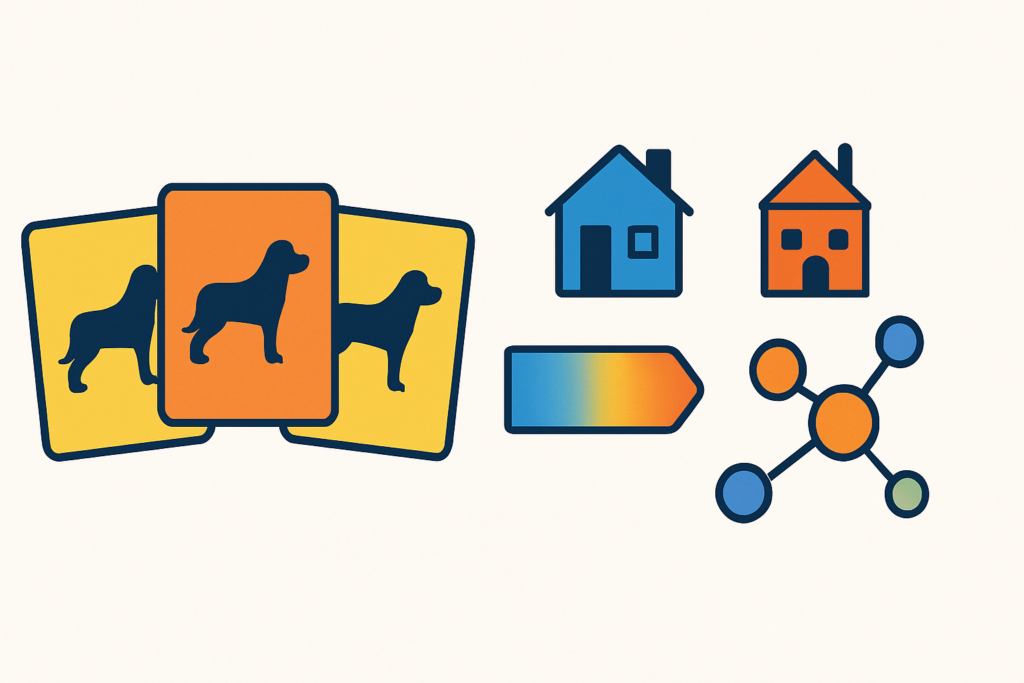
Understanding stimulus generalization is crucial for both effective ABA practice and BCBA exam success. This fundamental concept explains how learned behaviors transfer to new situations, making it essential for creating meaningful, lasting behavior change. When a behavior occurs in the presence of stimuli that share properties with the original training stimulus, you’re observing stimulus generalization in action.
Table of Contents
- What is Stimulus Generalization in ABA?
- Stimulus Generalization in Practice: Worked ABA Examples
- Stimulus Generalization and the BCBA Exam
- A Practitioner’s Checklist for Promoting Generalization
- Summary and Key Takeaways
What is Stimulus Generalization in ABA?
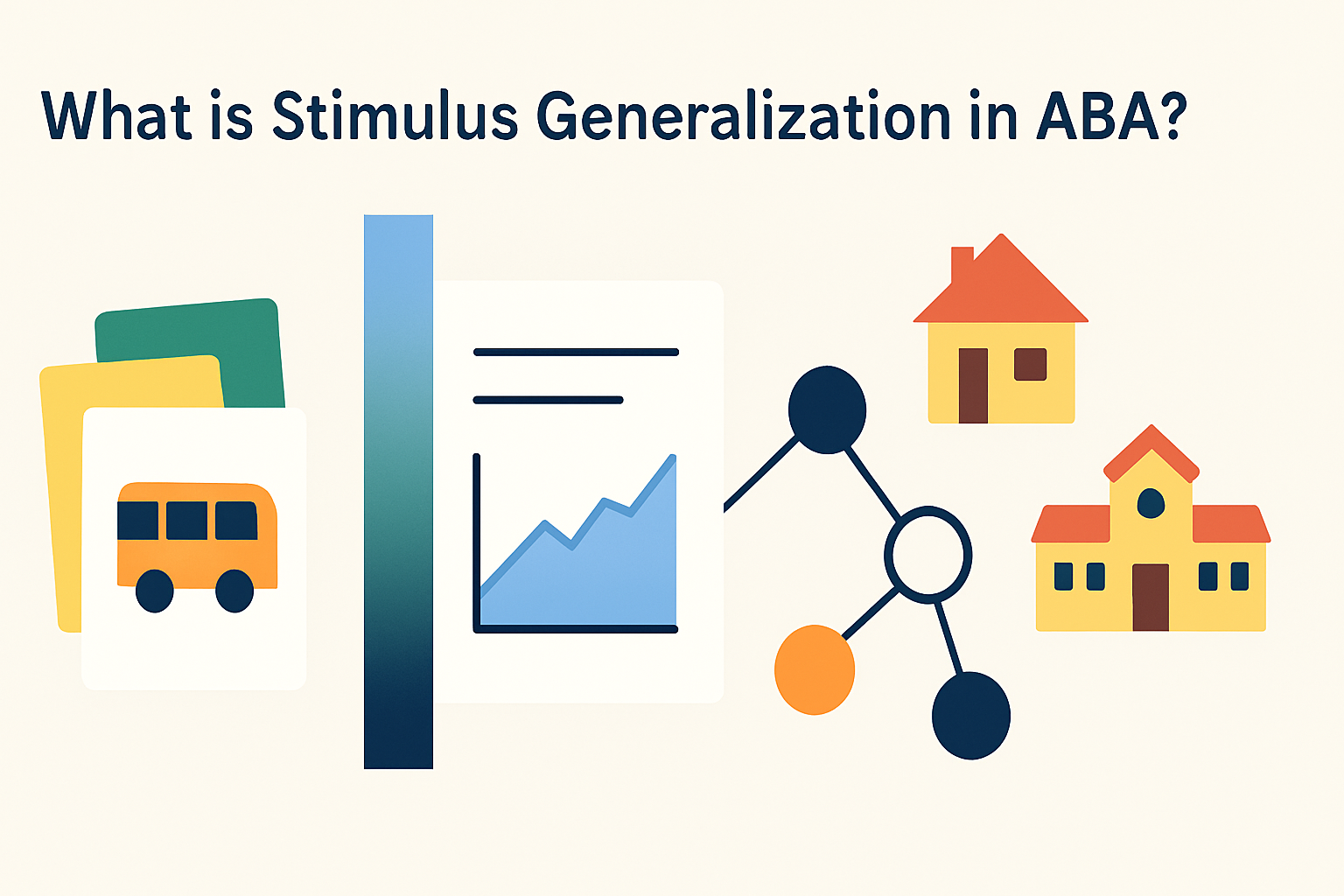
Stimulus generalization occurs when a behavior learned in the presence of one stimulus occurs in the presence of other, similar stimuli. This transfer happens because the new stimuli share relevant properties with the original discriminative stimulus (SD).
A Formal Definition for Your Exam
According to Cooper, Heron, and Heward, stimulus generalization refers to the occurrence of a behavior in the presence of stimuli that are similar to the original SD. The core idea involves stimulus control extending to novel stimuli that share certain physical dimensions or properties with the training stimulus.
Stimulus Generalization vs. Response Generalization
These two concepts are often confused but represent different phenomena. Stimulus generalization involves the same behavior occurring across different stimuli. In contrast, response generalization involves different behaviors occurring in response to the same stimulus.
For example, if a child learns to say ‘hello’ to their therapist and then says it to other adults, that’s stimulus generalization. If they learn to say ‘hello’ and then spontaneously use ‘hi’ or ‘good morning,’ that’s response generalization.
The Stimulus Generalization Gradient
The stimulus generalization gradient is a theoretical model showing how response strength changes as stimuli become less similar to the original SD. Imagine a bell curve where the peak represents the original training stimulus. As you move away from this peak along a stimulus dimension (like color, size, or shape), responding typically decreases in a predictable pattern.
Stimulus Generalization in Practice: Worked ABA Examples
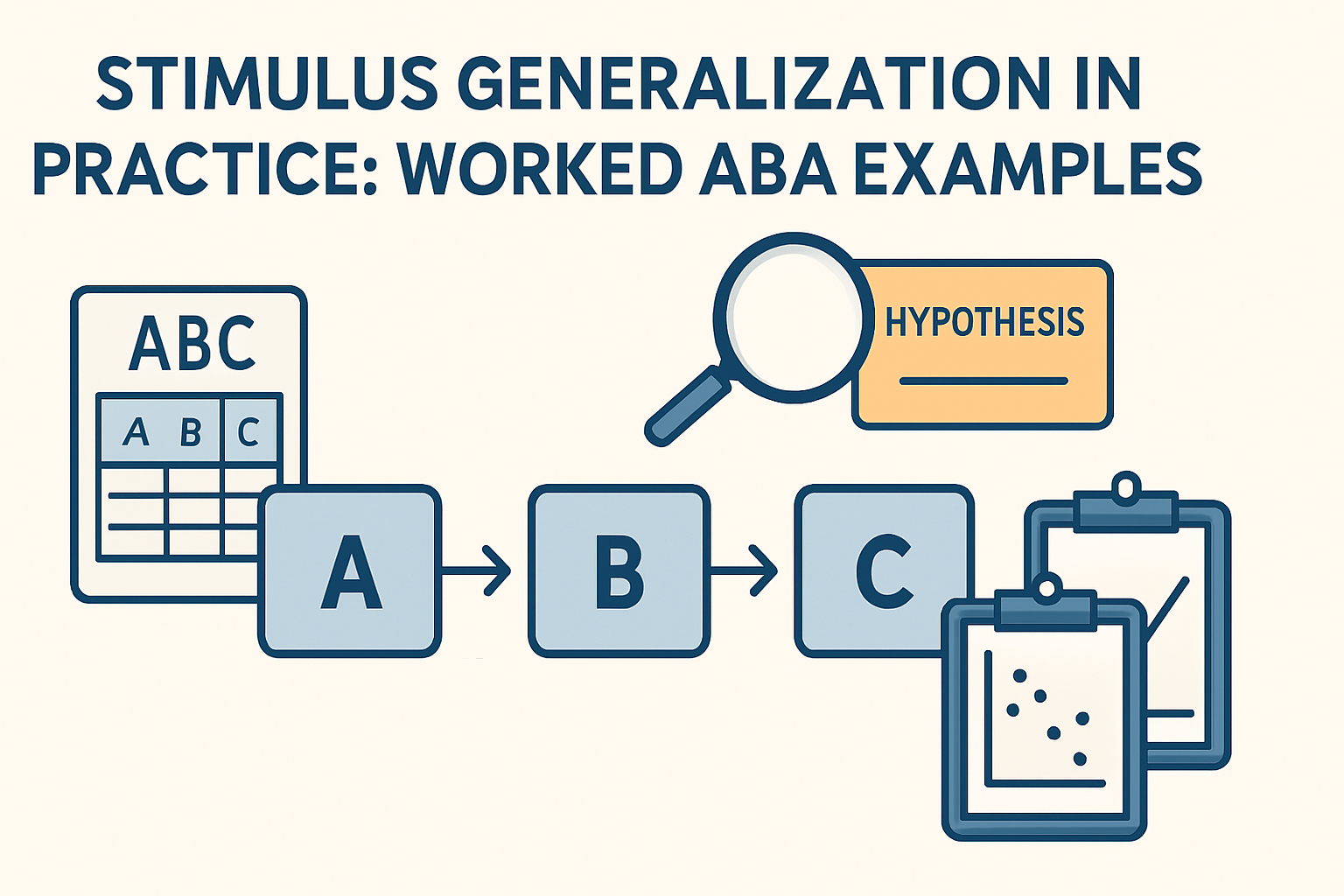
Let’s examine three realistic scenarios that demonstrate stimulus generalization in action. Each example includes ABC data and hypothesized function to help you apply this concept clinically.
Example 1: Greeting Skills Across People
A learner is taught to say ‘Hi’ when their primary therapist enters the room (SD: therapist presence). After mastery, the behavior occurs with other staff members, family, and even novel adults at the grocery store.
- Antecedent: New adult approaches
- Behavior: Says ‘Hi’
- Consequence: Social attention (smile, greeting back)
- Hypothesized function: Social positive reinforcement
The behavior has generalized across a stimulus class of ‘adults who might provide social attention.’
Example 2: Manding for a Preferred Item in New Settings
A child learns to mand ‘ball’ during structured table sessions with their BCBA. The skill then appears in the playground, living room, and clinic hallway when a ball is present.
- Antecedent: Ball visible + any adult present
- Behavior: Vocal mand ‘ball’ or reaches toward ball
- Consequence: Access to ball
- Hypothesized function: Tangible positive reinforcement
Generalization occurs across different settings and people while maintaining the same functional relationship.
Example 3: Discriminating Safe vs. Dangerous (Stimulus Class)
A safety program teaches touching cool stove burners (safe) versus hot ones (dangerous). The discrimination generalizes to other hot objects like oven doors, curling irons, and radiators.
- Antecedent: Potentially hot object
- Behavior: Visually inspects or asks ‘hot?’ before touching
- Consequence: Avoidance of injury
- Hypothesized function: Negative reinforcement (avoidance)
This forms a functional stimulus class of ‘hot/dangerous objects’ through generalization.
Stimulus Generalization and the BCBA Exam
This concept appears frequently on the BCBA exam, often in scenario-based questions. Understanding the distinction between stimulus and response generalization is particularly important.
How the BCBA Exam Tests This Concept
Typical question formats include:
- ‘This scenario demonstrates which type of generalization?’
- ‘To promote generalization, a practitioner should…’
- ‘Which strategy would most effectively program for stimulus generalization?’
These questions often present detailed scenarios requiring you to identify whether generalization has occurred and what type it represents.
Common Exam Traps and Misconceptions
Avoid these frequent errors:
- Confusing stimulus generalization with response generalization
- Mistaking generalization for maintenance (which involves behavior persisting over time)
- Over-applying the concept to all behavior change without considering stimulus dimensions
- Failing to identify the relevant stimulus dimension along which generalization occurs
Key Linked Terms You Must Know
Master these related concepts:
- Stimulus class: A group of stimuli that share common elements and evoke the same response
- Stimulus control: When a behavior occurs more frequently in the presence of certain stimuli
- Discrimination training: Teaching differential responding to different stimuli
- Programming common stimuli: Including elements from training in generalization settings
- Multiple exemplar training: Teaching with varied examples to promote generalization
A Practitioner’s Checklist for Promoting Generalization
Use these actionable strategies to program for effective stimulus generalization in your clinical work:
- Implement multiple exemplar training with varied stimuli during acquisition
- Program common stimuli that will be present in generalization settings
- Train in multiple settings with different materials and people
- Use natural maintaining contingencies whenever possible
- Teach loose training by varying non-critical stimulus features
- Incorporate indiscriminable contingencies to maintain behavior
- Monitor and reinforce generalized responding when it occurs
For more on related concepts, see our guide on stimulus equivalence and the seven dimensions of ABA.
Summary and Key Takeaways
Stimulus generalization is essential for meaningful behavior change that transfers beyond training sessions. Remember these critical points:
- Stimulus generalization involves the same behavior occurring with similar stimuli
- It differs from response generalization, which involves different behaviors
- The stimulus generalization gradient shows how responding changes with stimulus similarity
- Effective programming requires intentional strategies like multiple exemplar training
- On the BCBA exam, carefully analyze whether the behavior or stimulus has changed
For authoritative information on behavior analysis concepts, consult the Behavior Analyst Certification Board and primary sources like Cooper, Heron, and Heward’s Applied Behavior Analysis textbook.



