
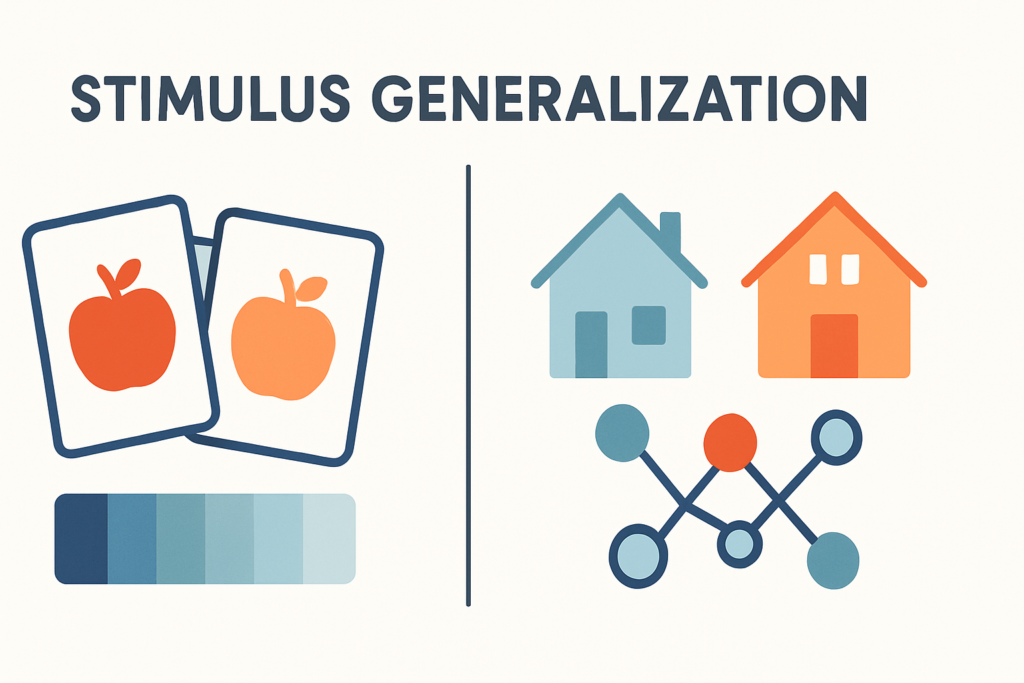
In applied behavior analysis, stimulus generalization represents a fundamental process where learning transfers across different situations. This concept is crucial for ensuring that skills taught in therapy sessions actually work in real-world environments. Understanding this behavioral principle helps practitioners create more effective interventions and prepares candidates for success on the BCBA exam.
Table of Contents
- Defining Stimulus Generalization in Behavioral Terms
- Stimulus Generalization in Action: Worked ABA Examples
- Stimulus Generalization and the BCBA Exam
- A Quick Checklist for Clinical Application and Exam Review
Defining Stimulus Generalization in Behavioral Terms
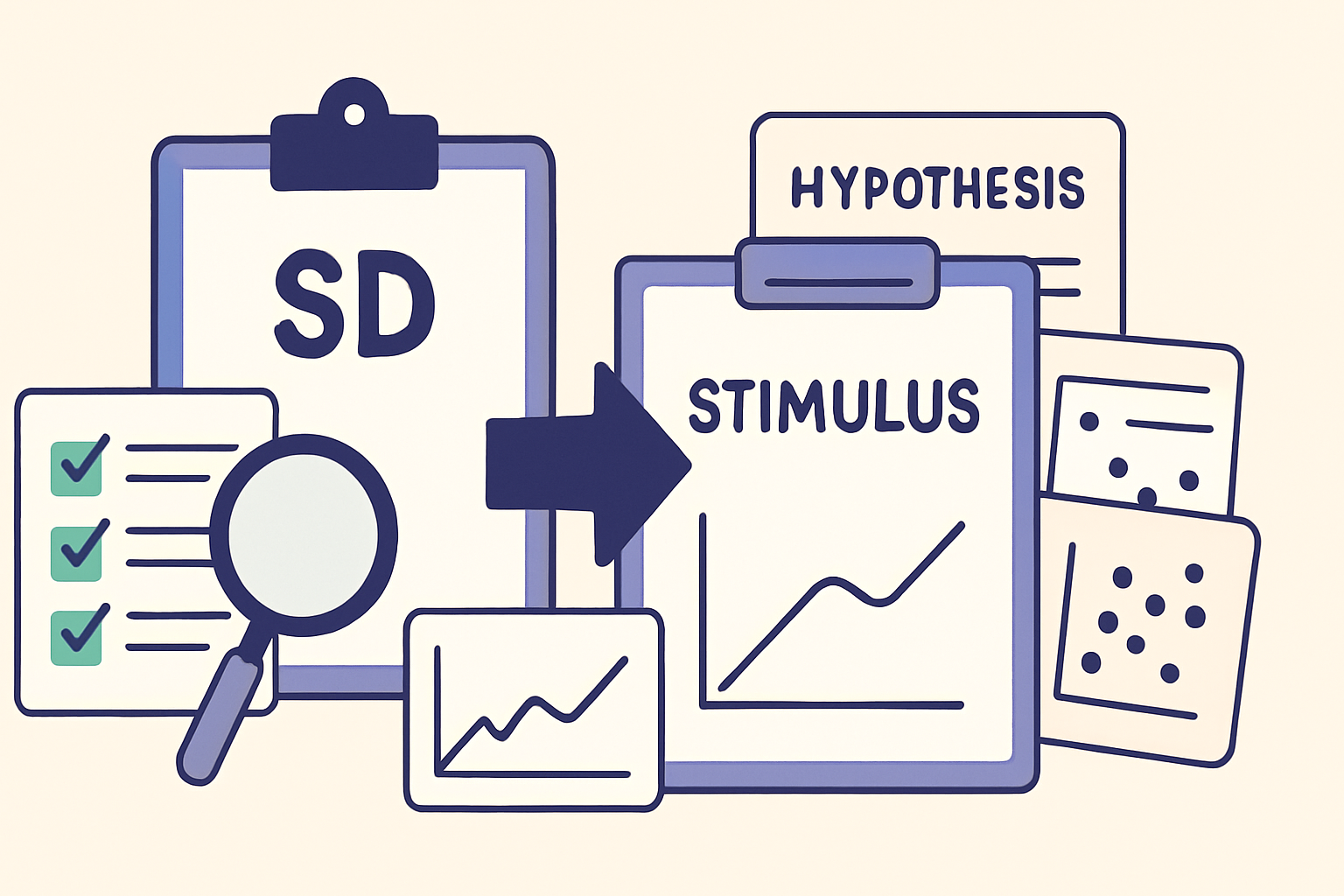
Stimulus generalization occurs when a behavior learned in the presence of one discriminative stimulus (Sd) occurs in the presence of other, similar stimuli that have not been directly trained. According to Cooper, Heron, and Heward’s definition, this represents the unlearned transfer of behavior across stimulus variations.
The Core Mechanism: When Learning Transfers
The behavioral mechanism involves a previously reinforced response occurring when presented with novel antecedent conditions. These new stimuli share physical characteristics or functional properties with the original training stimulus. The key distinction is that these similar stimuli were never directly associated with reinforcement during training.
Stimulus Generalization vs. Response Generalization
These two concepts are frequently confused on the BCBA exam. Stimulus generalization involves the same response occurring to different antecedent stimuli. In contrast, response generalization involves different, functionally similar behaviors occurring to the same antecedent stimulus. Remember: stimulus changes the antecedent, response changes the behavior.
Stimulus Generalization in Action: Worked ABA Examples
Real-world examples make this abstract concept concrete. Each scenario demonstrates how behavioral transfer occurs across different stimulus conditions while maintaining the same functional outcome.
Example 1: Greeting Across Therapists
A child learns to say ‘Hi’ when their primary therapist enters the room (Sd). After consistent reinforcement, they begin saying ‘Hi’ to other staff members and even visitors. The ABC analysis shows: Antecedent (new person enters), Behavior (greeting ‘Hi’), Consequence (social attention). The hypothesized function is social positive reinforcement.
Example 2: Manding for ‘Water’ with Different Cups
During training, a learner mands ‘water’ when shown a specific blue cup. Later, they successfully mand ‘water’ when presented with a red cup, a glass, or even a water bottle. The antecedent stimulus class has expanded from one specific cup to various drinking containers. The function remains access to tangibles.
Example 3: Discriminative Stimulus for ‘Quiet Hands’
The instruction ‘quiet hands’ is taught as an Sd in the therapy room. The child then folds their hands when hearing similar instructions like ‘settle down,’ ‘hands to yourself,’ or even when a teacher gives a visual signal. This demonstrates stimulus generalization across different verbal and non-verbal cues with the function of negative reinforcement (escape from further demands).
Stimulus Generalization and the BCBA Exam
This concept appears throughout the BCBA exam in various formats. Understanding how it’s tested helps you avoid common pitfalls and select correct answers efficiently.
How the BCBA Exam Tests This Concept
The exam presents stimulus generalization questions in several contexts. You’ll encounter scenarios about programming for generalization, interpreting generalization probe data on graphs, and ethical considerations regarding skill transfer. Questions often involve identifying whether a described phenomenon represents stimulus generalization versus other concepts like response generalization or maintenance.
Common Exam Traps and How to Avoid Them
Several patterns consistently trip up candidates:
- Confusing stimulus with response generalization: Remember stimulus changes the antecedent, response changes the behavior
- Selecting stimulus generalization when behavior changes: If the behavior itself varies (different responses), it’s response generalization
- Over-applying to dissimilar stimuli: The new stimulus must share functional or physical properties with the original
- Mistaking maintenance for generalization: Maintenance involves the same behavior with the same stimulus over time
A Quick Checklist for Clinical Application and Exam Review
This practical checklist serves both clinical practice and last-minute exam preparation. Use it to quickly assess whether you’re observing true stimulus generalization.
- Check the antecedent: Is a different, untrained stimulus present?
- Verify the behavior: Is it the same response as originally trained?
- Assess similarity: Do the stimuli share physical or functional properties?
- Confirm no direct training: Was this specific stimulus-response pairing never directly reinforced?
- Consider function: Does the behavior serve the same purpose across stimuli?
- Review programming: Did you intentionally plan for generalization, or is it occurring naturally?
Mastering stimulus generalization requires understanding both its behavioral definition and practical applications. This knowledge directly impacts clinical effectiveness and exam performance. For more on related concepts, explore our guide on stimulus vs. response generalization or learn about generalization and maintenance strategies.



