

What is Stimulus Control Transfer? A Core ABA Procedure
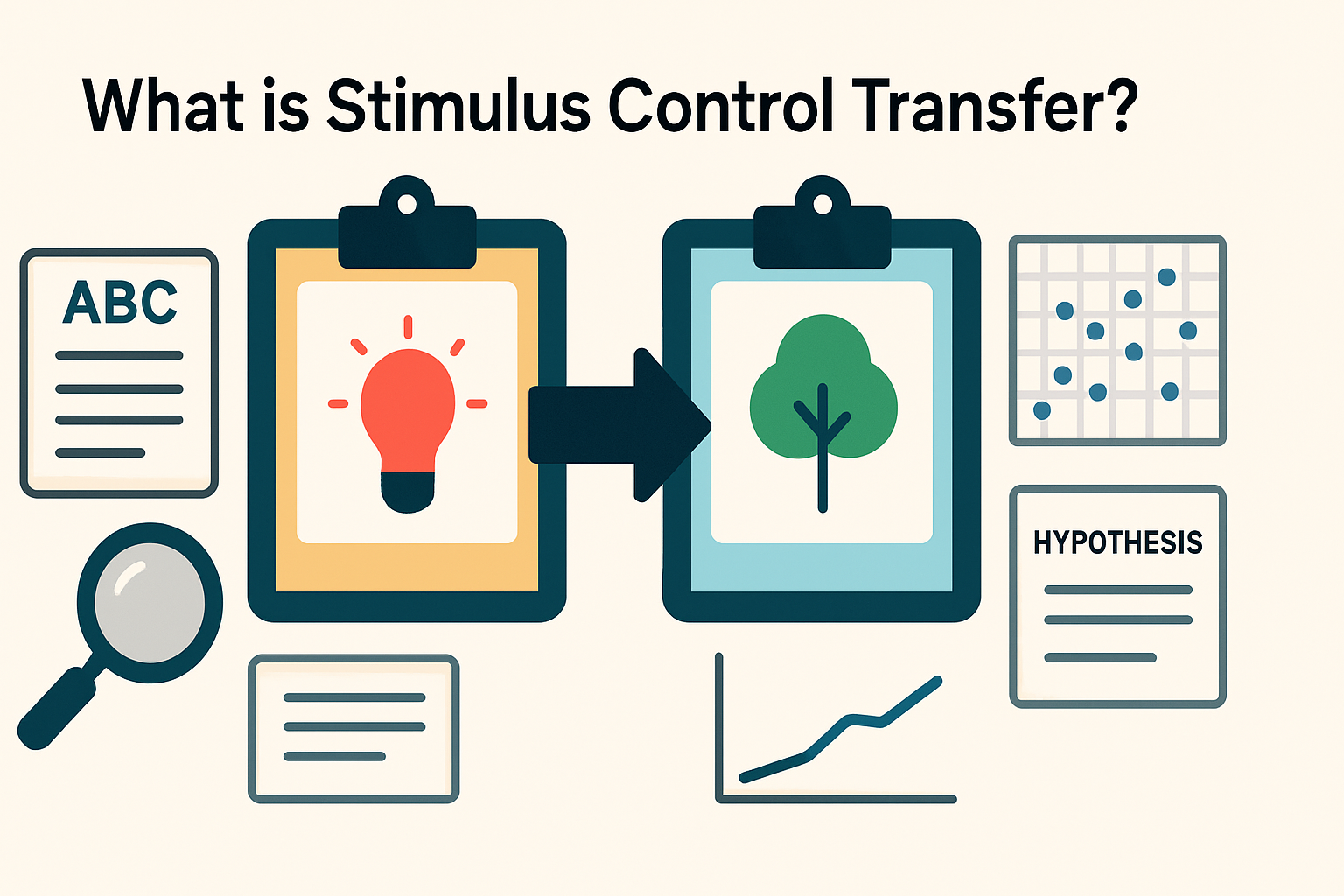
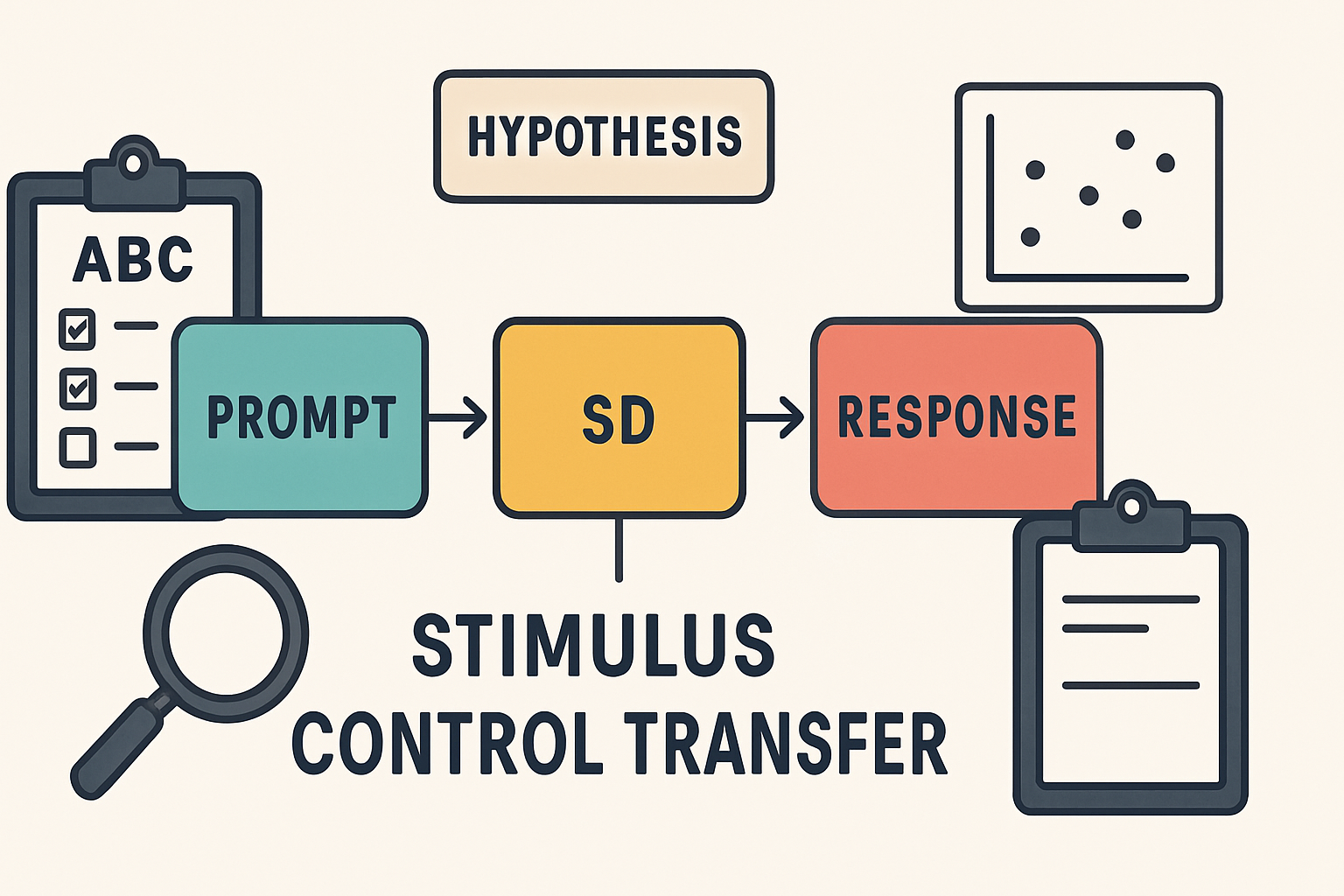
Stimulus control transfer is a fundamental ABA procedure where control over a behavior shifts from artificial prompts to natural environmental cues. This process systematically fades prompts while strengthening the relationship between the target discriminative stimulus (SD) and the desired response.
Table of Contents
- What is Stimulus Control Transfer? A Core ABA Procedure
- Stimulus Control Transfer Procedures in Action
- Stimulus Control Transfer on the BCBA Exam: Common Traps
- Quick-Study Checklist for Stimulus Control Transfer
The ultimate goal is to establish independent performance where the learner responds correctly to natural SDs without artificial support. This procedure is essential for teaching functional skills that maintain in everyday environments.
Key Definitions: SD, Prompts, and Transfer
Understanding these core concepts is essential for implementing effective stimulus control transfer:
- Discriminative Stimulus (SD): A stimulus in the presence of which a response has been reinforced. The natural cue that should eventually control the behavior.
- Response Prompts: Additional stimuli that evoke the correct response, such as physical guidance, modeling, or verbal instructions.
- Stimulus Prompts: Changes to the SD itself or its environment to make the correct response more likely, like highlighting or positioning.
- Transfer of Control: The systematic process of shifting behavioral control from prompts to the target SD through prompt fading.
Why Stimulus Control Transfer Matters for BCBAs
This procedure appears in the BCBA Task List under Section B-10: Interventions, making it essential exam content. Beyond testing requirements, effective transfer prevents prompt dependency, promotes skill generalization, and supports ethical practice by fostering independence.
Proper implementation ensures skills maintain across settings and people, which is crucial for meaningful behavior change. For more on related procedures, see our guide on prompt dependency.
Stimulus Control Transfer Procedures in Action
Let’s examine concrete examples using the ABC format to demonstrate how transfer works in practice. These scenarios illustrate the systematic fading process from prompted to independent responding.
Example 1: Transferring Control in a Vocal Mand
Teaching a child to ask for preferred items requires careful prompt fading to establish functional communication:
- Antecedent: Preferred toy is present but out of reach (natural SD)
- Initial Prompt: Full vocal model “I want toy” (response prompt)
- Behavior: Child echoes “I want toy”
- Consequence: Immediate access to toy (reinforcement)
The fading plan progresses from full model to partial model (“I want…”) to time delay before prompting. Each step strengthens the relationship between the toy’s presence and the vocal request. The function is typically access to tangible items.
Example 2: Fading Prompts for a Daily Living Skill
Teaching handwashing involves transferring control from artificial prompts to natural environmental cues:
- Natural SDs: Dirty hands, presence of sink and soap
- Initial Prompts: Visual schedule + gestural prompts to each step
- Behavior Chain: Turn on water → wet hands → apply soap → scrub → rinse → dry
- Consequence: Clean hands, termination of dirty stimulus
Fading begins with removing the visual schedule, then reducing gestural prompts to only difficult steps, then using time delay before providing any assistance. The hypothesized function is access to cleanliness and termination of an aversive condition.
Choosing a Transfer Method: Most-to-Least vs. Least-to-Most
BCBAs must select appropriate prompting hierarchies based on learner characteristics:
- Most-to-Least Prompting: Begin with most intrusive prompts, then systematically fade. Ideal for new skills or learners with limited repertoire to minimize errors.
- Least-to-Most Prompting: Begin with minimal prompts, increasing only as needed. Suitable for maintaining skills or promoting independence from the start.
- Errorless Learning: A variation of most-to-least that prevents errors entirely through immediate, sufficient prompting.
The choice depends on learner history, error tolerance, and the skill’s complexity. For more on error prevention strategies, see our article on errorless learning.
Stimulus Control Transfer on the BCBA Exam: Common Traps
Exam questions often test subtle distinctions and procedural details. Understanding these common pitfalls can prevent costly mistakes.
Trap 1: Confusing Prompt Fading with Other Procedures
Stimulus control transfer is specifically about shifting control from prompts to SDs. Don’t confuse it with:
- Shaping: Reinforcing successive approximations toward a target behavior
- Chaining: Teaching sequences of responses as a single complex behavior
- Schedule Thinning: Gradually increasing response requirements for reinforcement
Practice Question: “A BCBA systematically reduces physical guidance while the learner continues to brush teeth independently. Which procedure is being used?” Answer: Stimulus control transfer (specifically prompt fading).
Trap 2: Misidentifying the Stimulus in Control
The goal is always for the natural SD to gain control, not the prompt. Exam questions may ask what the SD is after transfer is complete.
Example: After teaching a child to say “hello” when seeing a friend, the SD is the friend’s presence, not the therapist’s previous verbal prompt. Failed transfer occurs when the prompt remains necessary for the response.
Trap 3: Overlooking the Role of Reinforcement
Reinforcement must follow correct responses under the target SD for transfer to occur. Poorly timed reinforcement can maintain prompt dependency.
Critical error: Reinforcing only prompted responses, not independent ones. The reinforcement schedule should support responses to the natural SD. For more on reinforcement strategies, see our guide on differential reinforcement.
Quick-Study Checklist for Stimulus Control Transfer
Use this actionable summary for last-minute review and clinical application:
- Define the target SD clearly before beginning intervention
- Select appropriate prompts based on learner needs and skill complexity
- Plan the fading sequence systematically, whether most-to-least or least-to-most
- Reinforce independent responses to the natural SD more heavily than prompted ones
- Monitor for prompt dependency and adjust fading pace as needed
- Program for generalization across settings, people, and materials
- Collect data on both prompted and independent responses to track progress
- Consider learner preferences and cultural variables in prompt selection
Stimulus control transfer is more than just prompt fading—it’s about establishing functional relationships between natural environmental cues and adaptive behaviors. Mastery requires understanding both the procedural steps and the underlying behavioral principles. For authoritative guidance on related procedures, consult the BACB Task List and peer-reviewed literature on prompting and fading procedures.
Remember that effective transfer promotes independence, prevents prompt dependency, and ensures skills maintain in natural environments. This makes it not just an exam topic, but an essential clinical competency for every practicing BCBA.


