

shaping in ABA: What is Shaping in Applied Behavior Analysis?
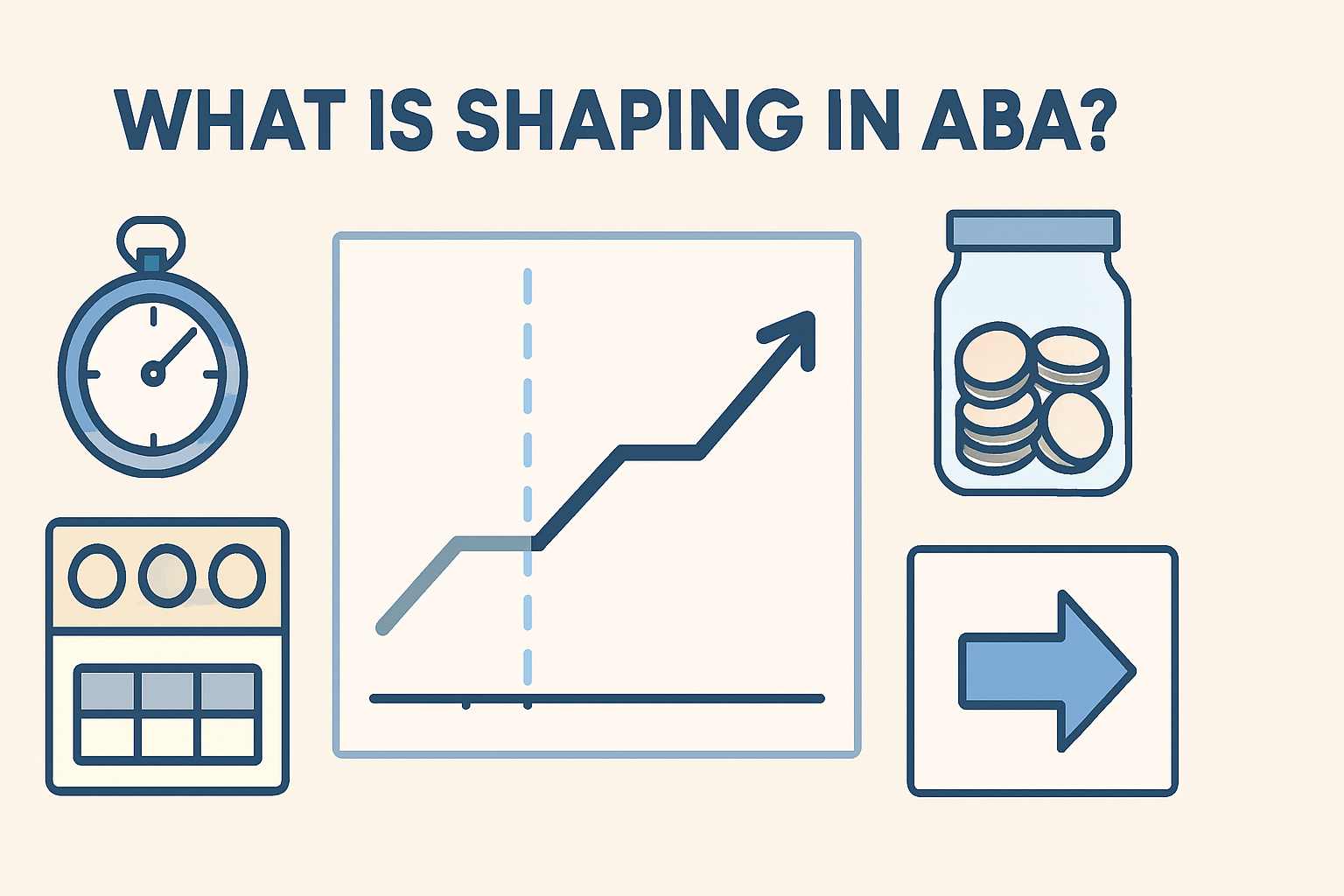
Shaping in ABA is a fundamental teaching procedure that builds new behaviors through the differential reinforcement of successive approximations toward a target response. This method systematically reinforces closer and closer approximations while extinguishing previous ones.
Table of Contents
- shaping in ABA: What is Shaping in Applied Behavior Analysis?
- Shaping in Practice: Worked Examples for BCBAs
- Shaping on the BCBA Exam: What to Expect and Common Traps
- Quick-Reference Checklist for Implementing Shaping
- Summary and Key Takeaways
The core principle involves breaking down complex behaviors into manageable steps and reinforcing progress toward the final goal.
The Formal Definition and Key Components
Shaping is formally defined as the process of reinforcing successive approximations to a target behavior while placing earlier approximations on extinction. The two critical components are successive approximations and differential reinforcement.
Successive approximations refer to the small, incremental steps that gradually move closer to the terminal behavior. Differential reinforcement means reinforcing only the current approximation while withholding reinforcement for previous ones.
Consider teaching a dog to roll over. You might start by reinforcing any movement toward lying down, then only reinforce lying on one side, then rolling partially, and finally the complete roll. Each step represents a successive approximation toward the terminal behavior.
Shaping vs. Chaining: A Critical Distinction for the Exam
Many exam candidates confuse shaping with chaining, but these are distinct procedures with different applications. Understanding this distinction is crucial for exam success.
- Shaping develops new topographies of a single behavior through successive approximations
- Chaining links separate, already-learned behaviors into a sequence
- Shaping creates new response forms; chaining organizes existing responses
- Shaping uses differential reinforcement; chaining typically uses forward or backward chaining procedures
For example, shaping might teach a child to say “water” when they previously made no vocal sounds, while chaining might teach the steps of handwashing after each component is already mastered.
Shaping in Practice: Worked Examples for BCBAs
Effective implementation of shaping requires careful planning and data collection. These practical examples demonstrate how to apply shaping principles in clinical settings with clear ABC contingencies.
Example 1: Increasing Vocalizations for a Non-Vocal Learner
When working with a non-vocal learner, shaping can systematically build vocal communication skills through carefully planned approximations.
Starting behavior: Any vocal sound (grunt, hum, vowel sound)
Successive approximations:
- Step 1: Reinforce any vocalization within 5 seconds of presentation
- Step 2: Only reinforce vocalizations lasting 1+ seconds
- Step 3: Reinforce approximations of target phonemes (“wa” for water)
- Step 4: Reinforce clear word approximations (“wawa” for water)
- Step 5: Reinforce clear word production (“water”)
ABC Data Table for Two Successive Steps:
- Antecedent: Therapist presents water bottle and says “Say water”
- Behavior: Child says “wa” (approximation)
- Consequence: Therapist provides immediate praise and small sip of water
When the child masters “wa,” reinforcement is withheld for that approximation and only provided for closer approximations like “wawa.”
Example 2: Shaping Tolerance for Hair Brushing
Shaping is particularly effective for building tolerance to aversive stimuli. This example addresses escape-maintained problem behavior through systematic desensitization.
Starting behavior: Child remains in room with hairbrush visible across the room
Successive approximations:
- Step 1: Reinforce staying in room with brush 10 feet away for 30 seconds
- Step 2: Reinforce staying with brush 5 feet away for 30 seconds
- Step 3: Reinforce allowing brush on table within arm’s reach
- Step 4: Reinforce brief touch of brush to arm (1 second)
- Step 5: Reinforce one stroke of brush through hair
- Step 6: Gradually increase to full hair brushing routine
The function of the original problem behavior is typically escape from the aversive hair brushing. Shaping alters the reinforcement contingency by providing reinforcement for appropriate tolerance behaviors while systematically increasing demands.
Shaping on the BCBA Exam: What to Expect and Common Traps
The BCBA exam tests your conceptual understanding and practical application of shaping procedures. Questions often require identifying shaping from descriptions or selecting appropriate successive approximations.
How the Exam Tests Your Understanding of Shaping
Exam questions typically fall into several categories that assess different aspects of shaping knowledge.
- Identifying shaping from scenario descriptions
- Selecting the next appropriate successive approximation
- Distinguishing shaping from chaining or fading procedures
- Identifying when to use shaping versus other teaching procedures
- Recognizing proper implementation of differential reinforcement during shaping
These questions require both conceptual knowledge and practical application skills.
Frequent Misconceptions and Exam Distractors
Several common traps appear repeatedly on the BCBA exam. Being aware of these can help you avoid incorrect answer choices.
- Confusing shaping with chaining: Remember shaping builds new topographies; chaining sequences existing behaviors
- Thinking shaping requires a task analysis (this is chaining)
- Selecting approximations that represent too large a behavioral leap
- Misidentifying the reinforcing consequence in shaping scenarios
- Forgetting that earlier approximations must be placed on extinction
- Assuming shaping only applies to motor behaviors (it applies to any behavior)

Quick-Reference Checklist for Implementing Shaping
Use this practical checklist when designing or implementing shaping procedures in clinical practice or exam scenarios.
- Define the terminal behavior clearly and objectively
- Identify the starting behavior (what the learner can currently do)
- Break down the progression into successive approximations
- Select powerful, appropriate reinforcers
- Reinforce only the current approximation consistently
- Place previous approximations on extinction
- Monitor progress with data collection
- Adjust approximations if progress stalls
- Ensure each step is achievable before moving forward
- Plan for generalization and maintenance from the beginning
This checklist aligns with best practices outlined in the BACB Task List and evidence-based literature.
Summary and Key Takeaways
Shaping remains one of the most powerful tools in behavior analysis for building new behaviors. Mastering this concept is essential for both clinical practice and BCBA exam success.
Key points to remember:
- Shaping uses differential reinforcement of successive approximations
- It creates new response topographies, unlike chaining which sequences existing behaviors
- Effective shaping requires careful planning of achievable steps
- Earlier approximations must be placed on extinction as new ones are reinforced
- Common exam traps include confusing shaping with chaining or selecting inappropriate approximations
- Always consider the function of behavior when designing shaping procedures
For more information on related concepts, see our guide on differential reinforcement procedures or explore the research on shaping in the Journal of Applied Behavior Analysis.


