
Understanding the distinction between rate and frequency counts is fundamental to accurate behavioral measurement in applied behavior analysis. These two measurement approaches serve different purposes and require different analytical considerations. Mastery of when to use each method is essential for both effective practice and success on the BCBA exam.
Table of Contents
- rate and frequency counts: Defining Rate and Frequency: More Than Just Numbers
- When to Use Rate vs. Frequency: Practical ABA Examples
- Exam Relevance and Common Traps for BCBA Candidates
- Quick Checklist for Selecting Your Measure
- Summary and Key Takeaways
- References
rate and frequency counts: Defining Rate and Frequency: More Than Just Numbers
At first glance, both measures involve counting behavioral occurrences, but their applications differ significantly. The key distinction lies in how they account for time, which affects their utility for different assessment scenarios.
What is a Frequency Count?
A frequency count represents the simplest form of behavioral measurement. It’s a straightforward tally of how many times a behavior occurs during an observation period. This raw count provides basic quantitative data without considering the duration of observation.
Frequency counts are particularly useful for behaviors that have clear beginnings and endings, known as discrete behaviors. Examples include hand raises, vocal requests, or completed tasks. The primary limitation is that frequency alone doesn’t account for observation time, making comparisons across sessions problematic.
What is Rate?
Rate measurement incorporates time into the equation, providing a more sophisticated analysis tool. Rate is calculated by dividing the frequency count by the observation time, typically expressed as responses per minute or hour. The formula is straightforward: Rate = Count / Time.
This time-based approach allows for meaningful comparisons across observation periods of different lengths. Rate measurement is essential for behaviors that occur at varying frequencies and when session durations change. Understanding this distinction is crucial for selecting appropriate measurement procedures in both assessment and intervention contexts.
When to Use Rate vs. Frequency: Practical ABA Examples
Selecting the appropriate measure depends on your assessment goals and the nature of the behavior. Here are three practical scenarios demonstrating the decision-making process.
Example 1: Measuring Elopement During Recess
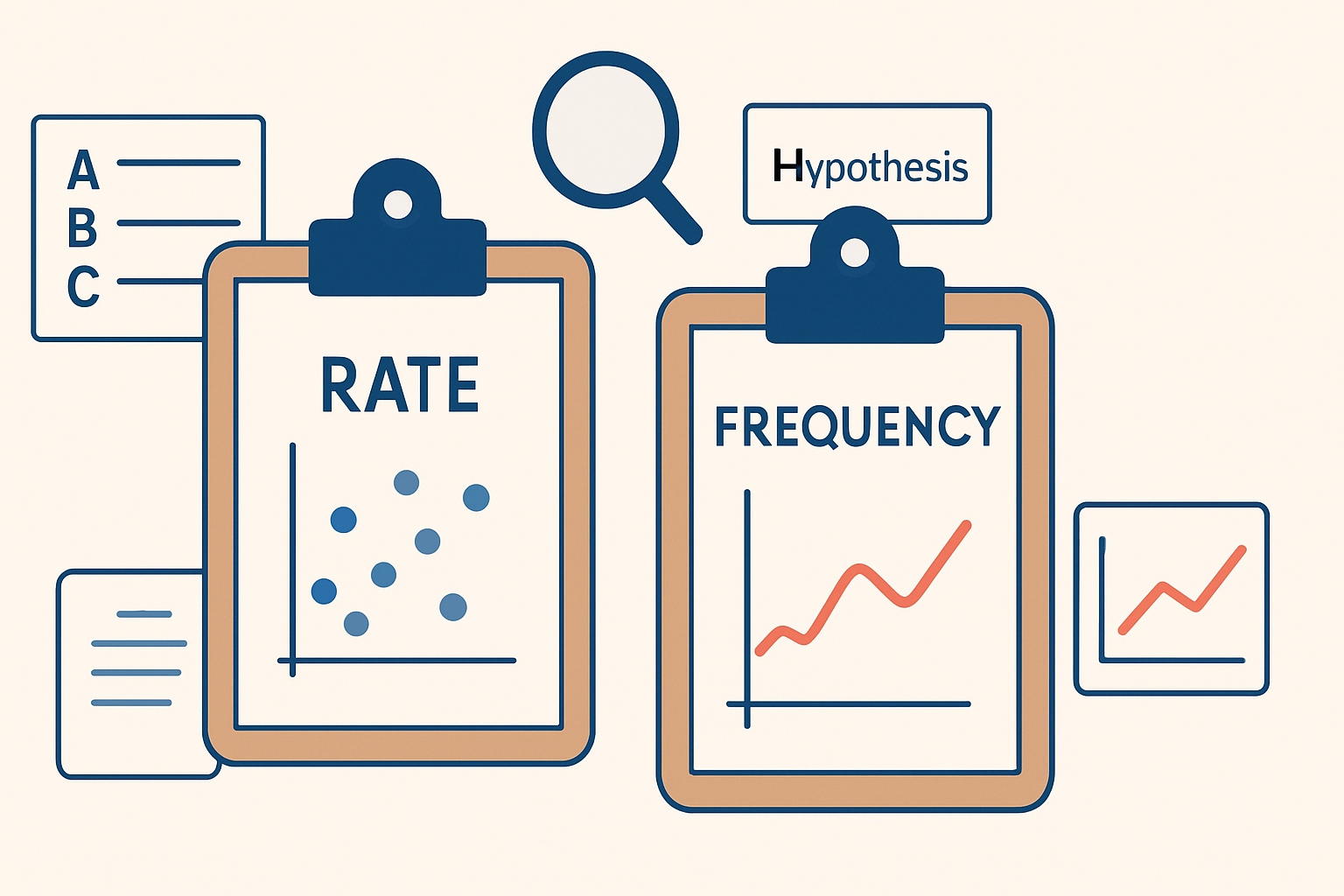
Consider a child who elopes from the playground area. The antecedent is transition to recess, the behavior is elopement, and the consequence is attention from staff. The hypothesized function is access to adult attention.
In this scenario, rate measurement is necessary because recess periods vary in length. A frequency count of 3 elopements means little without knowing if recess lasted 15 minutes or 30 minutes. Calculating rate (elopements per minute) provides meaningful data for intervention planning and progress monitoring.
Example 2: Counting Mands During a 30-Minute Session
When teaching a child to request preferred items, you might record 15 vocal mands during a session. The antecedent is presence of preferred toys, the behavior is the vocal mand, and the consequence is access to the item.
While you could report a simple frequency count of 15 mands, converting to rate (0.5 mands per minute) allows comparison across sessions of different durations. This becomes particularly important when session lengths vary due to scheduling or client needs.
Example 3: Tracking Hand Raises in a Classroom
For increasing classroom participation, you might track hand raises during teacher questions. The behavior is clearly discrete with a definite beginning and end.
For a fixed 45-minute class period, a frequency count might suffice. However, if comparing participation across different lesson lengths, rate measurement becomes essential. This distinction is critical for accurate data interpretation and intervention evaluation.
Exam Relevance and Common Traps for BCBA Candidates
The BCBA exam frequently tests understanding of measurement concepts, including the distinction between rate and frequency. Recognizing common traps can improve your exam performance.
Trap 1: Confusing the Definitions
Many candidates mistakenly use frequency and rate interchangeably. Remember that rate requires a time component, while frequency does not. Exam questions often present scenarios with varying observation periods to test this distinction.
Trap 2: Misapplying the Formula
A common calculation error involves inconsistent time units. When computing rate, ensure all time measurements use the same units. Converting seconds to minutes or hours to minutes is a frequent source of errors that can be avoided with careful attention.
Trap 3: Overlooking the ‘Require’ in Measurement Selection
The fundamental requirement distinction is critical: rate calculations require time data, while frequency counts do not. Exam questions often test whether you recognize when time standardization is necessary for valid comparisons.
Quick Checklist for Selecting Your Measure
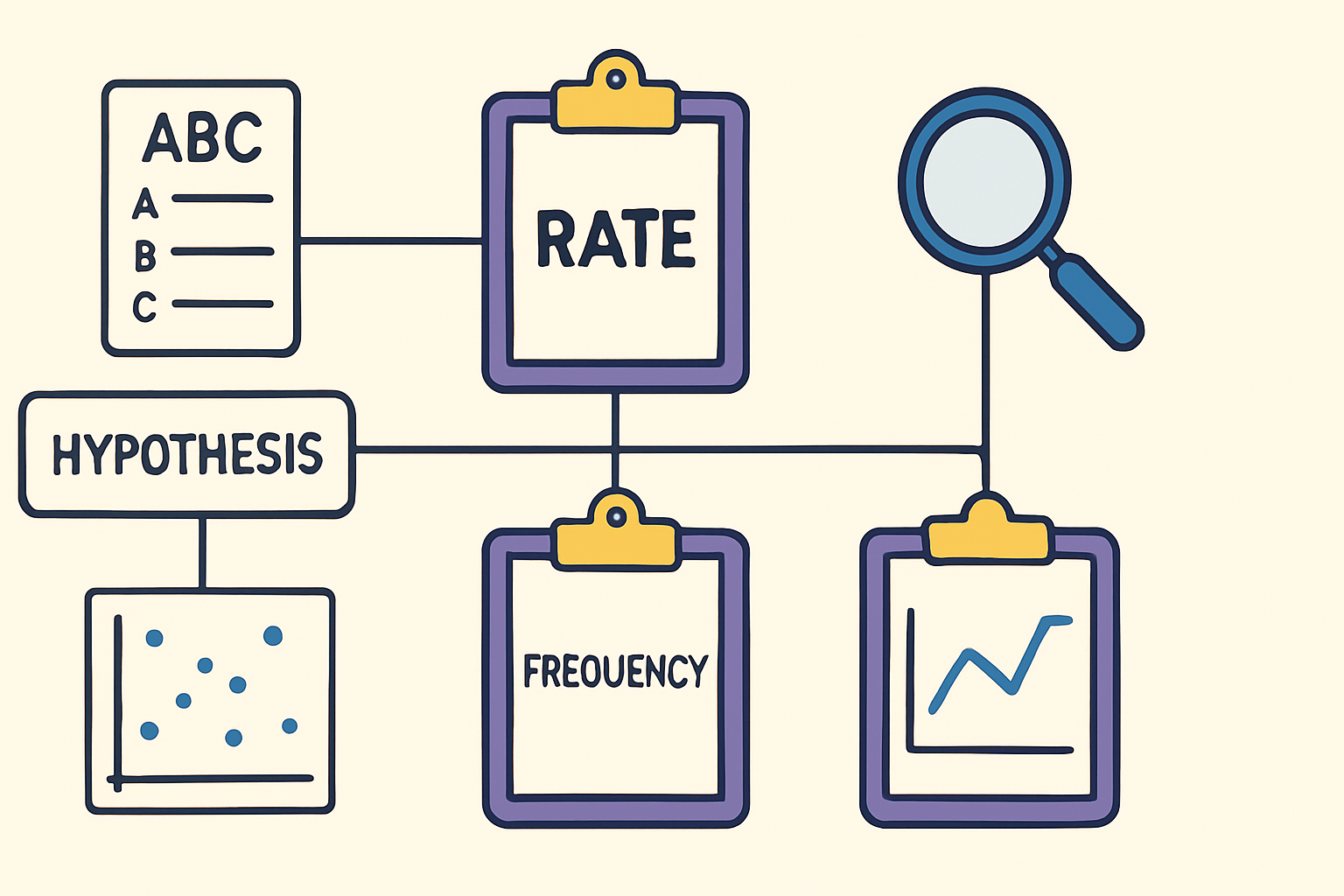
Use this practical guide to determine when to use rate versus frequency measurement:
- Choose rate when observation periods vary in length
- Select frequency for fixed-duration sessions with consistent timing
- Calculate rate when comparing data across different time frames
- Use frequency for simple tallying of discrete behaviors
- Apply rate for behaviors occurring at high frequencies
- Consider frequency when time measurement isn’t feasible or necessary
This decision-making framework aligns with data collection best practices in applied behavior analysis.
Summary and Key Takeaways
The distinction between rate and frequency counts represents more than just mathematical differences—it reflects fundamental principles of behavioral measurement. Rate incorporates time standardization, enabling meaningful comparisons across varying observation periods. Frequency provides simple counts suitable for consistent time frames.
For BCBA candidates, mastering this distinction involves understanding when each measure is appropriate and recognizing common exam traps. The key requirement remains clear: rate calculations demand time data, while frequency counts do not. This understanding supports effective applied behavior analysis practice and prepares you for measurement-related questions on the certification exam.
Remember that proper measurement selection impacts all subsequent analysis and intervention decisions. As you prepare for the BCBA exam, practice applying these concepts to various scenarios and consult the BACB test content outline for additional guidance on measurement domains.


