
What is Prompt Dependency? A Behavioral Definition
In applied behavior analysis, prompt dependency occurs when a learner’s correct response becomes controlled by the prompt rather than the natural discriminative stimulus. This means the individual waits for or requires the prompt to respond, even when they possess the actual skill. Understanding this concept is crucial for BCBA candidates, as it represents a common intervention challenge and exam topic.
Prompt dependency develops when prompts are not systematically faded, creating a situation where the prompt itself becomes the antecedent stimulus that evokes the response. This differs from errorless learning, which is a teaching procedure designed to minimize errors, not create dependency. The key distinction lies in whether stimulus control transfers appropriately from the prompt to the natural SD.
Prompt Dependency vs. Skill Deficit: A Critical Distinction
Operationally differentiating prompt dependency from a skill deficit requires careful behavioral observation. A learner with prompt dependency will typically demonstrate the skill when prompted but fails to respond independently to the natural SD. In contrast, a true skill deficit means the learner cannot perform the response even with maximal prompting.
Behavioral indicators of prompt dependency include: waiting for the prompt before responding, looking toward the therapist for cues, or responding only after multiple prompts. These patterns suggest the prompt has become an establishing operation for reinforcement, rather than the target stimulus. This distinction is a common exam trap where candidates might misidentify the problem.
Analyzing Prompt Dependency: ABC Examples and Hypothesized Function
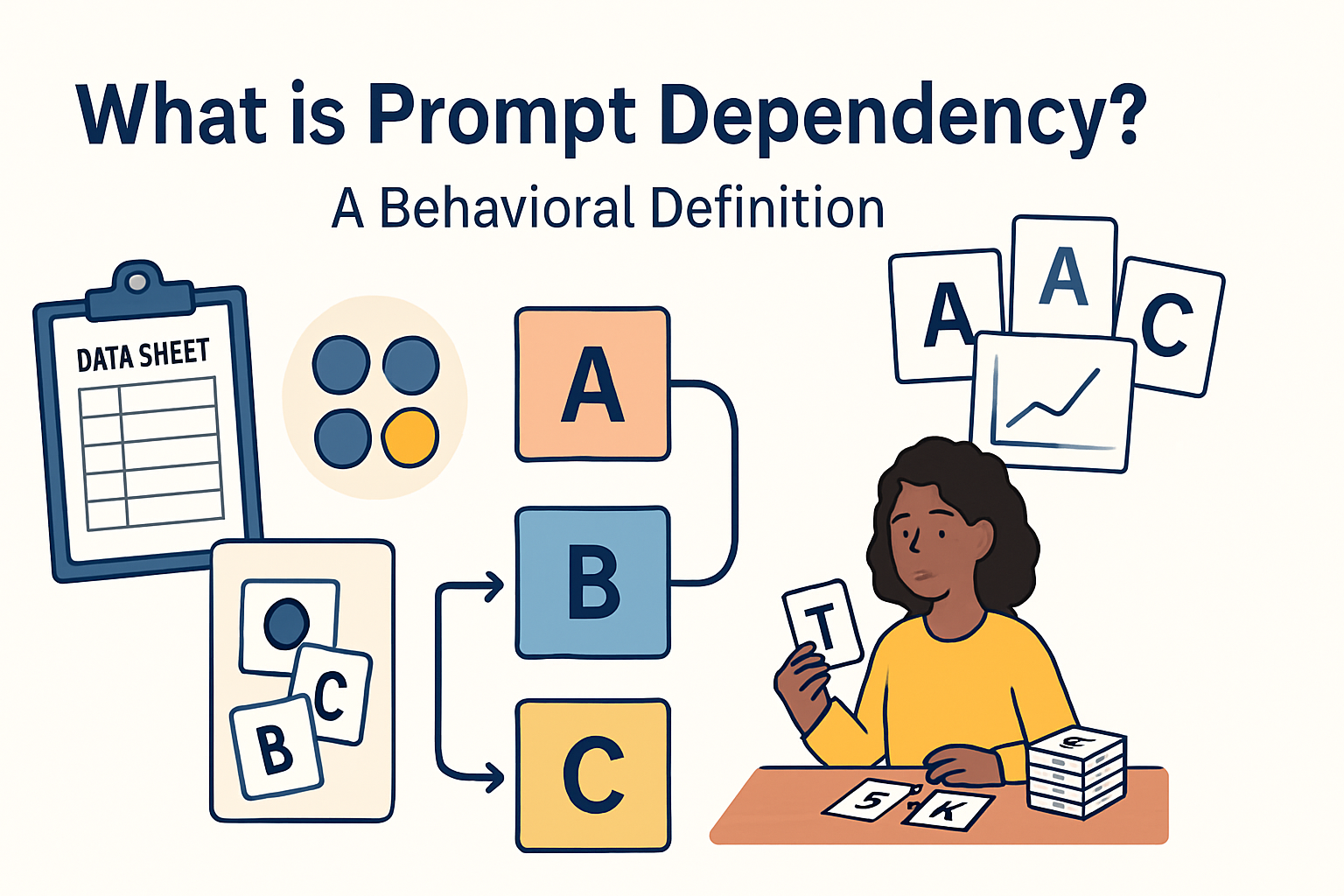
Understanding prompt dependency requires analyzing the three-term contingency in specific scenarios. By examining the antecedent-behavior-consequence sequence, we can identify the maintaining variables and develop appropriate interventions.
Example 1: Hand-Over-Hand Prompting During Toothbrushing
In this common scenario, the antecedent involves presenting the toothbrush and toothpaste. The behavior consists of the learner waiting passively or looking at the parent. The consequence is immediate hand-over-hand guidance from the parent. The hypothesized function is typically negative reinforcement through escape from the task demand initiation.
This pattern demonstrates how prompt dependency develops through repeated reinforcement of waiting behavior. The learner learns that waiting results in assistance, which removes the effort requirement. Over time, this creates a stimulus control problem where the prompt, not the hygiene routine, controls the brushing behavior.
Example 2: Verbal Prompt for a Known Intraverbal
Consider a learner who knows their name but consistently waits for the verbal prompt. The antecedent is the question “What’s your name?” The behavior involves looking at the therapist and waiting. The consequence is the therapist saying “Say, ‘Sam'” followed by the learner’s response “Sam.”
The hypothesized function here is positive reinforcement through access to social praise contingent only on the prompted response. This creates a dependency where the learner responds only after hearing the model. The prompt becomes a necessary component of the response chain, preventing independent intraverbal responding.
Prompt Dependency on the BCBA® Exam: Common Traps and How to Avoid Them
The BCBA exam frequently tests prompt dependency through scenario-based questions that require analysis and intervention planning. Understanding common traps helps candidates select the most appropriate answers.
Trap 1: Confusing Prompt Fading Schedules
Different prompt fading procedures carry varying risks for creating prompt dependency. Most-to-least prompting begins with intrusive prompts and systematically reduces intensity, which can minimize errors but requires careful fading. Least-to-most prompting starts with minimal assistance and increases as needed, but may allow errors to occur.
Time delay procedures systematically increase the interval between the SD and prompt, helping transfer stimulus control. Graduated guidance involves physical prompts that are faded based on learner performance. Misapplication of these procedures, particularly failing to fade prompts systematically, directly contributes to prompt dependency development.
Trap 2: Misidentifying the Problem in a Scenario
Exam questions often present scenarios where the real issue is prompt dependency, but distractors suggest other problems. For example, a question might describe a learner who responds correctly only after prompts, with options suggesting motivation issues, skill deficits, or punishment effects.
The correct analysis requires recognizing that the learner demonstrates the skill when prompted, indicating they possess the capability. The problem lies in stimulus control transfer failure, not skill acquisition. Candidates should look for evidence of correct responding under prompted conditions as the key indicator of prompt dependency rather than skill deficit.
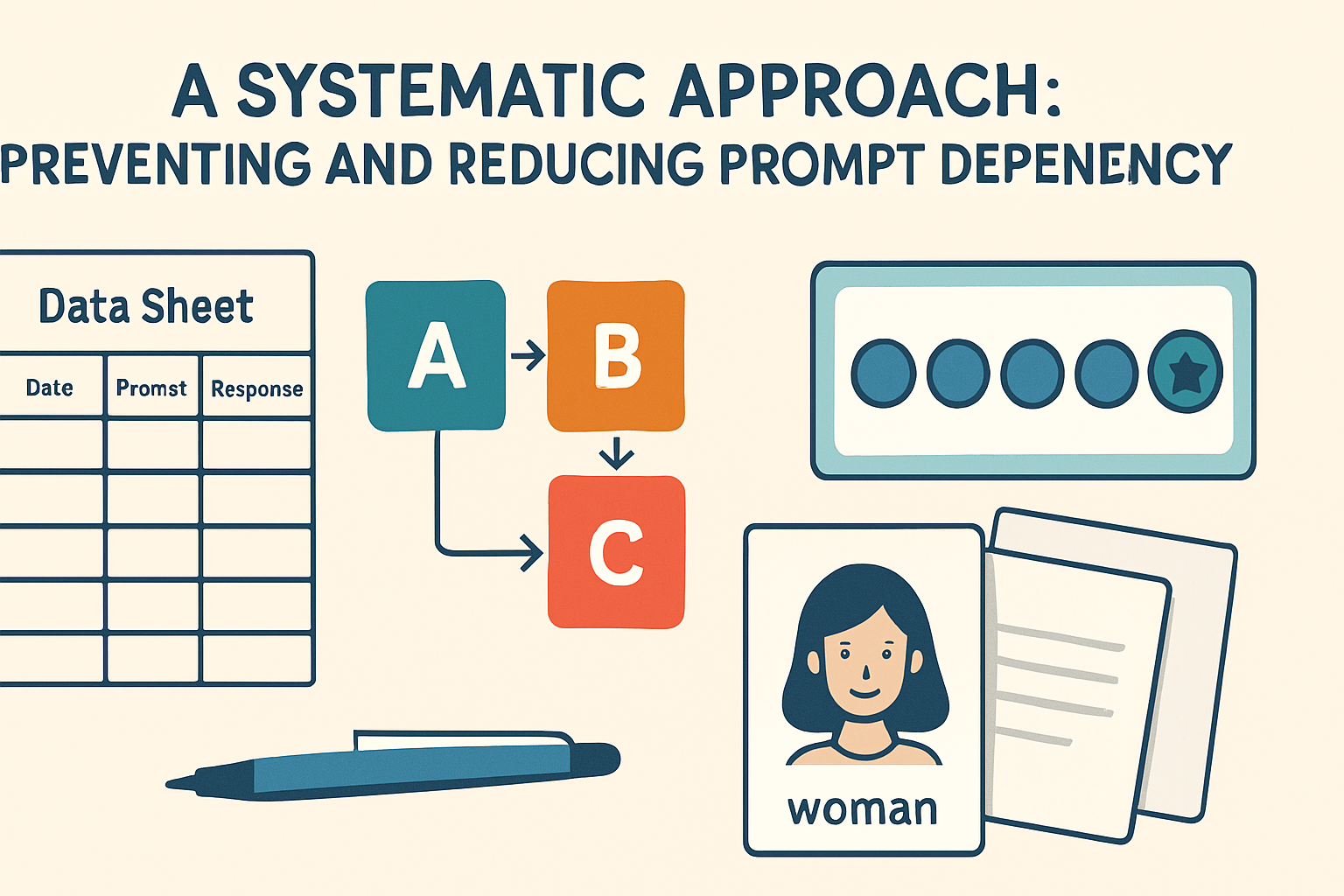
A Systematic Approach: Preventing and Reducing Prompt Dependency
Effective intervention requires a structured, evidence-based approach rather than simple tips. This systematic method addresses the root causes and promotes independent responding.
Step 1: Conduct a Stimulus Control Assessment
Before implementing interventions, assess whether the SD or the prompt is evoking the response. This involves testing responses under different conditions: with the natural SD alone, with various prompt levels, and with delayed prompts. Document the latency to respond and accuracy under each condition.
This assessment helps determine the current level of stimulus control and identifies specific prompt types that have become controlling stimuli. The results guide selection of appropriate fading strategies and establish baseline data for measuring progress.
Step 2: Select and Implement a Fading Plan
Choose a fading strategy based on the assessment results and learner characteristics. Increasing time delay systematically lengthens the interval between SD presentation and prompt delivery. Prompt intensity fading reduces the physical or verbal support gradually.
Stimulus shaping modifies the SD to make it more distinctive, then gradually changes it toward the natural form. Implement the plan consistently across sessions, collecting data on independent responses and prompt levels required. Adjust the fading schedule based on performance data to ensure steady progress toward independence.
Step 3: Program for Generalization and Maintenance
Transfer stimulus control to natural SDs across settings, people, and materials. Program multiple exemplar training to ensure the response occurs under various conditions. Systematically thin reinforcement schedules from continuous to intermittent to promote maintenance.
Include generalization probes in novel environments and with different instructors. Teach self-management strategies where appropriate, and program for maintenance through periodic review sessions. This comprehensive approach ensures skills remain functional and independent over time.
Quick Checklist: Is It Prompt Dependency?
Use this actionable checklist when analyzing scenarios in practice or on the BCBA exam:
- Does the learner respond correctly when prompted but not to the natural SD alone?
- Is there evidence of waiting or looking for prompts before responding?
- Does the response occur with shorter latency when prompted versus independently?
- Have prompts been consistently provided without systematic fading?
- Does the learner possess the component skills needed for the task?
- Is there a pattern of prompt escalation (increasing prompt intensity needed over time)?
If you answer “yes” to most of these questions, prompt dependency is likely the issue. This pattern indicates that stimulus control resides with the prompt rather than the target antecedent. Addressing this requires systematic fading rather than additional teaching of the skill itself.
For more detailed analysis of behavioral concepts, explore our guide on stimulus control procedures and errorless learning techniques. The BACB Ethics Code provides guidance on appropriate intervention implementation, while research from the Journal of Applied Behavior Analysis offers evidence-based strategies for prompt fading.
Mastering prompt dependency concepts prepares you for both exam success and effective clinical practice. By understanding the behavioral mechanisms, recognizing common patterns, and implementing systematic interventions, you can help learners achieve true independence in their skills.


