

In applied behavior analysis, prompts are essential tools for teaching new skills, and among these, positional prompts offer a subtle yet powerful approach. This guide explores what positional prompts are, how they work in practice, and why they’re crucial for both clinical implementation and exam success.
Table of Contents
- positional prompt ABA: What is a Positional Prompt in ABA?
- Positional Prompt Examples and Analysis
- Exam Relevance and Common Pitfalls
- Implementing Positional Prompts Ethically and Effectively
- Summary and Key Takeaways
positional prompt ABA: What is a Positional Prompt in ABA?
A positional prompt involves arranging the physical environment or the location of items to increase the likelihood of a correct response. Unlike response prompts that directly guide behavior, positional prompts modify the antecedent conditions to make the target behavior more probable.
This technique falls under stimulus prompts, which alter the discriminative stimulus rather than providing direct behavioral guidance. Understanding this distinction is fundamental for both clinical practice and exam preparation.
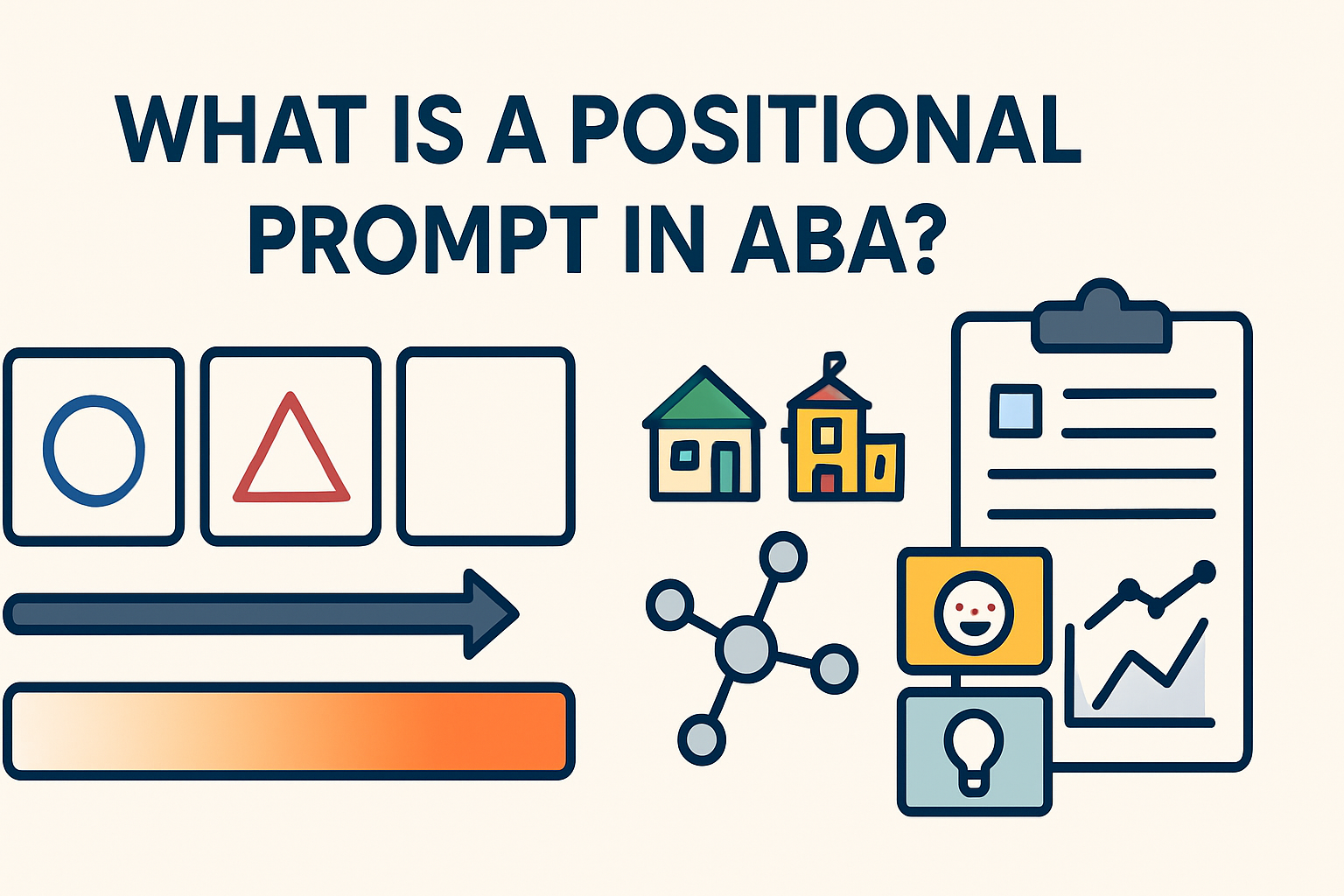
Definition and Key Characteristics
Positional prompts work by manipulating spatial relationships between items, people, or environmental features. The key characteristic is that the prompt exists in the arrangement itself, not in any direct action toward the learner.
- Stimulus prompt rather than response prompt
- Modifies antecedent conditions only
- Often involves proximity or sequence
- Can be faded through environmental changes
- Considered less intrusive than physical guidance
Linking to the BACB Task List
Positional prompts directly connect to Section G-14 of the BACB Task List: Using Prompting and Fading. This section covers both stimulus and response prompts, with positional prompts representing a specific application of stimulus shaping and stimulus fading techniques.
For exam preparation, understanding how positional prompts relate to these broader concepts is essential. They represent a practical implementation of antecedent interventions that can be systematically faded to promote independence.
Positional Prompt Examples and Analysis
Moving from theory to practice, let’s examine detailed scenarios that demonstrate how positional prompts function in real-world applications. Each example includes the complete ABC framework and clear identification of the prompt’s function.
Example 1: Teaching Receptive Identification
In this common teaching scenario, a practitioner works on receptive identification of common objects. The target item is placed strategically to facilitate correct responding.
- Antecedent: “Touch cup” instruction with array of three items (cup, spoon, plate), with cup positioned closest to the learner
- Behavior: Learner touches the cup
- Consequence: Immediate praise and edible reinforcement
- Positional Prompt: Proximity of target item to learner
- Function: To evoke correct discrimination by making the target more salient
Example 2: Promoting Independence in a Routine
This example demonstrates how positional prompts can support behavior chains and routine establishment for older learners.
- Antecedent: “Pack your lunch” instruction with lunchbox directly in front and food items arranged sequentially to the right
- Behavior: Teen packs all items in correct order
- Consequence: Natural reinforcement (completed lunch ready for school)
- Positional Prompt: Sequential spatial arrangement of materials
- Function: To facilitate correct sequence completion without verbal reminders
Example 3: Reducing Elopement Risk
This scenario shows how positional prompts can serve as antecedent interventions for safety concerns, bridging to ethical considerations.
- Antecedent: Table work instruction with therapist’s chair positioned between learner and door
- Behavior: Client remains seated and engages with task
- Consequence: Reinforcement for on-task behavior
- Positional Prompt: Therapist’s physical position as environmental barrier
- Function: To make competing behavior (elopement) less probable through environmental arrangement
Exam Relevance and Common Pitfalls
Understanding how positional prompts appear on the BCBA exam requires recognizing specific question patterns and avoiding common misconceptions. This knowledge is crucial for effective exam preparation.
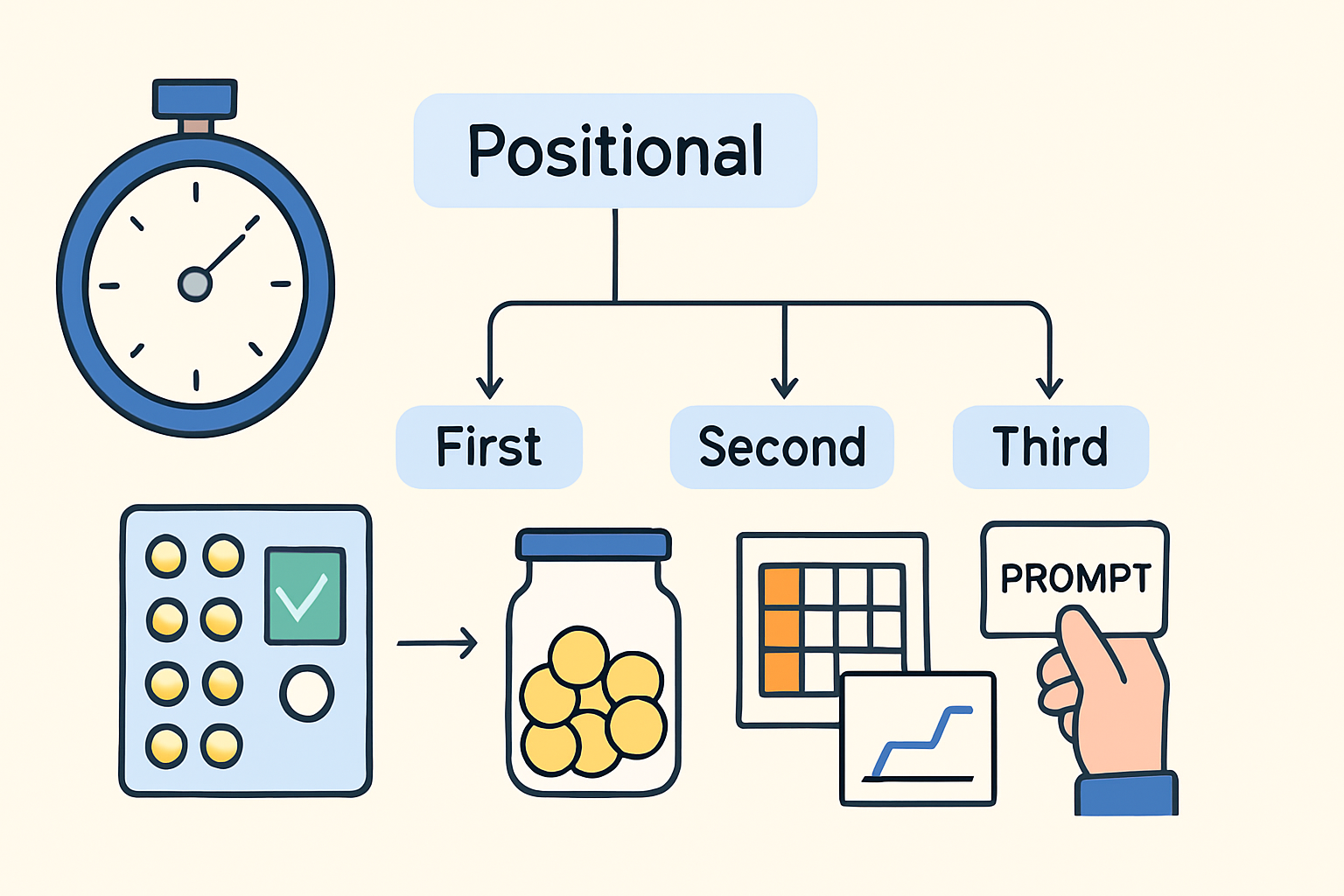
How Positional Prompts Appear on the Exam
Exam questions typically test this concept in three main ways. First, you may need to identify the prompt type described in a scenario. Second, questions often ask you to select the most appropriate prompt for a given teaching goal. Third, you might need to choose the next fading step for a positional prompt.
For comprehensive exam strategies, consider reviewing our guide on BCBA test question approaches.
Traps to Avoid: Distinguishing Prompt Types
Several common errors can trip up even well-prepared candidates. The most frequent mistake is confusing positional prompts with gestural prompts. Remember that pointing is gestural, while placing an item closer is positional.
- Trap 1: Misidentifying positional as gestural (pointing vs. placement)
- Trap 2: Classifying it as a response prompt instead of stimulus prompt
- Trap 3: Overlooking the ethical requirement to systematically fade prompts
- Trap 4: Failing to recognize positional prompts in safety scenarios
Implementing Positional Prompts Ethically and Effectively
Clinical implementation requires careful planning and ethical consideration. Positional prompts should always align with the principle of least restrictive intervention and respect client dignity.
A Quick-Reference Implementation Checklist
Use this practical checklist when planning to implement positional prompts in your practice:
- Determine if a prompt is truly necessary based on baseline data
- Verify that positional is the least intrusive option available
- Plan immediate fading strategy before implementation begins
- Establish clear data collection for independence measurement
- Ensure environmental arrangements respect personal space
- Consider cultural and individual preferences in setup
Aligning with Compassionate and Dignified Practice
Positional prompts, when used thoughtfully, can support client autonomy by reducing the need for more intrusive interventions. The key is subtlety and respect—arrangements should facilitate learning without creating “trick” setups that undermine trust.
Effective implementation involves gradual stimulus fading, where environmental arrangements are systematically changed to promote independent responding. This process should be data-driven and responsive to client progress.
For more on ethical implementation, review the ethics in ABA practice guide.
Summary and Key Takeaways
Positional prompts represent a valuable tool in the ABA practitioner’s toolkit. They offer a less intrusive alternative to response prompts while effectively supporting skill acquisition. Remember these essential points:
- Positional prompts are stimulus prompts that modify antecedent conditions
- They work through spatial arrangement and environmental modification
- Systematic fading is essential to prevent prompt dependence
- Ethical implementation respects client dignity and autonomy
- Exam questions often test prompt identification and fading sequences
By mastering positional prompts, you enhance both your clinical effectiveness and exam readiness. For additional resources on prompting strategies, consult the Behavior Analyst Certification Board resources on prompting and fading techniques.


