
Parametric Analysis ABA: What is Parametric Analysis in Applied Behavior Analysis?
Parametric analysis is an experimental design that systematically manipulates the magnitude or level of an independent variable to determine its functional relationship with a dependent variable. Unlike designs that simply test if an intervention works, parametric analysis asks ‘how much’ of the intervention produces optimal results.
Table of Contents
- Parametric Analysis ABA: What is Parametric Analysis in Applied Behavior Analysis?
- Parametric Analysis in Practice: Worked ABA Examples
- Parametric Analysis on the BCBA Exam: Relevance and Common Traps
- Quick Checklist for Identifying and Applying Parametric Analysis
- Summary and Key Takeaways
The primary goal is to identify the optimal level of an intervention component that produces the desired behavioral change while considering efficiency, practicality, and client preference.
Core Definition and Purpose
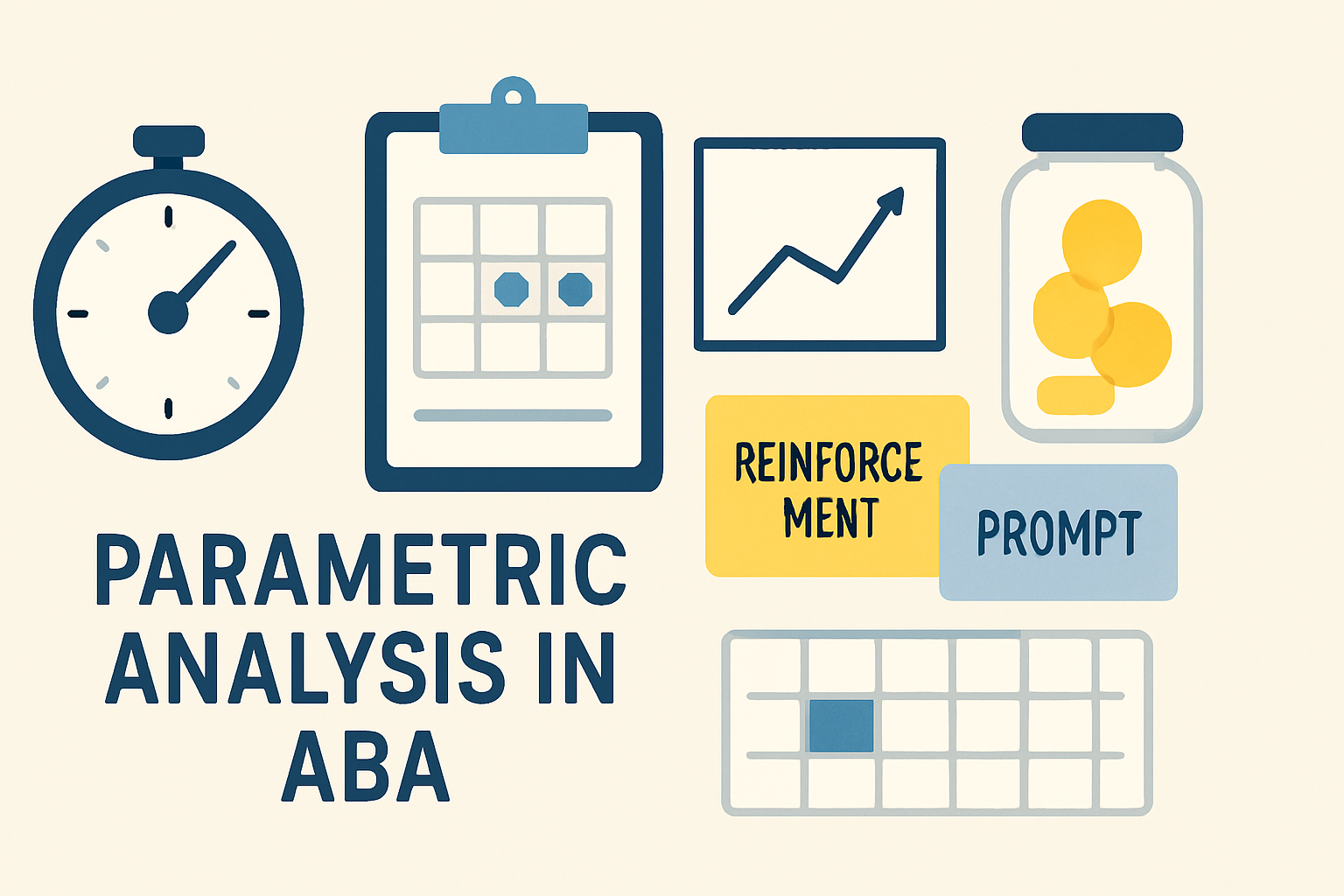
In parametric analysis, researchers systematically vary the intensity, duration, frequency, or magnitude of an independent variable across different conditions. This approach helps practitioners determine not just if an intervention works, but what specific parameters yield the best outcomes.
The design follows a single-subject methodology where the same participant experiences different levels of the intervention in a controlled sequence. Data collection focuses on how changes in the independent variable’s parameters affect the dependent variable across conditions.
Parametric vs. Nonparametric Analysis: The Critical Distinction
Understanding this distinction is crucial for both practice and exam success. Parametric analysis investigates the quantitative relationship between variables, while nonparametric analysis establishes whether a functional relationship exists at all.
- Parametric asks: ‘How much reinforcement duration is most effective?’
- Nonparametric asks: ‘Does reinforcement increase the target behavior?’
- Parametric manipulates: Levels, magnitudes, or intensities of the IV
- Nonparametric manipulates: Presence vs. absence of the IV
- Parametric outcome: Identifies optimal intervention parameters
- Nonparametric outcome: Establishes functional control
This distinction is particularly important when reviewing single-subject experimental designs on the BCBA exam.
Parametric Analysis in Practice: Worked ABA Examples
Real-world applications help solidify understanding of parametric analysis. These examples demonstrate how practitioners use this design to make data-driven decisions about intervention parameters.
Example 1: Determining Effective Reinforcement Duration
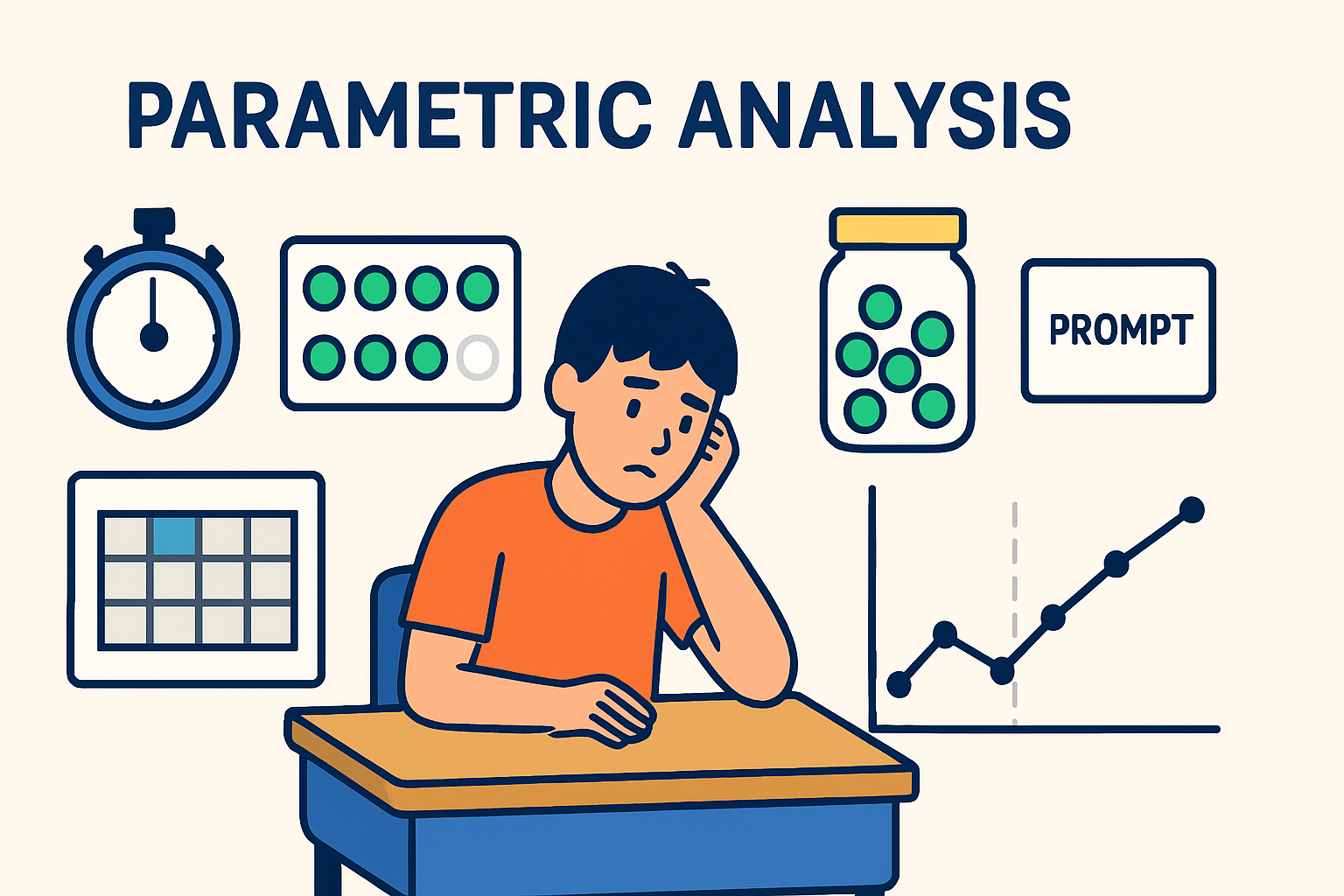
A student demonstrates low on-task behavior during independent work periods. The behavior analyst hypothesizes that access to preferred activities functions as positive reinforcement for on-task behavior.
- Independent Variable: Duration of access to preferred computer game (1 min, 3 min, 5 min)
- Dependent Variable: Percentage of on-task intervals during subsequent work period
- Experimental Design: Parametric analysis with alternating conditions
- Data Analysis: Compare on-task percentages across reinforcement durations
- Clinical Decision: Select the most efficient duration that maintains behavior
This parametric analysis might reveal that 3-minute access produces nearly identical results to 5-minute access, allowing for more efficient intervention implementation.
Example 2: Titrating Prompting Levels for Skill Acquisition
Teaching handwashing to a child with developmental delays requires determining the least intrusive prompt that still ensures skill acquisition. The analyst systematically tests different prompting levels.
- Independent Variable: Prompting intensity (full physical, partial physical, gestural)
- Dependent Variable: Number of handwashing steps completed independently
- Function Consideration: Escape from adult assistance may maintain prompt dependence
- Parametric Question: What level of support maximizes independence?
- Outcome Goal: Identify most effective yet least restrictive prompt
This approach aligns with the least intrusive intervention principle while ensuring skill acquisition.
Example 3: Analyzing Schedule of Reinforcement Effects
A client working on vocational tasks shows variable work completion rates. The analyst investigates different reinforcement schedules to identify the most efficient maintaining contingency.
- Independent Variable: Fixed-ratio schedule (FR1, FR3, FR5)
- Dependent Variable: Number of tasks completed per session
- Behavior Function: Positive reinforcement via token exchange
- Parametric Manipulation: Reinforcement schedule density
- Practical Application: Balance reinforcement efficiency with behavior maintenance
This parametric analysis helps establish a thinning schedule that maintains behavior while reducing reinforcement density over time.
Parametric Analysis on the BCBA Exam: Relevance and Common Traps
Understanding parametric analysis is essential for exam success, particularly in the experimental design domain. The BACB Task List includes several items related to this concept.
Linking to the BACB Task List
Parametric analysis connects directly to multiple Task List items in the 6th Edition:
- Section B-1: Define and provide examples of behavior and the environment in observable and measurable terms
- Section B-2: Conduct preference assessments to identify putative reinforcers
- Section B-3: Systematically manipulate independent variables to analyze their effects on dependent variables
- Section B-4: Use single-subject experimental designs (e.g., reversal, multiple baseline, multielement, changing criterion)
- Section B-5: Conduct a component analysis to determine the effective components of an intervention package
For comprehensive exam preparation, review our guide to single-subject experimental designs.
Frequent Exam Pitfalls and How to Avoid Them
Candidates often struggle with distinguishing parametric analysis from similar experimental designs. Watch for these common traps:
- Confusing parametric with component analysis: Parametric varies levels of ONE component; component analysis tests different COMBINATIONS of components
- Missing the magnitude manipulation: Remember that parametric analysis specifically manipulates the AMOUNT or LEVEL of the independent variable
- Overlooking efficiency considerations: Parametric analysis seeks not just effectiveness but EFFICIENCY and optimal parameters
- Misidentifying demonstration of effect: Showing ANY effect is nonparametric; showing HOW MUCH effect is parametric
- Forgetting client preference: Optimal parameters should consider client ACCEPTABILITY and preference
These distinctions are critical for answering experimental design questions correctly.
Quick Checklist for Identifying and Applying Parametric Analysis
Use this practical checklist to quickly identify when parametric analysis is appropriate and how to implement it correctly:
- Check if you’re asking ‘how much’: Does the research question involve finding optimal LEVELS or AMOUNTS?
- Identify the quantitative variable: What specific PARAMETER will you systematically manipulate?
- Define measurement clearly: How will you QUANTIFY changes in the dependent variable?
- Plan systematic variation: What specific VALUES or LEVELS will you test?
- Consider efficiency goals: Are you seeking the MOST EFFICIENT effective parameter?
- Include preference assessment: Will you measure CLIENT PREFERENCE for different parameters?
- Design appropriate sequence: What EXPERIMENTAL DESIGN will control for order effects?
- Plan data analysis: How will you VISUALLY ANALYZE differences across conditions?
This checklist helps ensure proper implementation and identification of parametric analysis scenarios.
Summary and Key Takeaways
Parametric analysis represents a sophisticated experimental approach in applied behavior analysis. Mastering this concept requires understanding several key points:
- Core purpose: Identify OPTIMAL LEVELS of intervention components
- Key distinction: Asks ‘how much’ rather than ‘if’ something works
- Common applications: Reinforcement parameters, prompting levels, schedule density
- Exam relevance: Frequently tested in experimental design questions
- Critical skill: Distinguishing from component and comparative analyses
- Practical value: Enhances intervention EFFICIENCY and effectiveness
For additional resources on experimental design, explore our comprehensive guide to ABA experimental designs. The BACB Task List provides official guidance on required competencies.
Remember that parametric analysis represents just one approach within the broader framework of single-subject methodology. When combined with other designs and assessment methods, it contributes to comprehensive, data-driven practice in applied behavior analysis.


