

Understanding negative punishment is essential for any behavior analyst preparing for certification. This fundamental principle involves decreasing behavior through stimulus removal, but its application requires careful consideration of ethical guidelines and practical implementation. This guide breaks down the concept with clear examples and exam-focused insights.
Table of Contents
- What is Negative Punishment? A Foundational Definition
- Negative Punishment in Action: Worked ABA Examples
- Negative Punishment on the BCBA Exam: What to Watch For
- Quick Checklist for Ethical Negative Punishment Procedures
- Summary and Key Takeaways
What is Negative Punishment? A Foundational Definition
Negative punishment occurs when a behavior is followed by the removal of a stimulus, resulting in a decrease in the future frequency of that behavior. The term ‘negative’ refers to removal, while ‘punishment’ indicates behavior reduction. This contrasts with positive punishment, which involves adding a stimulus to decrease behavior.
The Core Mechanism: Removal of a Stimulus
The defining feature of negative punishment is the contingent removal of a stimulus following a target behavior. This process requires that the removed stimulus was actually functioning as a reinforcer for the individual. The behavior-environment change must be observable and measurable, with clear data showing the behavior decrease over time.
Negative Punishment vs. Response Cost: A Critical Distinction
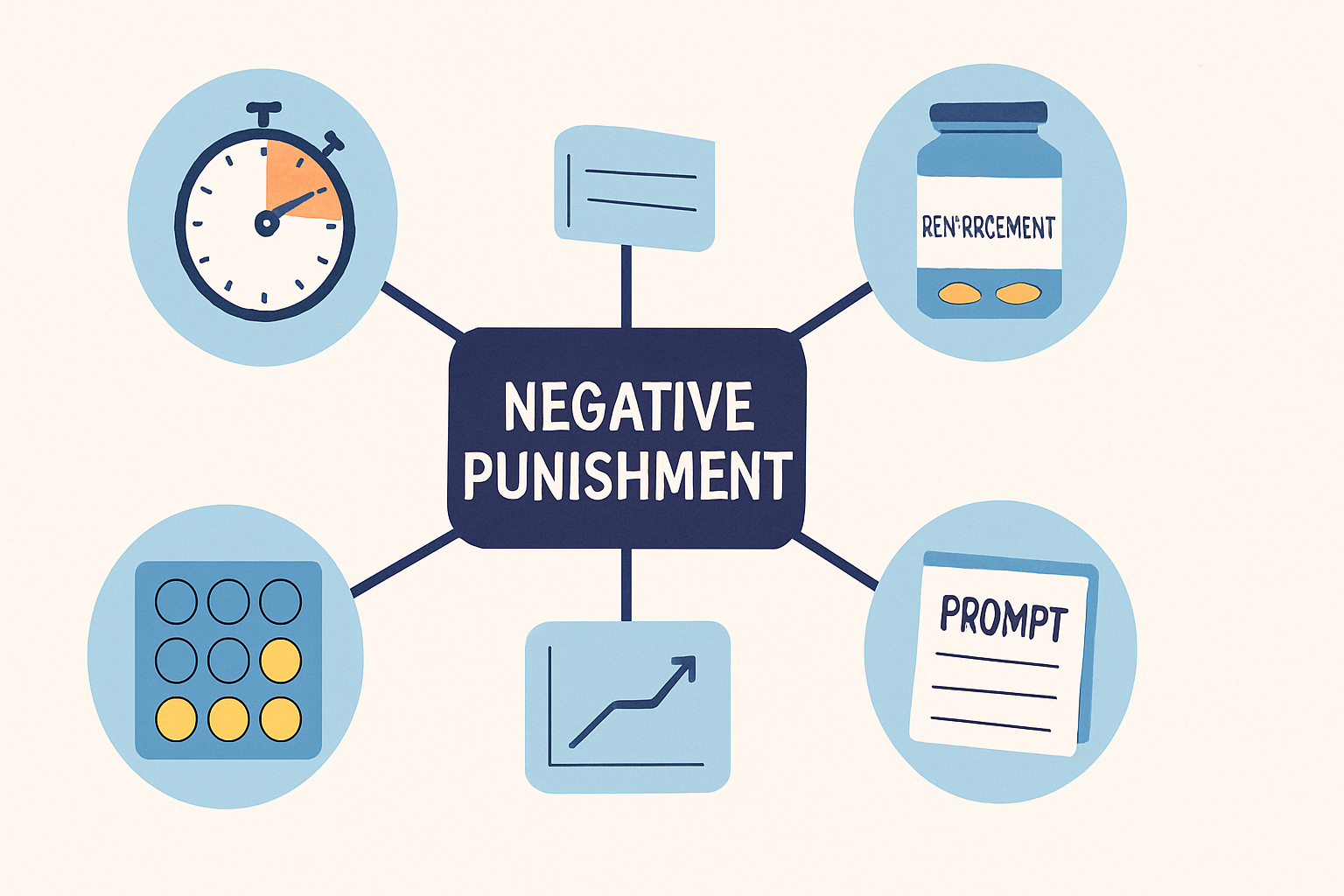
Response cost represents a specific subtype of negative punishment involving the removal of a tangible, quantifiable reinforcer. Common examples include losing tokens, points, or privileges. While all response cost procedures are negative punishment, not all negative punishment involves response cost. Time-out from positive reinforcement represents another common form that doesn’t necessarily involve tangible item removal.
Negative Punishment in Action: Worked ABA Examples
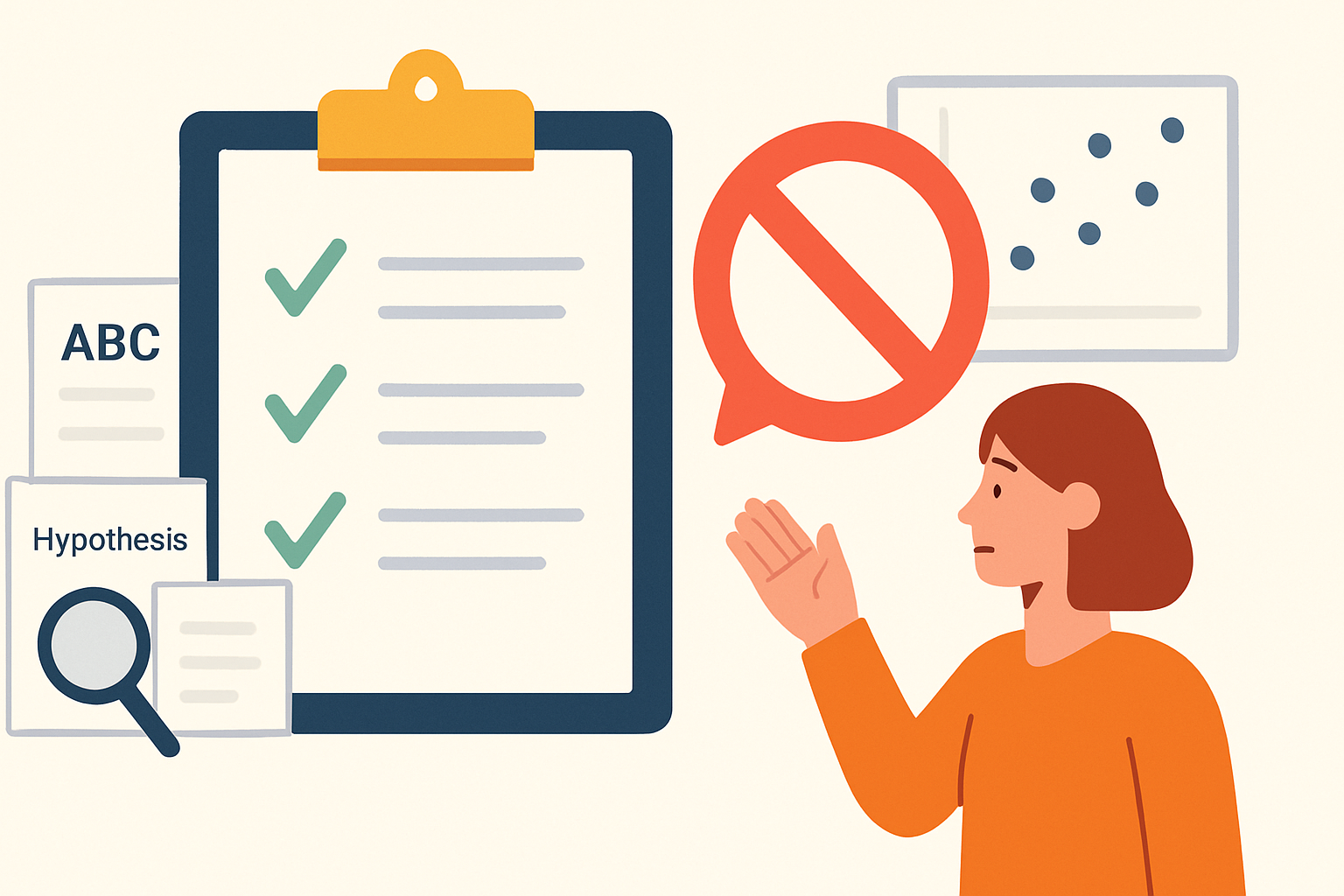
These practical scenarios illustrate how negative punishment operates in real-world settings, complete with ABC data and functional analysis.
Example 1: Time-Out from Positive Reinforcement
A child engages in toy snatching during group play. The antecedent is peer interaction with preferred toys, the behavior is grabbing toys from others, and the hypothesized function is access to tangible items. The intervention involves a brief, contingent 2-minute removal from the play area (time-out), removing access to both social interaction and preferred toys. If toy snatching decreases, this qualifies as negative punishment.
Example 2: Withdrawal of a Specific Privilege
A teenager uses their phone during homework time after explicit instructions not to. The antecedent is homework assignment with phone present, the behavior is unauthorized phone use, and the function may be automatic reinforcement. The intervention removes phone privileges for the evening contingent on phone use. This represents response cost, a specific negative punishment procedure involving tangible privilege removal.
Example 3: Planned Ignoring as a Potential Negative Punisher
A student makes disruptive noises during instruction. The antecedent is teacher-led activity, the behavior is noise-making, and the hypothesized function is teacher attention. The teacher implements planned ignoring (removal of attention). This only qualifies as negative punishment if attention was a reinforcer and its removal actually decreases the behavior. Otherwise, it may function as extinction if attention was maintaining the behavior.
Negative Punishment on the BCBA Exam: What to Watch For
Exam questions often test your ability to distinguish negative punishment from similar concepts and apply ethical considerations. Understanding these distinctions is crucial for success on the BCBA certification exam.
Common Exam Traps and How to Avoid Them
- Confusing negative punishment with extinction: Extinction removes the specific reinforcer maintaining the behavior, while negative punishment removes any stimulus (not necessarily the maintaining reinforcer).
- Mistaking response cost for positive punishment: Remember that response cost involves removal (negative), not addition (positive).
- Overlooking the behavior decrease requirement: Negative punishment is defined by its effect – if behavior doesn’t decrease, it’s not punishment.
- Failing to identify the removed stimulus: Always identify what specific stimulus was removed following the behavior.
Ethical Implementation and the BACB Ethics Code
The BACB Ethics Code requires behavior analysts to use the least restrictive interventions and obtain informed consent. Negative punishment procedures must be carefully considered within this ethical framework. Potential side effects include emotional reactions, avoidance behaviors, and aggression. These procedures should always be paired with reinforcement-based strategies to teach appropriate alternative behaviors.
Quick Checklist for Ethical Negative Punishment Procedures
- Conduct functional assessment to identify maintaining variables before implementation
- Obtain informed consent from clients or their representatives
- Use least restrictive alternative that is likely to be effective
- Pair with reinforcement procedures for appropriate behaviors
- Monitor side effects and adjust procedures as needed
- Collect ongoing data to evaluate effectiveness and make data-based decisions
- Ensure procedural integrity through staff training and monitoring
- Plan for generalization and maintenance of behavior change
Summary and Key Takeaways
Negative punishment is defined by stimulus removal leading to behavior decrease. Key distinctions include separating it from extinction and understanding response cost as a subtype. Ethical implementation requires careful consideration of the BACB Ethics Code and pairing with reinforcement procedures. For exam success, focus on identifying the removed stimulus and verifying behavior decrease. Understanding these principles prepares you for both certification and ethical practice.


