
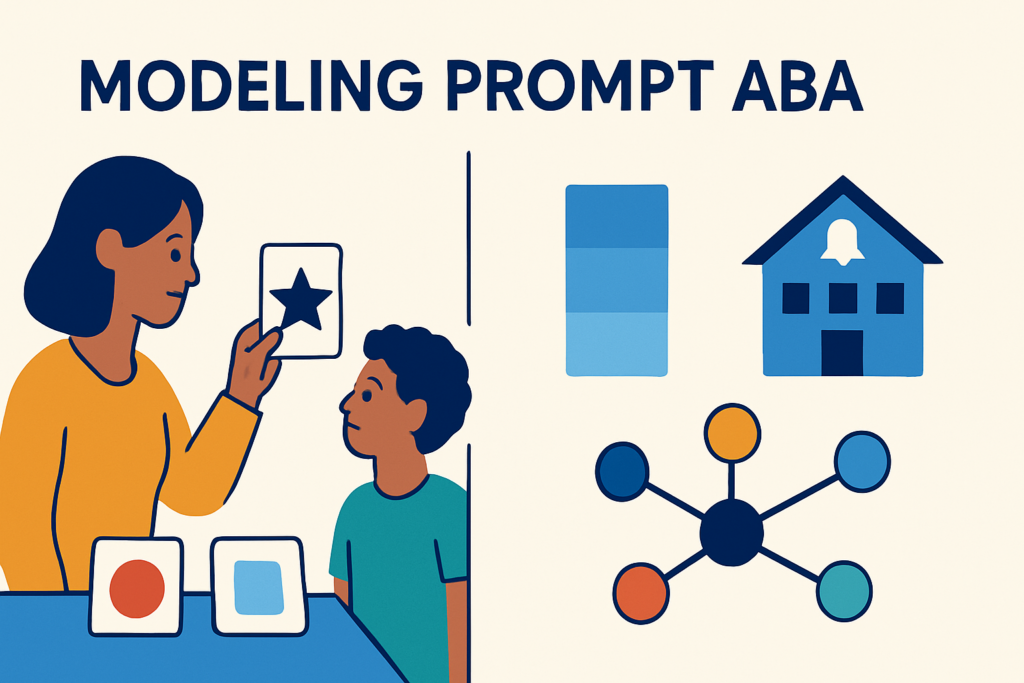
A modeling prompt is a fundamental teaching strategy in applied behavior analysis where the instructor demonstrates the target behavior for the learner to imitate. This response prompt technique is particularly effective for teaching motor skills, social behaviors, and complex behavior chains. Understanding modeling prompts is essential for both clinical practice and BCBA exam success.
Table of Contents
- modeling prompt ABA: What is a Modeling Prompt in ABA?
- Modeling Prompt Examples and Analysis
- Exam Focus: Modeling Prompts and Common Traps
- Quick-Reference Implementation Checklist
- Summary and Next Steps for Mastery
modeling prompt ABA: What is a Modeling Prompt in ABA?
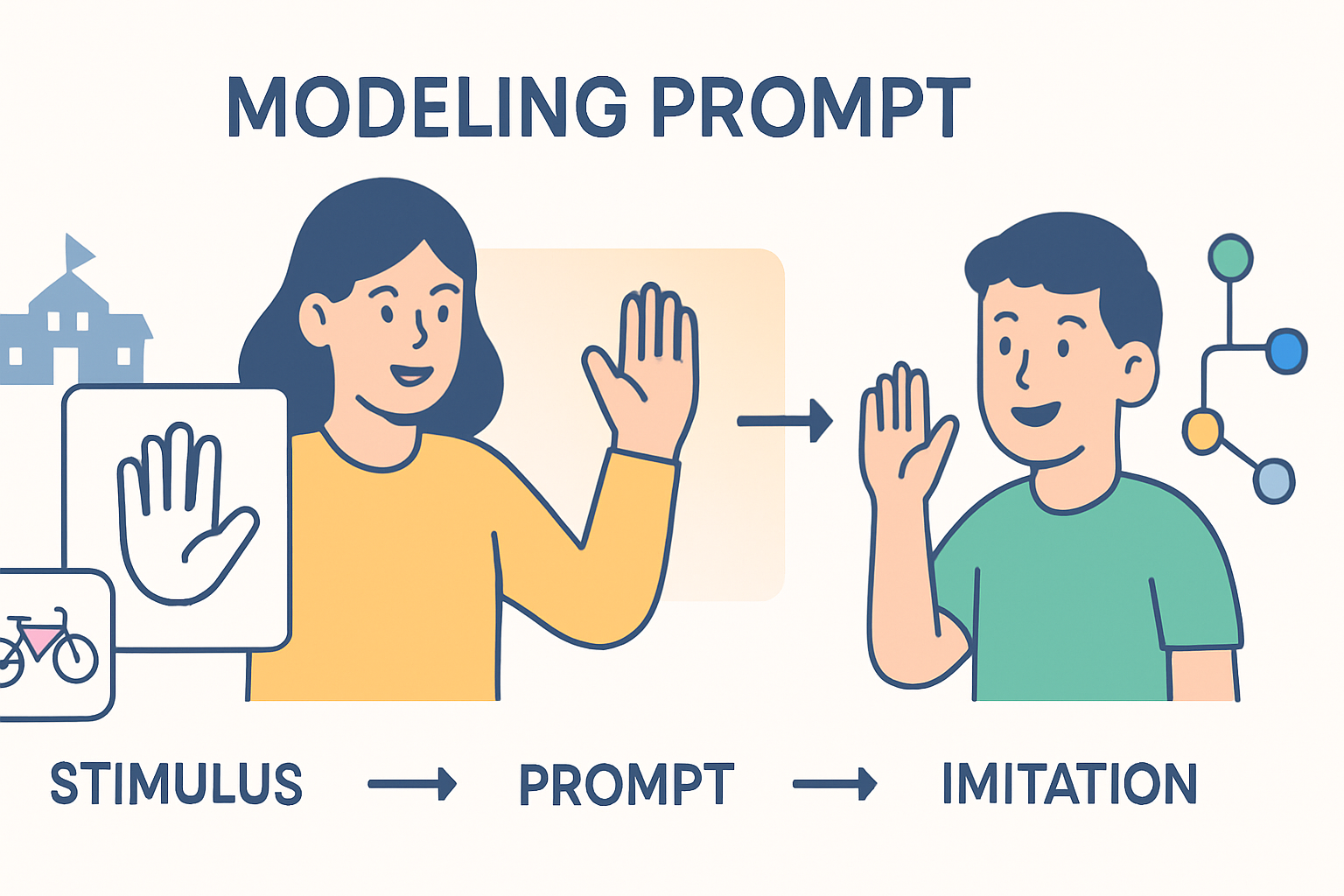
Modeling prompts involve demonstrating the exact behavior you want the learner to perform. Unlike stimulus prompts that alter the environment, modeling is a response-based intervention that requires the learner to attend to and replicate the modeled action.
Core Definition and Key Characteristics
A modeling prompt is defined as a demonstration of the target behavior that serves as an antecedent for imitation. The learner must have an established imitative repertoire for this prompt type to be effective. Key characteristics include:
- It’s a type of response prompt, not a stimulus prompt
- Requires the learner to attend to the model before responding
- Often used for teaching motor behaviors and behavior chains
- Can be delivered through live modeling or video modeling
- Effectiveness depends on the learner’s imitation skills
Modeling in the Prompt Hierarchy
In prompt hierarchies, modeling typically falls between verbal prompts and physical guidance. In a least-to-most prompting sequence, you might progress from verbal instruction to modeling before using physical assistance. Conversely, in most-to-least prompting, modeling might follow physical guidance as you systematically fade support.
The position of modeling in the hierarchy depends on the learner’s skills and the target behavior’s complexity. For learners with strong imitation skills, modeling can be a less intrusive alternative to physical prompting.
Modeling Prompt Examples and Analysis
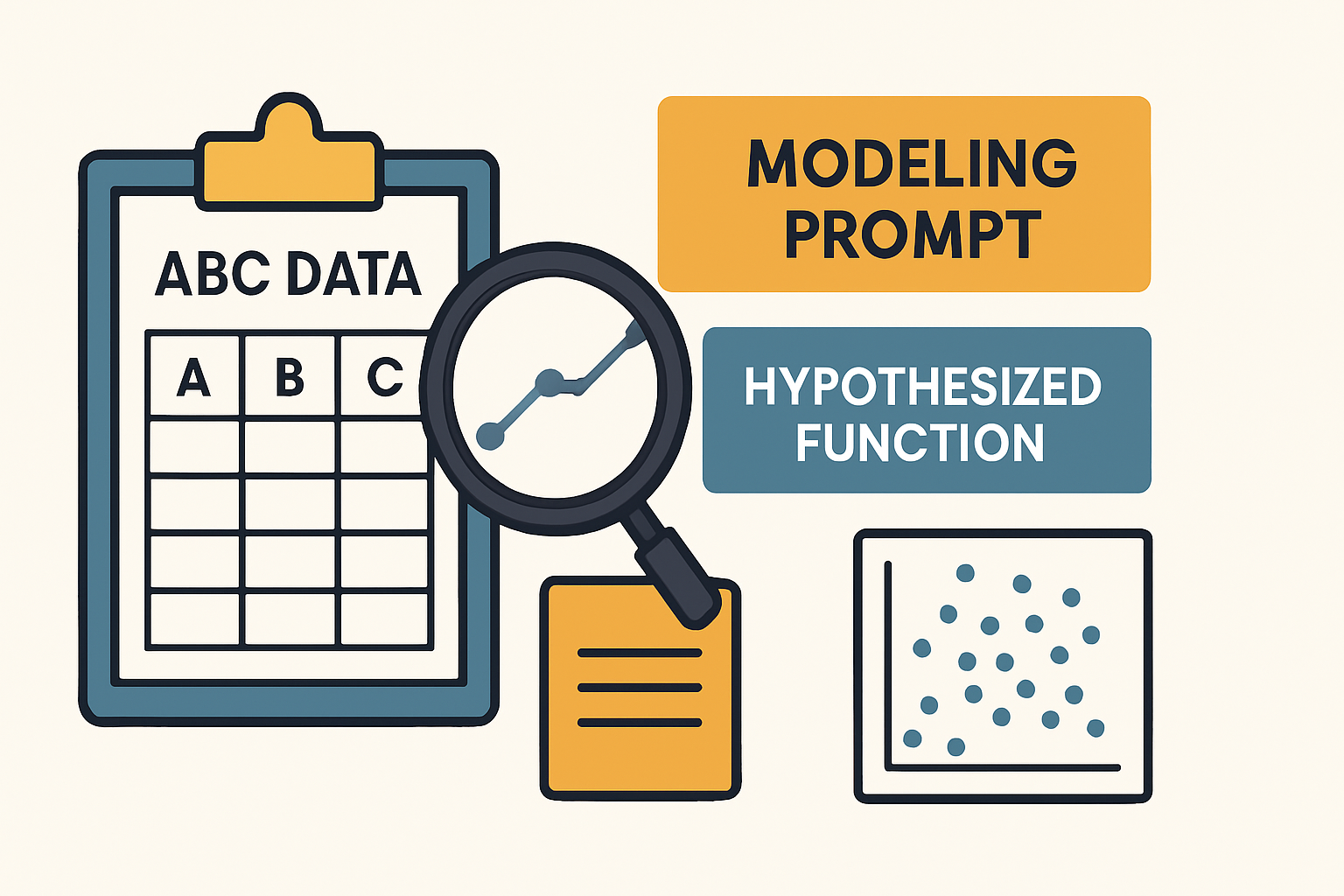
Practical examples help illustrate how modeling prompts function in real ABA sessions. Each example includes ABC data and hypothesized function to reinforce analytical skills.
Example 1: Teaching Hand Washing Steps
Consider teaching a child to wash hands independently using a task analysis with 8 steps. At step 4 (applying soap), the child hesitates.
- Antecedent: “Put soap on your hands” + therapist models rubbing hands together with soap
- Behavior: Child imitates the rubbing motion with soap
- Consequence: Therapist provides praise (“Great job rubbing the soap!”)
The hypothesized function is access to social reinforcement (praise) and potentially escape from non-compliance demands. The modeling prompt bridges the gap between instruction and independent performance.
Example 2: Using Video Modeling for Social Greetings
Video modeling extends traditional modeling by using recorded demonstrations. For teaching a teenager to greet peers appropriately:
- Antecedent: Video shows peer saying “Hi” with appropriate eye contact and tone
- Behavior: Teenager approaches peer and says “Hi” with similar eye contact
- Consequence: Peer responds positively and continues conversation
The function here is access to social interaction. Video modeling allows for repeated, consistent demonstrations and can be particularly effective for social skills training.
Exam Focus: Modeling Prompts and Common Traps
BCBA exam questions often test your ability to distinguish modeling from other prompt types and select appropriate prompting strategies based on learner characteristics.
Key Terms and Distinctions for the Test
Master these essential concepts:
- Imitative prompt: Another term for modeling prompt emphasizing the imitation component
- Live modeling: In-person demonstration by therapist or peer
- Video modeling: Recorded demonstration played for the learner
- Simultaneous modeling: Model occurs at the same time as the learner’s attempt
- Delayed modeling: Model presented before the learner’s response opportunity
Crucial distinctions: Modeling differs from physical guidance (hand-over-hand assistance) and gestural prompts (pointing or motioning). Modeling demonstrates the complete behavior, while gestural prompts provide partial cues.
Frequent Exam Pitfalls and How to Avoid Them
Watch for these common errors:
- Confusing modeling with stimulus prompts: Remember that modeling is a response prompt, while visual schedules or picture cues are stimulus prompts
- Selecting modeling without imitative repertoire: Don’t choose modeling if the learner hasn’t demonstrated imitation skills
- Forgetting attentional requirements: Modeling requires the learner to attend to the model – consider attention skills first
- Misidentifying prompt hierarchy position: Modeling is typically more intrusive than verbal but less than physical prompts
- Overlooking prompt fading: Always plan to systematically fade modeling prompts to prevent prompt dependency
Quick-Reference Implementation Checklist
Use this checklist when implementing modeling prompts:
- ✓ Assess the learner’s imitative repertoire before implementation
- ✓ Ensure the learner can attend to the model for sufficient duration
- ✓ Position the model clearly within the learner’s visual field
- ✓ Use clear, concise demonstrations without unnecessary movements
- ✓ Provide immediate reinforcement for correct imitation
- ✓ Plan systematic prompt fading from the beginning
- ✓ Consider video modeling for complex social behaviors
- ✓ Monitor for prompt dependency and adjust fading schedule as needed
- ✓ Collect data on prompt level required and independence achieved
For more on preventing prompt dependency, see our guide on prompt dependency in ABA.
Summary and Next Steps for Mastery
Modeling prompts are powerful teaching tools when used appropriately. Key takeaways include their position as response prompts, their dependence on imitative skills, and their effectiveness for teaching motor behaviors and social skills. Remember that successful implementation requires careful assessment of learner prerequisites and systematic prompt fading.
For exam preparation, focus on distinguishing modeling from other prompt types and selecting appropriate prompting strategies based on scenario details. Practice analyzing ABC data involving modeling prompts and identifying when modeling would be the most appropriate intervention choice.
To deepen your understanding of related concepts, explore our resources on errorless learning and chaining procedures. For authoritative information on prompting procedures, refer to the BACB’s resources and peer-reviewed literature on evidence-based practices in ABA.
Mastering modeling prompts enhances both your clinical effectiveness and exam performance, making this a critical skill for every behavior analyst.


